Link Copied!
J. Howard Moore Quotes (1862-1916)
Philosopher, Author
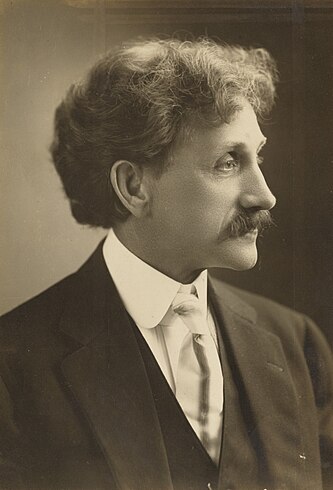
About J. Howard Moore
John Howard Moore (December 4, 1862 – June 17, 1916) was an American zoologist, philosopher, educator and social reformer. He advocated for the ethical consideration and treatment of animals and authored several articles, books, essays and pamphlets on topics including education, ethics, evolutionary biology, humanitarianism, utilitarianism and vegetarianism. He is best known for his work The Universal Kinship (1906), which advocated for a secular sentiocentric philosophy he called the doctrine of "Universal Kinship", based on the shared evolutionary kinship between all sentient beings.
Best J. Howard Moore Quotes
Shortest
Earliest
Explore our curated collection of the most famous and impactful J. Howard Moore quotes.
“Caprice is a hallucination. There is no caprice, only ignorance.”
“Each being is an integer in the stupendous scheme of consciousness.”


“We are striving for the amelioration of this suffering world. Let us be economical.”

“The ability to weigh the stars is all right, but it is not more important than the disposition to be just.”

“It is a fact of our world, tho, that Death is as inevitable as Birth. The coffin is as natural as the cradle.”

“The most hopeless chains are those of which we are unconscious. The darkest slavery is that which binds the human brain.”

“There are not ten men on the continent of America at this moment who will not, two hundred years from now, be considered as 'back numbers.'”
“Much of the vagueness of the human mind is due to the fact that the mind is largely composed of material derived second-hand from books. The ideas are not read.”

“It is a crime to start a child learning to read and write as soon as it is out of the cradle. We should get ideas before starting on the business of representing them.”

“Vacation days may be much more beautifully spent communing with the transcendent spirit of Nature than in the butchery and terrorisation of her simple-hearted children.”
“[This work] would be inexcusable to suppose it to be exhaustive. It is not even defensive. It is a projectile, and projectiles do not apologize.
It intends to be followed.”
It intends to be followed.”
“Wherever Buddhism prevails, there will be found in greater or less purity, as one of the cardinal principles of its founder, the doctrine of the sacredness of all Sentient Life.”

“The philosophies of this world have all been framed by, and from the standpoint of, a single species, and they are still managed and maintained in the interests of this species.”

“We should be a little more disposed to move along. We live in a world that is neither petrified or perfect. The universe is a liquid. It is flowing. Humanitarianism is in the air.”
“"Wild animals" merely strangers to us—beings who live apart from and independent of us. They suffer and enjoy the same as we do. They have their own ends and justifications of life.”
“Living beings who love themselves no more ardently than they love others are prodigies, and it will never be otherwise so long as beings are born as they are and live in like conditions.”

“This is a wintry world. Low temperatures prevail in the hearts of men. Altruism is scarce. Gaunt but blessed hands stretch up to us everywhere for bread. They are the holy hands of Truth.”

“No wonder the child loves the camp-fire. The camp-fire was the ancestor of the hearth—the first bright spot in that dark world out of which our forefathers groped their way so long ago.”
“[A]nyone who has ever associated with dogs or monkeys long enough and intimately enough to really know them knows that they compare very favorably with human beings in the powers of feeling.”
“In the ideal state, man treats the races of beings affiliated with him, not as objects of pillage, but as beings with rights and feelings and capabilities of happiness and misery, like himself.”
“The Great Law of Love—the abstaining from that which we do not like when done to ourselves—Reciprocity—is the only relation to exist among associated beings of any kind.”
J. Howard Moore Quotes by Topic
Find exactly what you are looking for by browsing this categorized list of J. Howard Moore quotes by topic.
J. Howard Moore on Wild animal suffering 6 quotes
“All over the non-human world, with few exceptions, each being seeks the satisfaction of his own desires, if not with positive disregard for the happiness and misery of the rest of the universe, at least with sincere unconcern. There is no courtesy, sympathy, or amenity there—a cold, heartless, implacable world of strangers.”

J. Howard Moore on Utilitarianism 5 quotes
“Each living being of the universe, therefore, sustains to every other living being the relation of possible right and wrong, but to the insentient universe no such relation exists. Right is that relation which is conducive to happiness, or welfare, or complete living, or whatever synonym is preferred. Wrong is that which conduces to the opposite of happiness—misery, ill-fare, maladaptation.”
J. Howard Moore on Open individualism 3 quotes
“Look upon and treat others as you do your own hands, your own eyes, your very heart and soul—with infinite care and compassion—as suffering and enjoying members of the same Great Being with yourself. This is the spirit of the ideal universe—the spirit of your own being. It is this alone that can redeem this world, and give to it the peace and harmony for which it longs.”
J. Howard Moore on Speciesism 3 quotes
“Zoocentricism, that stage of solidarity in which the entire sentient universe is contemplated, universal consideration and love, is as yet too difficult for human consciousness. Human philosophy, which has been so slow in discovering the solidarity of the human species, is to-day, except in its Oriental manifestations, as reluctant to recognize other species in its ethical contemplations as were dominant human groups in less advanced stages of aggregation reluctant to recognize the solidarity of the hominine species.”

J. Howard Moore on Suffering-focused ethics 2 quotes
“Oh this poor world, this poor, suffering, ignorant, fear-filled world! How can men be blind or deranged enough to think it is a good world? How can they be cold and satanic enough to be unmoved by the groans and anguish, the writhing and tears, that come up from its unparalleled afflictions?”

J. Howard Moore on Animal rights 2 quotes
“There is, in fact, but one great crime in the universe, and most of the instances of terrestrial wrong-doing are instances of this crime. It is the crime of exploitation—the considering by some beings of themselves as ends, and of others as their means—the refusal to recognize the equal, or the approximately equal, rights of all to life and its legitimate rewards—the crime of acting toward others as one would that others would not act toward him. For millions of years, almost ever since life began, this crime has been committed, in every nook and quarter of the inhabited globe.”

J. Howard Moore on Vegetarianism
“I am a vegetarian because I believe that present-day ethics is founded on that puerile, pre-Darwinian delusion that all other kinds of creatures and all worlds were created explicitly for the hominine species. Vegetarianism is the ethical corollary of evolution. It is simply the expansion of ethics to suit the biological revelations of Charles Darwin. Evolution has taught us the kinship of all creatures.”

J. Howard Moore on Effective altruism
“Longitudinal or serial altruism, that is, altruism toward the generations in future time, arises, like lateral or space altruism, thru sympathy, that is, thru the imagination. The living sustain a vital relation to the unborn. Every one who recognizes and shows any regard for this relation, and there are very few who do, does so by putting himself in the place of the unborn billions, and by anticipation sharing their welfare and ill-fare.”

J. Howard Moore on Insect suffering
“The ant is the most pugnacious of all animals, and the most muscular compared with its size. It will boldly attack the biggest creature that walks if this creature invades its home. It will fasten its mandibles into an enemy, and allow itself to be torn to pieces without relaxing its hold. Among some savage tribes, certain species of ants are said to be used as surgeons. Infuriated ants are allowed to fasten their mandibles on the opposite edges of a gash, and in this way the wound is closed. The ants are decapitated, and their bodiless heads with their relentless jaws serve as stitches to the wound.”

J. Howard Moore on Parasitism
“Nearly all birds build nests of some kind in which to cradle their eggs and young. The cow-bird and cuckoo (European), however, are exceptions. These birds have the rather human practice of turning their cares and labours over to somebody else. They are loafers and parasites. They lay their eggs secretly in the nests of other birds, where their eggs are hatched and their young cared for by an alien mother. I have seen a mother song-sparrow hustling about among the shrubs and grasses for an hour at a time almost, gathering food for a young cow-bird nearly twice as big as she was, while her foundling sat phlegmatically at the foot of a tree chirping and fluttering its wings, and acting as a thankless and apparently bottomless receptacle for the morsel after morsel laboriously harvested for it by its tireless little foster-mother.”

J. Howard Moore on Predation
“The chief activities of beings, both human and non-human, are put forth, directly or indirectly, for the purpose of procuring food. The suppression, entire or partial, of one being by another for nutritive purposes is, therefore, the form of the most frequent and excessive egoism. The lowly forms of life—the worms, echinoderms, mollusks, and the like—are, for the most part, vegetarians. So, also, are prevalently the insects, birds, rodents, and ungulates. These creatures are not, as a rule, aggressively harmful to each other, chiefly indifferent. But upon these inoffensive races feed with remorseless maw the reptilia, the insectivora, and the carnivora. These being-eaters cause to the earth-world its bloodiest experiences. It is their nature (established organically by long selection, or, as in the case of man, acquired tentatively) to subsist, not on the kingdom of the plant, the natural and primal storehouse of animal energy, but on the skeletons and sensibilities of their neighbors and friends. The serpent dines on the sparrow and the sparrow ingulfs the gnat; the tiger slays the jungle-fowl and the coyote plunders the lamb; the seal subsists on fish and the ursus maritimus subsists on seal; the ant enslaves the aphidae and man eats and enslaves what can not get away from him. Life riots on life—tooth and talon, beak and paw. It is a sickening contemplation, But life everywhere, in its aspect of activity, is largely made up of the struggle by one being against another for existence—of the effort by one being to circumvent, subjugate, or destroy another, and of the counter effort to reciprocate or escape.”

Quotes About J. Howard Moore
Gain deeper perspective through quotes about J. Howard Moore from others.
Mark Twain on J. Howard Moore
“[The Universal Kinship] has furnished me several days of deep pleasure and satisfaction; it has compelled my gratitude at the same time, since it saves me the labor of stating my own long-cherished opinions and reflections and resentments by doing it lucidly and fervently and irascibly for me.”

Jack London on J. Howard Moore
“I do not know of any book [The Universal Kinship] dealing with evolution that I have read with such keen interest. Mr. Moore has a broad grasp and shows masterly knowledge of the subject. And withal the interest never flags. The book reads like a novel. One is constantly keyed up and expectant. Mr. Moore is to be congratulated upon the magnificent way in which he has made alive the dull, heavy processes of the big books. And, then, there is his style. He uses splendid virile English and shows a fine appreciation of the values of words. He uses always the right word.”
Eugene V. Debs on J. Howard Moore
“It is impossible for me to express my appreciation of your masterly work [The Universal Kinship]. It is simply great, and every socialist and student of sociology should read it.”

Mona Caird on J. Howard Moore
“[The Universal Kinship] leaves me in a glow of enthusiasm and hope. It seems like the embodiment of years of almost despairing effort and pain of all of us who have felt these things. That which we have been thinking and feeling—some in one direction and some in another, some in fuller understanding and breadth, others in little flashes of insight here and there—all seems gathered together, expressed, and given form and color and life in your wonderful book.”
F. A. Cox on J. Howard Moore
“It is not too much to say that all that should be said, all that can be said, all that any one of us thinks he would like to say, is said in this book [The Universal Kinship] [...] nothing that I have ever yet read has so brought home to me the whole question of my relationship to and personal responsibility for the subhuman creation.”
Clarence Darrow on J. Howard Moore 2 quotes
“This man, our brother, never purposely killed a living thing until he put the pistol to his head. Poor dead dreamer, you are not the first or last mortal to learn the truth [...] I have dreamed my dreams, had my illusions and wakened from my sleep. Why do I not follow him? I do not end it all because the love of life and the shrinking fear of death in all living things stays my hand and my courage fails.”

Louis S. Vineburg on J. Howard Moore
“Indeed, all his works are replete with the sublimest thoughts and inspirations, and the least that we, as Comrades, can do as proof of our mission to spread "enlightenment is first, to acquaint ourselves with Professor Moore's books, and secondly, to pass the knowledge on to others. Thus his efforts shall not have been in vain.”
Henry S. Salt on J. Howard Moore 4 quotes
“Perhaps the most able of all vindications of humane principles is that contained in Mr. Howard Moore's The Universal Kinship, published by the League in 1906. It was through a notice which I wrote in the Humanitarian of an earlier book of his, Better-World Philosophy, that the League first came into association with him; and I remember with shame that when that "sociological synthesis," as its sub-title proclaimed it to be, first came into my hands, I nearly left it unread, suspecting it to be but the latest of the many wearisome ethical treatises that are a scourge to the reviewer, to whom the very word "sociology" or "synthesis" is a terror. But fortunately I read the book, and quickly discovered its merits; and from that time, till his death in 1916, Howard Moore was one of the truest and tenderest of our friends, himself prone to despondency and, as his books show, with a touch of pessimism, yet never failing in his support and encouragement of others and of all humanitarian effort. "What on earth would we Unusuals do, in this lonely dream of life," so he wrote in one of his letters, "if it were not for the sympathy and friendship of the Few?"”
Roderick Nash on J. Howard Moore
“At times Moore strikes contemporary ethicists as rather ridiculous, arguing, for instance, against meat-eating even by wild animals. It is likely that Moore's ardent vegetarianism contributed to this attitude.”
R. H. Tierney on J. Howard Moore
“No country is without popular heroes. America has at least one. Like young Lochinvar he "has come out of the West." He is in Chicago at present. His name is J. Howard Moore [...] He became a hero by a book. It happened this way. One day the Illinois Legislature passed a bill compelling teachers to instruct their pupils in morals, thirty minutes a week. Forthwith there was a panic. Ladies' hearts fluttered and men's lips dropped naughty words. Nobody in Illinois knew how to teach morals. Nobody? Just one. J. Howard Moore.”
About J. Howard Moore
John Howard Moore (December 4, 1862 – June 17, 1916) was an American zoologist, philosopher, educator and social reformer. He advocated for the ethical consideration and treatment of animals and authored several articles, books, essays and pamphlets on topics including education, ethics, evolutionary biology, humanitarianism, utilitarianism and vegetarianism. He is best known for his work The Universal Kinship (1906), which advocated for a secular sentiocentric philosophy he called the doctrine of "Universal Kinship", based on the shared evolutionary kinship between all sentient beings.