Link Copied!
H. G. Wells Quotes (1866-1946)
Writer
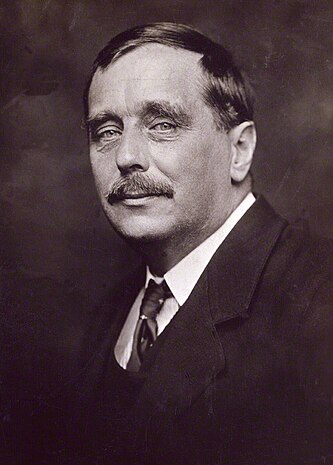



























About H. G. Wells
Herbert George Wells (September 21 1866 – August 13 1946) was a British writer most famous for his science fiction novels such as The War of the Worlds, The Invisible Man and The Time Machine; also for Kipps, The History of Mr. Polly and other social satires.
Best H. G. Wells Quotes
Shortest
Earliest
Explore our curated collection of the most famous and impactful H. G. Wells quotes.
“Our true nationality is mankind.”




“I had rather be called a journalist than an artist.”

“Man is an imperfect animal and never quite trustworthy in the dark.”
“He was inordinately proud of England, and he abused her incessantly.”

“All men, however highly educated, retain some superstitious inklings.”

“Heresies are experiments in man's unsatisfied search for truth.”
“Adapt or perish, now as ever, is Nature's inexorable imperative.”

“One of the darkest evils of our world is surely the unteachable wildness of the Good.”
“How small the vastest of human catastrophes may seem at a distance of a few million miles.”

“For crude classifications and false generalisations are the curse of all organised human life.”
“Humanity either makes, or breeds, or tolerates all its afflictions, great or small.”

H. G. Wells Quotes by Topic
Find exactly what you are looking for by browsing this categorized list of H. G. Wells quotes by topic.
H. G. Wells on Time 4 quotes
“There is no difference between Time and any of the three dimensions of Space except that our consciousness moves along it.”

H. G. Wells on Dimension 3 quotes
“There is no difference between Time and any of the three dimensions of Space except that our consciousness moves along it.”

H. G. Wells on Comet 3 quotes
“Ruling the calm spaciousness of that heaven was the great comet, now green-white, and wonderful for all who had eyes to see.”

H. G. Wells on Eugenics 2 quotes
“[N]o man shall be subjected to any sort of mutilation or sterilisation except with his own deliberate consent, freely given.”

H. G. Wells on French Revolution 2 quotes
“More lives were wasted by the British generals alone on the opening day of what is known as the Somme offensive of July, 1916 than in the whole French Revolution from start to finish.”

H. G. Wells on Vegetarianism 2 quotes
“A considerable number of people opposed it because it did not assert or impose on all mankind, some particular fad. Vegetarians, for example, wanted clauses to establish the legal rights of animals (pigs, etc).”

H. G. Wells on New world order (politics) 2 quotes
“Countless people, from maharajas to millionaires and from pukkha sahibs to pretty ladies, will hate the new world order, be rendered unhappy by the frustration of their passions and ambitions through its advent and will die protesting against it.”

H. G. Wells on Islam 2 quotes
“The Islamic teachings have left great traditions for equitable and gentle dealings and behavior, and inspire people with nobility and tolerance. These are human teachings of the highest order and at the same time practicable. These teachings brought into existence a society in which hard-heartedness and collective oppression and injustice were the least as compared with all other societies preceding it….Islam is replete with gentleness, courtesy, and fraternity.””

H. G. Wells on Kingdom of God 2 quotes
“It was not merely a moral and a social revolution that Jesus proclaimed; it is clear from a score of indications that his teaching had a political bent of the plainest sort. It is true that he said his kingdom was not of this world, that it was in the hearts of men and not upon a throne; but it is equally clear that wherever and in what measure his kingdom was set up in the hearts of men, the outer world would be in that measure revolutionized and made new. Whatever else the deafness and blindness of his hearers may have missed in his utterances, it is plain that they did not miss his resolve to revolutionize the world.”

H. G. Wells on Morality
“Moral indignation is jealousy with a halo.”
H. G. Wells on History
“Human history becomes more and more a race between education and catastrophe.”

What H. G. Wells Said About Others
Discover personal opinions H. G. Wells shared regarding contemporaries.
H. G. Wells on Ashoka 3 quotes
“In the history of the world there have been thousands of kings and emperors who called themselves "their highnesses," "their majesties," and "their exalted majesties" and so on. They shone for a brief moment, and as quickly disappeared. But Ashoka shines and shines brightly like a bright star, even unto this day.”
H. G. Wells on Buddha 2 quotes
“The fundamental teachings of Gautama, as it is now being made plain to us by study of original sources, is clear and simple and in the closest harmony with modern ideas. It is beyond all disputes the achievement of one of the most penetrating intelligence the world has ever known. Buddhism has done more for the advance of world civilization and true culture than any other influence in the chronicles of mankind.”

H. G. Wells on Francisco Franco
H. G. Wells on Thomas Henry Huxley
H. G. Wells on William Winwood Reade
“One book that has influenced the writer very strongly is Winwood Reade's Martyrdom of Man…It is still an extraordinarily inspiring presentation of human history as one consistent process.”

H. G. Wells on Max Aitken, 1st Baron Beaverbrook
“If Max gets to Heaven he won't last long. He will be chucked out for trying to pull off a merger between Heaven and Hell...after having secured a controlling interest in key subsidiary companies in both places, of course.”
H. G. Wells on Beatrice Webb
“Their first book, The Permanent Official, fills three plump volumes, and took them and their two secretaries upwards of four years to write. It is an amazingly good book, an enduring achievement. In a hundred directions the history and the administrative treatment of the public service was clarified for all time.”

H. G. Wells on John Galsworthy
“It seems to me that Justice, so far as the question of art goes, just establishes and vindicates you. (I didn't see Strife.) I've always opposed myself to your very austere method hitherto. I've not liked a sort of cold hardness in much of your work, but since it leads you at last to the quite tremendous force of the play—well, I give in.”
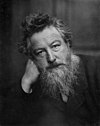
H. G. Wells on William Morris
“...above the confusion of these memories two figures remain distinct. Mr. Bernard Shaw, physically individualized with extraordinary decision, a frequent speaker, and always explicit and careful to make himself misunderstood; and the grand head, the rough voice, the sturdy figure, sedulously plain speech, and lovable bearing of William Morris.”
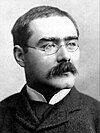
H. G. Wells on Rudyard Kipling
“...still more would I like to know about the brain history of Mr. Rudyard Kipling, whom also I have never met. He is to me the most incomprehensible of my contemporaries, with phases of real largeness and splendour and lapses to the quality of those mucky little sadists, Stalky and Co. ... He has an immense vogue in the British middle-class and upper-class home ; he is the patron saint of cadet corps masters, an inexhaustive fount of sham manly sentiment, and one of the most potent forces in the shrivelling of the British political imagination during the past third of a century.”
H. G. Wells on George Bernard Shaw
“The worst element in his mental make-up is a queer readiness to succumb to the poses of excessive virility. His soul goes down before successful force. He exalted the maker of enormous guns in Man and Superman; he has rejoiced in the worst claptrap of the Napoleonic legend; now he is striking attitudes of adoration towards the poor, vain, doomed biped who is making Rome horrible and ridiculous to all the world. When it comes to the torture of intelligent men, to vile outrages on old women, to the strangulation of all sane criticism and an orgy of claptrap more dreadful than its attendant cruelties, this vituperative anti-vivisectionist becomes an applauding spectator.”

H. G. Wells on Joseph Stalin
“I confess that I approached Stalin with a certain amount of suspicion and prejudice. A picture had been built up in my mind of a very reserved and self-centred fanatic, a despot without vices, a jealous monopolizer of power. [...] I still expected to meet a ruthless, hard—possibly doctrinaire—and self-sufficient man at Moscow; a Georgian highlander whose spirit had never completely emerged from its native mountain glen. Yet I had had to recognize that under him Russia was not being merely tyrannized over and held down; it was being governed and it was getting on. [...] All such shadowy undertow, all suspicion of hidden emotional tensions, ceased for ever, after I had talked to him for a few minutes. [...] I have never met a man more candid, fair and honest, and to these qualities it is, and to nothing occult and sinister, that he owes his tremendous undisputed ascendency in Russia.”

H. G. Wells on Simon Newcomb
“There is no difference between Time and any of the three dimensions of Space except that our consciousness moves along it. ...space, as our mathematicians have it, is spoken of as having three dimensions, which one may call Length, Breadth, and Thickness, and is always definable by reference to these planes, each at right angle to the others. But some philosophical people have been asking why three dimensions particularly—why not another direction at right angles to the other three?—and have even tried to construct a Four Dimensional geometry. Professor Simon Newcomb was expounding this to the New York Mathematical Society only a month or so ago. You know how on a flat surface, which has only two dimensions, we can represent a figure of a Three-Dimensional solid, and similarly they think that by models of three dimensions they could represent one of four—if they could master the perspective of the thing. See?”
H. G. Wells on Jesus
“This doctrine of the Kingdom of Heaven, which was the main teaching of Jesus, and which plays so small a part in the Christian creeds, is certainly one of the most revolutionary doctrines that ever stirred and changed human thought. It is small wonder if, the world of that time failed to grasp its full significance, and recoiled in dismay from even a half apprehension of its tremendous challenges to the established habits and institutions of mankind. It is small wonder if the hesitating convert and disciple presently went back to the old familiar ideas of temple and altar, of fierce deity and propitiatory observance, of consecrated priest and magic blessing, and these things being attended to reverted then to the dear old habitual life of hates and profits and competition and pride. For the doctrine of the Kingdom of Heaven, as Jesus seems to have preached it, was no less than a bold and uncompromising demand for a complete change and cleansing of the life of our struggling race, an utter cleansing, without and within.”

Quotes About H. G. Wells
Gain deeper perspective through quotes about H. G. Wells from others.
Brian Aldiss on H. G. Wells
“Wells is the Prospero of all the brave new worlds of the mind, and the Shakespeare of science fiction.”
Kingsley Amis on H. G. Wells

Margaret Atwood on H. G. Wells

Jacques Barzun on H. G. Wells
“Mr. Wells is not shrinking back to a mossy political liberalism; he is expressing the clear-eyed conclusions of one abreast with his own latest experience. He has seen it demonstrated all over Europe and Asia that however much the world wants order, it cannot get it by mere violence and the magic of symbols. He has seen that however splendid fanatical dogmatism may feel internally to the possessor, it is the quickest way to chaos externally.”

Marco Mamone Capria on H. G. Wells
“In 1933, Einstein's works were among those burned in the book bonfires organized by the Nazis throughout Germany, together with those of such different anti-fascist writers as Thomas and Heinrich Mann, Freud, Proust, Hemingway, H. G. Wells, Gide, Upton Sinclair, etc.”
Margaret Cole on H. G. Wells
“"H. G." in his lifetime inspired countless thousands of the eager self-immolatory young with the faith that freedom-with-democracy-and-Socialism could be realised "in our time," as the ILP used to say...He was the leaven – the anarchic, human leaven – which prevented, and still prevents, our movement from becoming a soulless organisation.”
Don D'Ammassa on H. G. Wells
“The influence of H. G. Wells on other science fiction writers is immeasurable. His work is widely known far beyond the boundaries of the genre, and to a great extent the creators of all novels and films of alien invasions, time travel, or invisibility are at least partly in his debt.”
T. S. Eliot on H. G. Wells 3 quotes
“Since the beginning of this war two men, whom we had thought of as slowly and unwillingly retiring from public life, have emerged into a glare of prominence. I mean Mr. Churchill and Mr. Wells. They must be nearly contemporary; they were both men of celebrity, I remember, when I was a freshman.”
Henry James on H. G. Wells

John Maynard Keynes on H. G. Wells
“What a debt every intelligent being owes to Bernard Shaw! What a debt also to H. G. Wells, whose mind seems to have grown up alongside his readers', so that, in successive phases, be has delighted us and guided our imaginations from boyhood to maturity.”

Erik von Kuehnelt-Leddihn on H. G. Wells
“"Progress" is for the convinced ochlocrats a consoling Utopia of madly increased comfort and technicism. This charming but dull vision was always the pseudoreligious consolation of millions of ecstatic believers in ochlocracy and in the relative perfection and wisdom of Mr. and Mrs. Averageman. Utopias in general are surrogates for heaven; they give a meager solace to the individual that his sufferings and endeavors may enable future generations to enter the chiliastic paradise. Communism works in a similar way. Its millennium is almost the same as that of ochlocracy. The Millennium of Lenin, the Millennium of Bellamy, the Millennium as represented in H. G. Wells's, "Of Things to Come," the Millennium of Adolf Hitler and Henry Ford — they are all basically the same; they often differ in their means to attain it but they all agree in the point of technical perfection and the classless or at least totally homogeneous society without grudge or envy.”

H. L. Mencken on H. G. Wells
“I have no hestitation whatever in saying that Wells, as he is, entertains me far more agreeably than Dickens. I know very well that the author of David Copperfield was a greater artist than the author of Mr. Polly, just as I know that the Archbishop of Canterbury is a more virtuous man than my good friend, Fred the Bartender, ; but all the same, I prefer Wells and Fred to Dickens and the Archbishop.”

Misattributed Quotes
Quotes mistakenly credited to H. G. Wells
About H. G. Wells
Herbert George Wells (September 21 1866 – August 13 1946) was a British writer most famous for his science fiction novels such as The War of the Worlds, The Invisible Man and The Time Machine; also for Kipps, The History of Mr. Polly and other social satires.