Vladimir Nabokov, in Herbert Gold, "Interview with Vladimir Nabokov". Reprinted in George Plimpton, Writers at Work: The Paris Review Interviews. Viking Press, 1976.
“
H.G. Wells, a great artist, was my favourite writer when I was a boy. The Passionate Friends, Ann Veronica, The Time Machine, The Country of the Blind, all these stories are far better than anything Bennett, or Conrad, or, in fact, any of Wells' contemporaries would produce. His sociological cogitations can be safely ignored, of course, but his romances and fantasies are superb.
— Vladimir Nabokov
What It Means
This is a placeholder explanation generated by the low-overhead model. It interprets "H.G. Wells, a great artist, was my favourite writer when I was a boy. The Passionate Friends, Ann Veronica, The Time Machine, The Country of the Blind, all these stories are far better than anything Bennett, or Conrad, or, in fact, any of Wells' contemporaries would produce. His sociological cogitations can be safely ignored, of course, but his romances and fantasies are superb." in the context of "Vladimir Nabokov, in Herbert Gold, "Interview with Vladimir Nabokov". Reprinted in George Plimpton, Writers at Work: The Paris Review Interviews. Viking Press, 1976." to mean that wisdom is timeless.

Source: Wikiquote: "H. G. Wells" (Quotes about Wells)
The 'What it means' explanation text was generated by Google Gemini Flash (accessed January 18, 2026). https://gemini.google.com/app
Tags
About H. G. Wells
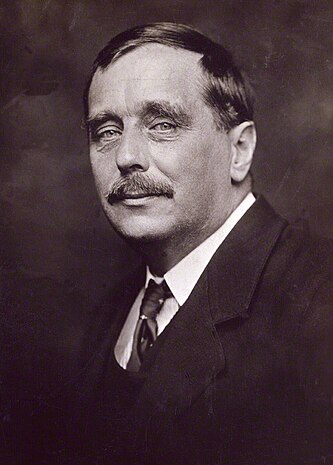
Herbert George Wells (September 21 1866 – August 13 1946) was a British writer most famous for his science fiction novels such as The War of the Worlds, The Invisible Man and The Time Machine; also for Kipps, The History of Mr. Polly and other social satires.
About H. G. Wells
Herbert George Wells (September 21 1866 – August 13 1946) was a British writer most famous for his science fiction novels such as The War of the Worlds, The Invisible Man and The Time Machine; also for Kipps, The History of Mr. Polly and other social satires.
View all quotes →