Link Copied!
Aurangzeb Quotes (1618-1707)
Emperor, King
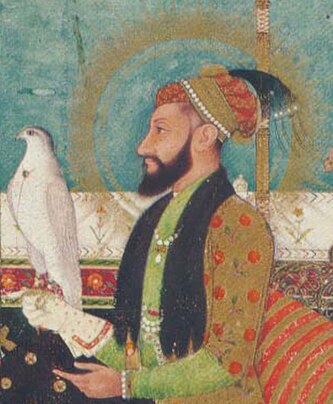




About Aurangzeb
Muhy-ud-Din Muhammad Aurangzeb Alamgir (4 November 1618 – 3 March 1707), more commonly known as Aurangzeb ("Jewel in the crown") or by his chosen imperial title Alamgir ("Conquerer of the World"), was the sixth Mughal Emperor, whose Islamic reign across most of the Indian subcontinent lasted from 1658 until his death in 1707.
Best Aurangzeb Quotes
Shortest
Earliest
Explore our curated collection of the most famous and impactful Aurangzeb quotes.

“An emperor ought to stand midway between gentleness and severity.”

“The demolition of a temple is possible at any time, as it cannot walk away from its place.”

“...I have committed numerous crimes, and know not with what punishments I may be seized...”
“I die happy for at least the world will be able to say that I have employed every effort to destroy the enemies of the Muhammedan faith.”

“The village of Satara near Aurangabad was my hunting-ground. Here on the top of a hill stood a temple with an image of Khande Rai. By God's grace I demolished it, and forbade the temple dancers (muzrlis) to ply their shameful trade.”
“I wish you to recollect that the greatest conquerors are not always the greatest kings. The nations of the earth have often been subjugated by mere uncivilized barbarians, and the most extensive conquests have, in a few short years, crumbled to pieces. He is the truly great king who makes it the chief business of his life to govern his subjects with equity.”
“The houses of this country (Maharashtra) are exceedingly strong and built solely of stone and iron. The hatchet-men of the Government in the course of my marching do not get sufficient strength and power (i.e., time) to destroy and raze the temples of the infidels that meet the eye on the way. You should appoint an orthodox inspector (darogha) who may afterwards destroy them at leisure and dig up their foundations.”

“The temple of Somnath was demolished early in my reign and idol worship (there) put down. It is not known what the state of things there is at present. If the idolaters have again taken to the worship of images at the place, then destroy the temple in such a way that no trace of the building may be left, and also expel them (the worshippers) from the place.”

“Wherefore should I not offer my congratulations? But the very fact of them being Sayyids, those fountains of felicity, demands heartly exertions in support of Islam and their ancestor Muhammad the Lord of Apostles. Let two Kaftans of honor for the two brothers be issued from my wardrobe and let them be sent with two swords, jewel-hilted and provided with pearl mounted belts, let Jamdat-ul-Mulk write much praise and congratulations when sending these presents.”
“It has been decided according to our Canon Law that long standing temples should not be demolished, but no new temple allowed to be built... Information has reached our . . . court that its environs and certain Brahmans who have the right of holding charge of the ancient temples there, and that they further desire to remove these Brahmans from their ancient office. Therefore, our royal command is that you should direct that in future no person shall in unlawful ways interfere with or disturb the Brahmans and other Hindus resident in those places.”
“In these days, information has reached our court that several people have, out of spite and rancour, harassed the Hindu residents of Banaras and nearby places, including a group of Brahmins who are in charge of ancient temples there. These people want to remove those Brahmins from their charge of temple-keeping, which has caused them considerable distress. Therefore, upon receiving this order, you must see that nobody unlawfully disturbs the Brahmins or other Hindus of that region, so that they might remain in their traditional place and pray for the continuance of the Empire.”
“Soul of my soul ... Now I am going alone. I grieve for your helplessness. But what is the use? Every torment I have inflicted, every sin I have committed, every wrong I have done, I carry the consequences with me. Strange that I came with nothing into the world, and now go away with this stupendous caravan of sin! ... Wherever I look I see only God. ... I have greatly sinned, and I know not what torment awaits me. ... Let not Muslims be slain and the reproach fall upon my useless head. I commit you and your sons to God’s care, and bid you farewell. I am sorely troubled. Your sick mother, Udaipuri, would fain die with me. ... Peace!”
“Answer me, sycophant, ought you not to have instructed me on one point at least, so essential to be known by a king; namely on the reciprocal duties between the sovereign and his subjects? Ought you not also to have foreseen that I might, at some future period, be compelled to contend with my brothers, sword in hand, for the crown, and for my very existence. Such, as you must well know, has been the fate of the children of almost every king of Hindustan. Did you ever instruct me in the art of war, how to besiege a town, or draw up an army in battle array? Happy for me that I consulted wiser heads than thine on these subjects! Go, withdraw to the village. Henceforth let no person know either who thou art, or what is become of thee.”

“I brought nothing into this world, and, except the infirmities of man, carry nothing out. I have a dread for my salvation, and with what torments I may be punished. Though I have strong reliance on the mercies and bounty of God, yet, regarding my actions, fear will not quit me; but, when I am gone, reflection will not remain. Come then what may, I have launched my vessel to the waves. Though Providence will protect the camp, yet, regarding appearances, the endeavours of my sons are indispensably incumbent. Give my last prayers to my grandson (Bidar Bakht), whom I cannot see, but the desire affects me. The Begum (his daughter) appears afflicted; but God is the only judge of hearts. The foolish thoughts of women produce nothing but disappointment. Farewell! Farewell! Farewell!”
“Peace be with you and yours, I am grown very old and weak, and my limbs are feeble. Many were around me when I was born, but now I am going alone. I know not why I am or wherefore I came into the world. I bewail the moments which I have spent forgetful of God’s worship. I have not done well by the country or its people. My years have gone by profitless. God has been in my heart, yet my darkened eyes have not recognized his light. Life is transient, and the lost moment never comes back. There is no hope for me in the future. The fever is gone: but only skin and dried flesh are mine. ... The army is confounded and without heart or help, even as I am: apart from God, with no rest for the heart. They know not whether they have a King or not. Nothing brought I into this world, but I carry away with me the burthen of my sins. I know not what punishment be in store for me to suffer. Though my trust is in the mercy and goodness of God, I deplore my sins. When I have lost hope in myself, how can I hope in other! – Come what will, I have launched my bark upon the waters. ... Farewell! Farewell! Farewell!”

“Health to thee! My heart is near thee. Old age is arrived: weakness subdues me, and strength has forsaken all my members. I came a stranger into this world, and a stranger I depart. I know nothing of myself, what I am, and for what I am destined. The instant which passed in power, has left only sorrow behind it. I have not been the guardian and protector of the empire. My valuable time has been passed vainly. I had a patron in my own dwelling (conscience), but his glorious light was unseen by my dim sight. Life is not lasting; there is no vestige of departed breath, and all hopes from futurity are lost. The fever has left me, but nothing of me remains but skin and bone. My son (Kam Baksh), though gone towards Bijapur, is still near; and you, my son, are yet nearer. The worthy of esteem, Shah Alam, is far distant; and my grandson (Azim-ush-Shan), by the orders of God, is arrived near Hindustan. The camp and followers, helpless and alarmed, are, like myself, full of affliction, restless as the quicksilver. Separated from their lord, they know not if they have a master or not.”
Aurangzeb Quotes by Topic
Find exactly what you are looking for by browsing this categorized list of Aurangzeb quotes by topic.
Aurangzeb on Bijapur 3 quotes
“'The fall and capture of Bijapur was similarly solemnized though here the destruction of temples was delayed for several years, probably till 1698.”

Aurangzeb on Religious policy of the Mughals after Akbar 3 quotes
“"The Emperor said to Shaikh Nizam that his prayers were not having any effect. What could be the reason for this ? The Shaikh said, 'The reason is that a large number of Hindus are serving as ahlikhidmat (officials and officers) and as musahibs (courtiers) and they are ever (seen) in the Royal presence, and, as a result, the prayers do not have any effect'. The Emperor ordered that it is necessary that the Musalmans be appointed to serve in place of the Hindus."”

Aurangzeb on Ahmedabad 2 quotes
“In Ahmadabad and other parganas of Gujarat, in the days before my accession, temples were destroyed by my order. They have been repaired and idol worship has been resumed. Carry out the former orders.”

Aurangzeb on Dwarka
Aurangzeb on Mewar
Aurangzeb on Iconoclasm
“The demolition of a temple is possible at any time, as it cannot walk away from its place.”

Aurangzeb on Chittor Fort
“On Monday, the 22nd February [1680]/1st Safar the Emperor went to view Chitor; by his order sixty-three temples of the place were destroyed.”

Aurangzeb on Jaipur
Aurangzeb on Ujjain
Aurangzeb on Hyderabad
“On the capture of Golkonda, the Emperor appointed Abdur Rahim Khan as Censor of the city of Haiderabad with orders to put down infidel practices and (heretical) innovations and destroy the temples and build mosques on their sites.”

Aurangzeb on Cattle slaughter in India
“The Emperor, summoning Muhammad Khalil and Khidmat Rai, the darogha of hatchet-men' ordered them to demolish the temple of Pandharpur, and to take the butchers of the camp there and slaughter cows in the temple' It was done (1705).”

Aurangzeb on Somnath temple
“The temple of Somnath was demolished early in my reign and idol worship (there) put down. It is not known what the state of things there is at present. If the idolaters have again taken to the worship of images at the place, then destroy the temple in such a way that no trace of the building may be left, and also expel them (the worshippers) from the place.'”
What Aurangzeb Said About Others
Discover personal opinions Aurangzeb shared regarding contemporaries.
Aurangzeb on Audrey Truschke 2 quotes
“Shivaji’s return to insurgency was devastating for the Mughals. Beginning in 1670 Shivaji plundered Surat and other places repeatedly.”

Aurangzeb on Mahmud of Ghazni
“Sültán Mahmüd-may God forgive his crimes-did not allow half-hearted religious men and heretics to enter his court, nay not even his kingdom, so that other people might not be misled by seeing such persons in the form of the dervish, and they themselves might have no power to mislead others.”
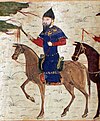
Aurangzeb on Dara Shukoh
““So long as you held the reins of government I never did anything without your permission, nor did I ever step beyond my jurisdiction. During your illness Dara usurped all power, girt up his loins to promote Hinduism and destroy Islam, and acted as king, totally setting you aside. The government fell into disorder... . My march on Agra was not due to a rebellious spirit, but to a desire to put an end to Dara’s usurpation, his lapse from Islam, and his exaltation of idolatry throughout the empire.... I was compelled, out of regard for the next world, to take up the perilous load of the crown, from sheer necessity and not from free choice, for restoring peace and the rules of Islam in the realm.””
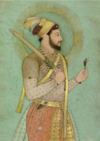
Quotes About Aurangzeb
Gain deeper perspective through quotes about Aurangzeb from others.
Muhammad Akbar on Aurangzeb 2 quotes
“Verily, the guide and teacher of this path [of rebellion against, a reigning father] is Your Majesty ; others are merely following your footsteps. How can the path which Your Majesty chose to follow can be called 'the path of ill-luck'? My fathered bartered away the garden of Eden for two grains of wheat; I shall be an unworthy son if I do not sell it for a grain of barley!”
Akhbarat on Aurangzeb 3 quotes
“The Emperor learnt from a secret news writer of Delhi that in Jaisinghpura Bairagis used to worship idols, and that the Censor on hearing of it had gone there, arrested Sri Krishna Bairagi and taken him with 15 idols away to his house; then the Rajputs had assembled flocked to the Censor's house, wounded three footmen of the Censor and tried to seize the Censor himself; so that the latter set the Bairagi free and sent the copper idols to the local subahdar.'...”
Inscription on mosque on the right hand side of the GaNeša Gate on Aurangzeb
“In the reign of the great Prince Ãlamgîr, Like the full shining moon, The enlightener of the world, Praise be to God that this happy place, Was by Motamid Khãn completed as an alms. It was the idol temple of the vile Gwãlî, He made it a mosque, like a mansion of paradise. .... He closed the idol temple: Exclamations rose from earth to heaven, When the light put far away the abode of darkness,”
François Bernier on Aurangzeb
“[After commenting disapprovingly on 'strange' Hindu beliefs and rituals regarding eclipses, Bernier remarks:] The Great Mogol, though a Mahometan, permits these ancient and superstitious practices; not wishing, or not daring, to disturb the Gentiles in the free exercises of their religion.”

Inscription on Mosque at Bodhan on Aurangzeb
““In obedience to the commandment of the Almighty God, the Lord of both the worlds; and in love of… the exalted Prophet: During the reign of Shãhjahãn, the king of the seven climes, the viceregent of God (lit. Truth), the master of the necks of people… the benevolent and generous Prince Aurangzeb, whose existence is a blessing of the Merciful God on people: He built a house for worship with (all) the qualities of heaven: after the site has been previously occupied by the temple of infidels…””
Kanzul-Mahfuz on Aurangzeb
“In the city of Agra there was a large temple, in which there were numerous idols, adorned and embellished with precious jewels and valuable pearls. It was the custom of the infidels to resort to this temple from far and near several times in each year to worship the idols, and a certain fee to the Government was fixed upon each man, for which he obtained admittance. As there was a large congress of pilgrims, a very considerable amount was realized from them, and paid into the royal treasury. This practice had been observed to the end of the reign of the Emperor Shah Jahan, and in the commencement of Aurangzeb's government; but when the latter was informed of it, he was exceedingly angry and abolished the custom. The greatest nobles of his court represented to him that a large sum was realized and paid into the public treasury, and that if it was abolished, a great reduction in the income of the state would take place. The Emperor observed, 'What you say is right, but I have considered well on the subject, and have reflected on it deeply; but if you wish to augment the revenue, there is a better plan for attaining the object by exacting the jizya. By this means idolatry will be suppressed, the Muhammadan religion and the true faith will be honoured, our proper duty will be performed, the finances of the state will be increased, and the infidels will be disgraced.' 'This was highly approved by all the nobles; and the Emperor ordered all the golden and silver idols to be broken, and the temple destroyed.”
Muntakhab-al Lubab on Aurangzeb
“Aurangzeb ordered the temples of the Sikhs to be destroyed and the guru's agents (masands) for collecting the tithes and presents of the faithful to be expelled from the cities.”
Ali Muhammad Khan on Aurangzeb
“During the Subedari of religious-minded, noble prince, vestiges of the Temple of Chintaman situated on the side of Saraspur built by Satidas jeweller, were removed under the Prince's order and a masjid was erected on its remains. It was named Quwwat-ul-Islam.”

Farman of on Aurangzeb
“As it has come to His Majesty's knowledge that some inhabitants of the mahals appertaining to the province of Gujarat have (again) built the temples which had been demolished by imperial order before his accession... Therefore His Majesty orders that the formerly demolished and recently restored temples should be pulled down... The Emperor ordered the destruction of the Hateshwar temple at Vadnagar, the special guardian of the Nagar Brahmans [1693].... Salih Bahadur was sent to pull down the temple of Malarna (1669).”
Maasir-i-alamgiri on Aurangzeb 2 quotes
“As his blessed nature dictated, he was characterized by perfect devotion to the rites of the Faith; he followed the teaching of the great Imam. Abu Hanifa (God be pleased with him!), and established and enforced to the best of his power the five foundations of Islam. Through the auspices of his hearty endeavour, the Hanafi creed (i.e., the Orthodox Sunni faith) has gained such strength and currency in the great country of Hindustan as was never seen in the times of any of the preceding sovereigns. By one stroke of the pen, the Hindu clerks (writers) were dismissed from the public employment. Large numbers of the places of worship of the infidels and great temples of these wicked people have been thrown down and desolated. Men who can see only the outside of things are filled with wonder at the successful accomplishment of such a seemingly difficult task. And on the sites of the temples lofty mosques have been built.”
Mir-at-i 'alam on Aurangzeb
“Hindu writers have been entirely excluded from holding public offices, and all the worshipping places of the infidels and great temples of these infamous people have been thrown down and destroyed in a manner which excites astonishment at the successful completion of so difficult a task. His Majesty personally teaches the sacred kalima to many infidels with success. All the mosques in the empire are repaired at public expense. Imama, criers to the daily prayers, and readers of the khutba, have been appointed to each of them, so that a large sum of money has been and is still laid out in these disbursements.”
Futuhat-i-‘Alamgiri of Ishwardas Nagar on Aurangzeb
““When the imperial army was encamping at Mathura, a holy city of the Hindus, the state of affairs with regard to temples of Mathura was brought to the notice of His Majesty. Thus, he ordered the faujdar of the city, Abdul Nabi Khan, to raze to the ground every temple and to construct big mosques (over their demolished sites)."”
Letter on Aurangzeb
“Such were the benevolent intentions of your ancestors. Whilst they pursued these great and generous principles, wheresoever they directed their steps, conquest and prosperity went before them; and then they reduced many countries and fortresses to their obedience. During your majesty’s reign, many have been alienated from the empire, and further loss of territory must necessarily follow, since devastation and rapine now universally prevail without restraint. Your subjects are trampled under foot, and every province of your empire is impoverished, depopulation spreads, and difficulties accumulate. ... If Your Majesty places any faith in those books by distinction called divine; you will there be instructed that God is the God of all mankind, not the God of Muhammadans alone. The Pagan and the Musalman are equally in His presence. Distinctions of colour are of his ordination. It is He who gives existence. In your temples, to His name the voice is raised in prayer; in a house of images, when the bell is shaken, still He is the object of adoration. To vilify the religion or customs of other men is to set at naught the pleasure of the Almighty. When we deface a picture we naturally incur the resentment of the painter; and justly has the poet said, “Presume not to arraign or scrutinize the various works of power divine.” In fine, the tribute you demand from the Hindus is repugnant to justice; it is equally foreign from good policy, as it must impoverish the country; moreover, it is an innovation and an infringement of the laws of Hindostan.”
Chhatra-prakāsa’ on Aurangzeb
““From the time that Ourungzeb ascended the throne, a great persecution of the Hindoos commenced : their temples were pulled down; their places of religious resort destroyed; their images mutilated; and a tax was levied on every house. The Rajpoots of the adjacent country were conquered, made obedient to the Emperor, and powerful armies were against those who resisted his commands. All were reduced to submission except one Raja, named Sheo Raj, who set a noble example of heroism and independence. “The power and authority of the Emperor had been generally acknowledged and established, the temples and holy places of the Hindoos pulled down, and their hearts trembled at beholding the sacrilegious destruction of all they held sacred and dear; for, an impenal mandate had been received by Fidaee Khan, stating, that ‘in the city of Oorchha the Hindoos practiced the rites of idolatry, sounding the Sunkh, ringing bells, making offerings to the manes of deceased ancestors, putting marks on their foreheads, wearing necklaces, and conducting themselves with contumely, pride, and presumption; that by the toleration of such rites, infidelity remained in the world; that the sound of the Sunkh prevented Moohummudans going to heaven; and that it had therefore become expedient to suppress those customs, and to decree that their temples should be destroyed, and mosques built on their sites; that if the temples were new or repaired, their upper parts should be demolished, and minarets erected, in order that they might become mosques for Mohummudan worship; that Moollahs should be appointed to read in them the glorious Qooran, pray morning and evening with a loud voice, and that Qazees should be nominated for the administration of justice; for with the equity of the Qazee God is well pleased;’ it being obvious, that when their temples no longer existed, their faith would dwindle away. On the receipt of this decree, Fidaee Khan prepared to carry it into execution. Apprehending, however, that the Boondelas would assemble in defence of their religion, he collected the imperial forces, amounting to eighteen thousand men; and vowing the destruction of the infidels, should they oppose the imperial mandate, unfurled his standard, and encamped at Dhoom Ghaut.””
Nicolaas de Graaff on Aurangzeb
“In the month of January, all the Governors and native officers received an order from the great Mughal prohibiting the practice of pagan religion throughout the country and closing down all the temples and sanctuaries of idol worshippers, in the hope that some pagans would embrace the Muslim religion.”
Source on Aurangzeb 5 quotes
““When it had come to the knowledge of the Emperor that many rich Gujarati banias had built temples within their homes to perform their devotions, in his religious fervour, he ordered that the Governors of the province should carry out an inspection. All the temples in the cities and villages had been destroyed. Now these inner sanctums were also to be laid low and the least sign of the practice of the Hindu religion was to be wiped out. The numbers of this community, particularly at Hyderabad and Cambay where they were to be found in large numbers, were greatly alarmed at these instructions. It was said that the banias managed to circumvent the Mughal orders by giving presents to the Governors who thereupon took their inspection tours very lightly.” ( p. 914)”
Francois Martin . ‘India on Aurangzeb
““Yachappa Nayak, the Hindu noble to whom I have referred earlier in my narrative, on seeing that the Mughal army after repeated orders from the Emperor, was bent on the destruction of the Hindu temples, left Mughal service and entered the territory of Gingee with his men. From there, he wrote to all the Hindu Princes, urging them to unite against the enemy of their community and religion.” ( p. 1256)”
Jean de Thévenot on Aurangzeb
““Santidas, Pagod, The Ceremonie of King Auranzev, for converting a Pagod into a mosque. Amedabad being inhabited also by a great number of Heathens, there are Pageds, or Idol-Temples in it. That which was called the Pagod of Santidas was the chief, before Auranzeb converted it into a Mosque. When he performed the Ceremonie, he caused a Cow to be killed in the place, knowing very well, that after such an Action, the Gentiles according to their Law, could worship no more therein. All round the Temple there is a Cloyster furnished, with lovely Cells, beautified with Figures of Marble in relief, representing naked Women sitting after the Oriental fashion. The inside Roof of the Mosque is pretty enough, and the Walls are full of the Figures of Men and Beasts; but Auranzeb, who hath always made 2 (to) shew of an affected Devotion, which at length raised him to the Throne, caused the Noses of all these Figures which added a great deal of Magnificence to that Mosque, to be beat off.” (Part III, p. 10)”

Sarkar on Aurangzeb
““The temple of Chintaman, situated close to Sarash-pur, and built by Sitadas jeweller, was converted into a mosque named Quuat-ul-islam by order of the Prince Aurangzib, in 1645.” (Mirat-i-Ahmadi, 232.) The Bombay Gazetteer, vol. I. pt, I. p. 280, adds that he slaughtered a cow in the temple, but Shah Jahan ordered the building to be restored to the Hindus.”
Inscription on Jãmi‘ Masjid on Aurangzeb
““In the name of Allãh, the Beneficent, the Merciful. There is no god except Allãh. Muhammad is His Prophet, verily. In the just reign of ‘Ãlamgîr, the king who is the asylum of Faith (and) whose universal generosity makes the sea and mine shame-stricken, one of his devoted servants, Muhammad Ashraf of god faith, saw a place where there was a temple. Like Khalîl (Prophet Abraham), he broke the temple at the command of God, and arranged for the construction of a very steadfast mosque. Year (AH) one thousand and seventy-eight” (AH 1078 = AD 1667).”
Palamau on Aurangzeb
“In 1661 Aurangzeb in his zeal to uphold the law of Islam sent orders to his Viceroy of Bihar, Daud Khan, to conquer Palamau. In the military operations that followed many temples were destroyed...Towards the end of the same year when Mir Jumla made a war on the Raja of Kuch Bihar, the Mughals destroyed many temples during the course of, their operations. Idols were broken and some temples were converted into mosques.”
Umurat-i-Hazur Kishwar-Kashai on Aurangzeb
“It was reported to the Emperor (Aurangzeb) that in the Temple of Keshava Rai at Mathura, there was a stone railing presented by ‘Bishukoh’ (one without dignity i.e. Prince Dara, Aurangzeb’s elder brother). On hearing it, the Emperor observed, “In the religion of the Musalmans, it is improper even to look at a Temple and this Bishukoh had installed this kathra (barrier railing). Such an act is totally unbecoming of a Musalman. This railing should be removed (forthwith).””
About Aurangzeb
Muhy-ud-Din Muhammad Aurangzeb Alamgir (4 November 1618 – 3 March 1707), more commonly known as Aurangzeb ("Jewel in the crown") or by his chosen imperial title Alamgir ("Conquerer of the World"), was the sixth Mughal Emperor, whose Islamic reign across most of the Indian subcontinent lasted from 1658 until his death in 1707.