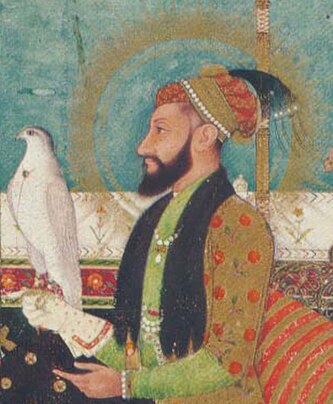
“In the name of Allãh, the Beneficent, the Merciful. There is no god except Allãh. Muhammad is His Prophet, verily. In the just reign of ‘Ãlamgîr, the king who is the asylum of Faith (and) whose universal generosity makes the sea and mine shame-stricken, one of his devoted servants, Muhammad Ashraf of god faith, saw a place where there was a temple. Like Khalîl (Prophet Abraham), he broke the temple at the command of God, and arranged for the construction of a very steadfast mosque. Year (AH) one thousand and seventy-eight” (AH 1078 = AD 1667).
What It Means
This is a placeholder explanation generated by the low-overhead model. It interprets "“In the name of Allãh, the Beneficent, the Merciful. There is no god except Allãh. Muhammad is His Prophet, verily. In the just reign of ‘Ãlamgîr, the king who is the asylum of Faith (and) whose universal generosity makes the sea and mine shame-stricken, one of his devoted servants, Muhammad Ashraf of god faith, saw a place where there was a temple. Like Khalîl (Prophet Abraham), he broke the temple at the command of God, and arranged for the construction of a very steadfast mosque. Year (AH) one thousand and seventy-eight” (AH 1078 = AD 1667)." in the context of "Inscription on Jãmi‘ Masjid in Akot, Maharashtra. Epigraphia Indica - Arabic and Persian Supplement, 1963, p. 54." to mean that wisdom is timeless.
Tags
About Aurangzeb