Link Copied!
Johann Gottlieb Fichte Quotes (1762-1814)
Philosopher
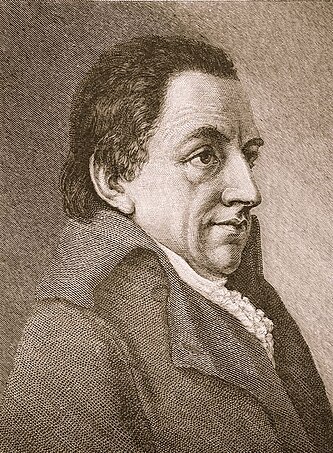
About Johann Gottlieb Fichte
Johann Gottlieb Fichte (19 May 1762 – 27 January 1814) was a German philosopher, who was one of the founding figures of the philosophical movement known as German idealism, a movement that developed from the theoretical and ethical writings of Immanuel Kant.
Best Johann Gottlieb Fichte Quotes
Shortest
Earliest
Explore our curated collection of the most famous and impactful Johann Gottlieb Fichte quotes.
“Who am I? Subject and object in one — contemplating and contemplated, thinking and thought of. As both must I have become what I am.”
“Let us apply these principles to adultery. The state can no more prohibit it or punish it by law than any other illegitimate satisfaction of the sexual impulse.”

“The infinitely smallest part of space is always a space, something endowed with continuity, not at all a mere point or the boundary between specified places in space.”
“By means of the new education we want to mould the Germans into a corporate body, which shall be stimulated and animated in all its individual members by the same interest.”

“Humanity may endure the loss of everything: all its possessions may be torn away without infringing its true dignity; — all but the possibility of improvement.”


“Instinct is blind;—a consciousness without insight. Freedom, as the opposite of Instinct, is thus seeing, and clearly conscious of the grounds of its activity.”


“Each individual imagines that he can exist, live, think, and act for himself, and believes that he himself is the thinking principle of his thoughts; whereas in truth he is but a single ray of the ONE universal and necessary Thought.”
“Am I a free agent, or am I merely the manifestation of a foreign power? Neither appear sufficiently well founded.By the most courageous resolve of my life am I reduced to this! what Power can save me from it, from myself?”

“The divine life that underlies all appearance reveals itself never as a fixed and known entity, but as something that is to be; and after it has become what it was to be, it will reveal itself again to all eternity as something that is to be.”

“An infirmity which affects the whole race, is no proper object for the scorn of an individual who belongs to that race, and who, before he could expose it, must himself have been its slave.”
“As Being and Life are one and the same, so are Death and Nothingness one and the same. But there is no real Death and no real Nothing ness, as we have already said. There is, however, an Apparent Life, and this is the mixture of life and death, of being and nothingness.”

“Every other art,—as poetry, music, painting,—may be practised without the process showing forth the rules according to which it is conducted ;—but in the self-cognizant art of the philosopher, no step can be taken without declaring the grounds upon which it proceeds.”
“I am excluded from the possession of a determined object, not through the will of the other, but only through my own free-will. If I had not excluded myself, I should not be excluded. But I must exclude myself from something in virtue of the Conception of Rights. ** P. 182”
“It is so by nature that the plant will develop with regularity, that the animal will move purposefully, and that human beings will think. Why should I take exception to recognizing also the last as the expression of an original force of nature, as I do the first and the second?”

“Science raises itself above all Ages and all Times, embracing and apprehending the ONE UNCHANGING TIME as the higher source of all Ages and Epochs, and grasping that vast idea in its free, unbounded comprehension.”
“Wenn ich nur dasjenige weiß, und von ihm überzeugt bin, was ich selbst gefunden, – nur dasjenige wirklich kenne, was ich selbst erfahren habe, so kann ich in der That nicht sagen, daß ich über meine Bestimmung das Geringste wisse; ich weiß blos, was Andre darüber zu wissen behaupten.”
“On condition that you protect my rights, I will protect your rights. How, then, does some party obtain the right to claim the protection of the other? Evidently, by actually protecting the rights of the other. But if this is so, no party will ever obtain a strictly legal claim to the protection of the other.”

“No nation which has sunk into this state of dependence can raise itself out of it by the means which have usually been adopted hitherto. Since resistance was useless to it when it was still in possession of all its powers, what can such resistance avail now that it has been deprived of the greater part of them?”
“The new education must consist essentially in this, that it completely destroys freedom of will in the soil which it undertakes to cultivate, and produces on the contrary strict necessity in the decisions of the will, the opposite being impossible. Such a will can henceforth be relied on with confidence and certainty.”
“All life, Omnipotent Father, is thy life! and the eye of religion alone penetrates to the realms of truth and beauty. I am related to thee, and what I behold around me is related to me; all is full of animation, and looks towards me with bright spiritual eyes, and speaks with spirit voices to my heart.”

“Of what I am, I know no more than that I am, but here no tie is necessary between subject and object. My own being is this tie, I am at once the subject knowing, and the object known of; and this reflection or return of the knowledge on itself is what I designate by the term I, if I have any determinate meaning.”
Johann Gottlieb Fichte Quotes by Topic
Find exactly what you are looking for by browsing this categorized list of Johann Gottlieb Fichte quotes by topic.
Johann Gottlieb Fichte on Vocation 5 quotes
“There are many tendencies and powers in man, and it is the vocation of each individual to cultivate all his powers, so far as he is able to do so.”

Johann Gottlieb Fichte on Will (philosophy) 2 quotes
“Will is the immediate consciousness of the activity of the inward powers of our Nature. The immediate consciousness of an effort, an aspiration of these powers which is not yet activity, because restrained by opposing forces — this is inclination or desire; the struggle of contending forces is irresolution; the victory of one is the resolution of the will.”

Johann Gottlieb Fichte on Knowledge 2 quotes
“Upon the progress of knowledge the whole progress of the human race is immediately dependent: he who retards that, hinders this also. And he who hinders this, — what character does he assume towards his age and posterity? Louder than with a thousand voices, by his actions he proclaims into the deafened ear of the world present and to come — "As long as I live at least, the men around me shall not become wiser or better; — for in their progress I too, notwithstanding all my efforts to the contrary, should be dragged forward in some direction; and this I detest I will not become more enlightened, — I will not become nobler. Darkness and perversion are my elements, and I will summon all my powers together that I may not be dislodged from them."”

Johann Gottlieb Fichte on Reflection
“The action of freedom, through which the form turns into the form of the form as its content and returns into itself, is called "reflection."”
Johann Gottlieb Fichte on Philosophy
“Every other art,—as poetry, music, painting,—may be practised without the process showing forth the rules according to which it is conducted;—but in the self-cognizant art of the philosopher, no step can be taken without declaring the grounds upon which it proceeds.”

Johann Gottlieb Fichte on Love
“Love divides an existence which is in itself dead, as it were into a two-fold being, holding it up before its own contemplation, — and thereby makes it an Ego or Self, which beholds and is cognizant of itself; and in this personality lies the root of all Life. Love again reunites and intimately binds together this divided personality, which, without Love, would regard itself coldly and without interest. This latter unity, within a duality which is not thereby destroyed but eternally remains subsistent, is Life itself; as every one who strictly considers these ideas and combines them together must at once distinctly perceive.”

Johann Gottlieb Fichte on Intelligibility
“Thus then does the Doctrine of Knowledge, which in its substance is the realisation of the absolute Power of intelligising which has now been defined, end with the recognition of itself as a mere manifestation in a Doctrine of Wisdom, although indeed a necessary and indispensable means to such a Doctrine: a manifestation, the sole aim of which is, with the Knowledge thus acquired, — by which knowledge alone a Will, clear and intelligible to itself and reposing upon itself without wavering or perplexity, is possible, — to return wholly into Actual Life; — not into the Life of blind and irrational Instinct which we have laid bare in all its nothingness, but into the Divine Life which shall become visible to us.”

Johann Gottlieb Fichte on Freedom
“The Age of Empty Freedom ... does not know that man must first through labour, industry, and art, learn how to know; but it has a certain fixed standard for all conceptions, and an established Common Sense of Mankind always ready and at hand, innate within itself and there present without trouble on its part;—and those conceptions and this Common Sense are to it the measure of the efficient and the real. It has this great advantage over the Age of Science, that it knows all things without having learned anything; and can pass judgment upon whatever comes before it at once and without hesitation,—without needing any preliminary evidence:—'That which I do not immediately comprehend by the conceptions which dwell within me, is nothing,'—says Empty Freedom.”

Johann Gottlieb Fichte on Modernity
“The Age of Empty Freedom ... does not know that man must first through labour, industry, and art, learn how to know; but it has a certain fixed standard for all conceptions, and an established Common Sense of Mankind always ready and at hand, innate within itself and there present without trouble on its part;—and those conceptions and this Common Sense are to it the measure of the efficient and the real. It has this great advantage over the Age of Science, that it knows all things without having learned anything; and can pass judgment upon whatever comes before it at once and without hesitation,—without needing any preliminary evidence:—'That which I do not immediately comprehend by the conceptions which dwell within me, is nothing,'—says Empty Freedom.”

Quotes About Johann Gottlieb Fichte
Gain deeper perspective through quotes about Johann Gottlieb Fichte from others.
Edwin Arthur Burtt on Johann Gottlieb Fichte
“Berkeley, Hume, Kant, Fichte, Hegel, James, Bergson all are united in one earnest attempt, the attempt to reinstate man with his high spiritual claims in a place of importance in the cosmic scheme.”
Hermann Weyl on Johann Gottlieb Fichte 3 quotes
“We cannot hope to give here a final clarification of the essence of fact, judgement, object, property; this task leads into metaphysical abysses; about these one has to seek advice from men whose name cannot be stated without earning a compassionate smile—e.g. Fichte.”
About Johann Gottlieb Fichte
Johann Gottlieb Fichte (19 May 1762 – 27 January 1814) was a German philosopher, who was one of the founding figures of the philosophical movement known as German idealism, a movement that developed from the theoretical and ethical writings of Immanuel Kant.