Link Copied!
Bal Gangadhar Tilak Quotes (1856-1920)
Author, Leader, Playwright
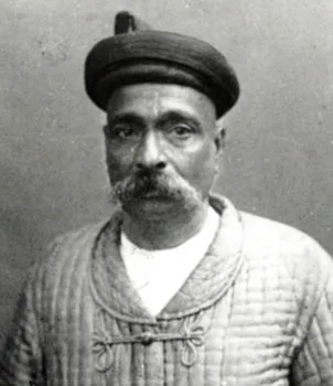

About Bal Gangadhar Tilak
Bal Gangadhar Tilak (23 July 1856 – 1 August 1920), born Keshav Gangadhar Tilak, was a popular leader of the people who fought for Indian independence during the Indian Independence Movement. He was a journalist, teacher, social reformer, playwright, and lawyer. He was also a political extremist. He founded the Home Rule League in 1915. He was given the epithets "Father of the Indian unrest" by the British colonial authorities and “Father of Indian Consciousness”. Tilak was also addressed by the honorific "Lokmanya" (meaning: "Accepted by the people as their leader). A coin bearing Lokmanya's image has been issued.
Best Bal Gangadhar Tilak Quotes
Shortest
Earliest
Explore our curated collection of the most famous and impactful Bal Gangadhar Tilak quotes.
“Freedom is my birthright. I must have it.”


“...its ultimate origin is still lost in geological antiquity.”
“If God is put up with untouchability, I will not call him God.”

“The compilation of hymns into Sanhitas also appears to be a work of the early part of this period.”

“It may be providence's will that the cause I represent may prosper more by my suffering than by my remaining free.”

“...for destroying the harmony in the villages by interfering on behalf of the peasants and betraying the moneylender.”
“"To use the words of Max Muller, we must, in such cases, 'keep our preconceived notions of what people call primitive humanity in abeyance for a time'".”

“The Vedic hymns were sung in post glacial times (8,000BC) by poets who had inherited their knowledge or contents thereof from their antediluvian forefathers.”
“Progress is implied in independence. Without self-government neither industrial progress is possible, nor the educational scheme will be useful to the nation…To make efforts for India’s freedom is more important than social reforms.”

“It was Valentine Chirol, a Britisher, who gave Tilak the meaningful sobriquet ‘the father of Indian unrest”.... Lokmanya Tilak thundered “Swaraj is my birth-right and I will have it’ and blazed the path of Karma Yoga to achieve it.”
“(A non-Hindu) may not perhaps go with me to the same temple to pray to God, perhaps there may be no intermarriage and inter-dining between him and me. All these are minor questions. But, if a man is exerting himself for the good of India, and takes measures in that direction, I do not consider him an alien.”
“Lack of rain indeed causes famine but it is also true that the people of India have not the strength to fight evil. The poverty of India is wholly due to the present rule. India is being bled till only the skeleton remains…all the vitality of the people is being sapped and we are left in an emaciated state of slavery.”

“It has been shown that Vedic religion and worship are both interglacial; and though that we can not trace their ultimate origin yet the Arctic character of the Vedic deities fully proves that the powers of nature represented by them has been already clothed with divine attributives by the primitive Aryans in their original home round about the North Pole, or the Meru of the Puranas.”
“The curriculum of the girl’s school should be vernacular, needlework and sanitation...teaching women amounted to the loss of nationality... English education had [a] de-womanizing impact on women by denying them a happy worldly life...hurt the sentiments of the Hindus…teaching Hindu women to read English would ruin their precious traditional virtues and would make them immoral and subordinate.”

“Such consistent refusal to consider a greater antiquity for the Vedic texts, and to suggest a foreign origin whenever the occasion presents itself, has been a source of puzzlement and resentment for many Indian scholars such as Tilak (n.d.a), who "cannot understand why scholars should hesitate to assign the Vedic works to the same period of antiquity which they allow to the Chinese and the Egyptians" (56).”
“It has been said, gentlemen, by some that we Hindus have yielded too much to our Mohammedan brethren. I am sure I represent the sense of the Hindu community all over India when I say that we could not have yielded too much. I would not care if the rights of self-government are granted to the Mohammedan community only... When we have to fight against a third party — it is a very important thing that we stand on this platform united, united in race, united in religion, united as regards all different shades of political creed.”

“In the early geological ages, when the Alps were low and the Himalayas not yet upheaved... from geological evidence of fossil and fauna, we find that an equitable climate and uniform climate prevailed over the whole surface of the globe. It is now conclusively proved that before the advent of glacial and interglacial periods luxurious forest vegetation... flourished in the high latitude of the polar regions where the Sun goes below the horizon from November till March, thus showing that a warm climate prevailed in the Arctic regions in those days”
“Shatham prati shaathyam, ‘Wickedness to the wicked.’... Meet boldness with boldness; impertinence by impertinence must be met; villainy by villainy must be met.... Therefore, my friend, wise men have everywhere mentioned exceptions to the principle of forgiveness.... has made it clear that this rule should not be followed in a society, where there do not exist persons who follow the other religious principle, namely, others should not cause harm to us, which is the corollary from this first principle.... Therefore, just as the principle of non-violence is not violated by killing an evil-doer, so also the principle of self-identification [of seeing the same, Eternal Self in all] or of non-enmity, which is observed by saints, is in no way affected by giving condign punishment to evil-doers.... And the summary of the entire teaching of the Gita is that: even the most horrible warfare which may be carried on in these circumstances, with an equable frame of mind, is righteous and meritorious.... Religion and morality consist in behaving towards others in the same way as they behave towards us; one must behave deceitfully towards deceitful persons, and in a saintly way towards saintly persons.... But if the evilness of the evil-doers is not circumvented by such saintly actions, or, if the counsel of peacefulness and propriety is not acceptable to such evil-doers, then according to the principle kantakenaiva kantakam (that is, “take out a thorn by a thorn”), it becomes necessary to take out by a needle, that is by an iron thorn, if not by an ordinary thorn, that thorn which will not come out with poultices, because under any circumstances, punishing evil-doers in the interests of general welfare, as was done by the Blessed Lord, is the first duty of saints from the point of view of Ethics.... I give to them reward in the same manner and to the same extent that they worship Me.’ ‘In the same way, no one calls the Judge, who directs the execution of a criminal, the enemy of the criminal…’”
Bal Gangadhar Tilak Quotes by Topic
Find exactly what you are looking for by browsing this categorized list of Bal Gangadhar Tilak quotes by topic.
Bal Gangadhar Tilak on Indian independence movement
“Swaraj is my birthright, and I shall have it!”

Bal Gangadhar Tilak on Hinduism
Bal Gangadhar Tilak on Geology
“The geologist takes up the history of the earth at the point where the archaeologist leaves it, and carries it further back into remote antiquity.””

Bal Gangadhar Tilak on Famine in India
“It is true that lack of rain causes famine but it is also true that the people of India have not the strength to fight the evil. The poverty of India is wholly due to the present rule. India is being bled till only the skeleton remains…all the vitality of the people is being sapped and we are left in an emaciated state of slavery.”
Bal Gangadhar Tilak on Bhagavad Gita
“The Gītā was not preached either as a pastime for persons tired out after living a worldly life in the pursuit of selfish motives nor as a preparatory lesson for living such worldly life; but in order to give philosophical advice as to how one should live his worldly life with an eye to Release (mokṣa) and as to the true duty of human beings in worldly life.”

Quotes About Bal Gangadhar Tilak
Gain deeper perspective through quotes about Bal Gangadhar Tilak from others.
Stated by Montague on Bal Gangadhar Tilak
“In India there was only one natural aggressive nationalist and he was Tilak.”
Mahatma Gandhi on Bal Gangadhar Tilak
“Love of India was the breath of life with Mr. Tilak and in it, he has left to us a treasure, which can only increase, by use. The endless procession of yesterday shows the hold the great patriot had on the masses.”

Sri Aurobindo on Bal Gangadhar Tilak
“The Congress movement was for a long time purely occidental in its mind, character, and methods, confined to the English-educated few, founded on the political rights and interests of the people read in the light of English history and European ideals, but with no roots either in the past of the country or in the inner spirit of the nation. ... To bring in the mass of the people, to find the greatness of the future on the greatness of the past, to infuse Indian politics with Indian religious fervor and spirituality are the indispensable conditions for a great and powerful political awakening in India. Others, writers, thinkers, spiritual leaders, had seen this truth. Mr. Tilak was the first to bring it into the actual field of practical politics. ... There are always two classes of political mind: one is preoccupied with details for their own sake, revels in the petty points of the moment and puts away into the background the great principles and the great necessities, the other sees rather these first and always and details only with them. The one type moves in a routine circle that may or may not have an issue; it cannot see the forest for the trees and it is only by an accident that it stumbles, if at all, on the way out. The other type takes a mountain-top view of the goal and all the directions and keeps that in its mental compass through all the deflections, retardations and tortuosities which the character of the intervening country may compel it to accept; but these it abridges as much as possible. The former class arrogates the name of a statesman in their day; it is to the latter that posterity concedes it and sees in them the true leaders of great movements. Mr. Tilak, like all men of pre-eminent political genius, belongs to this second and greater order of mind.”
About Tilak on Bal Gangadhar Tilak
“Interiorizing this notion, Tilak then went on to develop fanciful interpretations of Vedic verses to make them fit the scenario of a non-Indian, indeed Arctic setting of the oldest layer of Vedic literature. Perfectly innocuous verses about the dawn or the seasons, always read in their natural meaning by one or two hundred generations of Brahmins, were suddenly contrived to reveal references to the Arctic. It is this highly artificial and untraditional reading of the Vedic hymns which became and remains the sheet-anchor of Aryan invasion lore in European far-rightist and new-rightist circles. Tilak was no authority on Indo-European expansion history...”
About Bal Gangadhar Tilak
Bal Gangadhar Tilak (23 July 1856 – 1 August 1920), born Keshav Gangadhar Tilak, was a popular leader of the people who fought for Indian independence during the Indian Independence Movement. He was a journalist, teacher, social reformer, playwright, and lawyer. He was also a political extremist. He founded the Home Rule League in 1915. He was given the epithets "Father of the Indian unrest" by the British colonial authorities and “Father of Indian Consciousness”. Tilak was also addressed by the honorific "Lokmanya" (meaning: "Accepted by the people as their leader). A coin bearing Lokmanya's image has been issued.