Link Copied!
Hermann von Helmholtz Quotes (1821-1894)
Physicist, Artist
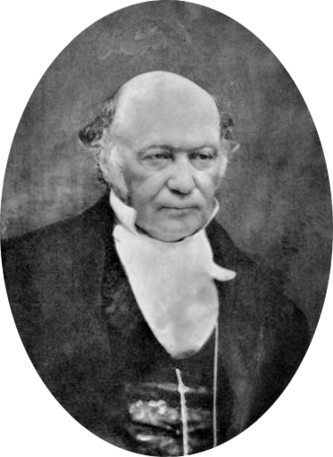
About Hermann von Helmholtz
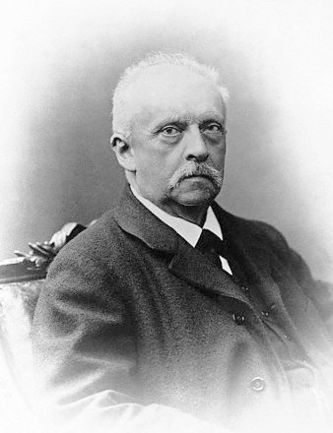
Hermann Ludwig Ferdinand von Helmholtz (31 August 1821 – 8 September 1894) was a German physician and physicist who made significant contributions to several widely varied areas of modern science.
Best Hermann von Helmholtz Quotes
Shortest
Earliest
Explore our curated collection of the most famous and impactful Hermann von Helmholtz quotes.
“The quantity of force which can be brought into action in the whole of Nature is unchangeable, and can neither be increased nor diminished.”
“The formation of scales and of the web of harmony is a product of artistic invention, and is in no way given by the natural structure or by the natural behaviour of our hearing, as used to be generally maintained hitherto.”
“There is a kind, I might almost say, of artistic satisfaction, when we are able to survey the enormous wealth of Nature as a regularly ordered whole — a kosmos, an image of the logical thought of our own mind.”
“In speaking of the work of machines and of natural forces we must, of course, in this comparison eliminate anything in which activity of intelligence comes into play. The latter is also capable of the hard and intense work of thinking, which tries a man just as muscular exertion does.”

“The last decades of scientific development have led us to the recognition of a new universal law of all natural phenomena, which, from its extraordinarily extended range, and from the connection which it constitutes between natural phenomena of all kinds, even of the remotest times and the most distant places, is especially fitted to give us an idea of what I have described as the character of the natural sciences, which I have chosen as the subject of this lecture.”
“As you are aware, no perceptions obtained by the senses are merely sensations impressed on our nervous systems. A peculiar intellectual activity is required to pass from a nervous sensation to the conception of an external object, which the sensation has aroused. The sensations of our nerves of sense are mere symbols indicating certain external objects, and it is usually only after considerable practice that we acquire the power of drawing correct conclusions from our sensations respecting the corresponding objects.”
“Every great deed of which history tells us, every mighty passion which art can represent, every picture of manners, of civic arrangements, of the culture of peoples of distant lands or of remote times, seizes and interests us, even if there is no exact scientific connection among them. We continually find points of contact and comparison in our own conceptions and feelings; we get to know the hidden capacities and desires of the mind, which in the ordinary peaceful course of civilised life remain unawakened.
It is not to be denied that, in the natural sciences, this kind of interest is wanting. Each individual fact, taken by itself, can indeed arouse our curiosity or our astonishment, or be useful to us in its practical applications. But intellectual satisfaction we obtain only from a connection of the whole, just from its conformity with law.”
It is not to be denied that, in the natural sciences, this kind of interest is wanting. Each individual fact, taken by itself, can indeed arouse our curiosity or our astonishment, or be useful to us in its practical applications. But intellectual satisfaction we obtain only from a connection of the whole, just from its conformity with law.”

“The external work of man is of the most varied kind as regards the force or ease, the form and rapidity, of the motions used on it, and the kind of work produced. But both the arm of the blacksmith who delivers his powerful blows with the heavy hammer, and that of the violinist who produces the most delicate variations in sound, and the hand of the lacemaker who works with threads so fine that they are on the verge of the invisible, all these acquire the force which moves them in the same manner and by the same organs, namely, the muscles of the arm. An arm the muscles of which are lamed is incapable of doing any work; the moving force of the muscle must be at work in it, and these must obey the nerves, which bring to them orders from the brain. That member is then capable of the greatest variety of motions; it can compel the most varied instruments to execute the most diverse tasks.”

“Now it is a universal law of the perceptions obtained through the senses that we pay only so much attention to the sensations actually experienced as is sufficient for us to recognise external objects. In this respect we are very one-sided and inconsiderate partisans of practical utility; far more so indeed than we suspect. All sensations which have no direct reference to external objects, we are accustomed, as a matter of course, entirely to ignore, and we do not become aware of them till we make a scientific investigation of the action of the senses, or have our attention directed by illness to the phenomena of our own bodies. Thus we often find patients, when suffering under a slight inflammation of the eyes, become for the first time aware of those beads and fibres known as mouches volantes swimming about within the vitreous humour of the eye, and then they often hypochondriacally imagine all sorts of coming evils, because they fancy that these appearances are new, whereas they have generally existed all their lives.”

Hermann von Helmholtz Quotes by Topic
Find exactly what you are looking for by browsing this categorized list of Hermann von Helmholtz quotes by topic.
Hermann von Helmholtz on Luminiferous aether
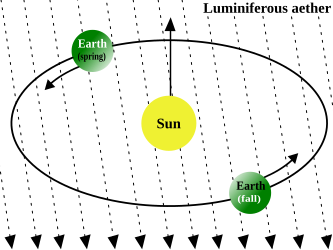
“The subjects of change in the vibrations are the electric or magnetic polarisations of the medium in which they take place. In order to explain the propagation of light in space between the stars, which is free from all trace of ponderable matter, the electromagnetic theory of light also must assume a medium, which fills the world-space even where no ponderable matter is to be found. It must so far make the same assumption as the undulatory theory (of light); but while the latter has to ascribe the properties of a solidly-elastic body to the ether, no assumption at all need be made by the electromagnetic theory as to the mode of its inner consistence. It is enough, that the ether is capable of being magnetised, and electrified in the fashion of an insulator, that is, in such a way that in its smallest parts a certain electric distribution, a so-called dielectric polarisation, as Faraday named it, is possible.”

Hermann von Helmholtz on Electromagnetism
“In the autumn of 1878 [Heinrich Hertz] came to Berlin and it was as an university student there in the physical laboratory under my control that I first made his acquaintance. ...In Germany at that time the laws of electromagnetics were deduced by most physicists from the hypothesis of W. Weber, who sought to trace back electric and magnetic phenomena to a modification of Newton's assumption of direct forces acting at a distance and in a straight line. With increasing distance these forces diminish in accordance with the same laws as those assigned by Newton to the force of gravitation, and held by Coulomb to apply to the action between pairs of electrified particles. The force was directly proportional to the product of the two quantities of electricity, and inversely proportional to the square of their distance apart; like quantities produced repulsion, unlike quantities attraction. Furthermore, in Weber's hypothesis it was assumed that this force was propagated through infinite space instantaneously, and with infinite velocity. The only difference between the views of W. Weber and of Coulomb consisted in this—that Weber assumed that the magnitude of the force between the two quantities of electricity might be affected by the velocity with which the two quantities approached towards or receded from one another, and also by the acceleration of such velocity. Side by side with Weber's theory there existed a number of others, all of which... regarded the magnitude of the force expressed by Coulomb's law as being modified by the influence of some component of the velocity... Such theories were advanced by F. E. Neumann, by his son C. Neumann, by Riemann, Grassmann, and subsequently by Clausius. Magnetised molecules were regarded as the axes of circular electric currents, in accordance with an analogy between their external effects previously discovered by Ampère. This plentiful crop of hypotheses had become very unmanageable, and in dealing with them it was necessary to go through complicated calculations, resolutions of forces into their components in various directions, and so on. So at that time the domain of electromagnetics had become a pathless wilderness. Observed facts and deductions from exceedingly doubtful theories were inextricably mixed up together. With the object of clearing up this confusion I had set myself the task of surveying the region of electromagnetics, and of working out the distinctive consequences of the various theories, in order, wherever... possible, to decide between them by suitable experiments.”

What Hermann von Helmholtz Said About Others
Discover personal opinions Hermann von Helmholtz shared regarding contemporaries.
Hermann von Helmholtz on Heinrich Hertz 2 quotes
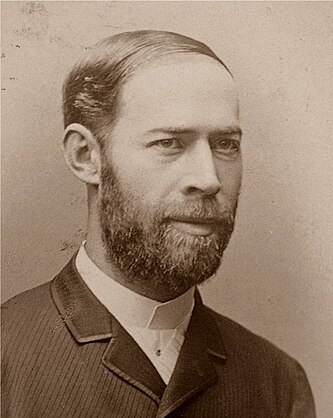
“Heinrich Hertz seemed to be predestined to open up to mankind many of the secrets which nature has hitherto concealed from us; but all these hopes were frustrated by the malignant disease which, creeping slowly but surely on, robbed us of this precious life and of the achievements which it promised.”

Hermann von Helmholtz on William Rowan Hamilton
“It still remained to be seen whether the laws of motion, as dependent on moving forces, could also be consistently transferred to spherical or pseudospherical space. This investigation has been carried out by Professor Lipschitz of Bonn. It is found that the comprehensive expression for all the laws of dynamics, Hamilton's principle, may be directly transferred to spaces of which the measure of curvature is other than zero. Accordingly, in this respect also, the disparate systems of geometry lead to no contradiction.”

Quotes About Hermann von Helmholtz
Gain deeper perspective through quotes about Hermann von Helmholtz from others.
James Clerk Maxwell on Hermann von Helmholtz
“According to Sir W. Thomson's theory of Vortex Atoms, the substance of which the molecule consists is a uniformly dense plenum, the properties of which are those of a perfect fluid, the molecule itself being nothing but a certain motion impressed on a portion of this fluid, and this motion is shewn, by a theorem due to Helmholtz, to be as indestructible as we believe a portion of matter to be.”

Charles Darwin on Hermann von Helmholtz
“And we know what Helmholtz, the highest authority in Europe on the subject, has said about the human eye; that if an optician had sold him an instrument so carelessly made, he would have thought himself fully justified in returning it.”

About Hermann von Helmholtz
Hermann Ludwig Ferdinand von Helmholtz (31 August 1821 – 8 September 1894) was a German physician and physicist who made significant contributions to several widely varied areas of modern science.