It still remained to be seen whether the laws of motion, as dependent on moving forces, could also be consistently transferred to spherical or pseudospherical space. This investigation has been carried out by Professor Lipschitz of Bonn. It is found that the comprehensive expression for all the laws of dynamics, Hamilton's principle, may be directly transferred to spaces of which the measure of curvature is other than zero. Accordingly, in this respect also, the disparate systems of geometry lead to no contradiction.
What It Means
This is a placeholder explanation generated by the low-overhead model. It interprets "It still remained to be seen whether the laws of motion, as dependent on moving forces, could also be consistently transferred to spherical or pseudospherical space. This investigation has been carried out by Professor Lipschitz of Bonn. It is found that the comprehensive expression for all the laws of dynamics, Hamilton's principle, may be directly transferred to spaces of which the measure of curvature is other than zero. Accordingly, in this respect also, the disparate systems of geometry lead to no contradiction." in the context of "Hermann von Helmholtz, "On the Origin and Significance of Geometrical Axioms" (1870) Lecture delivered in the Docenten Verein in Heidelberg, in Popular Lectures on Scientific Subjects (1881) 2nd series, Tr. E. Atkinson, pp. 53-54." to mean that wisdom is timeless.
Tags
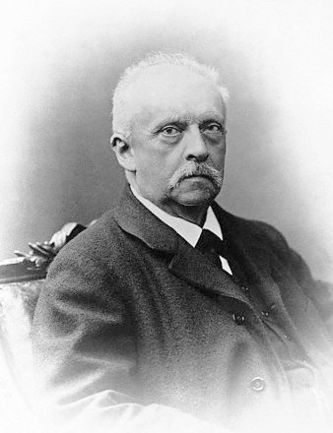
About Hermann von Helmholtz