Link Copied!
David Frawley Quotes (1950-)
Author, King




About David Frawley
David Frawley (born 21. September 1950), is an American Hindu teacher and author, who has written more than thirty books on topics such as the Vedas, Hinduism, Yoga, Ayurveda and Vedic astrology, published both in India and in the United States.
Best David Frawley Quotes
Shortest
Earliest
Explore our curated collection of the most famous and impactful David Frawley quotes.
“The Hindu mind has a vision of eternity and infinity. It is aware of the vast cycles of creation and destruction that govern the many universes and innumerable creatures within them.”

“Wikipedia has published many questionable statements about Hindu writers, leaders, causes and historical issues. Is not an unbiased forum. Hindus should protest against its anti-Hindu views.”
“Can we trust transnational internet groups like Wikipedia, which are self-regulating and unaccountable, to determine or censor information for the public, to decide what are the facts in nearly all fields of life and learning?”
“Hinduism never seemed to be something foreign or alien to me or inappropriate to my circumstances living in the West. It is the very religion of nature and consciousness in the broadest sense, which makes it relevant to everyone.”

“Social media owners and directors have long allowed or promoted an anti-Hindu and anti-India bias. Are not providing a neutral platform but have their own political agenda. This extends to Wikipedia as well. Time for them to be made accountable.”
“Using Marxism to understand India's ancient and vast dharmic civilization is like consulting a frog in a well for explaining the ocean. Those trapped in dialectical materialism cannot understand the unity of Self and universe, humanity and the cosmos.”

“Mosques built over important traditional Hindu temples like Kashi Vishwanath were not monuments to secularism, nationalism, religious pluralism or Bharatiya heritage. They were products of domination by hostile rulers trying to suppress the majority Hindu population.”

“Yoga, Ayurveda, Vedanta and the Vedic view of history should be taught in India's schools as part of the national cultural heritage. If western views of wellbeing, psychology, history and culture can be taught, it is colonialism to exclude the legacy of Bharatiya traditions.”

“What happened India today is probably the only country in the world in which the colonial narrative against it has not been changed.... what happened is that the Marxists perpetuated the negative colonial narrative... so instead of the British being the enemy the Hindus became the enemy....”
“In this way I can speak of an American Hinduism and call myself an American and a Hindu – an American connected with the land and a Hindu connected with the spirit and soul of that land. Hinduism has helped me discover the forces of nature in which I live, their past and their future, their unique formations and their connections with the greater universe and the cosmic mind.”

“The most important insights that have come to me usually occur while walking in nature, particularly hiking in the high mountains. In the wilderness nature can enter into our consciousness and cleanse our minds of human-centered compulsions. I think that liberation is like wandering off into nature, climbing up a high mountain, and not coming back to the lowlands of human society.”

“The Hindu mind represents humanity's oldest and most continuous stream of conscious intelligence on the planet. Hindu sages, seers, saints, yogis and jnanis have maintained an unbroken current of awareness linking humanity with the Divine since the dawn of history, and as carried over from earlier cycles of civilization in previous humanities unknown to our present spiritually limited culture.”
“The Hindu movement in India in its most typical form follows a Swadeshi (own-country) movement like the Swadeshi Jagaran Manch. It emphasizes protecting the villages and local economies, building economic independence and self-reliance for the country. It resists corporate interference and challenges multinational interests, whether the bringing of fast food chains to India, western pharmaceuticals or terminator seeds.”

“Hinduism is a religion of the Earth. It honors the Earth as the Divine Mother and encourages us to honor her and help her develop her creative potentials. The deities of Hinduism permeate the world of nature. For example, Shiva is the God of the mountains, while Parvati is the mountain Goddess. Shiva dwells in high and steep rocky crags and cliff faces. Parvati rules over mountain streams, waterfalls, and mountain meadows with their many flowers.”

“Not surprisingly, the same leftists in India, who have long been allied to communist China, similarly style the Dalai Lama and the Tibetan cause as right-wing and regressive, though the Dalai Lama is honored by the American left. This should tell the reader about the meaning of right and left as political terms in India. When one looks at the Hindu movement as the assertion of a native tradition with a profound spiritual heritage, the whole perspective on it changes.”
“Hindu Sidereal calculations are thus more complicated than Tropical ones. Hindu astronomy is a very specialized system that requires precise astronomical observations and shows an ongoing knowledge of the exact placement of the planets and equinoxes relative to the fixed stars. Such Sidereal measurements show how much the Hindus relied on actual stellar positions. On this basis it is hard to dismiss the positions of early Hindu astronomy as having no basis in observation.”
“The Hindu cause is similar to the cause of native and tribal peoples all over the world, like native American and African groups. Even Hindu concerns about cultural encroachment by western religious and commercial interests mirrors those of other traditional peoples who want to preserve their cultures. Yet while the concerns of native peoples have been taken up by the left worldwide, the same concerns of Hindus are styled right-wing or communal, particularly by the left in India!”
“The American Christian right is still sending missionaries to the entire world in order to convert all people to Christianity, the only true religion. It is firmly fixed on one savior, one scripture and a rather literal interpretation of these. Yet when Hindus ask the pope to make a statement that truth can be found outside of any particular church or religion they are called right-wing and backwards, while the pope, who refuses to acknowledge the validity of Hindu, Buddhist or other Indic traditions, is regarded as liberal!”

“I could sense the march of Vedic dawns unfolding a continual evolution of consciousness in the universe. I could feel the Vedic wisdom permeating all of nature, unfolding the secrets of birth and death, the days and nights of the soul. The Veda was present at the core of our being like an inextinguishable flame and carried the spiritual aspiration of our species. It was sad to contemplate how far we had fallen – that culturally we had closed the doors on these ancient dawns and become mired in a dark night of greed and arrogance.”
“According Dr. David Frawley eminent teacher and practitioner of Ayurvedic medicine: "No religion, perhaps, lays as much emphasis on environmental ethics as does Hinduism. It believes in ecological responsibility and says like Native Americans that the Earth is our mother. It champions protection of animals, which it considers also have souls, and promotes vegetarianism. It has a strong tradition of non-violence or ahimsa. It believes that God is present in all nature, in all creatures, and in every human being regardless of their faith or lack of it."”

“However, if we look at their actual views, Hindu groups have a very different ideology and practices than the political right in other countries. In fact many Hindu causes are more at home in the left in the West than in the right. The whole idea of the 'Hindu right' is a ploy to discredit the Hindu movement as backward and prevent people from really examining it. The truth is that the Hindu movement is a revival of a native spiritual tradition that has nothing to do with the political right-wing of any western country. Its ideas are spiritually evolutionary, not politically regressive.”
“References to seas and oceans and a vision of the universe as a series of oceans cannot be explained away by supposing that some big river was imagined to be the ocean by the primitive mind. This is not a rational interpretation of what is said but an irrational reduction of it according to the imposition of outside ideas and preconceptions. Yet this has been part of the general and accepted method of Vedic scholarship. Most of what has been done on the Vedas so far remains largely the unquestioned work of nineteenth century Western scholars who were often trapped in the cultural and sometimes imperialistic bias of their times.”

“However, the entire right-left division reflects the conditions of western politics and is inaccurate in the Indian context. We must give up such concepts in examining Indic civilization, which in its core is spiritually based, not politically driven. It reflects older and deeper concerns that precede and transcend the West's outer vision. As long as we define ourselves through politics our social order will contain conflict and confusion. Democracy may be the more benign face of a political order, but it still hides the lack of any true spiritual order. We must employ the vision of dharma and subordinate politics to it, which should be a form of Karma Yoga.”

“Hence, examining astronomical references in Vahara Mihira and Vedanga Jyotish, we arrive at the equinoctial positions of about 1280 BC. This is found as the latest reference in later Vedic texts like the Brahmans, with the new Moon in Magha marking the winter solstice. Using the different points of Krittika as marking the vernal equinox and the lunar positions earlier in the month of Magha back to the eighth day of the waning Moon (Ekashtaka), we get a period of 2800-1760 BC. Vedic references show an ongoing adjustment of their solstice-oriented calendar, proving the existence of Vedic culture at this time along with the existence of a sophisticated system of astronomical observation.”
David Frawley Quotes by Topic
Find exactly what you are looking for by browsing this categorized list of David Frawley quotes by topic.
David Frawley on Prana 6 quotes
“Mantras can work to hold and sustain our prana. Prana, [we could say], is the spirit of mantra. Mantra in turn is the expression of prana.”

David Frawley on Hindu 2 quotes
“It is not necessary to live in India to be a Hindu. In fact one must live in harmony with the land where one is located to be a true Hindu.”
David Frawley on Hindu nationalism 2 quotes
“The idea of the ‘Hindu right’ is largely a ploy to discredit the Hindu movement as backward and prevent people from really examining it.”

David Frawley on Sita 2 quotes
“Sita, Rama and Lakshmana met the venerable ancient seer Agastya in their travels to the south. The company of the wise brings joy: seeing the three holy wanderers the yearnings of the heart are naturally fulfilled.”

David Frawley on Voice of India 2 quotes
“Voice of India through Ram Swarup, Sita Ram Goel and Koenraad Elst provided the main intellectual defense of the Ram Janmabhoomi movement starting thirty years ago. Their contributions were very important in sustaining it.”
David Frawley on Vamadeva 2 quotes
“I first noted the name Vamadeva while studying the Upanishads. The Brihadaranyaka Upanishad quotes Rishi Vamadeva for the great saying (mahavakya) Aham Brahmasmi (I am Brahman or I am God). This it relates to Vamadeva’s saying in the Rig Veda, "I was Manu and I became the Sun (IV.26.1). The Aitareya Upanishad mentions Vamadeva, who was said to have learned the Vedas while still within his mother’s womb. It quotes another statement of Vamadeva from the Rig Veda (IV.27.1), "When I was in my mother’s womb I learned the birth of all the Gods." Among the first hymns of the Rig Veda whose inner meaning became clear to me were those of Brihadukta, the son of Vamadeva (RV X. 54 – 56). Others were hymns of Vamadeva himself, which comprise most of the fourth book of the Rig Veda, particularly his hymns to Agni and Indra, such as Sri Aurobindo also specially admired.”
David Frawley on Sanskrit
“Old India had a high rate of literacy, particularly because of its educational system, its Sanskrit and its gurukulams.”

David Frawley on Education in India
“Old India had a high rate of literacy, particularly because of its educational system, its Sanskrit and its gurukulams.”

David Frawley on Ramayana
“No ancient story, not even Homer's Iliad or Odyssey, has remained as popular through the course of time. The story of Rama appears as old as civilization and has a fresh appeal for every generation.”
David Frawley on Hinduism
“Hinduism is a religion of the Earth. It honors the Earth as the Divine Mother and encourages us to honor her and help her develop her creative potentials. The deities of Hinduism permeate the world of nature.”
David Frawley on Citizenship (Amendment) Act, 2019
“There is nothing anti-Muslim about CAA but it is anti-Hindu not to recognize the suffering and oppression Hindus in Pakistan, Afghanistan and Bangladesh have had to endure, as well as the other religious minorities in these Islamic states.”
David Frawley on Yajurveda
What David Frawley Said About Others
Discover personal opinions David Frawley shared regarding contemporaries.
David Frawley on Ram Swarup 3 quotes
“Ram Swarup is probably the most important and cogent writer on Hinduism in the last half of the twentieth century.”

David Frawley on Sita Ram Goel 2 quotes
“I can think of no other modern writer who better epitomizes this role of an intellectual kshatriya than Sitaram Goel.”
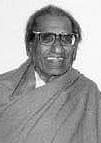
David Frawley on Ganapati Muni 2 quotes
“Ganapati was a Vedic scholar, a Tantric yogi, an Ayurvedic doctor and a Vedic astrologer, as well as an active social thinker and reformer – covering the same basic range of fields that I had and at a much deeper level. He even researched the history of the Vedas and the Mahabharata. He was probably the greatest Sanskrit poet and writer of this century. His greatest work, Uma Sahasram, has a thousand verses and forty chapters each down flawlessly in a different Sanskrit meter. I recognized him as a model for what I was attempting in all aspects of my work. He also presented an approach that balanced my connection with both Aurobindo and Ramana. Through Ganapati I was able to bridge the gap between the two. No doubt a secret affinity with him was behind the position that I had taken.”
David Frawley on Anwar Shaikh
“Shaikh was a warm and friendly character with a great sense of humor and hospitality.”
David Frawley on Swami Rama
“Swami Rama was another major guide and teacher in my life. Most importantly he connected me with the world of nature through his towering Himalayan spirit and his indomitable will.”
David Frawley on Rama Tirtha
“About the same time I discovered the teachings of Swami Rama Tirtha, who lived at the turn of the century and was another great Vedantin. I felt a special inner kinship to Swami Rama, who was a poetic, inspirational and independent figure.”
David Frawley on L. K. Advani
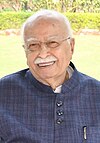
“The recent Coimbatore bombing that killed a number of BJP workers was likened in the New York Times to the Reichstag fire which Hitler staged to gain power. The implication was that the BJP planned the bombing as an election ploy, even sacrificing its own members, and that they are as ruthless as Hitler. That Islamic terrorist groups were linked, was ignored.”
David Frawley on Ahalya
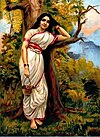
“Along his journey Rama freed Ahalya from her curse. The grace of God is so strong it can free us from the most difficult situations. Through it our inner wisdom, symbolized by the sage's wife, can be released from the stone of ignorance and materialism in which it is trapped. But for this to occur, we must open ourselves to the Divine Will. Otherwise obstacles will arise that we cannot possibly overcome by our power.”
David Frawley on Jiddu Krishnamurti
“Krishnamurti was, on one hand, a typically self-alienated Indian intellectual criticizing his own culture. But, on the other hand, he possessed a genuine meditative mind in harmony with the same tradition, a strange contradiction but one that was appealing to people who could not relate to traditions. He had important teachings on perception and on the workings of the mind and emotions that added much depth to my meditation.”

David Frawley on Vinayak Damodar Savarkar
“Veer Savarkar was another Indian leader senior to Gandhi who was a firebrand revolutionary like those of Europe with whom he associated. He had a strong vision of Indian nationalism and was also not adverse tot using force to remove the British. He was a deep thinker and a yogi in his later years. Unfortunately his work was denigrated and distorted by leftist opponents. There was a concerted effort to malign him a Nazi because of his anti-leftist views, even though he was an opponent of Hitler and wanted India to join the war on the British side! Through Savarkar I gained a different idea of India's independence movement, which clearly was much more than the Gandhian images which is all that people in the West really know.”

David Frawley on Kapali Sastry
“I studied the works of Kapali Shastri, the guru of M.P. Pandit, who wrote extensively on the Vedas from Sri Aurobindo’s point of view. Many of my comments on the Upanishads that I had written were echoed in Kapali’s work. I eventually discovered that Kapali, prior to connecting with Aurobindo had been a disciple of Ramana Maharshi. He was responsible for many of the Sanskrit works on Ramana under the pseudonym K. Kapali was the chief disciple of Ganapati Muni, who was perhaps the chief disciple of Ramana. Ganapati had first discovered Ramana as a young boy then called Brahma Swami, because he was a Brahmin boy. He renamed him Ramana and Bhagavan. Ganapati wrote several important Sanskrit works on the Maharshi and also put Ramana’s teachings into Sanskrit, which Kapali as his disciple commented on.”
David Frawley on M. S. Golwalkar
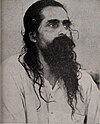
“Guruji Golwalkar was the second head of the RSS after Hedgewar, who founded the organization in 1925. He was a mild mannered schoolteacher with a philosophical bent of mind. His main work is a Bunch of Thoughts, which is a collection put together from his many talks and articles. In it I found a clear analysis of the social problems of Hinduism and of modern India with both practical and spiritual solutions to the problems. Golwalkar gave a clear critique of culture showing the dangers of materialism, communism and missionary religions and suggested a dharmic alternative based upon Hindu and yogic teachings. The book was like an application of the thought of Vivekananda and Aurobindo to the social sphere. I was also surprised to know that such a deep and flexible approach was branded as fundamentalist by leftists in India.”
David Frawley on Anandamoyi Ma
“From 1976 through 1980 I corresponded with the great woman saint of India, Sri Anandamayi Ma. I had decided to write her as a friend of mine had recently done so and received a reply. To my surprise a letter came back from her within a few months. Swamis Atmananda and Nirvananda helped with my communications. I planned to visit Ma in India but somehow could not get the resources together to bring it about. I also wrote a few articles for their magazine Ananda Varta. Contact with Ma inspired me more into a Vedantic and Hindu mold. Her energy would come in waves, almost like an electrical force, encouraging me to deeper practices. Ma’s energy opened up devotional potentials for me, not merely for the Goddess but also for Shiva and Rama. I began to look into Bhakti Yoga, chanting and devotional meditation. Images of Hindu deities appeared in mymind.”

David Frawley on Michael Witzel
““Witzel quotes favourably a statement at the beginning of this rather long article about India's role as "the cultural diffusion cul -de-sac of Asia" (p.1), an idea that has "kept me occupied on and off over the past few years." This sums up Witzel's view of Indian civilisation — it is the cultural backwater and dead end of Asia, where wandering nomads can go no further, with no real civilisation of its own. Not surprisingly Witzel has little appreciation for the Vedas, Vedanta, Yoga, Buddhism or anything else India has produced. His extensive bibliographies on ancient India seldom refer to any Indian scholars, and certainly avoid mentioning any yogis like Aurobindo who have different views. You would never find Witzel chanting Om, practicing Yoga or in any other way honouring the great traditions of the region. His anti-India views reflect those of the colonial era which he is continuing. For this reason Witzel is mainly honoured by Marxists in India whose political agenda favours rejecting anything great not only in the Vedas but in Indian civilisation as a whole, which many Marxists following Marx himself see as an invention of the British. However, no one who really studies and loves the Vedas will be fooled by such theatrics. There is much more to the Vedas than Witzel's philology.”

David Frawley on M. P. Pandit
“After finishing this Vedic study I had no idea what to do with it. Fortunately, through a personal friend I came into contact with M.P. Pandit, the secretary of the Sri Aurobindo Ashram. I had long admired Pandit’s many books on the Vedas, Tantra, Sri Aurobindo and the Mother. Pandit was perhaps the foremost scholar of Indian spirituality, not from an academic view but from a real understanding and inner experience that spanned the entire tradition. If anyone could appreciate what I was doing, it was he. I first visited Pandit in San Francisco in the summer of 1979. I brought my writings on the Vedas and Upanishads and explained my approach to him. What I received from him in return went far beyond my expectations. Pandit was a calm and concentrated person, with a penetrating vision. He listened carefully before making any comments. Instead of trying to influence me he was quite receptive and open to what I was attempting. I told him that I was not an academic but doing the work from an inner motivation and an intuitive view. He said that it was better that I was not an academic because I would not repeat their same old mistakes and could gain a fresh view of the subject. Pandit strongly encouraged me to continue my work, offering his full support. He called my Vedic work my "Divine mission," that I should follow out. He said both to my surprise and my honor that he would get my writings published in India.”
Quotes About David Frawley
Gain deeper perspective through quotes about David Frawley from others.
Elst on David Frawley
“One occasion where I saw US-based Indian Marxists in action was at the 1996 Annual South Asia Conference in Madison, Wisconsin... I knew that excellent and innovative papers by N.S. Rajaram and Shrikant Talageri had been rejected by the organizers, so I felt entitled to expect presentations of top-notch scholarship dwarfing even that of Rajaram and Talageri. Instead, what the audience got, was a canvassing session for the “Forum of Indian Leftists” without any scholarly papers. The speakers disdained to even mention any of the argumentative contents of the AIT debate, except “David Frawley’s paradox” (the AIT’s puzzling implication pointed out by Frawley, viz. that the Harappan civilization had numerous cities but no literature, while Vedic civilization had a vast literature but no cities), which they simply laughed off without discussion ad rem. ... But Frawley’s paradox is entirely pertinent: what are the chances that a literate culture leaves the biggest conglomerate of archaeological sites behind, but only a handful of short inscriptions as the complete corpus of its literature; while the illiterate conquerors produce a vast and sophisticated literature within a few centuries, but leave no sizable architecture behind? What are the chances that the largest civilization of the world loses its language to a conquering band of nomadic tribesmen? The AIT has the weight of probability against it.”
Arun Shourie on David Frawley
“One final reason for being confident is that because of the work of Ram Swarup, Sita Ram Goel, Koenraad Elst, David Frawley, and Rajiv Malhotra the corpus is now reaching a critical mass. So, that we can think that within few years we will have a library for India and a library of India.”

Kazanas on David Frawley
“Here [Witzel] throws a bombshell: “Kazanas is heavily influenced here by Frawley’s most amazing paradox”. (Elsewhere I borrow from Kak or some other “fundamentalist-colleague”.) I was not heavily influenced by Frawley’s paradox. I simply acknowledged (after some research) that Frawley had “first noted” this paradox, namely that the literate Harappans left no literature while the non-literate, archaeologically unattested Aryans left their voluminous productions. With this I suppose [Witzel] tries to draw attention away from the fact that he has no explanation for the Aryanisation of North India. In [Witzel]’s mind Frawley is a fiendish figure of fundamentalist Hindutva, Astrology and the like, and therefore cannot utter any truth; if [Kazanas] is “influenced”, [Kazanas] also cannot utter any truth.”
Deepak Chopra on David Frawley
““David Frawley is one of the most important scholars of Ayurveda and Vedic Science today. I have great respect and admiration for his knowledge and the way he has expounded the ancient wisdom of the Vedas.””

M.P. Pandit on David Frawley
““Frawley is an Indian in an American body. The ease with which he enters into the spiritual of the Indian tradition and renders its deeper concepts in terms of modern thought shows an unusual familiarity with this ancient wisdom.””
Ashok Malik on David Frawley
““Certainly America’s most singular “practicing Hindu.”””
Ashish Sharma on David Frawley
““David Frawley is a formidable scholar of Vedanta and easily the best known Western Acharya of the Vedic wisdom.””
About David Frawley
David Frawley (born 21. September 1950), is an American Hindu teacher and author, who has written more than thirty books on topics such as the Vedas, Hinduism, Yoga, Ayurveda and Vedic astrology, published both in India and in the United States.