Link Copied!
Deng Xiaoping Quotes (1904-1997)
Politician, Leader

About Deng Xiaoping
Deng Xiaoping ( ; August 22, 1904 – February 19, 1997) was a Chinese politician and reformer, and the paramount leader of the Communist Party of China (CPC). Deng never held office as the head of state or the head of government, but was the de facto leader of the People's Republic of China from 1978 to the early 1990s. He developed "Socialism with Chinese characteristics" and Chinese economic reform, also known as the "socialist market economy", and opened China to the global market. During his paramount leadership, his official state positions were Chairman of the National Committee of the Chinese People's Political Consultative Conference from 1978–1983 and Chairman of the Central Military Commission of the People's Republic of China from 1983–1990, while his official party positions were Vice Chairman of the Communist Party of China from 1977–1982 and Chairman of the Central Military Commission of the Communist Party of China from 1981–1989.
Best Deng Xiaoping Quotes
Shortest
Earliest
Explore our curated collection of the most famous and impactful Deng Xiaoping quotes.


“Hmm… listen, I have made mistakes — yes, sometimes serious ones. But I never made them with bad intentions; I always made them with good intentions. My conscience is clear about my own life. Hmm… listen, I think I could give myself fifty percent. Yes, fifty percent would be all right.”
“For the modernization of science and technology, we must have a mighty scientific and technical force serving the working class, a force which is both “red and expert” and includes a large number of scientists, engineers and technicians who are first rate by world standards. It will not be easy for us to build up such a force.”

“If one day China should change her colour and turn into a superpower, if she too should play the tyrant in the world, and everywhere subject others to her bullying, aggression and exploitation, the people of the world should identify her as social-imperialism, expose it, oppose it and work together with the Chinese people to overthrow it.”

“We mustn't fear to adopt the advanced management methods applied in capitalist countries (...) The very essence of socialism is the liberation and development of the productive systems (...) Socialism and market economy are not incompatible (...) We should be concerned about right-wing deviations, but most of all, we must be concerned about left-wing deviations.”

“Self-reliance in no way means “self-seclusion” and rejection of foreign aid. We have always considered it beneficial and necessary for the development of the national economy that countries should carry on economic and technical exchanges on the basis of respect for state sovereignty, equality and mutual benefit, and the exchange of needed goods to make up for each other’s deficiencies.”
“The discovery and training of talented people by our scientists and teachers is in itself an achievement and a contribution to the country. The history of science shows us the tremendous importance of discovering genuinely talented persons. Some of the world’s scientists look upon the finding and training of new talent as the crowning achievement of a lifetime devoted to science. There is much to be said for this view.”

“We hold that in both political and economic relations, countries should base themselves on the Five Principles of mutual respect for sovereignty and territorial integrity, mutual non-aggression, non-interference in each other’s internal affairs, equality and mutual benefit, and peaceful coexistence. We are opposed to the establishment of hegemony and spheres of influence by any country in any part of the world in violation of these principles.”
“We hold that technology transferred to the developing countries must be practical, efficient, economical and convenient for use. The experts and other personnel dispatched to the recipient countries have the obligation to pass on conscientiously technical know-how to the people there and to respect the laws and national customs of the countries concerned. They must not make special demands or ask for special amenities, let alone engage in illegal activities.”
“We hold that all countries, big or small, rich or poor, should be equal, and that international economic affairs should be jointly managed by all the countries of the world instead of being monopolized by the one or two superpowers. We support the full right of the developing countries, which comprise the great majority of the world’s population, to take part in all decision-making on international trade, monetary, shipping and other matters.”
“Science and technology are part of the productive forces. Mental workers who serve socialism are part of the working people. A correct understanding of these two facts is essential to the rapid development of our scientific enterprises. Once we have accepted these premises, it follows that we must make every effort to develop scientific research and education in science and to encourage the revolutionary initiative of our scientific, technical and educational workers.”

“Marxism has consistently treated science and technology as part of the productive forces. More than a century ago, Marx said that expansion of the use of machinery in production requires the conscious application of natural science. Science too, he said, is among the productive forces.The development of modern science and technology has bound science and production ever more tightly together. It is becoming increasingly clear that science and technology are of tremendous significance as productive forces.”
“China is poor and our military is backwards, I agree. But we have our traditions, you know. And for quite some time, using inadequate and miserable equipment, we have cultivated the art of defeating well-armed enemies. Our territory is extremely vast, and in this vast territory the people have learned the necessary resistance for a long war — to bend the strength of others through their weaknesses. Whoever wants to invade China should remember this truth, and I believe that the Soviets remember it well.”

“We hold that international trade should be based on the principles of equality, mutual benefit and the exchange of needed goods. We support the urgent demand of the developing countries to improve trade terms for their raw materials, primary products and semi-manufactured and manufactured goods, to expand their market and to fix equitable and favourable prices. We support the developing countries in establishing various organizations of raw material exporting countries for a united struggle against colonialism, imperialism and hegemonism.”
“We hold that economic aid to the developing countries must strictly respect the sovereignty of the recipient countries and must not be accompanied by any political or military conditions and the extortion of any special privileges or excessive profits. Loans to the developing countries should be interest-free or low-interest and allow for delayed repayment of capital and interest, or even reduction and cancellation of debts in case of necessity. We are opposed to the exploitation of developing countries by usury or blackmail in the name of aid.”
“But… look, Chairman Mao made mistakes, yes. Nonetheless, he was one of the principal founders of the Communist Party of China and the People’s Republic of China. Thus, when we look at his merits together with his mistakes, we think that his mistakes take second place, while his merits take first. And this means that the contribution he made to the Chinese revolution cannot be forgotten and that the Chinese people will always cherish his memory; they will always think of him as one of the founders of the party and of the republic.'''”

“Democracy and dictatorship of the proletariat are two parts of the same antithesis, and proletarian democracy is far superior to its capitalist counterpart. We are emphasizing the Four Principles that we must adhere to: the principle of socialism, the principle of dictatorship of the proletariat, the principle of Marxism and Leninism elaborated in Mao Zedong Thought, and the principle of leaders supported by the Communist Party of China. So, you see, that even the principle of dictatorship of the proletariat has remained untouched and untouchable.”

“We must give full play to democracy and follow the mass line, trusting the judgement of the scientists and technicians in such matters as the evaluation of scientific papers, the assessment of the competence of professional personnel, the elaboration of plans for scientific research and the evaluation of research results. When views diverge on scholarly questions, we must follow the policy of “letting a hundred schools of thought contend” and encourage free discussion. In scientific and technical work, we must listen closely to the opinions of the experts and leave them free to use all their skills and talents so as to achieve better results and reduce our errors to the minimum.”

“According to Marx, socialism, which is the first stage of Communism, covers a very long period. And, during this period, we will try to fulfill the principle “From each according to his ability, to each according to his work.” In other words, we will blend the interests of the individual with the interests of the country. There is no other way to mobilize interest in production among the masses, let’s admit it. And since the capitalist West will be helping us to overcome the backwardness we find ourselves in — the poverty that afflicts us — it doesn’t seem opportune to get caught up in the subtleties. However things go, the positive effects will be greater than the negative effects.”
“In societies under the rule of exploiting classes, there are various kinds of mental workers. Some are wholly in the service of the reactionary ruling classes and thus stand in an antagonistic relationship to manual workers. But even in such a situation, as Lenin said, many of the intellectuals engaged in scientific and technical work are themselves not capitalists but scholars, even though they are filled with bourgeois prejudices. The fruits of their work are used by the exploiters, but in general this is determined by the social system and not by their own free choice. They are totally different from those politicians who rack their brains for expedients of direct service to the reactionary ruling classes.”

“War is inevitable because superpowers exists and because imperialism exists. And we are not the only ones who think this way; in every part of the world today, many people are convinced that war will break out in the 1980s. The next ten years will be very, very dangerous. They’re terrifying. We should never forget this, because this is the only way we will prevent war from breaking out immediately; this is the only way we can defer it. Not by chatting about peace and detente. Westerners have been talking about peace and detente since the end of the Second World War. So has the Soviet Union. But where is this peace, where is this detente? Year to year, if not day to day, the hot spots are growing; the factors that will lead to World War Three are increasing; and still they talk about detente and peace.”
Deng Xiaoping Quotes by Topic
Find exactly what you are looking for by browsing this categorized list of Deng Xiaoping quotes by topic.
Deng Xiaoping on China
Deng Xiaoping on Cultural Revolution
“I should remind you that Chairman Mao dedicated most of his life to China, that he saved the party and the revolution in their most critical moments, that, in short, his contribution was so great that, without him, the Chinese people would have had a much harder time finding the right path out of the darkness. We also shouldn't forget that it was Chairman Mao who combined the teachings of Marx and Lenin with the realities of Chinese history—that it was he who applied those principles, creatively, not only to politics but to philosophy, art, literature, and military strategy. Yes, before the 1960s—or, better, up until the late 1950s—some of Chairman Mao's ideas were, for the most part, correct. Furthermore, many of his principles brought us victory and allowed us to gain power. Then, unfortunately, in the last few years of his life, he committed many grave errors—the Cultural Revolution, above all. And much disgrace was brought upon the party, the country, the people.”
What Deng Xiaoping Said About Others
Discover personal opinions Deng Xiaoping shared regarding contemporaries.
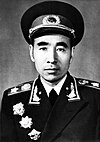
Deng Xiaoping on Lin Biao
“Lin Biao and the "Gang of Four" completely deviated from the fundamental principles of Marxism-Leninism and Mao Zedong Thought. Lin Biao also separated Mao Zedong Thought from Marxism-Leninism. This is a serious distortion of Mao Zedong Thought, which is extremely detrimental to our Party and socialist cause, and is extremely detrimental to the international communist movement.”
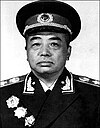
Deng Xiaoping on Peng Dehuai
“Comrade Peng Dehuai loves the party, loves the people, and is loyal to the great cause of the proletarian revolution. He fought bravely, was upright, honest, strict with himself, cared about the masses, and never considered personal gains and losses. He is not afraid of difficulties, bravely shoulders heavy responsibilities, is diligent and extremely responsible for revolutionary work.”
Deng Xiaoping on Joseph Stalin
“We think that Stalin's contribution to the revolution is much more important than the mistakes he made. To use the Chinese way, the score for Stalin would be thirty percent to seventy percent: thirty for his errors and seventy for his merits. Furthermore, Chairman Mao agreed with me on the question of Stalin's score, and, after the twentieth Congress of the CPSU, members of the Communist Party of China expressed a very clear judgment of Stalin.”

Deng Xiaoping on Soong Ching-ling
“Comrade Soong Ching Ling dedicated herself entirely, in a time of seventy years, to China’s democracy and socialist cause and to world peace and development. She had been unwavering in her political principles in all circumstances, unyielding to threats and absolutely incorruptible by wealth. Her noble character and integrity will always be remembered. What’s more precious is that she progressed with the times, from being a great revolutionary democratic to a great communist.”

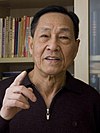
Deng Xiaoping on Bao Tong
“The CCP ’s Party Constitution "states that there is something called Deng Xiaoping Theory. For political needs, it is a game of the Communist Party to enclose the party chiefs as" theorists, but in fact There is no "Deng Xiaoping Theory", just as there is no "Qin Shihuang Theory" in the world. Qin Shihuang did not rely on theory to establish centralized power, nor did Deng Xiaoping. He relied on Mao Zedong's power for the Communist Party to create a "Deng Xiaoping Road" that allowed China to enter The abyss of corruption. The difference is that few people extol the burning of Confucianism, but the "Deng Xiaoping Road" is endlessly fragrant, and the worshippers praise it all the way."”
Deng Xiaoping on Mao Zedong
“I should remind you that Chairman Mao dedicated most of his life to China, that he saved the party and the revolution in their most critical moments, that, in short, his contribution was so great that, without him, the Chinese people would have had a much harder time finding the right path out of the darkness. We also shouldn't forget that it was Chairman Mao who combined the teachings of Marx and Lenin with the realities of Chinese history—that it was he who applied those principles, creatively, not only to politics but to philosophy, art, literature, and military strategy. Yes, before the 1960s—or, better, up until the late 1950s—some of Chairman Mao's ideas were, for the most part, correct. Furthermore, many of his principles brought us victory and allowed us to gain power. Then, unfortunately, in the last few years of his life, he committed many grave errors—the Cultural Revolution, above all. And much disgrace was brought upon the party, the country, the people.”

Quotes About Deng Xiaoping
Gain deeper perspective through quotes about Deng Xiaoping from others.
Former Malaysian Prime Minister Mahathir Mohamad on Deng Xiaoping
“I think Deng Xiaoping is one of the greatest reformists in the history of China and the history of the world. I first met him when he came here at the time when I was a deputy prime minister. He was very curious about Malaysia. He was very keen on details of every aspect, so much so that sometimes I couldn't answer. Obviously he wanted to change from what was happening in China. He wanted to bring about reform. To bring about reforms he studied very carefully the performance of other countries. Because it was not easy to change China. You have a huge population. And obviously he didn't want to see China remain behind other nations of the world.”
Jeremy Black on Deng Xiaoping 2 quotes
“More significant than developments in the Middle East, the death of Mao Zedong in September 1976 was not followed by any abandonment of China’s American alignment. As so often during the Cold War, rivalries within Communist parties played a major role in international developments. The attempt by the radical ‘Gang of Four’, including Mao’s widow, to gain power was thwarted by Hua Guofeng, the Premier, who became Chairman of the Central Committee. He, in turn, became less powerful as his rival, Deng Xiaoping, rose. Deng had been dismissed as Vice-Premier of the State Council earlier in 1976 as a result of the influence of the Gang of Four. Deng was reinstated in July 1977 and, while supporting control by the Communist Party, outmanoeuvred the more ideological Hua by emphasising pragmatism. Deng’s leadership was confirmed in December 1978 at the Third Plenum of the 11th CCP Congress. He remained in power until 1997.”
John Lewis Gaddis on Deng Xiaoping
“It could hardly have been anticipated, for example, that a long-time follower of Mao Zedong, at five feet in height barely visible beside him, would use the power of the Chinese Communist Party to give his country a market economy: "It doesn't matter if the cat is white or black," Deng Xiaoping liked to say, "so long as it catches mice." Deng's views on cats—by which he meant ideologies—got him into trouble with Mao during the Cultural Revolution, and at the time of Nixon's 1972 visit to Beijing, Deng was in exile with his family growing vegetables, chopping wood, working in a tractor repair plant, and nursing his son, whom Red Guards had thrown from the roof of a building, permanently paralyzing him. Mao called Deng back to Beijing the following year, acknowledging that he had "done good deeds seventy percent of the time and bad deeds thirty percent"—only to purge him again in 1976. Always resilient, Deng fled to southern China, hid out, and patiently awaited yet another rehabilitation. It came shortly after Mao's death in September of that year, and by the end of 1978 Deng had outmaneuvered all of his rivals to become China's "paramount" leader. He had already by then turned the tables on his predecessor by claiming that Mao had been right seventy percent of the time and wrong thirty percent: this now became party doctrine. Among the "right" things Mao had done were reviving China as a great power, maintaining the Communist Party's political monopoly, and opening relations with the United States as a way of countering the Soviet Union. Among the "wrong" things was Mao's embrace of a disastrously administered command economy. With this pronouncement on percentages, Deng won himself room to pursue a very different path.”

David C. Gompert on Deng Xiaoping
“Deng Xiaoping decided in 1979 that China could teach Vietnam a lesson through a brief but decisive invasion, forcing the diversion of Vietnamese forces from Cambodia and delivering a blow to the Vietnamese-Soviet (anti-China) alliance. His low opinion of the Vietnamese ignored the fact that they had routed France and outlasted the United States. The Chinese miscalculation was not an unmitigated blunder: Deng cut his losses by keeping the conflict short, and the war exposed China's military weakness, allowing him to consolidate power and reform the People's Liberation Army. Operationally, though, the war was a military disaster for China. China suffered massive losses and failed to draw the Vietnamese out of Cambodia.”
Johan Norberg on Deng Xiaoping
“It was no longer possible to say that only the Western world could become rich through capitalism, so a new narrative took hold: although a few developing countries might be able to enter global markets from the periphery, it is only because they are very small, almost insignificant. Strangely enough, today you sometimes hear the opposite: that developing countries might make it, but only if they are very large. This is due to the transformation of two giants, China and India, which for decades were held back by, in one case, a communist despot, and in the other a democratic but strictly protectionist command economy. Therefore, people said that Chinese and Indians will be successful all over the world – except in China and India. But then, in 1976, China’s dictator Mao Zedong, as the US economist Steven Radelet put it, ‘single-handedly and dramatically changed the direction of global poverty with one single act: he died’. His successor, Deng Xiaoping, began to accept the private enterprise that peasants and villagers secretly engaged in and extended it to the entire economy. All the restrained creativity and ambition was finally let loose and China grew at record speed. Ironically, intellectuals around the world – modern-day Max Webers – soon explained that this is itself not that strange, as Confucianism made it easy to modernize the economy.”
Misattributed Quotes
Quotes mistakenly credited to Deng Xiaoping
“Crossing the river by feeling the stones.
• Meaning: proceed gradually, by experimentation.”
• Meaning: proceed gradually, by experimentation.”
About Deng Xiaoping
Deng Xiaoping ( ; August 22, 1904 – February 19, 1997) was a Chinese politician and reformer, and the paramount leader of the Communist Party of China (CPC). Deng never held office as the head of state or the head of government, but was the de facto leader of the People's Republic of China from 1978 to the early 1990s. He developed "Socialism with Chinese characteristics" and Chinese economic reform, also known as the "socialist market economy", and opened China to the global market. During his paramount leadership, his official state positions were Chairman of the National Committee of the Chinese People's Political Consultative Conference from 1978–1983 and Chairman of the Central Military Commission of the People's Republic of China from 1983–1990, while his official party positions were Vice Chairman of the Communist Party of China from 1977–1982 and Chairman of the Central Military Commission of the Communist Party of China from 1981–1989.