Link Copied!
Bernard Mandeville Quotes (1670-1733)
Philosopher, Poet
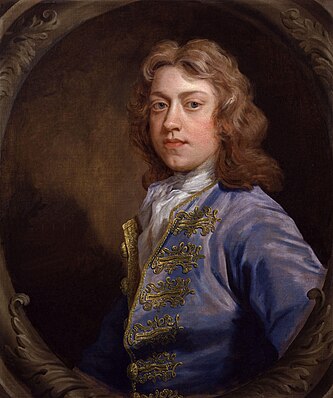


About Bernard Mandeville
Bernard Mandeville (or Bernard de Mandeville) (baptised November 20 1670, died January 21 1733) was a Dutch physician, poet and social philosopher who settled in England. Most of his works, including his controversial satire The Fable of the Bees, were written in English.
Best Bernard Mandeville Quotes
Shortest
Earliest
Explore our curated collection of the most famous and impactful Bernard Mandeville quotes.
“They put off hearings wilfully,
To finger the refreshing fee.”
To finger the refreshing fee.”
“The worst of all the Multitude
Did something for the Common Good.”
Did something for the Common Good.”
“Private Vices by the dextrous Management of a skilful Politician may be turned into Publick Benefits.”


“Knowledge both enlarges and multiplies our Desires, and the fewer things a Man wishes for, the more easily his Necessities may be supply'd.”
“Vast Numbers throng'd the fruitful Hive;
Yet those vast Numbers made 'em thrive;
Millions endeavouring to supply
Each other's Lust and Vanity.”
Yet those vast Numbers made 'em thrive;
Millions endeavouring to supply
Each other's Lust and Vanity.”
“If Courtezans and Strumpets were to be prosecuted with as much Rigour as some silly People would have it, what Locks or Bars would be sufficient to preserve the Honour of our Wives and Daughters?”
“People of Substance may Sin without being expos'd for their stolen Pleasure; but Servants and the Poorer sort of Women have seldom an Opportunity of concealing a Big Belly, or at least the Consequences of it.”
“Thus Vice nurs'd Ingenuity,
Which join'd with Time and Industry,
Had carry'd Life's Conveniences,
It's real Pleasures, Comforts, Ease,
To such a Height, the very Poor
Liv'd better than the Rich before.”
Which join'd with Time and Industry,
Had carry'd Life's Conveniences,
It's real Pleasures, Comforts, Ease,
To such a Height, the very Poor
Liv'd better than the Rich before.”
“Then leave Complaints: Fools only strive
To make a Great an Honest Hive.
T'enjoy the World's Conveniences,
Be fam'd in War, yet live in Ease,
Without great Vices, is a vain
Eutopia seated in the Brain.”
To make a Great an Honest Hive.
T'enjoy the World's Conveniences,
Be fam'd in War, yet live in Ease,
Without great Vices, is a vain
Eutopia seated in the Brain.”

“Thus every Part was full of Vice,
Yet the whole Mass a Paradise;
Flatter'd in Peace, and fear'd in Wars,
They were th' Esteem of Foreigners,
And lavish of their Wealth and Lives,
The Balance of all other Hives.”
Yet the whole Mass a Paradise;
Flatter'd in Peace, and fear'd in Wars,
They were th' Esteem of Foreigners,
And lavish of their Wealth and Lives,
The Balance of all other Hives.”
“This laudable quality is commonly known by the name of Manners and Good-breeding, and consists in a Fashionable Habit, acquir'd by Precept and Example, of flattering the Pride and Selfishness of others, and concealing our own with Judgment and Dexterity.”

“No Habit or Quality is more easily acquir'd than Hypocrisy, nor any thing sooner learn'd than to deny the Sentiments of our Hearts and the Principle we act from: But the Seeds of every Passion are innate to us, and no body comes into the World without them.”

“The first Rudiments of Morality, broach'd by skilful Politicians, to render Men useful to each other as well as tractable, were chiefly contrived that the Ambitious might reap the more Benefit from, and govern vast Numbers of them with the greater Ease and Security.”
“There is no Intrinsick Worth in Money but what is alterable with the Times, and whether a Guinea goes for Twenty Pounds or for a Shilling, it is … the Labour of the Poor, and not the high and low value that is set on Gold or Silver, which all the Comforts of Life must arise from.”
“Luxury
Employ'd a Million of the Poor,
And odious Pride a Million more;
Envy it self, and Vanity,
Were Ministers of Industry;
Their darling Folly, Fickleness,
In Diet, Furniture and Dress,
That strange ridic'lous Vice, was made
The very Wheel that turn'd the Trade.”
Employ'd a Million of the Poor,
And odious Pride a Million more;
Envy it self, and Vanity,
Were Ministers of Industry;
Their darling Folly, Fickleness,
In Diet, Furniture and Dress,
That strange ridic'lous Vice, was made
The very Wheel that turn'd the Trade.”
“I have often thought, if it was not for this Tyranny which Custom usurps over us, that Men of any tolerable Good-nature could never be reconcil'd to the killing of so many Animals for their daily Food, as long as the bountiful Earth so plentifully provides them with Varieties of vegetable Dainties.”
“What have the Aldermen, the Common-Council, or indeed all People of any Substance to do with the War, but to pay Taxes? The Hardships and Fatigues of War that are personally suffer'd, fall upon them that bear the Brunt of every Thing, the meanest Indigent Part of the Nation, the working slaving People.”
“One good Man may take another's Word, if they so agree, but a whole Nation ought never to trust to any Honesty, but what is built upon Necessity; for unhappy is the People, and their Constitution will be ever precarious, whose Welfare must depend upon the Virtues and Consciences of Ministers and Politicians.”
“What a vast Traffick is drove, what a variety of Labour is performed in the World to the Maintenance of Thousands of Families that altogether depend on two silly if not odious Customs; the taking of Snuff and smoking of Tobacco; both which it is certain do infinitely more hurt than good to those that are addicted to them!”
“So Vice is beneficial found,
When it's by Justice lopt and bound;
Nay, where the People would be great,
As necessary to the State,
As Hunger is to make 'em eat.
Bare Virtue can't make Nations live
In Splendor; they, that would revive
A Golden Age, must be as free,
For Acorns, as for Honesty.”
When it's by Justice lopt and bound;
Nay, where the People would be great,
As necessary to the State,
As Hunger is to make 'em eat.
Bare Virtue can't make Nations live
In Splendor; they, that would revive
A Golden Age, must be as free,
For Acorns, as for Honesty.”
“Ashamed of the many Frailties they feel within, all Men endeavour to hide themselves, their Ugly Nakedness, from each other, and wrapping up the true Motives of their Hearts in the Specious Cloke of Sociableness, and their Concern for the publick Good, they are in hopes of concealing their filthy Appetites and the Deformity of their Desires.”
Bernard Mandeville Quotes by Topic
Find exactly what you are looking for by browsing this categorized list of Bernard Mandeville quotes by topic.
Bernard Mandeville on Vegetarianism 2 quotes
“I have often thought, if it was not for this Tyranny which Custom usurps over us, that Men of any tolerable Good-nature could never be reconcil'd to the killing of so many Animals for their daily Food, as long as the bountiful Earth so plentifully provides them with Varieties of vegetable Dainties.”


What Bernard Mandeville Said About Others
Discover personal opinions Bernard Mandeville shared regarding contemporaries.
Bernard Mandeville on Anthony Ashley-Cooper, 3rd Earl of Shaftesbury
“I agree with you, that he was a Man of Erudition, and a very polite Writer; he has display'd a copious Imagination, and a fine Turn of thinking, in courtly Language and nervous Expressions: But as, on the one hand, it must be confess'd, that his Sentiments on Liberty and Humanity are noble and sublime, and that there is nothing trite or vulgar in the Characteristicks; so, on the other, it cannot be denied, that the Ideas he had form'd of the Goodness and Excellency of our Nature, were as romantick and chimerical as they are beautiful and amiable; that he labour'd hard to unite two Contraries that can never be reconcil'd together, Innocence of Manners and worldly Greatness; that to compass this End he favour'd Deism, and, under Pretence of lashing Priestcraft and Superstition, attack'd the Bible it self; and lastly, that by ridiculing many Passages of Holy Writ, he seems to have endeavour'd to sap the Foundation of all reveal'd Religion, with Design of establishing Heathen Virtue on the Ruins of Christianity.”
Quotes About Bernard Mandeville
Gain deeper perspective through quotes about Bernard Mandeville from others.
Alexander Bain on Bernard Mandeville
“Mandeville examined not what human nature ought to be, but what it really is. In contrast, therefore, to the moralists that distinguish between a higher and a lower in our nature, attributing to the higher everything good and noble, while the lower ought to be persecuted and despised, Mandeville declares the fancied higher parts to be the region of vanity and imposture, while the renowned deeds of men, and the greatness of kingdoms, really arise from the passions usually reckoned base and sensual.”
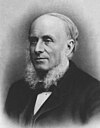
Edwin Cannan on Bernard Mandeville
“If we bear in mind Smith's criticism of Hutcheson and Mandeville in adjoining chapters of the Moral Sentiments, and remember further that he must almost certainly have become acquainted with the Fable of the Bees when attending Hutcheson's lectures or soon afterwards, we can scarcely fail to suspect that it was Mandeville who first made him realise that "it is not from the benevolence of the butcher, the brewer or the baker that we expect our dinner, but from their regard to their own interest".”
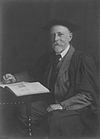
Benjamin Franklin on Bernard Mandeville
“My pamphlet by some means falling into the hands of one Lyons, a surgeon, author of a book entitled "The Infallibility of Human Judgment," it occasioned an acquaintance between us; he took great notice of me, called on me often to converse on those subjects, carried me to the Horns, a pale alehouse in —— lane, Cheapside, and introduced me to Dr. Mandeville, author of the Fable of the Bees, who had a club there, of which he was the soul, being a most facetious, entertaining companion.”
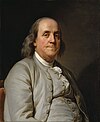
Thomas Green on Bernard Mandeville
“Read Mandeville's Fable of the Bees, and his Enquiry into the Origin of Virtue. In the latter, he ascribes entirely to the policy of Lawgivers, the infusion of that controlling principle which results from the constitution of our nature; and nicknames its operation, Pride and Shame. With respect to his capital and offensive paradox, that private vices are public benefits, Mandeville's whole art consists, in denominating our passions by the appellation assigned to their vicious excess; and then proving them, under this denomination, useful to society. There is a lively force, and caustic though coarse wit, in his performance, which occasionally reminds one of Paine.”
The economic doctrine of Adam Smith is the doctrine of Mandeville set out on Bernard Mandeville
“La doctrine économique d'Adam Smith, c'est la doctrine de Mandeville, exposée sous une forme non plus paradoxale et littéraire, mais rationnelle et scientifique.”
Friedrich Hayek on Bernard Mandeville 3 quotes
“That we do not know why we do what we do, and that the consequences of our decisions are often very different from what we imagine them to be, are the two foundations of that satire on the conceits of a rationalist age which was his initial aim... [T]he speculations to which that je d'esprit led him mark the definite breakthrough in modern thought of the twin ideas of evolution and of the spontaneous formation of an order... Though Mandeville may have contributed little to the answers of particular questions of social and economic theory, he did, by asking the right questions, show that there was an object for a theory in this field. Perhaps in no case did he precisely show how an order formed itself without design, but he made it abundantly clear that it did, and thereby raised the questions to which theoretical analysis, first in the social sciences and later in biology, could address itself.”

William Ralph Inge on Bernard Mandeville
“Mandeville's essay [The Fable of the Bees] was a clever and cynical defence of licence and selfishness.”
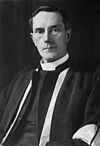
Samuel Johnson on Bernard Mandeville 2 quotes
“The fallacy of that book is, that Mandeville defines neither vices nor benefits. He reckons among vices everything that gives pleasure. He takes the narrowest system of morality, monastick morality, which holds pleasure itself to be a vice, such as eating salt with our fish, because it makes it taste better; and he reckons wealth as a publick benefit, which is by no means always true. Pleasure of itself is not a vice.”
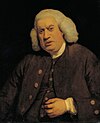
Benjamin Jowett on Bernard Mandeville
“I send you some books, one very good book among them, the works of a Saint, and one very bad book, Fable of the Bees—one of those books which are condemned equally by the world and the Church; by the world because it is partly true, and by the Church because it is partly false, or vice versa—one of those books which delight in turning out the seamy side of society to the light. (Don't read it if you object to the coarseness of parts.)”

About Bernard Mandeville
Bernard Mandeville (or Bernard de Mandeville) (baptised November 20 1670, died January 21 1733) was a Dutch physician, poet and social philosopher who settled in England. Most of his works, including his controversial satire The Fable of the Bees, were written in English.