Link Copied!
Edward S. Herman Quotes (1925-2017)
President
About Edward S. Herman
Edward Samuel Herman (April 7, 1925 – November 11, 2017) was professor emeritus of finance at the Wharton School of Business of the University of Pennsylvania and a media analyst with a specialty in corporate and regulatory issues as well as political economy. He also taught at Annenberg School for Communication at the University of Pennsylvania. He developed, with Noam Chomsky, the propaganda model of media criticism which seeks to explain how populations are manipulated and how consent for economic, social, and political policies is "manufactured" in the public mind due to this alleged propaganda.
Best Edward S. Herman Quotes
Shortest
Earliest
Explore our curated collection of the most famous and impactful Edward S. Herman quotes.


“Patriotism: Judging disputes on the basis of place of residence.”

“Conspiracy theory: A critique or explanation that I find offensive.”


“Jesus Christ: An irresponsible rabble rouser of communistic tendency; victim of an early witch-hunt.”
“Free election: A post-pacification election, in which the “hearts and minds” of the survivors are shown to have been won over by the force of pure reason.”
“Overmature trees: In timber company and Forest Service lingo, trees which may live in splendor for another 500 years, but which would make damned fine boards today.”

“Magic bullet: One that wends its way through several bodies, smashing bones on the way, but ends up in pristine condition, conveniently located for police attribution to the gun of choice.”
“Demonstration election: A circus held in a client state to assure the population of the home country that their intrusion is well received. The results are guaranteed by an adequate supply of bullets well in advance.”

“As in the other cases discussed, our primary concern here is not to establish the facts with regard to postwar Indochina, but rather to investigate their refraction through the prism of Western ideology, a very different task.”
“It is a common error, as we have pointed out several times, to interpret opposition to U.S. intervention and aggression as support for the programs of its victims, a useful device for state propagandists but one that often has no basis in fact.”
“We will consider the facts about postwar Indochina insofar as they can be ascertained, but a major emphasis will be on the ways in which these facts have been interpreted, filtered, distorted or modified by the ideological institutions in the West.”
“Operation Rat-Killer: A U.S. military campaign of 1951-1952, designed to wipe out North Korean guerillas; the terminology reveals an early version of the Mere Gook Rule.”
“Chutzpah factor: Self-righteousness, arrogance, and a sense of superiority so great that gross double-standards seem entirely reasonable and no self-interested action is beyond rationalization. This factor is positively correlated with size, power, and per capita income.”
“On the assumption that the shoot-down was central to the larger plan of Hutu Power and genocide, this would have required a miracle of Hutu incompetence; but it would be entirely understandable if it was carried out by Kagame’s force as part of their planned program to seize state power.”

“Mere gook rule: The deaths and injuries of lesser breeds who stand in our way may be ignored in law and policy-making; technically, the marginal cost of a dead gook (Arab, etc.) is zero. The rule is based on the fact that gooks do not value life and feel pain like we do; besides which, they stand in our way.”
““Herman’s Law” states that when the dictator of a shakedown state loses control and ceases to be useful to the United States, the mainstream media suddenly discover that he is a crook and focus intently on his corruption. This was the case with Marcos and Mobutu, and it fits well the recent treatment of Suharto.”

“Israel is a major regional rival of Iran, and having succeeded in getting the United States to turn lesser rivals, Iraq and Libya, into failed states, it has been extremely anxious to get the United States to do the same to Iran. And Israel’s leaders have pulled out all the stops in getting its vast array of U.S. politicians, pundits, intellectuals, and lobbying groups to press for a U.S. military assault on Iran.”

“In sum, the logic of American military escalation leads to nothing less than a war of extermination against the native Vietnamese peasantry: because the guerillas cannot be segregated from the peasantry; because the peasantry provides the necessary broad base for the guerillas; and because the United States has the military means to eradicate this base completely, if need be, to create an “independent” South Vietnam.”

“The mass media serve as a system for communicating messages and symbols to the general populace. It is their function to amuse, entertain, inform, and to inculcate individuals with the values, beliefs, and codes of behavior that will integrate them into the institutional structures of the larger society. In a world of concentrated wealth and major conflicts of class interest, to fulfil this role requires systematic propaganda.”
“K. Barton Osborn, who served in a covert program of intelligence in Vietnam, not only testified to a wide variety of forms of torture used by U.S. and Saigon personnel, but also made the startling claim that “I never knew an individual to be detained as a VC suspect who ever lived through an interrogation in a year and a half, and that included quite a number of individuals.””

“An important and perhaps growing feature of official and strong-interest-group propaganda is the resort to personal attacks and flak to keep dissidents at bay and inconvenient thoughts out of sight and mind. […] We were very conscious of this when studying the Western dismantlement of Yugoslavia, where the Western media quickly fell into line and treated with aggressive condemnation any departures from the accepted truth and de facto party-line.”
“We know that our work will be assailed as “historical revisionism” and, worse, as “genocide denial,” but charges such as these are fundamentally political in nature, and we regard them as no more than cheap-shots and evasions, whose real purpose is to preempt challenges to a firmly established party-line. The regnant account is regularly protected by aggressive personal attacks on the challengers in lieu of the more arduous task of answering with evidence.”
“Even today, as regards East Timor, where our brutal Indonesian satellite (authors of the 1965-1966 butcheries) have very possibly killed as many people as did the Khmer Rouge, there is a virtually complete blackout of information in the Free Press. This is a bloodbath carried out by a friendly power and is thus of little interest to our leaders. It is a “benign bloodbath” in our terminology.”
Edward S. Herman Quotes by Topic
Find exactly what you are looking for by browsing this categorized list of Edward S. Herman quotes by topic.
Edward S. Herman on Yugoslav Wars
“An important and perhaps growing feature of official and strong-interest-group propaganda is the resort to personal attacks and flak to keep dissidents at bay and inconvenient thoughts out of sight and mind. […] We were very conscious of this when studying the Western dismantlement of Yugoslavia, where the Western media quickly fell into line and treated with aggressive condemnation any departures from the accepted truth and de facto party-line.”

What Edward S. Herman Said About Others
Discover personal opinions Edward S. Herman shared regarding contemporaries.
Edward S. Herman on Donald Rumsfeld
“The warfare in Syria is a follow-on to the attacks on Iraq and Libya. We may recall General Wesley Clark’s claim in March 2007 that shortly after 9/11 a Pentagon official had shown him a Rumsfeld-Wolfowitz list of seven Middle East and North African countries that were scheduled for attack and regime change. Iraq and Libya, both on that list, have been attacked and transformed into U.S.-destroyed states with new or unsettled leadership. The United States has been supporting regime change forces in Syria as far back as 2011, but the job has not been completed, in part because of Russian support for president Assad. Truce efforts by the U.S. and Russia have regularly broken down because the U.S. still aims at regime change and supports the rebel forces that Russia targets, many or most of which are Al Qaeda- or ISIS-related and whose victory would mean another Libya-like failed state.”

Quotes About Edward S. Herman
Gain deeper perspective through quotes about Edward S. Herman from others.
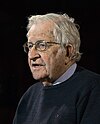
Noam Chomsky on Edward S. Herman 3 quotes
“Perhaps the most shattering lesson from this powerful inquiry is that the end of the Cold War opened the way to an era of virtual genocide denial. As the authors put it, more temperately, “during the past several decades, the word ‘genocide’ has increased in frequency of use and recklessness of application, so much so that the crime of the 20th Century for which the term was originally coined often appears debased.” Current usage, they show, is an insult to the memory of victims of the Nazis.”
Jeff Cohen on Edward S. Herman
“In 1984, when I was part of a lawyers’ delegation monitoring an “election” in death squad-run El Salvador, I remember a gaggle of progressive attorneys at the Salvador Sheraton tussling with each other to get their hands on a shipment of hot-off-the-press copies of Demonstration Elections, Ed’s devastating book (with Frank Brodhead) on the US “staging” elections as PR [public relations] shows to prop up repressive puppet regimes, from the Dominican Republic to Vietnam to Salvador. […] A highpoint of my life was flying with Ed across the Atlantic to Brussels to speak alongside him before the European Parliament on the problem of media conglomeration, a hearing organized by the European Greens. As happened too often, Ed’s name went unmentioned in the 1997 movie Good Will Hunting; when Will (Matt Damon) says to his therapist (Robin Williams) that Howard Zinn’s People’s History is a book that will “[…] knock you on your ass,” the therapist responds: “Better than Chomsky’s Manufacturing Consent?” I asked Ed if he felt left out. Not at all - the movie “will bring our book more attention, more readers.” Pure Ed.”
Robert W. McChesney on Edward S. Herman
“The genius of Manufacturing Consent was that it opened an entirely new way of understanding the news media, not only for activists and people on the left, but also for more than one generation of students and young people trying to make sense of it. It introduced them to a new way of viewing the world from a critical perspective, and understanding the importance, possibility, and necessity of social change. There is no doubt that it is the most widely read and influential work on how to understand the US news media. It remains so, and is more relevant than ever, three decades after its publication.”
Christopher Hitchens on Edward S. Herman
“That war in the early 1990s changed a lot for me. I never thought I would see, in Europe, a full-dress reprise of internment camps, the mass murder of civilians, the reinstitution of torture and rape as acts of policy. And I didn't expect so many of my comrades to be indifferent – or even take the side of the fascists. It was a time when many people on the left were saying 'Don't intervene, we'll only make things worse' or, 'Don't intervene, it might destabilise the region. And I thought – destabilisation of fascist regimes is a good thing. Why should the left care about the stability of undemocratic regimes? Wasn't it a good thing to destabilise the regime of General Franco? It was a time when the left was mostly taking the conservative, status quo position – leave the Balkans alone, leave Milosevic alone, do nothing. And that kind of conservatism can easily mutate into actual support for the aggressors. Weimar-style conservatism can easily mutate into National Socialism. So you had people like Noam Chomsky's co-author Ed Herman go from saying 'Do nothing in the Balkans', to actually supporting Milosevic, the most reactionary force in the region. That's when I began to first find myself on the same side as the neocons. I was signing petitions in favour of action in Bosnia, and I would look down the list of names and I kept finding, there's Richard Perle. There's Paul Wolfowitz. That seemed interesting to me. These people were saying that we had to act. Before, I had avoided them like the plague, especially because of what they said about General Sharon and about Nicaragua. But nobody could say they were interested in oil in the Balkans, or in strategic needs, and the people who tried to say that – like Chomsky – looked ridiculous. So now I was interested.”

Source on Edward S. Herman
“Herman's animus against the United States was so great that, from his study in Philadelphia, he assiduously whitewashed the crimes of the worst thugs and dictators in the post-war world provided only that they defined themselves against America.”
Oliver Kamm on Edward S. Herman
“For many years, I’ve done what I can to aid the cause of commemorating and publicising the victims of genocide, through the charity Remembering Srebrenica. One irritant, to put it no higher, is the persistence of a handful of ideologues who deny the facts of Srebrenica and other crimes. Herman was the leading figure in that small world, labelling the Srebrenica massacre "a gigantic political fraud".”

Matt Taibbi on Edward S. Herman
“His work has never been more relevant. Manufacturing Consent was a kind of bible of media criticism for a generation of dissident thinkers. The book described with great clarity how the system of private commercial media in America cooperates with state power to generate propaganda. […] Herman and Chomsky's work was a great gift to a generation of thinkers trying to make sense of how power in the West sold itself to populations. The late Herman should be honored for that critical contribution he made to understanding American empire.”

Khadijah Costley White on Edward S. Herman
“[...] Herman’s insights become most keen at the points in which they meet my own experience, study, and engagement with the media. It means almost nothing to state repeatedly that the media function as complements and conduits of a capitalist regime without a personal history and context through which one can fully understand the everyday mire of journalism’s entanglements. It is through the mire, I think, that Herman’s theories are most clear.”
About Edward S. Herman
Edward Samuel Herman (April 7, 1925 – November 11, 2017) was professor emeritus of finance at the Wharton School of Business of the University of Pennsylvania and a media analyst with a specialty in corporate and regulatory issues as well as political economy. He also taught at Annenberg School for Communication at the University of Pennsylvania. He developed, with Noam Chomsky, the propaganda model of media criticism which seeks to explain how populations are manipulated and how consent for economic, social, and political policies is "manufactured" in the public mind due to this alleged propaganda.