Link Copied!
William Baziotes Quotes (1912-1963)
Painter


About William Baziotes
William Baziotes (June 11, 1912 – June 6, 1963) was an American painter influenced by Surrealism and was a contributor to Abstract Expressionism. He participated in discussions and exhibitions of the New York School. In the early 1940's Baziotes was close friends of Jackson Pollock, Roberto Matta and Robert Motherwell; with Pollock he painted some paintings together.
Best William Baziotes Quotes
Shortest
Earliest
Explore our curated collection of the most famous and impactful William Baziotes quotes.
“The eye seems to be responding to something living.”
“I can not evolve any concrete theory about painting. What happens on the canvas is unpredictable and surprising to me.”
“To be inspired. That is the thing.
to be possessed; to be bewitched.
To be obsessed. That is the thing.
To be inspired.”
to be possessed; to be bewitched.
To be obsessed. That is the thing.
To be inspired.”
“As for the subject matter in my painting...it is very often an incidental thing in the background, elusive and unclear, that really stirred me.”
“There is always an unconscious collaboration among artists.. ..the artist who imagine himself a Robinson Crusoe is either a primitive or a fool.”
“The large gray spiked form rising from the bottom of the picture is to me the symbol of death and ruin. And finally the black ovoid form is the symbol of fire, lava and destruction.”

“The emphasis on flora, fauna, and beings makes the exhibit a most intriguing and artistic one for it brings forth those strange memories and psychic feelings that mystify and fascinate all of us. [his remark in 1957]”

“I consider my painting finished when my eyes goes to a particular spot on the canvas. But if I put the picture away about thirty feet on the wall and the movements keep returning to me and the eye seems to be responding to something living, then it is finished.”

“Its decadence, satiety, and languor [of Roman civilization] interested me. And I kept looking and returning to their wall paintings with their veiled melancholy and their elegant plasticity. I admired the way they used their geology in their art — the sense of mineral, clay. rock, marble, and stone.”

“I think the reason we [Baziotes himself and Richard Lippold ] begin in a different way, is that this particular time has gotten to a point where the artist feels like a gambler. He does something on the canvas and takes a chance in the hope that something important will be revealed.”
“Each painting has its own way of evolving. One may start with a few color areas on the canvas; another with a myriad of lines, another with a profusion of colors.. .Once I sense the suggestion I begin to paint intuitively. The suggestion then becomes a phantom that must be caught and made real. As I work, or when the painting is finished, the subject reveals itself.”

“Today it's possible to paint one canvas with the calmness of an ancient Greek and the next with the anxiety of a Van Gogh. Either of these emotions, and any in between, is valid to me.. .I work on many canvasses at once. In the morning I line them up against the wall of my studio. Some speak, some do not. They are my mirrors. They tell me what I am like at that moment.”
“We are getting mixed up with the French tradition. In talking about the necessity to 'finish' a thing, we then said American painters 'finish' a thing that looks 'unfinished', and the French, they 'finish' it. I have seen Henri Matisse's that were more 'unfinished' and yet more 'finished' than any American painters. Matisse was obviously in a terrific emotion at the time and he was more 'unfinished' than 'finished'.”
“Whereas certain people start with a recollection or an experience and paint that experience, to some of us the act of doing is the experience; so that we are not quite clear why we are engaged on a particular work. And because we are more interested in plastic matters than we are in matters of words, once can begin a painting and carry it through and stop it and do nothing about the title at all. All pictures are full of association.”

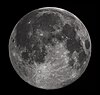
“I think when a man first discovers that two and two is four, there is 'beauty' in that; and we can see why. But if people stand and look at the moon and one says 'I think it's just beautiful tonight' and the other says 'The moon makes me feel awful' we are both 'clear'. A geometric shape – we know why we like it; and an unreasonable shape; it has a certain mystery that we recognize as real; but it is difficult to put these things in an objective way.”
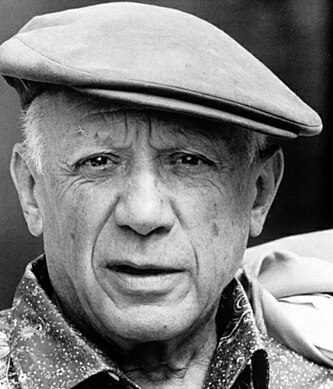
“Well, I looked at Picasso [at the Picasso exhibition, Museum of Modern Art, in 1939] until I could smell his armpits and the cigarette smoke on his breast. Finally, in front of one picture – a bone figure on a beach – I got it. I saw that the figure was not his real subject. The plasticity wasn't either – although the plasticity was great. No. Picasso had uncovered a feverishness in himself and is painting it – a feverishness of death and beauty.”
“My whole intention in painting is to make a thing poetical; but not poetical in a literary sense. I want something that evokes mood, a background, a stage set for certain characters that are playing certain parts. When I paint I do not consider myself an abstractionist in the sense that I'm trying to create beautiful forms that fit together like a puzzle. The things in my painting are intended to strike something that is an emotional involvement – that has to do with the human personality and all the mysteries of life, not simply colors or abstract balances. To me, it's all reality.”
“Contact with other artists has always been of great importance to me. When the artists I know best used to meet.. ..the talk was mostly of ideas in painting. There was an unconscious collaboration between artists. Whether you agreed or disagreed was of no consequence. It was exciting and you were compelled to paint over your head... .If your painting was criticized adversely, you either imitated someone to give it importance, or you simply suffered and painted harder to make your feelings on canvas convincing.. .What does happen when artists meet is that we are able to see more clearly the unfolding of character as time goes on.”

William Baziotes Quotes by Topic
Find exactly what you are looking for by browsing this categorized list of William Baziotes quotes by topic.
William Baziotes on Abstract expressionism 3 quotes
“The eye seems to be responding to something living.”
William Baziotes on Abstract art
“My whole intention in painting is to make a thing poetical; but not poetical in a literary sense. I want something that evokes mood, a background, a stage set for certain characters that are playing certain parts. When I paint I do not consider myself an abstractionist in the sense that I'm trying to create beautiful forms that fit together like a puzzle. The things in my painting are intended to strike something that is an emotional involvement – that has to do with the human personality and all the mysteries of life, not simply colors or abstract balances. To me, it's all reality.”

What William Baziotes Said About Others
Discover personal opinions William Baziotes shared regarding contemporaries.
William Baziotes on Henri Matisse
“I have seen Matisse's that were more 'unfinished' and yet more 'finished' than any American painters. Matisse was obviously in a terrific emotion at the time and he was more ’unfinished’ than 'finished'.”
William Baziotes on Pablo Picasso
“Well, I looked at Picasso (at the Picasso exhibition in New York, Museum of Modern Art in 1939) until I could smell his armpits and the cigarette smoke on his breast. Finally, in front of one picture – a bone figure on a beach – I got it. I saw that the figure was not his real subject. The plasticity wasn't either – although the plasticity was great. No. Picasso had uncovered a feverishness in himself and is painting it – a feverishness of death and beauty.”

Quotes About William Baziotes
Gain deeper perspective through quotes about William Baziotes from others.
Lawrence Alloway on William Baziotes 2 quotes
“Baziotes is unique in that the spatial organization of the whole painting implies a dense medium, like water, as well as evoking reminiscences of particular organisms. This kind of space becomes scenically expansive in 1952. developing after paintings of 1950 in which marine life is one term in an ambiguous image. Examples of this phase are 'Dying Bird' and 'Flight', in which bird forms are generalized to the point at which they imply a seal or a slug...Baziotes' color is as bland and shifting as light in topaz or opal, converting the motion of the sea to a Medusan calm. His art paradoxically evokes both the amniotic waters and the impassivity of the mineral world.”
Quote of Helen Frankenthaler on William Baziotes
“I saw a Dubuffet show at Pierre Matisse's art gallery in the late forties and came back with a new vocabulary. Also when Baziotes won the Carnegie (1948) there was a reproduction in 'The Times'. I remember bringing it to class. It was source of bewilderment, delineated configurations that seemed to come out of Cubism. It was something new. Those were the tastes of a whole dimension that was to come..”
Quote of Adolph Gottlieb on William Baziotes
“Recently I was at the home of Thomas Hess and he had a painting hanging there and I said to my wife: 'Is that one of my paintings?'. And she said: 'Well, it looks like one of yours [Adolph Gottlieb's] from around 1942'. But then we realized that it wasn't one of my but one of Baziote's paintings. At that time, 1942, the differences in our paintings may have seemed very great, but now [1960] the difference is not so great apparently.. .However, at no point was there ever any sort of a doctrine or a programma or anything that would make a school. I think it was simply a situation in which all of the painters were at that time; they were trying to break away from certain things.”
Quote of Robert Motherwell on William Baziotes
“I hung Baziote's [painting] show with him at Peggy's in 1944. After it was up and we had stood in silence looking at it for a while, I noticed he had turned white. Suddenly he [Baziotes] looked at me and said: 'You're the one I trust; if you tell me the show is no good, I'll take it right down and cancel it.'. You see, at the opposite side of the coin of the abstract expressionist's ambition and of out not giving a damn, was also not knowing whether our pictures were even pictures, let alone whether they were any good..”
About William Baziotes
William Baziotes (June 11, 1912 – June 6, 1963) was an American painter influenced by Surrealism and was a contributor to Abstract Expressionism. He participated in discussions and exhibitions of the New York School. In the early 1940's Baziotes was close friends of Jackson Pollock, Roberto Matta and Robert Motherwell; with Pollock he painted some paintings together.