Link Copied!
Anaximander Quotes (-610--546)
Philosopher
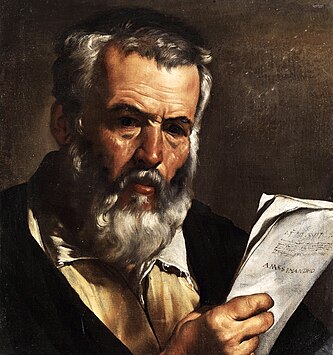


About Anaximander
Anaximander (Greek: Ἀναξίμανδρος, Anaximandros; c. 610 – c. 546 BC) was a pre-Socratic Greek philosopher who lived in Miletus, a city of Ionia; Milet in modern Turkey. He belonged to the Milesian school and learned the teachings of his master Thales, succeeding him to become the second master of that school where he counted Anaximenes and arguably, Pythagoras amongst his pupils.
Best Anaximander Quotes
Shortest
Earliest
Explore our curated collection of the most famous and impactful Anaximander quotes.
“All things must in equity again decline into that whence they have their origin for they must give satisfaction and atonement for injustice each in the order of time.”

“The Earth is cylindrical, three times as wide as it is deep, and only the upper part is inhabited. But this Earth is isolated in space, and the sky is a complete sphere in the center of which is located, unsupported, our cylinder, the Earth, situated at an equal distance from all the points of the sky.”
“There cannot be a single, simple body which is infinite, either, as some hold, one distinct from the elements, which they then derive from it, nor without this qualification. For there are some who make this (i.e. a body distinct from the elements) the infinite, and not air or water, in order that the other things may not be destroyed by their infinity. They are in opposition one to another — air is cold, water moist, and fire hot—and therefore, if any one of them were infinite, the rest would have ceased to be by this time. Accordingly they say that what is infinite is something other than the elements, and from it the elements arise.”
Anaximander Quotes by Topic
Find exactly what you are looking for by browsing this categorized list of Anaximander quotes by topic.
Anaximander on Time
“All things must in equity again decline into that whence they have their origin for they must give satisfaction and atonement for injustice each in the order of time.”

Anaximander on Symmetry
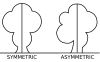
“The earth is a cylindrical column, surrounded by air; it floats upright in the centre of the universe without support or anything to stand on, yet it does not fall because, being in the centre, it has no preferred direction towards which to lean; if it did, this would disturb the symmetry and balance of the whole. The spherical heavens enclose the atmosphere 'like the bark of a tree', and there are several layers of this enclosure to accommodate the various stellar objects.”
Quotes About Anaximander
Gain deeper perspective through quotes about Anaximander from others.
Walter Burkert on Anaximander
“Anaximander relies on the accuracy of geometry in matters beyond the range of any kind of verification—in its application to cosmic proportions—and also in contradiction to appearance, which suggests that the sun is about as large in diameter as the width of a human foot. The concept of geometrical similarity is also the precondition for Anaximander's attempt to construct a map of the world.”
David H. Clark on Anaximander
“The big bang and the steady state debate in some ways echoed that between the ideas of Anaximander and Anaxagoras from two and a half millennia earlier. Anaxagoras had envisaged that at one time "all things were together" and that the motive force for the universe originated at a single point... Anaximander on the other hand wanted a universe determined by "the infinite" and needed an "eternal motion" to explain the balancing process of things coming into being and passing away in an eternal universe... ancient philosophy was debating the alternatives of a creation event starting the universe from a single point versus a continuous creation in an eternal universe.”
Werner Heisenberg on Anaximander 2 quotes
“Anaximander denied the fundamental substance to be... any of the known substances. He taught that the primary substance was infinite, eternal and ageless and... encompassed the world. This... is transformed into the various substances... Theophrastus quotes from Anaximander: "Into that from which things take their rise they pass away once more... for they make reparation and satisfaction to one another for their injustice according to the ordering of time." In this... the antithesis of Being and Becoming plays the fundamental role. The primary substance, infinite... ageless... undifferentiated Being, degenerates into... forms which lead to endless struggles. ...Becoming is ...a ...debasement of the infinite Being—a disintegration into the struggle ultimately expiated by a return into that ...without shape or character. The struggle ...is the opposition between hot and cold, fire and water, wet and dry, etc. ...[T]emporary victory ...is the injustice for which they ...make reparation in the ordering of time. ...[T]here is "eternal motion," the creation and passing away of worlds from infinity to infinity.”

Arthur Koestler on Anaximander
“Anaximander displays all the symptoms of the intellectual fever spreading through Greece. His universe is no longer a closed box, but infinite in extension and duration. The raw material is none of the familiar forms of matter but a substance without definite properties except for being indestructible and everlasting. Out of this stuff all things are developed, and into it they return... infinite multitudes of other universes have already existed, and been dissolved again into the amorphous mass. The earth is a cylindrical column, surrounded by air; it floats upright... without support or anything to stand on, yet it does not fall because, being in the centre, it has no preferred direction... if it did, this would disturb the symmetry and balance of the whole. The spherical heavens enclose the atmosphere "like the bark of a tree", and there are several layers... to accommodate the various stellar objects. ...The sun is merely a hole... the moon... it phases... due to recurrent partial stoppages of the puncture, and so are the eclipses. The stars are pin-holes in a dark fabric through which we glimpse the cosmic fire filling the space between two layers of "bark". ...it is the first approach to a mechanical model of the universe. ...yet the machinery looks like it had been dreamed up by a surrealist painter... closer to Picasso than to Newton.”

Plutarch on Anaximander
“Anaximander the Milesian, affirmed the infinite to be the first principle, and that all things are generated out of it, and corrupted again into it. His infinite is nothing else but matter.”


About Anaximander
Anaximander (Greek: Ἀναξίμανδρος, Anaximandros; c. 610 – c. 546 BC) was a pre-Socratic Greek philosopher who lived in Miletus, a city of Ionia; Milet in modern Turkey. He belonged to the Milesian school and learned the teachings of his master Thales, succeeding him to become the second master of that school where he counted Anaximenes and arguably, Pythagoras amongst his pupils.