Link Copied!
Ambrose Bierce Quotes (1842-1914)
Writer













































































































































































About Ambrose Bierce
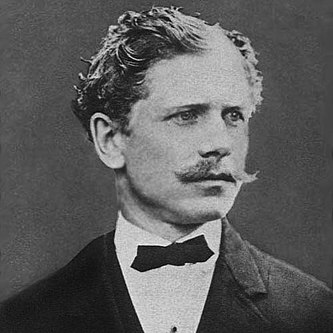
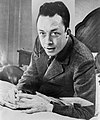
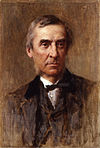
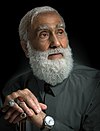
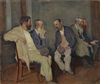
Ambrose Gwinnett Bierce (June 24, 1842 – date of death uncertain; probably late 1912 or early 1914) was an American satirist, critic, short story writer, editor and journalist. He is perhaps most famous for his serialized mock lexicon, The Devil's Dictionary, in which, over the years, he scathed American culture and accepted wisdom by pointing out alternate, more practical definitions for common words.
Best Ambrose Bierce Quotes
Shortest
Earliest
Explore our curated collection of the most famous and impactful Ambrose Bierce quotes.

“Self-denial is indulgence of a propensity to forego.”


“He who thinks with difficulty believes with alacrity.”
“Kleptomaniac, n. A rich thief.”
“Non-combatant, n. A dead Quaker.”

“Happiness is lost by criticizing it; sorrow by accepting it.”

“Defenceless, adj. Unable to attack.”
“Virtues, n. pl. Certain abstentions.”
“Capital, n. The seat of misgovernment.”
“Congratulation, n. The civility of envy.”

“The most intolerant advocate is he who is trying to convince himself.”
“Politeness, n. The most acceptable hypocrisy.”


Ambrose Bierce Quotes by Topic
Find exactly what you are looking for by browsing this categorized list of Ambrose Bierce quotes by topic.
Ambrose Bierce on Politics 4 quotes
“POLITICS, n. The conduct of public affairs for private advantage.”

Ambrose Bierce on Reason 3 quotes
“REASON, n. Propensitate of prejudice.”

Ambrose Bierce on Pork 3 quotes
“LITIGATION, n. A machine which you go into as a pig and come out of as a sausage.”
Ambrose Bierce on Friendship 2 quotes
View all 2 quotes on Friendship →Ambrose Bierce on Lying 2 quotes
“LIAR, n. A lawyer with a roving commission.”

Ambrose Bierce on United States Congress 2 quotes
View all 2 quotes on United States Congress →Ambrose Bierce on Homeopathy 2 quotes
“HOMOEOPATHIST, n. The humorist of the medical profession.”
Ambrose Bierce on Ghosts 2 quotes
View all 2 quotes on Ghosts →Ambrose Bierce on Mice 2 quotes
View all 2 quotes on Mice →Ambrose Bierce on Begging 2 quotes
“BEGGAR, n. One who has relied on the assistance of his friends.”

Ambrose Bierce on President of the United States 2 quotes
“PRESIDENCY, n. The greased pig in the field game of American politics.”

Ambrose Bierce on Clergy 2 quotes
“ARCHBISHOP, n. An ecclesiastical dignitary one point holier than a bishop.”

What Ambrose Bierce Said About Others
Discover personal opinions Ambrose Bierce shared regarding contemporaries.
Ambrose Bierce on Historian
“HISTORIAN, n. A broad-gauge gossip.”

Ambrose Bierce on Robert G. Ingersoll
Ambrose Bierce on Wives
“Uxoriousness, n. A perverted affection that has strayed to one's own wife.”

Ambrose Bierce on Queen
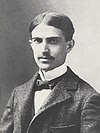
Ambrose Bierce on Stephen Crane
“This young man has the power to feel. He knows nothing of war, yet he is drenched in blood. Most beginners who deal with this subject spatter themselves merely with ink.”
Ambrose Bierce on Walt Whitman
“Incompossible, adj. Unable to exist if something else exists. Two things are incompossible when the world of being has scope enough for one of them, but not enough for both—as Walt Whitman's poetry and God's mercy to man.”

Ambrose Bierce on Politicians
“POLITICIAN, n. An eel in the fundamental mud upon which the superstructure of organized society is reared. When he wriggles he mistakes the agitation of his tail for the trembling of the edifice. As compared with the statesman, he suffers the disadvantage of being alive.”
Ambrose Bierce on Thomas Robert Malthus
“MALTHUSIAN, adj. Pertaining to Malthus and his doctrines. Malthus believed in artificially limiting population, but found that it could not be done by talking. One of the most practical exponents of the Malthusian idea was Herod of Judea, though all the famous soldiers have been of the same way of thinking.”
Ambrose Bierce on Michel de Montaigne
“The most offensive egotist is he that fears to say "I" and "me." "It will probably rain "—that is dogmatic. "I think it will rain"—that is natural and modest. Montaigne is the most delightful of essayists because so great is his humility that he does not think it important that we see not Montaigne. He so forgets himself that he employs no artifice to make us forget him.”

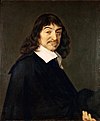
Ambrose Bierce on René Descartes
“CARTESIAN, adj. Relating to Descartes, a famous philosopher, author of the celebrated dictum, Cogito ergo sum -- whereby he was pleased to suppose he demonstrated the reality of human existence. The dictum might be improved, however, thus: Cogito cogito ergo cogito sum -- "I think that I think, therefore I think that I am;" as close an approach to certainty as any philosopher has yet made.”
Ambrose Bierce on Maiden
“MAIDEN, n. A young person of the unfair sex addicted to clewless conduct and views that madden to crime. The genus has a wide geographical distribution, being found wherever sought and deplored wherever found. The maiden is not altogether unpleasing to the eye, nor (without her piano and her views) insupportable to the ear, though in respect to comeliness distinctly inferior to the rainbow, and, with regard to the part of her that is audible, bleating out of the field by the canary — which, also, is more portable.”

Ambrose Bierce on Plato
“Plato held that those souls which in a previous state of existence (antedating Athens) had obtained the clearest glimpses of eternal truth entered into the bodies of persons who became philosophers. Plato himself was a philosopher. The souls that had least contemplated divine truth animated the bodies of usurpers and despots. Dionysius I, who had threatened to decapitate the broad- browed philosopher, was a usurper and a despot. Plato, doubtless, was not the first to construct a system of philosophy that could be quoted against his enemies; certainly he was not the last.”

Ambrose Bierce on Women
“Woman, n. An animal usually living in the vicinity of Man, and having a rudimentary susceptibility to domestication. It is credited by many of the elder zoologists with a certain vestigial docility acquired in a former state of seclusion, but naturalists of the postsusananthony period, having no knowledge of the seclusion, deny the virtue and declare that such as creation's dawn beheld, it roareth now. ... The popular name (wolfman) is incorrect, for the creature is of the cat kind. The woman is lithe and graceful in its movement, especially the American variety (felis pugnans), is omnivorous and can be taught not to talk. —Balthasar Pober”

Ambrose Bierce on George Washington
“You can no more love and revere the memory of the biographical George Washington than you can an isosceles triangle or a cubic foot of interstellar space. The portrait-painters began it—Gilbert Stuart and the rest of them. They idealized all the humanity out of the poor patriot's face and passed him down to the engravers as a rather sleepy-looking butcher's block. There is not a portrait of Washington extant which a man of taste and knowledge would suffer to hang on the wall of his stable. Then the historians jumped in, raping all the laurels from the brows of the man's great contemporaries and piling them in confusion upon his pate. They made him a god in wisdom, and a giant in arms; whereas, in point of ability and service, he was but little, if at all, superior to any one of a half-dozen of his now over-shadowed but once illustrious co-workers in council and camp, and in no way comparable with Hamilton. He towers above his fellows because he stands upon a pile of books.”

Ambrose Bierce on Oscar Wilde
“That sovereign of insufferables, Oscar Wilde has ensued with his opulence of twaddle and his penury of sense. He has mounted his hind legs and blown crass vapidities through the bowel of his neck, to the capital edification of circumjacent fools and foolesses, fooling with their foolers. He has tossed off the top of his head and uttered himself in copious overflows of ghastly bosh. The ineffable dunce has nothing to say and says it—says it with a liberal embellishment of bad delivery, embroidering it with reasonless vulgarities of attitude, gesture and attire. There never was an impostor so hateful, a blockhead so stupid, a crank so variously and offensively daft. Therefore is the she fool enamored of the feel of his tongue in her ear to tickle her understanding. The limpid and spiritless vacuity of this intellectual jellyfish is in ludicrous contrast with the rude but robust mental activities that he came to quicken and inspire. Not only has he no thoughts, but no thinker. His lecture is mere verbal ditch-water—meaningless, trite and without coherence. It lacks even the nastiness that exalts and refines his verse. Moreover, it is obviously his own; he had not even the energy and independence to steal it. And so, with a knowledge that would equip and idiot to dispute with a cast-iron dog, and eloquence to qualify him for the duties of a caller on a hog-ranch, and an imagination adequate to the conception of a tom-cat, when fired by contemplation of a fiddle-string, this consummate and star-like youth, missing everywhere his heaven-appointed functions and offices, wanders about, posing as a statue of himself, and, like the sun-smitten image of Memnon, emitting meaningless murmurs in the blaze of women's eyes. He makes me tired. And this gawky gowk has the divine effrontery to link his name with those of Swinburne, Rossetti and Morris—this dunghill he-hen would fly with eagles. He dares to set his tongue to the honored name of Keats. He is the leader, quoth'a, of a renaissance in art, this man who cannot draw—of a revival of letters, this man who cannot write! This little and looniest of a brotherhood of simpletons, whom the wicked wits of London, haling him dazed from his obscurity, have crowned and crucified as King of the Cranks, has accepted the distinction in stupid good faith and our foolish people take him at his word. Mr. Wilde is pinnacled upon a dazzling eminence but the earth still trembles to the dull thunder of the kicks that set him up.”

Misattributed Quotes
Quotes mistakenly credited to Ambrose Bierce
About Ambrose Bierce
Ambrose Gwinnett Bierce (June 24, 1842 – date of death uncertain; probably late 1912 or early 1914) was an American satirist, critic, short story writer, editor and journalist. He is perhaps most famous for his serialized mock lexicon, The Devil's Dictionary, in which, over the years, he scathed American culture and accepted wisdom by pointing out alternate, more practical definitions for common words.