Link Copied!
Amartya Sen Quotes (1933-)





About Amartya Sen
Amartya Kumar Sen (born 3 November 1933) is an Indian economist and the winner of the 1998 Nobel Prize for economics.
Best Amartya Sen Quotes
Shortest
Earliest
Explore our curated collection of the most famous and impactful Amartya Sen quotes.
“To ask how things are going and whether they can be improved is a constant and inescapable part of the pursuit of justice.”
“The continuous cries for help - from children and women and men - ring in my ears, even today seventy-seven years later. (pg. 115)”

“No less importantly, intellectual probing is needed to identify deeds that are not intended to be injurious, but which have that effect...”

“Globalization is not in itself a folly: It has enriched the world scientifically and culturally and benefited many people economically as well.”

“To what extent reasoning can provide a reliable basis for a theory of justice is, of course, itself an issue that has been subject to controversy.”


“Being smarter may help the understanding not only of one’s self-interest, but also how the lives of others can be strongly affected by one’s own actions.”


“Democracy has to be judged not just by the institutions that formally exist but by the extent to which different voices from diverse sections of the people can actually be heard.”

“People's identities as Indians, as Asians, or as members of the human race seemed to give way — quite suddenly — to sectarian identification with Hindu, Muslim, or Sikh communities.”
“Given what can be achieved through intelligent and humane intervention, it is amazing how inactive and smug most societies are about the prevalence of the unshared burden of disability.”
“The impoverishment of economics related to its distancing from ethics affects both welfare economics (narrowing its reach and relevance) and predictive economics (weakening its behavioural foundations).”

“Amartya Sen is not Indian. He had lost his Indian-ness after he left his Bengali ex-wife and married two foreign females. He has lived abroad and only visits the country for a couple of months, which cannot make you Indian.”
“What moves us, reasonably enough, is not the realization that the world falls short of being completely just – which few of us expect – but that there are clearly remediable injustices around us which we want to eliminate.”

“"Where is the railway station?" he asks me. "There," I say, pointing at the post office, "and would you please post this letter for me on the way?" "Yes," he says, determined to open the envelope and check whether it contains something valuable.”
“It is arguable that a closer contact between ethics and economics can be beneficial not only to economics but even to ethics. Many ethical problems have what we have been calling 'engineering' aspects, and some of them do, in fact, involve economic relations.”
“Even though in the approach presented here principles of justice will not be defined in terms of institutions, but rather in terms of the lives and freedoms of the people involved, institutions cannot but play a significant instrumental role in the pursuit of justice.”

“John Kenneth Galbraith doesn't get enough praise. The Affluent Society is a great insight, and has become so much a part of our understanding of contemporary capitalism that we forget where it began. It's like reading Hamlet and deciding it's full of quotations.”
“Smith had no illusion that this would be easy to do, nor did he suffer from the delusion that such an exercise would, in any sense, be perfect. But he did have the conviction that the exercise could still be very useful, and the best should not be made into an enemy of the good.”

“While most of the loot from the financial bleeding accrued to British company officials in Bengal, there was widespread participation by the political and business leadership in Britain: nearly a quarter of the MPs in London owned stocks in the East India Company after Plassey. (pg. 165)”

“Rather, it is the firmly ‘open’ outlook, which Smith’s ‘impartial spec tator’ invokes, that may be in some need of reassertion today. It can make a substantial difference to our understanding of the demands of impartiality in moral and political philosophy in the interconnected world in which we live.”
“Hugely engaging as this longing is for hope and history to rhyme together, the justice of transcendental institutionalism has little room for that engagement. This limitation provides one illustration of the need for a substantial departure in the prevailing theories of justice. That is the subject matter of this book.”
Amartya Sen Quotes by Topic
Find exactly what you are looking for by browsing this categorized list of Amartya Sen quotes by topic.
Amartya Sen on Social contract 3 quotes
“The contractarian approach has remained the dominant influence in contemporary political philosophy, led by the most prominent political philosopher of our time, John Rawls, whose classic book, A Theory of Justice published in 1971, presents a far-reaching statement of a particular version of the social contract approach to justice. The principal theories of justice in contemporary political philosophy, coming not only from Rawls but also from Robert Nozick, Ronald Dworkin, David Gauthier and others, share in common, explicitly or by implication, the idea of a social contract that identifies ideal social institutions (even though the substantive contents of their respective theories are different from each other in terms of the diagnosis of what exactly the social contract should demand).”

Amartya Sen on Social choice theory 2 quotes
“In contrast with the ‘social contract’ tradition, a ‘social choice’ approach is concerned with public reasoning – and that can go well beyond national boundaries. There is a strong case for an inclusive effort to bring in the perspectives and values of other people, even when they live far away. Indeed, the inputs into the exercise of invoking of the ‘impartial spectator’ can come from far as well as near, as Smith explained.”

Amartya Sen on Democracy 2 quotes
“The requirements of democracy include the development of opportunities for participatory public reasoning, not least in Iraq. This calls for the promotion of civil rights, including freedom from arbitrary arrest (and, of course, from torture), facilities for public gathering and fuller media freedom. It is important to assist, rather than hinder, the development of non-sectarian identities of women and men, and restoration of the self-respect of Iraqis as Iraqis. The first step is to have a clearer understanding of the nature of government by discussion.”
Amartya Sen on Globalization
“Globalization is not in itself a folly: It has enriched the world scientifically and culturally and benefited many people economically as well.”
Amartya Sen on Asian values
“I personally have great skepticism about the theories extolling the wonders of "Asian values." They are often based on badly researched generalizations and frequently uttered by governmental spokesmen countering accusations of authoritarianism and violations of human rights (as happened spectacularly at the World Conference on Human Rights in Vienna in 1993).”

Amartya Sen on Libertarianism
“Libertarian logic for non-interference, when consistently explored, can have extraordinarily stern implications in invalidating the right to assistance from the society when one is hit by self-harming behaviour. If that annulment is not accepted, then the case for libertarian “immunity” from interference is also correspondingly undermined. We should not readily agree to be held captive in a half-way house erected by an inadequate assessment of the demands of liberty.”

Amartya Sen on Justice
“The world in which we live falls short in terms of justice in many different ways. We have reason to do what we can to remove diagnosable injustice to the extent possible. Subjecting our values to scrutiny by asking probing questions, drawing on many sources, may be a good beginning. Broadening that exercise by considering the perspectives of others – from far as well as near – would make sense here, for reasons that Smith had discussed with much clarity a quarter of a millennium ago.”
Amartya Sen on Selfishness
“The behavioral foundations of capitalism do, of course, continue to engage attention, and the pursuit of self-interest still occupies a central position in theories about the workings and successes of capitalism. But in these recent theories, interests are given a rather different—and much more "positive"—role in promoting efficient allocation of resources through informational economy as well as the smooth working of incentives, rather than the negative role of blocking harmful passions.”

Amartya Sen on Injustice
“It is fair to assume that Parisians would not have stormed the Bastille, Gandhi would not have challenged the empire on which the sun used not to set, Martin Luther King would not have fought white supremacy in ‘the land of the free and the home of the brave’, without their sense of manifest injustices that could be overcome. They were not trying to achieve a perfectly just world (even if there were any agreement on what that would be like), but they did want to remove clear injustices to the extent they could.”

Amartya Sen on Bangladesh Liberation War
“People's priorities and actions are influenced by many different affiliations and associations, not just by their religion. For example, the separation of Bangladesh from Pakistan was connected with loyalty to Bengali language and literature, along with political - including secular - priorities, not with religion, which both wings of undivided Pakistan shared. Muslim Bangladeshis - in Britain or anywhere else - may indeed be proud of their Islamic faith, but that does not obliterate their other affiliations and capacious dignity.”

Amartya Sen on Bengali nationalism
“People's priorities and actions are influenced by many different affiliations and associations, not just by their religion. For example, the separation of Bangladesh from Pakistan was connected with loyalty to Bengali language and literature, along with political - including secular - priorities, not with religion, which both wings of undivided Pakistan shared. Muslim Bangladeshis - in Britain or anywhere else - may indeed be proud of their Islamic faith, but that does not obliterate their other affiliations and capacious dignity.”

Amartya Sen on Nalanda
“After more than seven hundred years of successful teaching, Nalanda was destroyed in the 1190s by invading armies from West Asia, which also demolished the other universities in Bihar. The first attack, it is widely believed, was led by the ruthless Turkic conqueror Bakhtiyar Khilji, whose armies devastated many cities and settle- ments in North India. All the teachers and monks in Nalanda were killed and much of the campus was razed to the ground. Special care was taken to demolish the beautiful statues of Buddha and other Buddhist figures that were spread across the campus. The library—a nine-story building containing thousands of manuscripts—is reputed to have burned for three days.”

What Amartya Sen Said About Others
Discover personal opinions Amartya Sen shared regarding contemporaries.
Amartya Sen on Adam Smith 3 quotes
“Smith had no illusion that this would be easy to do, nor did he suffer from the delusion that such an exercise would, in any sense, be perfect. But he did have the conviction that the exercise could still be very useful, and the best should not be made into an enemy of the good.”

Amartya Sen on Joan Robinson 2 quotes
“Whatever you can rightly say about India, the opposite is also true.”

Amartya Sen on Friedrich Hayek 2 quotes
“Our debt to Hayek is very substantial. He helped to establish a freedom-based approach of evaluation through which economic systems can be judged (no matter what substantive judgments we arrive at). He pointed to the importance of identifying those services that the state can perform well and has a social duty to undertake. Finally, he showed why administrative psychology and propensities to corruptibility have to be considered in determining how states can, or cannot, work and how the world can, or cannot, be run.”

Amartya Sen on John Kenneth Galbraith
“He doesn't get enough praise. The Affluent Society is a great insight, and has become so much a part of our understanding of contemporary capitalism that we forget where it began. It's like reading Hamlet and deciding it's full of quotations.”

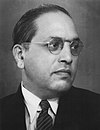
Amartya Sen on B. R. Ambedkar
“Ambedkar is my Father in Economics. He is true celebrated champion of the underprivileged. He deserves more than what he has achieved today. However he was highly controversial figure in his home country, though it was not the reality. His contribution in the field of economics is marvelous and will be remembered forever..!”
Amartya Sen on Thomas Hobbes
“When Hobbes referred to the dire state of human beings in having ‘nasty, brutish and short’ lives, he also pointed, in the same sentence, to the disturbing adversity of being ‘solitary’. Escape from isolation may not only be important for the quality of human life, it can also contribute powerfully to understanding and responding to the other deprivations from which human beings suffer. There is surely a basic strength here which is complementary to the engagement in which theories of justice are involved.”

Amartya Sen on John Rawls
“Rawls’s analysis of fairness, justice, institutions and behaviour has illuminated our understanding of justice very profoundly and has played – and is still playing – a hugely constructive part in the development of the theory of justice. But we cannot make the Rawlsian mode of thinking on justice into an intellectual ‘stand-still’. We have to benefit from the richness of the ideas we have got from Rawls – and then move on, rather than taking a ‘vacation’. We do need ‘justitia’, not ‘justitium’.”

Amartya Sen on John Maynard Keynes
“The world in which we live today has been made much more secure by the economic wisdom that Keynes brought to us during the dark days of the Great Depression. When that wisdom is partly or wholly ignored in the making of economic policy, large numbers of people are made to suffer unnecessarily. I am afraid we have seen several depressing examples of that in the recent years, especially in Europe, with a huge human toll. Keynes was a great pathfinder, and it would have distressed — if not surprised — him to see how well-identified paths can be comprehensively neglected by policymaking that draws more on ideology than on well-reflected reasoning.”

Amartya Sen on Immanuel Kant
“Even when altruism is allowed (as, for example, in Gary Becker's model of rational allocation), it is assumed that the altruistic actions are undertaken because they promote each person's own interests; there are personal gains to the altruist's own welfare, thanks to sympathy for others. No role is given to any sense of commitment about behaving well or to pursuing some selfless objective. All this leaves out, on the one hand, the evil passions that early theorists of capitalism contrasted with selfinterest and, on the other, the social commitments that Kant analyzed in The Critique of Practical Reason and that Adam Smith discussed in The Theory of Moral Sentiments.”

Amartya Sen on Muhammad ibn Mūsā al-Khwārizmī
“Multicultural education is certainly important, but it should not be about bundling children into preordained faith schools. Awareness of world civilisation and history is necessary. Religious madrasas may take little interest in the fact that when a modern mathematician invokes an "algorithm" to solve a difficult computational problem, she helps to commemorate the secular contributions of Al-Khwarizmi, the great ninth-century Muslim mathematician, from whose name the term algorithm is derived ("algebra" comes from his book, Al Jabr wa-al-Muqabilah). There is no reason at all why old Brits as well as new Brits should not celebrate those grand connections. The world is not a federation of religious ethnicities. Nor, one hopes, is Britain.”

Amartya Sen on Albert O. Hirschman
“The Passions and the Interests does not have the policy urgency that a contribution to public decisions may enjoy (as Hirschman's The Strategy of Economic Development eminently does), nor the compulsive immediacy that the exigencies of practical reason generate (as Exit, Voice, and Loyalty superbly portrayed). What then is so special about this book? […] The answer lies not only in the recognition that Hirschman makes us see the ideological foundations of capitalism in a fresh way, but also in the remarkable fact that this freshness is derived from ideas that are more than two-hundred-years old. The basic hypothesis— the articulation and development of which Hirschman investigates—makes the case for capitalism rest on the belief that "it would activate some benign human proclivities at the expense of some malignant ones."”

Amartya Sen on Michio Morishima
“The later Morishima’s dissatisfaction with the false sense of completed achievement―and the related smugness―of many pure theorists did make sense, and he was right to emphasize the need to seek constantly a fuller picture which could do justice to the reality around us, rather than seeing their separated investigations as the end of their task. All the constructive insights that the later Morishima offers become relevant when that exercise of broadening is undertaken. And yet, this does not require us to dismiss the nature of the contribution that the early Morishima made, or discard the contributions that old-fashioned economic theory has made and still makes to our understanding of the world. In defence of the latter claim, I offer the fact that even the highly oversimplified General Theory of Employment, Interest and Money of that great abstractionist, John Maynard Keynes (1936), made a significant difference to public policy. I could refer also to the fact that, when Michio was trying to expand the education of the Archbishop of Canterbury, he had no hesitation in bringing in some results of fairly pure Marxian economic theory to the attention of a person with a very powerful voice in the real world; and Robert Runcie himself appreciated this fully. The relation between useful abstraction and underlying reality requires, I would argue, an enduringly dual approach.”

Amartya Sen on Mao Zedong
“In fact, the occurrence of favorable unintended consequences (the Smith-Menger-Hayek case) also has some parallels in the field of economic planning in China, though for that we have to look at other parts of recent Chinese history. As the fast economic progress of East Asian and Southeast Asian economies gets more fully analyzed, it is becoming increasingly clear that it is not only the openness of the economies—and greater reliance on domestic and international trade—that led to such rapid economic transition in these economies. The groundwork was laid also by positive social changes, such as land reforms, the spread of education and literacy and better health care. What we are looking at here is not so much the social consequences of economic reforms, but the economic consequences of social reforms. The market economy flourishes on the foundations of such social development. As India has been lately recognizing, lack of social development can quite severely hold up the reach of economic development. When and how did these social changes occur in China? The main thrust of these social changes was in the pre-reform period, before 1979—indeed a lot of it during the active days of Maoist policy. Was Mao intending to build the social foundations of a market economy and capitalist expansion (as he certainly did succeed in doing)? That hypothesis would be hard to entertain. And yet the Maoist policies of land reform, expansion of literacy, enlargement of public health care and so on had a very favorable effect on economic growth in post-reform China. The extent to which post-reform China draws on the results achieved in pre-reform China needs greater recognition. The positive unintended consequences are important here. Since Mao did not consider seriously the likelihood that a flourishing market economy would emerge in China, it is not surprising that he did not consider this particular entailment of the social changes that were being brought in under his leadership. And yet there is a general connection here that is quite close to the focus on capability in this work. The social changes under consideration (expansion of literacy, basic health care, and land reform) do enhance human capability to lead worthwhile and less vulnerable lives. But these capabilities are also associated with improving the productivity and employability of the people involved (expanding what is called their “human capital”). The interdependence between human capability in general and human capital in particular could be seen as being reasonably predictable. While it may not have been any part of Mao’s intention to make things easier for market-based economic expansion in China, a social analyst should have been well placed—even then—to predict just such a relationship. Anticipation of such social relations and causal connections helps us to reason sensibly about social organization and about possible lines of social change and progress.”

About Amartya Sen
Amartya Kumar Sen (born 3 November 1933) is an Indian economist and the winner of the 1998 Nobel Prize for economics.