Link Copied!
Michio Morishima Quotes (1923-2004)
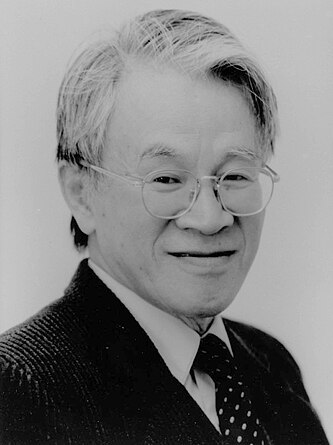
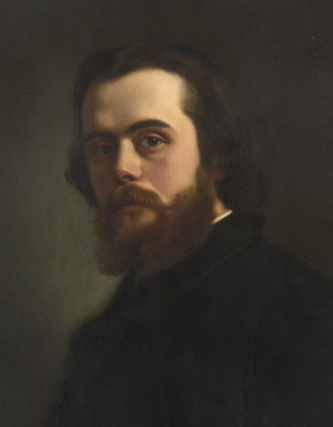
About Michio Morishima
Michio Morishima (森嶋 通夫, July 18, 1923 – July 13, 2004) was a Japanese heterodox economist and public intellectual who was the Sir John Hicks Professor of Economics at the London School of Economics from 1970–88. He was also professor at Osaka University and member of the British Academy. In 1976 he won the Order of Culture (文化勲章, Bunka-kunshō).
Michio Morishima Quotes
Shortest
Earliest
Explore our curated collection of the most famous and impactful Michio Morishima quotes.
“Leon Walras, the sun of one of the planetary systems in the universe of economics, developed a general equilibrium model of capital formation and credit, after he had explored models of exchange and production. But he was primarily concerned with momentary equilibrium to be established in a system with given stocks of capital goods that are shared among a given number of individuals.”

What Michio Morishima Said About Others
Discover personal opinions Michio Morishima shared regarding contemporaries.
Michio Morishima on Léon Walras
“In my opinion, Walras' theory of exchange and production is not the end and aim of his study but an overture to his general equilibrium theory of capital formation and circulation. Therefore, what we have to do first of all is to elaborate in economic, rather than mathematical terms his theory of growth and money, which in Walras' work was not complete. In reconsidering Walras from such a point of view, he appears as an economist who was comparable with Marx and who anticipated Keynes.”

Quotes About Michio Morishima
Gain deeper perspective through quotes about Michio Morishima from others.
John Roemer on Michio Morishima
“In the summer of 1975, I read Marx’s Economics by Michio Morishima (1973), a Japanese mathematical Marxist economist. I was excited by this book, for Morishima was using the tools I had learned in mathematical economics to study Marxist questions: exploitation, the labor theory of value, the transformation problem.”
Amartya Sen on Michio Morishima
“The later Morishima’s dissatisfaction with the false sense of completed achievement―and the related smugness―of many pure theorists did make sense, and he was right to emphasize the need to seek constantly a fuller picture which could do justice to the reality around us, rather than seeing their separated investigations as the end of their task. All the constructive insights that the later Morishima offers become relevant when that exercise of broadening is undertaken. And yet, this does not require us to dismiss the nature of the contribution that the early Morishima made, or discard the contributions that old-fashioned economic theory has made and still makes to our understanding of the world. In defence of the latter claim, I offer the fact that even the highly oversimplified General Theory of Employment, Interest and Money of that great abstractionist, John Maynard Keynes (1936), made a significant difference to public policy. I could refer also to the fact that, when Michio was trying to expand the education of the Archbishop of Canterbury, he had no hesitation in bringing in some results of fairly pure Marxian economic theory to the attention of a person with a very powerful voice in the real world; and Robert Runcie himself appreciated this fully. The relation between useful abstraction and underlying reality requires, I would argue, an enduringly dual approach.”

About Michio Morishima
Michio Morishima (森嶋 通夫, July 18, 1923 – July 13, 2004) was a Japanese heterodox economist and public intellectual who was the Sir John Hicks Professor of Economics at the London School of Economics from 1970–88. He was also professor at Osaka University and member of the British Academy. In 1976 he won the Order of Culture (文化勲章, Bunka-kunshō).