Link Copied!
Abraham Cahan Quotes (1860-1951)
Politician, Novelist



About Abraham Cahan
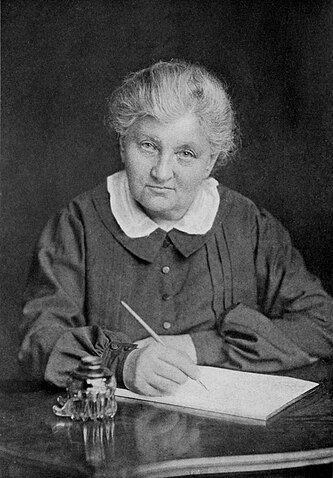
Abraham "Abe" Cahan (7 July 1860 – 31 August 1951) was a Belarusian-born Jewish-American socialist newspaper editor, novelist, and politician.
Best Abraham Cahan Quotes
Shortest
Earliest
Explore our curated collection of the most famous and impactful Abraham Cahan quotes.


“The orthodox Jewish faith practically excludes woman from religious life.”

“If it be true that our people represent a high percentage of mental vigor, the distinction is probably due, in some measure, to the extremely important part which Talmud studies have played in the spiritual life of the race.”
“Now, it is easy for me to separate the passages that were written from the heart, with conviction, from those which were written as propaganda, from a sense of duty. We used propaganda for an honest purpose, and there are still socialists who feel that this should be done.”

“I often argued that the revolution would not be made in America by our immigrants. There were personal reasons for this. Newcomers are anxious to become Americanized and to participate in American life. Our main purpose as socialists should be to win the native workers to our principles. There was great satisfaction in speaking and writing for an American audience and for this reason I confined almost all my activity to the English-speaking section of our movement.”
“Gradually I arrived at the conclusion that the power of realistic art arises from the pleasure we derive from recognizing the truth as it is mirrored by art. The painting, the sculpture, or the words that represent the original with fidelity, create the impression of reality and the feeling of pleasure. This goes beyond dead photography. It involves artistic re-creation, and if the result coincides with the subject, this artistic integrity becomes a source of aesthetic enjoyment. It is truth that we admire and that is the source of our artistic delight. The heart experiences a thrill in recognizing a friend in a faithful portrait. But capitalist critics don't want the truth. It disturbs the class they serve.”
“Sometimes when I am alone in my beautiful apartments, brooding over these things and nursing my loneliness, I say to myself: "There are cases when success is a tragedy." There are moments when I regret my whole career, when my very success seems to be a mistake. I think that I was born for a life of intellectual interest. I was certainly brought up for one. The day when that accident turned my mind from college to business seems to be the most unfortunate day in my life. I think that I should be much happier as a scientist or writer, perhaps. I should then be in my natural element, and if I were doomed to loneliness I should have comforts to which I am now a stranger. That's the way I feel every time I pass the abandoned old building of the City College. The business world contains plenty of successful men who have no brains. Why, then, should I ascribe my triumph to special ability?”
“Am I happy? There are moments when I am overwhelmed by a sense of my success and ease. I become aware that thousands of things which had formerly been forbidden fruit to me are at my command now. I distinctly recall that crushing sense of being debarred from everything, and then I feel as though the whole world were mine. One day I paused in front of an old East Side restaurant that I had often passed in my days of need and despair. The feeling of desolation and envy with which I used to peek in its windows came back to me. It gave me pangs of self-pity for my past and a thrilling sense of my present power. The prices that had once been prohibitive seemed so wretchedly low now. ...
And yet in all such instances I feel a peculiar yearning for the very days when the doors of that restaurant were closed to me and when the Canal Street merchant was a magnate of commerce in my estimation. Somehow, encounters of this kind leave me dejected. The gloomiest past is dearer than the brightest present. In my case there seems to be a special reason for feeling this way. My sense of triumph is coupled with a brooding sense of emptiness and insignificance, of my lack of anything like a great, deep interest.”
And yet in all such instances I feel a peculiar yearning for the very days when the doors of that restaurant were closed to me and when the Canal Street merchant was a magnate of commerce in my estimation. Somehow, encounters of this kind leave me dejected. The gloomiest past is dearer than the brightest present. In my case there seems to be a special reason for feeling this way. My sense of triumph is coupled with a brooding sense of emptiness and insignificance, of my lack of anything like a great, deep interest.”

“Today when an immigrant comes to America he finds a Jewish world already established here. It is full of strange sights but it is nevertheless Jewish. The earlier arrival, the "ungreen" Russian, Pole, Galician or Rumanian, is still a Jew, the same as the greenhorn. Quickly, the newcomer grows accustomed to his "ungreen" friends and thus to America. Today's Jewish immigrant has become familiar with American Jewish words and habits from the letters and newspapers from America that he received at home. But we found few Jews and only a small Jewish world on our arrival. The strangeness we felt was much deeper, the loneliness much sharper. America was, in a literal sense, a new world, a strange world, a disagreeable world, but also a challenging world that strengthened me with a strong, healthy odor like that of a freshly plowed field. America intrigued me, puzzled me. It seemed to me that America lives more in one day than Russia does in ten. The cat I had spied on the Philadelphia pier was living proof that America was part of the same world that included Vilna, Petersburg, Lemberg and Berlin. But in the first months, as I came to know America, I had the opposite impression. It was a new, different kind of a world. It was a pleasant world that tantalized me. All around me was astounding wealth, activity and enterprise. I had not yet heard the expression "the land of unlimited possibilities." But I felt all around me the sense of opportunity. Slowly, I began to perceive a change in myself. Every minute, it seemed, I savored some new experience. I examined all, I listened to everything, I observed everywhere. I was repelled and attracted, possessed and homesick and excited by expectations. My success as a speaker, the stimulating taste of applause, the stunning feeling that thousands knew me, intoxicated me. But they did not overcome my homesickness. I was torn between the pleasure of new achievement and the longing for home. Sometimes, in my restlessness, I didn't recognize my old self. (p 244)”

Abraham Cahan Quotes by Topic
Find exactly what you are looking for by browsing this categorized list of Abraham Cahan quotes by topic.
Abraham Cahan on Business
“Sometimes when I am alone in my beautiful apartments, brooding over these things and nursing my loneliness, I say to myself: "There are cases when success is a tragedy." There are moments when I regret my whole career, when my very success seems to be a mistake. I think that I was born for a life of intellectual interest. I was certainly brought up for one. The day when that accident turned my mind from college to business seems to be the most unfortunate day in my life. I think that I should be much happier as a scientist or writer, perhaps. I should then be in my natural element, and if I were doomed to loneliness I should have comforts to which I am now a stranger. That's the way I feel every time I pass the abandoned old building of the City College. The business world contains plenty of successful men who have no brains. Why, then, should I ascribe my triumph to special ability?”

Abraham Cahan on Success
“Sometimes when I am alone in my beautiful apartments, brooding over these things and nursing my loneliness, I say to myself: "There are cases when success is a tragedy." There are moments when I regret my whole career, when my very success seems to be a mistake. I think that I was born for a life of intellectual interest. I was certainly brought up for one. The day when that accident turned my mind from college to business seems to be the most unfortunate day in my life. I think that I should be much happier as a scientist or writer, perhaps. I should then be in my natural element, and if I were doomed to loneliness I should have comforts to which I am now a stranger. That's the way I feel every time I pass the abandoned old building of the City College. The business world contains plenty of successful men who have no brains. Why, then, should I ascribe my triumph to special ability?”
What Abraham Cahan Said About Others
Discover personal opinions Abraham Cahan shared regarding contemporaries.
Abraham Cahan on John Swinton
“a brilliant journalist”
Abraham Cahan on Theodore Roosevelt
“The Republicans did likewise. They nominated one who had already made a reputation for fighting dishonest politicians: Theodore Roosevelt. Young and aristocratic, Assemblyman Roosevelt had been among those who had "revolted" against Blaine.”

Abraham Cahan on Catherine Breshkovsky
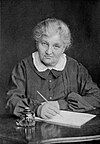
“The impression that she made in private was even deeper than that left by her public speeches. Kellogg Durland wrote in the Boston Transcript: "To look upon the face of this silver-haired apostle is like receiving a benediction. Her outward and inward calm are superb. Her hands are beautiful in their delicacy and refinement, despite the years in Siberia. Her voice is low and sweet, her smile winning and childlike. Only her eyes betray the sufferings of the years. In repose her face is strong like iron. The shadows of her eyes speak of deepest pathos.”
Quotes About Abraham Cahan
Gain deeper perspective through quotes about Abraham Cahan from others.
Ella Reeve Bloor on Abraham Cahan 2 quotes
“Abe Cahan had left Russia as a boy to escape tsarist persecution. But instead of hailing the success of his Russian brothers, he had turned against them and not only would not listen to my reports of their achievements, but himself became one of the most vicious of anti-Soviet slanderers, vying with Hearst in publishing articles by renegades and reactionaries in his paper The Forward.”

Isaac Metzker on Abraham Cahan 2 quotes
“Mr. Cahan, who became well known as a talented author with his novel, The Rise of David Levinsky, and other works, was a strong advocate of realism. He not only printed realistic stories by well-known writers but made an effort to bring the reality of Jewish life in America into his newspaper. Through light articles he inspired and encouraged the readers to write to the Forward about any unusual events in their own lives, and about their own problems. Mr. Cahan firmly believed that "truth is stranger than fiction," and as far back as 1903 planned a special feature for the newspaper in which the readers could express themselves, a section of the paper which would mirror real life...He maintained that the Forward should not devote itself exclusively to trade unionism, to political and social problems. From the outset, he broadened the interests of the paper and enlivened it with varied reading material, including light articles dealing with daily life. The daily newspaper thus drew readers from all strata and classes.”
Tony Michels on Abraham Cahan
“Cahan's Forverts remained an outspoken socialist newspaper allied with Eugene Debs's recently established Socialist Party. But the daily permitted diversity of opinion and struck a popular, even sensationalistic tone. In this sense, the contest between Krants's social democratic rectitude and Cahan's social democratic yellow journalism-evident in the earliest days of Di arbeter tsaytung-concluded in Cahan's favor. To be sure, Cahan faced constant criticism from staff writers and members of the Forverts Association, yet challengers never succeeded in dislodging him. Under Cahan's editorship the Forverts became the most popular Yiddish daily, and among the most popular foreign-language newspapers, in the United States.”
Ilan Stavans Introduction on Abraham Cahan
“Immigrant life in general is miserable, as one sees in the literature produced by those who experienced the journey. In the Jewish novels of Abraham Cahan, Henry Roth, and Anzia Yezierska, the picture is frequently a grim one.”
Sydney Weinberg on Abraham Cahan
“In Cahan's The Rise of David Levinsky, Dora, an illiterate immigrant woman, lived her life through her daughter, whom she viewed with a combination of pride and envy. "My own life is lost," she thought, "but she shall be educated"...Abraham Cahan, in his short story "Yekl," describes the plight of a young immigrant who prided himself on being "a real American."”
Ruth Wisse on Abraham Cahan
“The master broker of the marriage between the Yiddish-speaking Jews and English America, Abraham Cahan, editor of the Yiddish daily Forward, implied in his novel The Rise of David Levinsky that the Jew may best prove himself American by remaining suspicious of his own success.”
About Abraham Cahan
Abraham "Abe" Cahan (7 July 1860 – 31 August 1951) was a Belarusian-born Jewish-American socialist newspaper editor, novelist, and politician.