Link Copied!
World War II Quotes (1939-100)
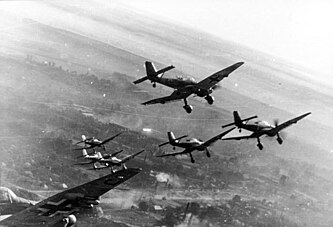
About World War II
World War II (WWII or WW2), also known as the Second World War, was a global war that lasted from 1939 to 1945. It involved the vast majority of the world's countries—including all the great powers—forming two opposing military alliances: the Allies and the Axis. In a state of total war, directly involving more than 100 million personnel from more than 30 countries, the major participants threw their entire economic, industrial, and scientific capabilities behind the war effort, blurring the distinction between civilian and military resources. World War II was the deadliest conflict in human history, resulting in 70 to 85 million fatalities, with more civilians than military personnel killed. Tens of millions of people died due to genocides (including the Holocaust), premeditated death from starvation, massacres, and disease. Aircraft played a major role in the conflict, including in strategic bombing of population centres, and the only uses of nuclear weapons in war.
Best World War II Quotes
Shortest
Earliest
Explore our curated collection of the most famous and impactful World War II quotes.

“Woman shipyard worker.
1944”



“Winona Espinosa, an aircraft worker.
1943”
“Observation of novelist John Dos Passos.
1943”

“Two break-throughs, Comrade Stalin, two break-throughs.”
The "National Resistance Program" reflected Japan's desperate plan to mobilize its entire population for combat, anticipating devastating losses in a potential Allied invasion.
“National Resistance Program.[Quote?]”

“They’re overfed, overpaid, overdressed... and over here.”
“We are out to win the war in the quickest and most economical way.”


Quotes About World War II
Gain deeper perspective through quotes about World War II from others.
Alan Axelrod on World War II
“On the eve of World War II, Japan was a thriving industrialized power of about seventy million people. The nation had become a major manufacturer of consumer goods, but, by the early 1930s, the military-dominated central government was increasingly replacing the market economy with features of a totalitarian command economy, including strong government control and planning of production. A growing sector of production was being devoted to war-related industries. Additionally, during 1934-36, the electric power and oil industries were nationalized, and in 1939 rice rationing was introduced. By the end of the decade, Japan was on a war footing driven by wartime economy.”
Alvah Bessie on World War II 2 quotes
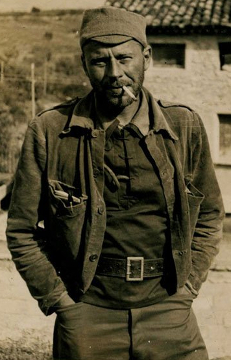
“Those Americans who went to Spain to fight Franco and stave off World War II have never minded being called "premature anti-fascists." They were proud of the label.”
Phillips Payson O’Brien on World War II
“To a striking degree, the way the United States conducted World War II was a consequence of Roosevelt’s own experience as the assistant secretary of the Navy during World War I—a period that made him appreciate the benefits of overwhelming the enemy with machinery, as well as the risks of ground warfare. When he traveled to France in 1918 to tour the front lines, the battlefield disgusted him. The conditions for soldiers were too crowded, and he wrote in his diary that “the smell of dead horses” offended his “sensitive naval” nose. Instead, he fixated on logistics and material: the deployment of large naval guns, transported on land via train carriages, to batter German lines; a push for rapid advances in aircraft and bomb technology. He promoted a plan to thwart German U-boat attacks by creating a minefield across the entire North Sea rather than putting Allied ships at risk. (The scheme was not complete when the war ended.) Roosevelt’s work during this period also showed him the value of working closely with trusted international partners such as Britain and France. Strong alliances, he came to learn, were how modern wars were won. Unlike many Americans, Roosevelt did not become an isolationist after World War I. He understood that aggressive authoritarian regimes had to be stopped and believed that the U.S. could protect many of its own interests via machinery and alliances. He was so wedded to these two ideas that, during World War II, he provided Britain and the Soviet Union with massive amounts of aid without expecting any repayment. So much better, Roosevelt believed, to strengthen U.S. allies and let them do much of the land fighting. This approach led to one of his greatest successes as a war leader.”
J. F. C. Fuller as qtd. on World War II
“It might have been the greatest lost weapon of World War II. Major-General JFC Fuller, the man credited with developing modern armored warfare in the 1920s, called failure to use it "the greatest blunder of the whole war." He even suggested that British and American tank divisions could have overrun Germany before the Russians – if it had been deployed, that is.”
William D. Leahy on World War II
“I was there.”
Dave Lindorff on World War II
“World War II, at least in Europe, may have had some moral justification, though there can be some legitimate debate as to whether the US and its freedoms were ever really threatened, and certainly many of the Americans who died in that war saw their struggle as worthy, so that we may at least in good conscience honor their deaths.”

Tony Judt on World War II
“Unlike World War One, then, the Second War—Hitler's War—was a near-universal experience. And it lasted a long time—nearly six years for those countries (Britain, Germany) that were engaged in it from beginning to end. In Czechoslovakia it began earlier still, with the Nazi occupation of the Sudetenland in October 1938. In eastern Europe and the Balkans it did not even end with the defeat of Hitler, since occupation (by the Soviet army) and civil war continued long after the dismemberment of Germany.”

Barack Obama on World War II 2 quotes
“The World War that reached its brutal end in Hiroshima and Nagasaki was fought among the wealthiest and most powerful of nations. Their civilizations had given the world great cities and magnificent art. Their thinkers had advanced ideas of justice and harmony and truth. And yet, the war grew out of the same base instinct for domination or conquest that had caused conflicts among the simplest tribes; an old pattern amplified by new capabilities and without new constraints. In the span of a few years, some 60 million people would die -- men, women, children no different than us, shot, beaten, marched, bombed, jailed, starved, gassed to death. ”

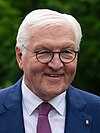
Frank-Walter Steinmeier on World War II
“At the war's end, the death toll of the peoples of the Soviet Union numbered some 27 million. Twenty-seven million people were killed, murdered, bludgeoned, starved or left to die as a result of forced labour by National Socialist Germany. Fourteen million of them were civilians. No one had to mourn more victims in this war than the peoples of the then Soviet Union. And yet these millions are not as deeply etched in our collective memory as their suffering and our responsibility demand. This war was a crime – a monstrous, criminal war of aggression and annihilation.”
Misattributed Quotes
Quotes mistakenly credited to World War II
About World War II
World War II (WWII or WW2), also known as the Second World War, was a global war that lasted from 1939 to 1945. It involved the vast majority of the world's countries—including all the great powers—forming two opposing military alliances: the Allies and the Axis. In a state of total war, directly involving more than 100 million personnel from more than 30 countries, the major participants threw their entire economic, industrial, and scientific capabilities behind the war effort, blurring the distinction between civilian and military resources. World War II was the deadliest conflict in human history, resulting in 70 to 85 million fatalities, with more civilians than military personnel killed. Tens of millions of people died due to genocides (including the Holocaust), premeditated death from starvation, massacres, and disease. Aircraft played a major role in the conflict, including in strategic bombing of population centres, and the only uses of nuclear weapons in war.