Link Copied!
Stanley Baldwin Quotes (1867-1947)
King


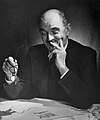

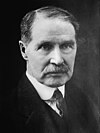



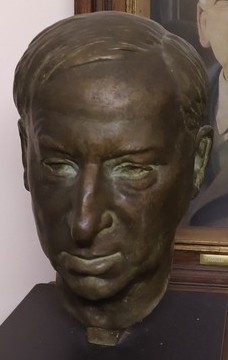

About Stanley Baldwin
Stanley Baldwin, 1st Earl Baldwin of Bewdley KG PC (3 August 1867 – 14 December 1947) was Prime Minister of the United Kingdom on three separate occasions (1923–24, 1924–29 and 1935–37).
Best Stanley Baldwin Quotes
Shortest
Earliest
Explore our curated collection of the most famous and impactful Stanley Baldwin quotes.
“My tongue, not my pen, is my instrument.”

“Dogmatism is the prerogative of youth.”

“The Conservatives can't talk of class war: they started it.”
“Perfect governments are only to be found where the prisons are full.”
“Better to doubt methodically than to think capriciously.”
“...protection of the home market? That has made mass production possible.”


“The fortunes of a nation are determined above everything by the quality of its people.”
“I knew that I had been chosen as God's instrument for the work of the healing of the nation.”

“I always dreaded Roosevelt's experiments and I think there will be an appalling mess up in America in a few months.”
“It is characteristic of the British Public to look askance at any deliberate, systematic attempt to rationalise our institutions.”
“Dictatorship is like a giant beech tree—very magnificent to look at in its prime, but nothing grows underneath it.”

“Perpetual strife can only lead to poverty and oppression, and peace alone can remove these two spectres of poverty and oppression.”


“Yes, it was a success. I know it. It was almost wholly unprepared. I had a success, my dear Nicolson, at the moment I most needed it. Now is the time to go.”

“What the proprietorship of these papers is aiming at is power, and power without responsibility — the prerogative of the harlot throughout the ages.”

Stanley Baldwin Quotes by Topic
Find exactly what you are looking for by browsing this categorized list of Stanley Baldwin quotes by topic.
Stanley Baldwin on Conservative Party (UK) 4 quotes
“Toryism, as we know it, was illuminated, expounded, and made a gospel for a large portion of this country by the genius of Benjamin Disraeli. Most of us who have worked for our great party have founded our beliefs on, and derived our inspiration from that statesman.”

Stanley Baldwin on British Empire 3 quotes
“As we study [the British Empire's] destiny, we are bound to think of it less as a human achievement than as an instrument of Divine Providence for the promotion of the progress of mankind.”

Stanley Baldwin on General strike 2 quotes
“It is a great tribute to the good qualities of the strikers, who are our own people, that they showed that sense of discipline and restraint in obedience to their instructions. Many of them obeyed their orders from their sense of loyalty, orders of which they disapproved themselves, but if that strike had been successful it would have meant industrial ruin, not only to the miners, but to the whole country.”

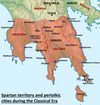
Stanley Baldwin on Sparta 2 quotes
“I like to think of the earth being stirred over grim Sparta. To all boys—and I am speaking of my own recollections—she had a peculiar appeal. I think most boys prefer her to Athens and prefer Leonidas to Alcibiades in spite of the fact that Alcibiades is a much more successful character in the modern world than Leonidas. But there is something in Spartan discipline and mode of life that appeals to strenuous youth, and it may be the cherished recollections of far distant days that make me feel a thrill at the thought of the investigations of the School in Sparta.”
Stanley Baldwin on Trade unions 2 quotes
“Trade unionism, like friendly societies, is a peculiarly English growth. This country is the native soil in which such democratic institutions are indigenous. They are an integral part of the country's life, and they are a great stabilizing influence. ... Watch carefully the continuous efforts that are made by the Communist Party in this country to get control of and to destroy trade unionism. They do not want to destroy it for nothing. A free trade unionism is a bulwark of popular liberty. If trade unionism were destroyed you would be a long way on the road to Communism, and via Communism to Fascism.”

Stanley Baldwin on British Raj 2 quotes
“Difficult as the course is, the dangers do not come from the difficulties; they come from extremists in India and at home. I will tell you what I mean. I am firmly convinced that such writings as appear in such papers as the Daily Mail will do more to lose India for the British Empire, will do more to cause a revolutionary spirit, than anything that can be done in any way by anyone else. I got many letters, I need hardly say, of all points of view. I had a very characteristic one last week...It was from a colonel; he was an old man, you could tell that by his writing; and he used this phrase: He said, "You and Lord Irwin are negrophiles." Perhaps he was a member of the United Empire party. That is not the way to cement the Empire. This sort of thing, and the spirit behind it, will break up our Empire infallibly, and that is what I am out to fight.”

Stanley Baldwin on Instinct
Stanley Baldwin on Kingdom of God
“If I did not believe that our work was done in the faith and hope that at some day, it may be a million years hence, the Kingdom of God will spread over the whole world, I would have no hope, I could do no work, and I would give my office over this morning to anyone who would take it.”

Stanley Baldwin on Victorian era
“One thing that strikes me when I think of Booth is the nonsense that is talked today about the poverty of the Victorian age. Why the Victorian age is so unpopular today very largely arises from the fact that, in spite of all its faults, there was among its great men, who were numerous, a faith in goodness: there was a moral earnestness and there was a sense of duty and a performance of duty.”

Stanley Baldwin on Patriotism
“We cannot without damage to our soul's health destroy the roots which bind us to the land and language of our birth. The love of country is a deep and universal instinct, freighted with ancient memories and subtle associations. Men who deny their national spiritual heritage in exchange for a vague and watery cosmopolitanism become less than men; they starve and dwarf their personalities; they turn into a sort of political eunuch.”

Stanley Baldwin on Nationalism
“Nationalism can take on some very ugly shapes. It looks as if as many crimes will be committed in its name as in the name of Religion or of Liberty. Indeed the source of the trouble is that Nationalists are apt to assume the garments of Religion. ... Love of one's country has been perverted into hatred of our neighbour's country by the preaching of lop-sided intellectuals, who themselves generally manage to escape the martyrdom they provide for others.”

Stanley Baldwin on League of Nations
“The dispute between the League and Italy is real, but it is not more real than our friendship...in being true to our pledged word to the League we wish also to preserve an old friendship. But loyalty to our pledge is inescapable, for, as the Secretary of State said in his recent Note to the French Government, we look on the League as the only escape from "the senseless disasters of the past." That is the key to our whole action and to our every motive.”

What Stanley Baldwin Said About Others
Discover personal opinions Stanley Baldwin shared regarding contemporaries.
Stanley Baldwin on Walter Scott 3 quotes
“I think you have the poetry of Scott best described in the title of his first sustained effort in verse, the Lay of the Last Minstrel. He was the last great Minstrel and probably the last epic poet to write in our language.”
Stanley Baldwin on David Lloyd George 2 quotes
“All through his career, except during the War, he has done no end of harm, and his Versailles peace was iniquitous and his conduct after the peace execrable.”

Stanley Baldwin on George Curzon, 1st Marquess Curzon of Kedleston 2 quotes
“[O]ne of the keys to Lord Curzon's life is to remember that his roots had struck deep into pre-industrial England, and it is from an early England that he drew the sources of his strength.”
Stanley Baldwin on William Shakespeare 2 quotes
“Shakespeare's plays, no matter of what country he may be writing, are redolent of our own soil and of our own country people. The habit of thought and the outlook of Shakespeare’s country people and of those wise men, Shakespeare’s fools, may be found to-day in our rural counties.”

Stanley Baldwin on Oswald Mosley
Stanley Baldwin on Ernest Bevin
“I should like to see in any reconstructed Government a strong Labour leader like Bevin.”
Stanley Baldwin on Edward Wood, 1st Earl of Halifax
Stanley Baldwin on David Low (cartoonist)
Stanley Baldwin on Horace
“When I was a boy I knew the Odes of Horace backwards and forwards, and when I came to manhood year by year those odes came knocking at the door of my heart at the most unexpected times and places.”

Stanley Baldwin on Benjamin Disraeli
“Toryism, as we know it, was illuminated, expounded, and made a gospel for a large portion of this country by the genius of Benjamin Disraeli. Most of us who have worked for our great party have founded our beliefs on, and derived our inspiration from that statesman.”

Stanley Baldwin on Henry James Sumner Maine
“We want to help to better the conditions for our own people. We want to see our people raised, not into a society of State ownership, but into a society in which, increasingly, the individual may become an owner. There is a very famous sentence of Sir Henry Maine's, in which he said that the progress of our civilisation had been of recent centuries a progress on the part of mankind from status to contract. Socialism would bring him back from contract to status.”
Quotes About Stanley Baldwin
Gain deeper perspective through quotes about Stanley Baldwin from others.
A colleague of Baldwin on Stanley Baldwin
“He was not so effective on the platform as in the House of Commons, but there he obtained for several years such ascendancy that, if a member interrupted him, it seemed almost like brawling in church.”
H. H. Asquith on Stanley Baldwin
“In regard to yourself, let me say that I have never found, and could never desire, a more straightforward and scrupulously honourable opponent, or one who more completely satisfied my ideal of an English gentleman.”
Clement Attlee on Stanley Baldwin 2 quotes
“I believe I am voicing the feelings of all hon. Members irrespective of party when I say that we all greatly regret his departure from our midst... [I]t is the hope of all of us that he may long be spared to enjoy health and happiness and the rest and the leisure which he has amply earned. This is not the occasion on which to attempt any appraisal of his work as a statesman and public man; it is, indeed, unfinished. Future historians will, no doubt, disagree, as we in this House disagree, about the merits or demerits of his policy and his actions, but I am certain they will be at one in acclaiming him as a great parliamentarian who possessed in a singular degree the faculty of judging the temper of this House and responding to its mood. They will, I think, also recall him as one who inspired affection as a man even in those who were opposed to him as a politician.”
Lucy Baldwin on Stanley Baldwin
“Stanley has been in politics practically all the time we have been married - about 30 years. Some women say they don’t want their husbands in politics because of its effect upon their temperament. My husband has remained unchanged. He is sweet-tempered, he is just that kind of a man.”
Correlli Barnett on Stanley Baldwin
“[I]t was Stanley Baldwin...who personified the spirit of the age to a greater degree than any other man. So well indeed did he focus the aspirations of his countrymen and reflect them back that the epoch seemed to take its character from him, as the Victorian age had from Queen Victoria... As a man and as prime minister, Baldwin was patient, slow-moving, whimsical, blessed with a fine sense of humour; ruminative; shrewd and wise within his limits. He never drove his colleagues; a kindly man, he was, as he himself admitted, a bad butcher... His kindliness and gentleness also made it impossible for him to ruthlessly attack his political opponents... Baldwin, believing as he did that considerateness was "the central English virtue", hated strife, shrank from conflict, constantly sought to heal division and bitterness, whether in his own cabinets, the country or the world. In this too he personified the deepest feelings of his countrymen. His speeches seldom manifested combative argument; instead they evoked moods; he was a Delius or a Debussy among political speakers. And the favourite mood was one of a sunset calm and nostalgia, in which the British nation, like an old couple in retirement enjoying the peaceful ending of the day, contemplated some sweep of English landscape and hearkened to the distant church bells. Nothing could have been more congenial to the contemporary British temperament than this tranquillity, in which desperate problems or dangers could be put out of mind, and energetic, possibly painful, action shirked or put off; nothing could have been more welcome to his hearers than this evocation of all things kindly, gentle and decent... Baldwin, Victorian that he was, saw politics – even international politics – as he saw the whole of human life, in terms of religion; of, in his own words, "doing secular acts from a spiritual motive". He believed that it "is precisely these values of right and wrong, of good and evil, of honesty and courage, which matter supremely for religion and national life...moral values, eternal in their quality, transient in their form and application, are the foundation of a country's greatness..." ... Such were the rulers and such was the nation to which befell after the Great War the task of preserving the power of England.”
Harold Begbie on Stanley Baldwin
“He, more than anybody else, broke up the [Lloyd George] Coalition. Why did he do so? He had seen that the government of the country was losing the moral character which had distinguished it during the Victorian period. He believed that if this moral decay continued it would be fatal to the greatness and glory of England. To strike at it, and root it out for ever, meant striking at some of the most brilliant intellects in the Coalition, and destroying some of the most promising of political careers in both parties. But he believed that it would be better for the country to have a less brilliant government, and for his party to go into the wilderness, even for a long period, than to continue a system which was poisoning the whole atmosphere of public life. The effect of his decision led immediately to two reforms of the very highest significance. He swept away the dominance of the Press, and he cleansed the Honours of their shame... He has restored the old standards. He has repaired the ancient barriers. Never again, so long as he is loyally supported by the best elements of his party, will the flood of Fleet Street return to Whitehall. Public life is again clean.”
Aneurin Bevan on Stanley Baldwin
“[Baldwin's] genius in this respect more than made up for his limitations as orator or debater. Baldwin was a master of the art of creating feeling, but an even greater one at the important art of detecting it. He would attack, not the argument being put forward, but the feeling behind it of which the case was the expression. When defending himself, he would not deploy fact after fact in skilful order, but appeal to the nobler and more humane feelings of his enemy. He was a great disarmer, though now and again he hit back like a butcher.”
Ernest Bevin on Stanley Baldwin
“Mr. Baldwin was held in very great respect by the Trades Unions and any statement made by him has great weight... [T]hey regretted that the General Strike was so often mentioned and that they believed that Mr. Baldwin's real opinions of them and of the trade union movement was expressed in his “Peace in Our Time” speech.”
Lord on Stanley Baldwin
“He believed that social obligations went with wealth and he lived by that precept.”

James Callaghan on Stanley Baldwin
“Stanley Baldwin had at least this virtue: he tried to bring both sides together. He tried to understand the labour movement and to bring industrial peace to our country. If that was the verdict then I would be very happy to be associated with Mr. Baldwin but not I think in every other way.”

Viscount Cecil of Chelwood on Stanley Baldwin
“Baldwin, who succeeded him [David Lloyd George], was temperamentally much more convinced that war was hateful. In a way he was too pacific by nature. I remember his asking me whether I believed that the coercive powers in the Covenant were necessary. I think it was largely the influence of his dislike of military action that produced the Abyssinian fiasco. If Lloyd George believed too much in force, Baldwin believed in it too little.”
G. K. Chesterton on Stanley Baldwin
“[S]ince I am a disreputable demagogic sort of person, holding that most reforms are too slow rather than too fast — from all this it will be easily and naturally deduced that my favourite politician is Mr. Baldwin. The deduction may not be swift and obvious; but it is sound. When I say my favourite politician, I mean in so far as any politician can be anybody’s favourite. [...] But if I were in practical politics (which God forbid), and if they involved me in that particular problem of party allegiance, I should support Mr. Baldwin for all I was worth, or rather for all he is worth — which is not a little. I should support him even though I disagree with him; on the ground that at least he is more liberal than the Liberals, more social than the Socialists, and immeasurably more patriotic than the Imperialists. I should support him through thick and thin; for I think the opposing theories are pretty thin and the impudence a bit thick. I should support him especially against his loyal and devoted followers. But I value him very specially for this: that I do think he is the one politician alive who has some inner understanding of the English people.”

About Stanley Baldwin
Stanley Baldwin, 1st Earl Baldwin of Bewdley KG PC (3 August 1867 – 14 December 1947) was Prime Minister of the United Kingdom on three separate occasions (1923–24, 1924–29 and 1935–37).