Link Copied!
Salman Rushdie Quotes (1947-)
Novelist








About Salman Rushdie
Sir Salman Rushdie (born Ahmed Salman Rushdie, Urdu: أحمد سلمان رشدی, Hindi: अह्मद सलमान रश्डी on 19 June 1947) is an Indian-born British novelist and essayist. Most of his work is set on the Indian subcontinent.
Best Salman Rushdie Quotes
Shortest
Earliest
Explore our curated collection of the most famous and impactful Salman Rushdie quotes.

“I'm not a geopolitical entity. I'm someone writing in a room.”


“The responsibility for violence lies with those who perpetrate it.”
“What is freedom of expression? Without the freedom to offend, it ceases to exist.”
“It matters, it always matters, to name rubbish as rubbish ... to do otherwise is to legitimize it.”
“I'll tell you quite truthfully that the great wound in my life [from then] is India, because of the way I and my work have been treated there”
“I do not envy people who think they have a complete explanation of the world, for the simple reason that they are obviously wrong.”
“Two things form the bedrock of any open society—freedom of expression and rule of law. If you don't have those things, you don't have a free country.”
“[On the period immediately after the Iranian fatwa when Rushdie was in hiding.] I really resist the idea of being dragged back to that period of time that you insist on bringing up.”
“The idea of the sacred is quite simply one of the most conservative notions in any culture, because it seeks to turn other ideas — uncertainty, progress, change — into crimes.”

“Just wondering if the Royal Society of Literature is "impartial" about attempted murder,*ernardineEvari? (Asking for a friend.)”

“To make Gandhi appeal to the Western market, he had to be sanctified and turned into Christ – an odd fate for a crafty Gujarati lawyer – and the history of one of the century's greatest revolutions had to be mangled.”
“One of the benefits of being a writer, I think, is that if what you're doing for a living is examining your life, hopefully by the time you reach this advanced age, you understand something about yourself and why you think what you think. Of course, other writers go in different directions.”
“A question I have often asked is, "What would an inoffensive political cartoon look like?" What would a respectful cartoon look like? The form requires disrespect and so if we are going to have in the world things like cartoons and satire, we just have to accept it as part of the price of freedom.”
“There were six hundred thousand Indian troops in Kashmir but the pogrom of the pandits was not prevented, why was that. Three and a half lakhs of human beings arrived in Jammu as displaced persons and for many months the government did not provide shelters or relief or even register their names, why was that.”

“There is no right in the world not to be offended. That right simply doesn't exist. In a free society, an open society, people have strong opinions, and these opinions very often clash. In a democracy, we have to learn to deal with this. And this is true about novels, it's true about cartoons, it's true about all these products.”
“The freedom to publish, of course, is also the freedom to read, the freedom to write what you want, to be able to choose what you want to read and not have it decided for you externally — and the freedom to publish books that ought to be published and sometimes are difficult to publish because of pressure from this or that group.”
Salman Rushdie Quotes by Topic
Find exactly what you are looking for by browsing this categorized list of Salman Rushdie quotes by topic.
Salman Rushdie on Freedom of speech 3 quotes
“What is freedom of expression? Without the freedom to offend, it ceases to exist.”
Salman Rushdie on Kashmir conflict 2 quotes
“In an ideal world you could reunite the Pakistan-occupied part of Kashmir with the Indian-occupied part and restore the old borders. You could have both India and Pakistan agreeing to guarantee those borders, demilitarise the area, and to invest in it economically. In a sane world that would happen but we don't live in a sane world.”

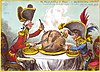
Salman Rushdie on Editorial cartoon
“What would a respectful political cartoon look like?”
Salman Rushdie on Story
“No story comes from nowhere; new stories are born from old — it is the new combinations that make them new.”

Salman Rushdie on Pakistanis
“It is commonly and, I believe, accurately said of Pakistan that her women are much more impressive than her men.”

Salman Rushdie on Unbelief
“To choose unbelief is to choose mind over dogma, to trust in our humanity instead of all these dangerous divinities.”
Salman Rushdie on Identity
“A thing that happens to migrants is that they lose many of the traditional things which root identity, which root the self.”

Salman Rushdie on Poets
“A poet's work is to name the unnameable, to point at frauds, to take sides, start arguments, shape the world and stop it from going to sleep.”

Salman Rushdie on World view
“A rigid, blinkered, absolutist world view is the easiest to keep hold of, whereas the fluid, uncertain, metamorphic picture I've always carried about is rather more vulnerable.”

Salman Rushdie on Conservatism
“The idea of the sacred is quite simply one of the most conservative notions in any culture, because it seeks to turn other ideas — uncertainty, progress, change — into crimes.”

Salman Rushdie on Earthquake
“Once you have been in an earthquake you know, even if you survive without a scratch, that like a stroke in the heart, it remains in the earth's breast, horribly potential, always promising to return, to hit you again, with an even more devastating force. ””

Salman Rushdie on Islam in India
“I come from an Indian Muslim family, but I experience India as a very pleasant country, whereas in Pakistan I feel ill at ease. You would think it should be the reverse. But in spite of its many defects, India is a rich and open society, while Pakistan is culturally an impoverished and closed society.”

What Salman Rushdie Said About Others
Discover personal opinions Salman Rushdie shared regarding contemporaries.
Salman Rushdie on Bapsi Sidhwa 2 quotes
“One of the finest responses made to the horror of the division of the subcontinent.”
Salman Rushdie on Woody Allen
Salman Rushdie on Arthur Miller
“Writing meant, for him, an effort to locate in the human species a counterforce to the randomness of victimisation.”

Salman Rushdie on Arundhati Roy
“Roy combines brilliant reportage with a passionate, no-holds-barred commentary. I salute both her courage and her skill.”

Salman Rushdie on Dan Brown
“Do not start me on The Da Vinci Code … a novel so bad that it gives bad novels a bad name. … Even Dan Brown must live. Preferably not write, but live.”

Salman Rushdie on Amnesty International
“Amnesty ... has done its reputation incalculable damage by allying itself with Moazzam Begg and his group Cageprisoners, and holding them up as human rights advocates.”

Salman Rushdie on Gandhi
“To make Gandhi appeal to the Western market, he had to be sanctified and turned into Christ – an odd fate for a crafty Gujarati lawyer – and the history of one of the century's greatest revolutions had to be mangled.”

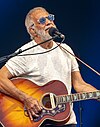
Salman Rushdie on Cat Stevens
“For many years, Yusuf Islam has been pretending he didn’t say the things he said in 1989, when he enthusiastically supported the Iranian terrorist edict against me and others. However, his words are on the record, in print interviews and on television programs.… I’m afraid Cat Stevens got off the peace train a long time ago.”
Salman Rushdie on Italo Calvino
“Reading Calvino, you're constantly assailed by the notion that he is writing down what you have always known, except that you've never thought of it before. This is highly unnerving; fortunately, you're usually too busy laughing to go mad. I can think of no finer writer to have beside me while Italy explodes, Britain burns, while the world ends”
Salman Rushdie on Henry Miller
“If we, in 1984, are asked to choose between, on the one hand, the Miller of Tropic of Cancer and ‘the first hundred pages of Black Spring’ and, on the other, the collected works of Auden, MacNeice and Spender, I doubt that many of us would go for old Henry. So it would appear that politically committed art can actually prove more durable than messages from the stomach of the fish.”

Quotes About Salman Rushdie
Gain deeper perspective through quotes about Salman Rushdie from others.
Isabel Allende on Salman Rushdie
“[Y]ou will find elements of magic realism in literature from all over the world—not just in Latin America. You will find it in Scandinavian sagas, in African poetry, in Indian literature written in English, in American literature written by ethnic minorities. Writers like Salman Rushdie, Toni Morrison, Barbara Kingsolver, and Alice Hoffman all use this style.”

Tahir Ashrafi on Salman Rushdie
“If a blasphemer [Rushdie] can be given the title "Sir" by the West despite the fact he has hurt the feelings of Muslims, then a mujahid [Osama bin Laden] who has been fighting for Islam against the Russians, Americans and British must be given the lofty title of Islam, Saifullah.”
Malcolm Bradbury on Salman Rushdie
Anita Desai on Salman Rushdie
“When Salman Rushdie published Midnight's Children [1981], it seemed to set tongues free in India in an odd way. Suddenly, younger writers realized that they didn't need to write correct and perfect English in the English tradition, but they could use Indian English and use it for any purpose whatsoever - for writing comic books, satiric books, or even for writing serious books.”
Nadine Gordimer "Faith on Salman Rushdie
“'I never thought of myself as a writer about religion until religion came after me', Salman Rushdie says. 'Religion was part of my subject, of course... nevertheless... I had to confront what was confronting me and to decide what I wanted to stand up for in the face of what so vociferously, repressively and violently stood against me. At that time it was difficult to persuade people that the attack on The Satanic Verses was part of a broader global assault on writers, artists, and fundamental freedoms."”
Christopher Hitchens on Salman Rushdie
“In the face of this ukase, which amounts to a life sentence as well as a death sentence on a reflective, autonomous individual, no wonder that people change the subject and take refuge in precedent or analogy. It's natural to do so when faced with a challenge that is so alarmingly singular. Yes, there are other death squads and assassins and proscriptions and archipelagos and all the rest of it. Yes, there are existing campaigns devoted to the release of so-and-so and the freedom of this-and-that. But when last did a head of government claim to be soliciting the murder of a citizen of another country, for pay, for the offence of literary production? I have heard great argument about it and about, from reminiscences of the Trotsky assassination to Christopher Hill's recall of the Papal incitement against Gloriana, but evermore came out by the same door as in I went. The Salman Rushdie case has no analogue and no precedent.”

Russell Jacoby on Salman Rushdie
“[Published six-months after the near-fatal stabbing of Rushdie in August 2022] As it happens, he had cause to worry. In the intervening years, support for Rushdie and for free expression has narrowed ... An August 19 New York City rally of writers gathered in support of Rushdie reprised a 1989 demonstration against the fatwa in which Susan Sontag, Norman Mailer, Joan Didion, Christopher Hitchens, and others participated, but the later iteration "paled in comparison," a Le Monde editorial remarked. Across social media, writers expressed concern for Rushdie's health, but an instinctual solidarity with him and the sense—so strong at the time of the fatwa—that his fate spoke to all of us as members of a liberal society did not materialize. Even among his defenders, free speech took a back seat. Why? One reason is fear. In 2009, the British writer Hanif Kureishi told Prospect Magazine that "nobody would have the balls today to write The Satanic Verses." He might have added that no one would have the balls to defend it. Most writers, Kureishi continued, live quietly, and "they don’t want a bomb in the letterbox."”

Mohammad Khatami on Salman Rushdie
Imam Khomeini on Salman Rushdie
“I would like to inform all the intrepid Muslims in the world... that the author of the book titled The Satanic Verses, which has been compiled, printed, and published in opposition to Islam, the Prophet, and the Koran, as well as those publishers who were aware of its contents, have been declared madhur el dam [“those whose blood must be shed”]. I call on all zealous Muslims to execute them quickly, wherever they find them, so that no one will dare to insult Islam again... .”
Joint letter on Salman Rushdie
“To the Editors: As writers and scholars from the Islamic world we are appalled by the vilification, bookbanning and threats of physical violence against Salman Rushdie, the gifted author of Midnight's Children, Shame, and The Satanic Verses. This campaign is done in the name of Islam, although none of it does Islam any credit. Certainly Muslims and others are entitled to protest against The Satanic Verses if they feel the novel offends their religion and cultural sensibilities. But to carry protest and debate over into the realm of bigoted violence is in fact antithetical to Islamic traditions of learning and tolerance. We deplore and regret this sort of thing, and we reaffirm our belief in universal principles of rational discussion and freedom of expression.”
Dorit Rabinyan on Salman Rushdie
“I asked him, "How did you manage to keep on writing when writing demands self-abandonment, when you’re being hunted, you're being persecuted?” He said, "You should tell them, 'Fuck you.'" And I said, "Did you know how to say 'fuck you' before it all occurred?" And he said, "No, I didn't know." So I said, "This turmoil taught you to detach and to be able to say 'fuck you' and keep on writing?" And he said, "Yes, this is what you have to learn from this experience."”

Riya Sen on Salman Rushdie
“I think when you are Salman Rushdie, you must get bored with people who always want to talk to you about literature.”
Cat Stevens on Salman Rushdie 2 quotes
“In Islam there is a line between let's say freedom and the line which is then transgressed into immorality and irresponsibility and I think as far as this writer is concerned, unfortunately, he has been irresponsible with his freedom of speech. Salman Rushdie or indeed any writer who abuses the prophet, or indeed any prophet, under Islamic law, the sentence for that is actually death. It's got to be seen as a deterrent, so that other people should not commit the same mistake again.”
Amir Taheri on Salman Rushdie
“Almost all Muslims, including the most enlightened, feel offended by Rushdie's novel or, rather, by reports they have read or heard about it. Very few people have actually read the dense and tortuous book, but they do not have to. The very idea of using the prophet Muhammad as a character in a novel is painful to many Muslims. The entire Islamic system consists of the so-called Hodud, or limits beyond which one should simply not venture. Islam does not recognize unlimited freedom of expression. Call them taboos, if you like, but Islam considers a wide variety of topics as permanently closed. Most Muslims are prepared to be broad-minded about most things but never anything that even remotely touches their faith... To Muslims religion is not just a part of life. It is, in fact, life that is a part of religion. Muslims cannot understand a concept that has no rules, no limits. The Western belief in human rights, which seems to lack limits, is alien to Islamic traditions... The fact that Rushdie propagated his heresy in a book is of especial significance to Muslims. Islam is the religion of the book par excellence. Few cultures hold the written and printed word in so much awe as Muslims, even though the vast majority are illiterate. When a Muslim wants to clinch an argument he says, 'It is written.'”
About Salman Rushdie
Sir Salman Rushdie (born Ahmed Salman Rushdie, Urdu: أحمد سلمان رشدی, Hindi: अह्मद सलमान रश्डी on 19 June 1947) is an Indian-born British novelist and essayist. Most of his work is set on the Indian subcontinent.