Link Copied!
Robert Service Quotes (1874-1958)
Poet















About Robert Service
Robert William Service (16 January 1874 – 11 September 1958) was an English poet, educated in Scotland, who sailed to Canada in 1894.
Best Robert Service Quotes
Shortest
Earliest
Explore our curated collection of the most famous and impactful Robert Service quotes.


“Marriage is a bachelor’s punishment for his sins”
“Mud is mankind in the moulding,
Heaven's mystery unfolding”
Heaven's mystery unfolding”
“The world is full of scribbling Nobodies
who think they’re scribbling Somebodies.
”
who think they’re scribbling Somebodies.
”

“Just have one more try - it's dead easy to die,
It's the keeping-on-living that's hard.
”
It's the keeping-on-living that's hard.
”


“This is the Law of the Yukon, that only the Strong shall thrive;
That surely the Weak shall perish, and only the Fit survive.
Dissolute, damned and despairful, crippled and palsied and slain,
This is the Will of the Yukon, -- Lo, how she makes it plain!”
That surely the Weak shall perish, and only the Fit survive.
Dissolute, damned and despairful, crippled and palsied and slain,
This is the Will of the Yukon, -- Lo, how she makes it plain!”
“A bunch of the boys were whooping it up in the Malamute saloon;
The kid that handles the music-box was hitting a rag-time tune;
Back of the bar, in a solo game, sat Dangerous Dan McGrew,
And watching his luck was his light-o'-love, the lady that’s known as Lou.”
The kid that handles the music-box was hitting a rag-time tune;
Back of the bar, in a solo game, sat Dangerous Dan McGrew,
And watching his luck was his light-o'-love, the lady that’s known as Lou.”
“There are strange things done in the midnight sun
By the men who moil for gold;
The Arctic trails have their secret tales
That would make your blood run cold;
The Northern Lights have seen queer sights,
But the queerest they ever did see
Was that night on the marge of Lake Lebarge
I cremated Sam McGee.”
By the men who moil for gold;
The Arctic trails have their secret tales
That would make your blood run cold;
The Northern Lights have seen queer sights,
But the queerest they ever did see
Was that night on the marge of Lake Lebarge
I cremated Sam McGee.”

“"It's coming soon and soon, mother, it's nearer every day,
When only men who work and sweat will have a word to say;
When all who earn their honest bread in every land and soil
Will claim the Brotherhood of Man, the Comradeship of Toil;
When we, the Workers, all demand: `What are we fighting for?' . . .
Then, then we'll end that stupid crime, that devil's madness -- War."”

“Were you ever out in the Great Alone, when the moon was awful clear,
And the icy mountains hemmed you in with a silence you most could hear;
With only the howl of a timber wolf, and you camped there in the cold,
A helf-dead thing in a stark, dead world, clean mad for the muck called gold;
While high overhead, green, yellow, and red, the North Lights swept in bars? —
Then you've a hunch what the music meant . . . hunger and night and the stars.”
Robert Service Quotes by Topic
Find exactly what you are looking for by browsing this categorized list of Robert Service quotes by topic.
Robert Service on Chinese Communist Party 3 quotes
“China had become the only communist state which developed a vibrant economy by giving it over to capitalism. By the beginning of the third millennium the country was already pointed in the direction of becoming the world’s largest manufacturing nation. It was its social cohesion and political durability that remained questionable. Deng was the last supreme ruler to have taken part in the Long March; his successors lacked the aureole of legitimacy as revolutionary veterans. Measures to deal with popular discontent were either crudely punitive or merely palliative. Party officials, faced with a choice between Maoist ideology and self-enrichment, invested in apartment blocks, coal-mines and computer technology. No one was able to tell how long this situation could last. No one today can tell any better.”

Robert Service on Canada 2 quotes
“This is the law of the Yukon, that only the Strong shall survive; That surely the Weak shall perish, and only the Fit survive. Dissolute, damned and despairful, crippled and palsied and slain, This is the Will of the Yukon,—Lo, how she makes it plain!”

Robert Service on Cultural Revolution 2 quotes
“The state reverted to capital punishment in the Cultural Revolution. Red Guards sometimes put victims on trial in the street after leading them in chains through the city. In extreme cases a defendant would be forced to confess before kneeling down and receiving a bullet in the back of the head. It was widespread practice for the families of the deceased to be sent a bill for the price of the bullet. Perhaps a million people died by execution or by their own hand. These gruesome rituals had a purpose. They were designed to make the maximum number of people complicit in the butchery and compliant with the policies of the authorities. Mao had no intention of doing things on the sly as Stalin had usually done. He wanted a society of active participants in the terror. According to one estimate, up to a million of the victims of the Red Guards were thrown into the prisons, the laogai or the reform-by-labour centres; but the true number may have been much higher. Moreover, the families of victims were discriminated against. Even people who were neither killed nor arrested could suffer in various ways. Some were dispatched for re-education by means of menial labour. Others were simply demoted. Psychological trauma was a pervasive phenomenon across the country.”
Robert Service on Yugoslav Wars 2 quotes
“The barbarous violence was brought to an end in 1995 by an agreement signed in Dayton, Ohio; and Milošević was momentarily hailed around the world as a peacemaker. But he had suspended action in Croatia and Bosnia-Herzegovina only because he currently lacked the necessary military power. Kosovo, morever, was another matter and in 1998 he carried out a campaign of ethnic cleansing which forced Albanians to flee for their lives over the border into Albania. President Clinton convinced the UN to sanction armed intervention. In March 1999, after Milošević refused to give way, Belgrade suffered relentless NATO bombing from the air. By June he had no alternative but to pull out of Kosovo. Political demonstrations began against him in Belgrade. In the following year he went down to defeat in Serbia’s elections and was ousted from office. In 2001 the Serbian authorities surrendered him for trial as a war criminal at the International Criminal Tribunal at The Hague; he died in March 2006 before any verdict was reached. Yugoslavia had long since been dismembered and its communism consigned to the dustbin of history. Nationalism, casting off the light disguise of constitutional federalism, had triumphed – and only to a partial degree did it lead to liberal democracy. The system of political patronage and financial corruption outlived the communist order in the states carved out of Yugoslavia.”

Robert Service on Mud
Robert Service on Wolves
Robert Service on Sunset
Robert Service on Rest
Robert Service on Failure
“And each forgets, as he strips and runs With a brilliant, fitful pace, It's the steady, quiet, plodding ones Who win in the lifelong race. And each forgets that his youth has fled, Forgets that his prime is past, Till he stands one day, with a hope that's dead, In the glare of the truth at last.”

Robert Service on Azerbaijan
“Although there was peaceful abandonment of communism in most states of the former Soviet Union, some terrible exceptions occurred. Russian and Moldovan elites fought for supremacy in Moldova (which had dropped its Soviet name of Moldavia). Tribal and religious rivalries produced a vicious civil war in Tajikistan on the Afghan border. Chechnya rose in revolt against the Russian Federation. A bloody war sputtered on between Armenia and Azerbaijan about the Armenian-inhabited enclave in Karabagh. But it could have been so much worse and most of the countries of the former USSR at least achieved independence without bloodshed.”

Robert Service on Islam in China
“Tibet languished under China’s despotism and its levels of literacy and material provision remained low; and the construction of a railway across its territory, much vaunted in Beijing as showing its wish to share the benefits of modernisation, was seen by Tibetans as a means of reinforcing central control. Great regions such as Xinjiang in the north-west of the People’s Republic were held in a suffocating grip. There the Chinese authorities feared that Islam and Uigur nationalism might breed a separatist movement. Freedom of religious expression was only patchily respected across China. Falun Gong, an indigenous faith of massive popularity, was systematically persecuted.”
Robert Service on Brainwashing
“The capture of American GIs in the Korean War heightened the alarm. Stories coming out of Korea suggested that the Chinese and Korean communists had developed techniques of indoctrination which nobody could resist. US soldiers and airmen had allegedly been turned into fervent communists. This process became known as brainwashing. Panic gripped the popular press. Perhaps such POWs, when liberated, might return home as clandestine subversives. It was years before brainwashing was shown to be a fantasy. When captives, brutalised by torture and malnutrition, professed adherence to Marxism-Leninism they were usually calculating that a pretence of ideological conversion would stop their torment.”
Robert Service on Yugoslavia
“There was a hierarchy of material conditions in the communist world. The Yugoslavs, with the closest commercial links with the West, did best in the range and quality of goods available. Next came the East Germans, followed by the Hungarians and the Poles. Citizens of the USSR trailed in after them; and, still more galling to Russian national pride, the Georgians and Estonians in the Soviet Union enjoyed better conditions than those available to the Russians. The stereotypical Georgian, in the Russian popular imagination, was a swarthy ‘Oriental’ who smuggled oranges in large suitcases from his collective farm to the large cities of the RSFSR. That fruit could be an item of internal contraband speaks volumes about communism’s economic inefficiency.”

Robert Service on Estonia
“There was a hierarchy of material conditions in the communist world. The Yugoslavs, with the closest commercial links with the West, did best in the range and quality of goods available. Next came the East Germans, followed by the Hungarians and the Poles. Citizens of the USSR trailed in after them; and, still more galling to Russian national pride, the Georgians and Estonians in the Soviet Union enjoyed better conditions than those available to the Russians. The stereotypical Georgian, in the Russian popular imagination, was a swarthy ‘Oriental’ who smuggled oranges in large suitcases from his collective farm to the large cities of the RSFSR. That fruit could be an item of internal contraband speaks volumes about communism’s economic inefficiency.”

Robert Service on Georgia (country)
“There was a hierarchy of material conditions in the communist world. The Yugoslavs, with the closest commercial links with the West, did best in the range and quality of goods available. Next came the East Germans, followed by the Hungarians and the Poles. Citizens of the USSR trailed in after them; and, still more galling to Russian national pride, the Georgians and Estonians in the Soviet Union enjoyed better conditions than those available to the Russians. The stereotypical Georgian, in the Russian popular imagination, was a swarthy ‘Oriental’ who smuggled oranges in large suitcases from his collective farm to the large cities of the RSFSR. That fruit could be an item of internal contraband speaks volumes about communism’s economic inefficiency.”

Robert Service on Hong Kong
“Hong Kong was reincorporated in the People’s Republic in 1997 when the British ceded their colony to Beijing. The immediate effect was a restriction on liberties on the island. But the Chinese regime needed to reassure global entrepreneurs of its commitment to some degree of social freedom, and a political witch-hunt in Hong Kong would have damaged this objective. Expatriate Chinese colonies in North America and Europe also required reassurance since they acted as important intermediaries for China’s entry into the world economy. Ties of commerce between the People’s Republic and the USA were strengthened and the global markets teemed with Chinese exports. Chinese rulers huffed and puffed about desiring to reincorporate Taiwan but military action was avoided. Trade was preferred to conquest.”

Robert Service on Chinese economic reform
“Ideas of ‘market socialism’ – for example, in the USSR in the 1920s, Czechoslovakia in 1968 and Hungary in the 1970s – had never proposed a system with the capitalist sector outgrowing the parts of the economy owned by the state. Chinese leaders from Deng Xiaoping onwards asserted that they were developing a ‘communism with Chinese characteristics’. The red-dyed gauze no longer occluded reality. The communist order was retained only as a means of rigorous political and ideological control; its economic and social components were blown to the winds. Concepts of Mao Zedong Thought were abandoned except insofar as they promoted the goals of national identity, centralised administration and superpower status. An extraordinary hybrid was created. China had become the only communist state which developed a vibrant economy by giving it over to capitalism.”
Robert Service on Communism
“Durable communist regimes had much in common. They eliminated or emasculated rival political parties. They attacked religion, culture, and civil society. They trampled on every version of nationhood except the one approved by communist rulership. They abolished the autonomy of the courts and the press. They centralised power. They turned over dissenters to forced-labour camps. They set up networks of security police and informers. They claimed infallibility in doctrine and paraded themselves as faultless scientists of human affairs. They insulated societies against alien influences in politics and culture. They fiercely barricaded their frontiers. They treated every aspect of social life as in need of penetration by the authorities. They handled people as a resource to be mobilised. They showed little respect for ecology, charity, or custom. These commonalities make it sensible to speak of a communist order.”

Robert Service on Romania
“Bucharest was a constant irritant inside Comecon and the Warsaw Pact. Romania’s ambitious industrial plans remained in place. Ceaușescu also reinforced the collective-farm system. Like Khrushchëv earlier, he bulldozed villages and brought peasants together in new rural townships. The rationale for this was the zeal to bring concrete-slab, multi-storey buildings, tractors and electric light to the countryside. National pride was asserted and the Hungarian Autonomous Region was abolished. Opposition was vigorously suppressed by the security police. Ceaușescu was determined to secure his regime from internal subversion as well as external interference. What saved Romania from being invaded by its allies in the Warsaw Pact was its retention of the one-party, one-ideology communist state. Ceaușescu's friendliness to the powers of the West was irritating but not a casus belli. Adoption of party pluralism and capitalist economics would have been an entirely different matter.”

Robert Service on Far-right politics
“Communism also infected other movements for the transformation of society. The totalising ideas, institutions and practices of Marxism-Leninism had a profound impact on the political far right. The one-party, one-ideology state with its disregard for law, constitution and popular consent was implanted in inter-war Italy and Germany. Neither Mussolini nor Hitler acted only in response to communism; and the forced submission of society to comprehensive control took different forms in the USSR, Italy and Germany. But the importance of precedent is scarcely deniable. The objective of an unrestrained state power penetrating all aspects of life – political, economic, social, cultural and spiritual – was a characteristic they shared. The same phenomenon emerged in the secularist Baathist regime in Iraq under Saddam Hussein and appeared in the Islamist plans of Osama bin Laden as well as in the rule of the Taliban in Afghanistan. All such leaders from Mussolini and Hitler down to bin Laden have detested communism. They dedicated themselves to its annihilation. Yet they were influenced by communist precedents even while regarding it as a plague bacillus. Communism has proved to have metastasising features. It will have a long afterlife even when the last communist state has disappeared.”

Robert Service on Marxism and religion
“Yet China remained a one-party dictatorship and its labour camps – the infamous laogai – continued to hold between four and six million inmates in shocking conditions. Mao’s gigantic image was still displayed in Tiananmen Square. There was no true pluralism of intellectual and political discourse at the highest official levels. Interest groups of employers were not allowed to function. Trade unions were emasculated. The importance of military power went on being promoted. Tibet languished under China’s despotism and its levels of literacy and material provision remained low; and the construction of a railway across its territory, much vaunted in Beijing as showing its wish to share the benefits of modernisation, was seen by Tibetans as a means of reinforcing central control. Great regions such as Xinjiang in the north-west of the People’s Republic were held in a suffocating grip. There the Chinese authorities feared that Islam and Uigur nationalism might breed a separatist movement. Freedom of religious expression was only patchily respected across China. Falun Gong, an indigenous faith of massive popularity, was systematically persecuted. Communist doctrines remained an obligatory ingredient in the school curriculum and a qualification for a serious public career. Marxism-Leninism was otherwise honoured only in the breach.”

Robert Service on Vietnam
“Vietnam was a single country again. Ho had organised the communist order on political and economic principles which drew on the Soviet and Chinese experiences. Agriculture was collectivised. A network of labour camps was spread across the country and hostile ‘class’ elements were rounded up and forced to abandon their capitalistic sympathies. A strict one-party dictatorship was imposed. A blend of patriotism and Marxism-Leninism was propagated. The party and the army were reinforced as the combined bastion of the regime. The Democratic Republic of Vietnam had been born in a colonial war and had known nothing but war since obtaining its independence. It was an even more militarised society than the People’s Republic of China. Yet its industry made hardly any armaments. It had little industry at all and the Americans bombed its few factories into rubble. Financial support and military supplies from the USSR and China had been crucial for survival. The northerners communised the south after the American withdrawal. Expropriations and arrests accompanied the expansion of the party and army presence across the newly occupied provinces. Within a year or two the southern economy had been pressed into a northern mould. Yet the wartime devastation was everywhere. Vietnam was a land of orphans, invalids, ruined houses, disrupted rice paddies and poisoned forests. Hanoi expressed the wish for a rapprochement, but the departed Americans cut the Vietnamese off from the world economy. Peace was meant to turn the country into a desert. Although the USSR continued to proffer aid, it was never on a scale adequate for substantial reconstruction.”

Robert Service on Marxism–Leninism
“Communism itself looks unlikely to return in the form it had in the USSR or in Maoist China. Indeed its restoration in any comprehensive fashion is surely inconceivable. It has been thoroughly discredited among intelligentsias and general publics even though grouplets of true believers will probably survive in liberal democracies or in many clandestine movements. Yet ideologies and politics can mutate and spread like a virus which counteracts every medical effort to pinpoint and eradicate it. So it has been with communism. Lenin and the Bolsheviks groped their way to the creation of their new kind of state. This became the stereotype for communist systems elsewhere; and the USSR itself underwent internal variation in subsequent decades. Communism also infected other movements for the transformation of society. The totalising ideas, institutions and practices of Marxism-Leninism had a profound impact on the political far right. The one-party, one-ideology state with its disregard for law, constitution and popular consent was implanted in inter-war Italy and Germany. Neither Mussolini nor Hitler acted only in response to communism; and the forced submission of society to comprehensive control took different forms in the USSR, Italy and Germany. But the importance of precedent is scarcely deniable. The objective of an unrestrained state power penetrating all aspects of life – political, economic, social, cultural and spiritual – was a characteristic they shared. The same phenomenon emerged in the secularist Baathist regime in Iraq under Saddam Hussein and appeared in the Islamist plans of Osama bin Laden as well as in the rule of the Taliban in Afghanistan.”
Robert Service on East/Central Europe
“Eastern Europe caused constant alarm in the Soviet supreme leadership. The suppression of the Hungarian Uprising had been traumatic for Khrushchëv. He had thought he was relaxing communist rule for everybody’s benefit but found that societies west of the Soviet Union hated their oppressors. The Prague Spring was less traumatic for Brezhnev, who had never promised reform in eastern Europe; his conscience, if he had one, was untroubled by his decision to send Warsaw Pact forces into Czechoslovakia in 1968. But military action dealt only with the symptoms. It offered no fundamental cure for the malaise of communism across the entire eastern half of the continent. From Stalin to Brezhnev the sickly phenomena persisted. The ‘colonies’ in eastern Europe had turned into a multinational drain on the Soviet budget. Nuclear missile bases had to be supplied if the threat of attack by NATO was to be faced down. The Soviet army also maintained garrisons which needed equipping and financing. These disgruntled troops were locally very unpopular and Moscow took the precaution of secluding its contingents well away from regular contact with the country’s civilian inhabitants. It was a most peculiar empire which resorted to such expedients. This was not all. Communised economies in eastern Europe were constructed on the Soviet model. It is true that Poland refrained from collectivising most of its peasantry; but industry, commerce, finance and transport copied the templates invented in the pre-war USSR. The result was permanent economic inadequacy. The countries of eastern Europe lacked the USSR’s abundance of natural resources. If Moscow wished to salvage the situation, it had to reconcile itself to the unceasing subsidisation of gas and oil exports.”
Robert Service on Dissolution of the Soviet Union
“In 1989 this communist order was removed from the face of Europe. In 1991 the same thing happened in the Soviet Union. Although China still claimed to be communist, its fundamental economic reforms meant that this was no longer accurate as a comprehensive description. Communist parties clung on to office in a few countries such as North Korea, Vietnam and Cuba; their geopolitical importance was a long way short of the power and prestige of the ‘world communist movement’ in its years of pomp. Communism was fast becoming a historical relic. Such a transformation brought an end to the struggle known as the Cold War. This was predominantly a conflict between coalitions led by the USSR and the USA, and the Soviet disintegration in December 1991 signalled a definitive victory for the Americans. For years the Cold War had involved the nightmarish possibility of a nuclear strike by one side against the other. Unable to match American advances in the development and dissemination of technology, the Soviet Union had lost the military parity it had possessed. This was not the sole index of defeat. Throughout the contest between the superpowers the Americans had claimed to stand for the market economy, liberal democracy and civil society. Although the USA had often honoured these principles only in the breach, they were the principles widely thought to have triumphed when communism expired in eastern Europe and in the USSR. The West’s political leaders and commentators were proud and excited. Communism had been exposed as an overwhelmingly inferior kind of state order. Many believed that history had come to a close. Liberalism in its political, economic and social manifestations had consigned the ideology and practice of Leninism to the dustbin of the ages. The suggestion was that communism had been a puffball which too many people had walked around as if it was a great oak tree.”

What Robert Service Said About Others
Discover personal opinions Robert Service shared regarding contemporaries.
Robert Service on Thomas More 2 quotes
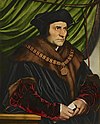
“More and Campanella advocated through indoctrination of their people. This was reversion to the attitude of the Greek philosopher Plato who, in the fourth century BC, called for philosopher-kings to introduce a reign of universal virtue. Neither More nor Campanella prospered in temporal affairs. Having faithfully served his master Henry VIII, More refused to accept the termination of the Pope’s supremacy over the English Church. He died on the executioner’s block in 1535”
Robert Service on Wojciech Jaruzelski 2 quotes
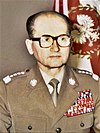
“Jaruzelski himself was reluctant to use any more force than was absolutely necessary for the maintenance of the state order. He had an impossible task. The communist party and the institutions it sponsored – trade unions, youth associations and cultural clubs – attracted popular contempt. The result was chronic stalemate: although Jaruzelski succeeded in restoring a degree of calm, he could not liquidate Solidarity and Solidarity could not supplant his military administration. Poland was like an insect trapped in amber. No fundamental political and economic development was possible for the country. No end to martial law appeared in sight.”
Robert Service on Yuri Andropov 2 quotes
“Brezhnev died in November 1982 and the USSR acquired Yuri Andropov as its new Party General Secretary. Andropov recognised the need for political and economic changes if the USSR was to remain at all competitive with the USA. He called for a renewed emphasis on discipline and a rooting out of corruption. Dozens of central and local party functionaries were shunted into retirement. Punctuality and conscientiousness at work was demanded. Andropov stated that the leadership had failed to understand conditions in society; by implication he was conceding that a gap had opened between the party and most citizens. Behind the scenes he set up a group of younger politicians including Mikhail Gorbachëv and Nikolai Ryzhkov to explore what kind of reforms were needed in the Soviet economy.”

Robert Service on Mao Zedong 2 quotes
“Supposedly this was Mao’s reaction to all the suffering: ‘You have only tree leaves to eat? So be it.’ What is undeniable is that he took no serious steps to change policy until it was too late. He continued to take satisfaction from communist successes in the decade since 1949. Land had been collectivised, industry nationalised. Rival parties had been eliminated. The non-Chinese groups in the population had been cowed. The ruling group enjoyed unchallenged supremacy; its members had the prestige and authority of men who had fought in the civil war against the Kuomintang. Yet the Great Leap Forward had not worked out as Mao had intended. The tens of millions of deaths were not the only reason why the central leaders of party and army were alarmed – and many leaders in fact were just as unconcerned about the hardship as Mao himself.”

Robert Service on Herbert Marcuse 2 quotes
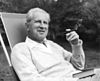
“Marcuse, Sartre, Colletti and Althusser were style-maestros of turgidity and never tried to rise to the flights of Marx and Engels in their inspired moments. Not one of them would choose a monosyllable if a longer word could be discovered or devised. Their Marxism, if not exactly pessimistic, was cramped and cautious. What is more, they were philosophers writing mainly for other philosophers. Only Marcuse became a genuine favourite of the thousands of students who rebelled in 1968 against ‘bourgeois society’ and university discipline, as well as the American war in Vietnam. He and his ideas were accorded a profile in Playboy magazine. (It is hard to imagine another Marxist theorist, except perhaps Marx himself, tolerating this without complaint.) Marcuse had grown popular because of the significance he attached to the students; it also did him no harm that he was willing to discuss the erotic as well as the socio-political.”
Robert Service on Hafizullah Amin 2 quotes
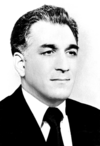
“The Khalq’s seizure of power in Kabul was the last of the twentieth-century communist revolutions and demonstrated beyond peradventure that communism had no chance of surviving in power without resorting to massive repression. The Soviet comrades were frequently appalled by what they witnessed. They belonged to a generation which remembered the horrors of Stalin’s rule, and they could hardly believe the recklessness of Pol Pot, Mengistu Haile Mariam and Hafizullah Amin. These were revolutions led by men wilder than the early Bolsheviks, wilder even than Stalin and Mao. They attempted to solve problems of economics, administration, ethnicity and religion by surgical force. Their mayhem kicked up a storm of hatred for communism. Yet the gradualist approach of Salvador Allende was hardly more successful; his regime was hurtling towards economic disaster and political disintegration even before Pinochet struck. Communist revolutionary rule proved to be a passage down a cul-de-sac.”
Robert Service on Nicolae Ceaușescu 2 quotes
“Ceausescu vaunted Romania as the reincarnation of the Roman Empire’s province of Dacia, and archaeologists searched for continuities with ancient culture. He endlessly goaded the Soviet Politburo and put himself forward as the nation’s greatest ever protector. He aimed at economic autarky for Romania. This tin-pot dictator was treated as a hero in the struggle against the USSR. He received the Order of the Bath from Queen Elizabeth II on the recommendation of Labour Prime Minister James Callaghan. Liberal Party leader David Steel sent him a Labrador puppy. Nicolae’s wife Elena strutted the world in her self-appointed role as a world-class chemist; and her penchant for clothes and shoes rivalled the record of Imelda Marcos in quantity and tastelessness. The Ceausescus, man and wife, planned a luxurious life in the People’s Palace which was being built in Bucharest’s old quarter after twenty-six churches and seven thousand homes had been demolished. The Pentagon in Washington is the only edifice with a larger cubic capacity. Yet while the Palace sparkled with 4,500 chandeliers, ordinary Romanians had to put up with regular cuts in electricity supply. It was modern communism with medieval appurtenances.”

Robert Service on Boris Pasternak
Robert Service on Pierre-Joseph Proudhon
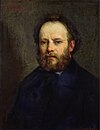
“Proudhon hated all authority and rebuked anyone planning a dictatorial form of socialism. He abhorred government altogether and made the call for a free federation of independent communes. He rejected all laws as instruments of oppression; he wanted communes to conclude agreements with each other about how their members should live.”
Robert Service on Nikolai Bukharin
“There have been communist leaders – and not just ones whose parties failed to come to power – who moderated their zeal for full communisation. They have included individuals who in their private lives would not deliberately hurt a fly. One such was Bukharin, animal lover, mountain walker and painter. But kindly Bukharin did not abjure dictatorship and terror in principle, and he condoned most of the violence perpetrated by the Bolsheviks in the early years of the Soviet state.”

Robert Service on Karl Kautsky
“Kautsky knew as well as Bernstein that advanced industrial societies were changing in ways unpredicted by Marx and Engels. But he set himself up as the Pope of Marxism in opposition to Bernstein as Anti-Pope. He protected 'orthodoxy' against attacks on its fundamental doctrines. He honoured the legacy of Marxism's co-founders. He wrote a lengthy disquisition on the agrarian question querying the evidence and analysis adduced by Eduard David. Nor did he fail to stress that developments around the world in industrial organization were following the path predicted by Marx and Engels.”
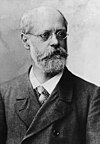
Robert Service on Konstantin Chernenko
“Re-elected in 1984, [Reagan] sought to assure the Soviet leadership that he wanted peace; he also signalled that he sought a resumption of negotiations. This was not going to be easy. Andropov had been in poor health at his accession to the General Secretaryship, and he died in February 1984. His successor Konstantin Chernenko had been Brezhnev’s personal assistant. Mental agility beyond the routine tasks of administration had never been one of his strong features and he was already badly ill with emphysema. Reagan was trying to parley at a table at which he was the solitary sitter. Yet fortune smiled on the American strategy when, in March 1985, Chernenko died and was succeeded by Mikhail Gorbachëv.”

About Robert Service
Robert William Service (16 January 1874 – 11 September 1958) was an English poet, educated in Scotland, who sailed to Canada in 1894.