Link Copied!
Robert A. Heinlein Quotes (1907-1988)
Author





























































About Robert A. Heinlein
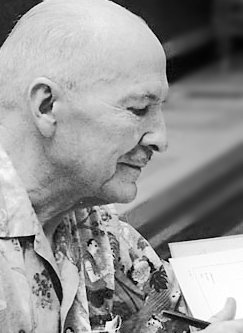
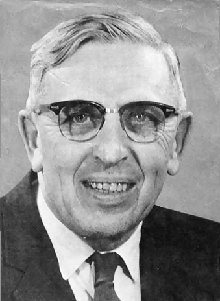
Robert Anson Heinlein (7 July 1907 – 8 May 1988) was one of the most popular, influential, and controversial authors of science fiction of the 20th Century.
Best Robert A. Heinlein Quotes
Shortest
Earliest
Explore our curated collection of the most famous and impactful Robert A. Heinlein quotes.


“Sex is rearing its interesting head.”

“Television leaves no external scars.”


“A Paradox May Be Paradoctored.”


“History is never surprising—after it happens.”



Robert A. Heinlein Quotes by Topic
Find exactly what you are looking for by browsing this categorized list of Robert A. Heinlein quotes by topic.
Robert A. Heinlein on Religion 14 quotes
View all 14 quotes on Religion →Robert A. Heinlein on Sword 5 quotes
“Swordplay is an odd thing; you don't really use your mind, it is much too fast for that. Your wrist thinks and tells your feet and body what to do, bypassing your brain...”

Robert A. Heinlein on Magic (supernatural) 4 quotes
“One man's "magic" is another man's engineering. "Supernatural" is a null word.”

Robert A. Heinlein on Grok 3 quotes
View all 3 quotes on Grok →Robert A. Heinlein on God 3 quotes
“I've never understood how God could expect his creatures to pick the one true religion by faith — it strikes me as a sloppy way to run a universe.”

Robert A. Heinlein on Ragnarök 3 quotes
“I am sorry... but I do believe that Loki is loose. The signs show it. Now anything can happen. We enter the Twilight of the Gods. Ragnarok comes. Our world ends.”

Robert A. Heinlein on Drink 2 quotes
View all 2 quotes on Drink →Robert A. Heinlein on Sin 2 quotes
“Age is not an accomplishment, and youth is not a sin.”

Robert A. Heinlein on Cats 2 quotes
“Anyone who considers protocol unimportant has never dealt with a cat.”

Robert A. Heinlein on Authors 2 quotes
“There is no way that writers can be tamed and rendered civilized. Or even cured.”
Robert A. Heinlein on Obituary 2 quotes
“Decency is not news; it is buried in the obituaries — but it is a force stronger than crime.”

Robert A. Heinlein on Breakfast 2 quotes
“In Wilson’s scale of evaluations breakfast rated just after life itself and ahead of the chance of immortality.”

What Robert A. Heinlein Said About Others
Discover personal opinions Robert A. Heinlein shared regarding contemporaries.
Robert A. Heinlein on Saint Peter 2 quotes
“Pete is a good old Joe, the most perfect Christian in Heaven or on earth. Denied his Boss thrice, been making up for it ever since. Utterly delighted to be on nickname terms with his Master in all three of His conventional Aspects. I like Pete. If he ever has a falling out with My Brother, he's got a job here.”

Robert A. Heinlein on James Branch Cabell
“A Cabellesque satire on religion and sex.”

Robert A. Heinlein on Clifford D. Simak
Robert A. Heinlein on Immanuel Kant
“Then there's philosophy -- supposed to tackle everything. Does it? All any philosopher ever comes out with is exactly what be walked in with -- except for those self-deluded who prove their assumptions by their conclusions, in a circle. Like Kant.”

Robert A. Heinlein on Neil Armstrong
“Many short-sighted fools think that going to the Moon was just a stunt. But the astronauts knew the meaning of what they were doing, as is shown by Neil Armstrong's first words in stepping down onto the soil of Luna: "One small step for a man, one giant leap for mankind."”

Robert A. Heinlein on Simon Newcomb
“I knew that flying machines were impossible; in engineering school I had studied Professor Simon Newcomb's well-known mathematical proof that the efforts of Professor Langley and others to build an aerodyne capable of carrying a man were doomed, useless, because scale theory proved that no such contraption large enough to carry a man could carry a heat-energy plant large enough to lift it off the ground — much less a passenger. That was science's final word on a folly and it put a stop to wasting public monies on a will-o'-the-wisp. Research and development money went into airships, where it belonged, with enormous success. However, in the past few days I had gained a new angle on the idea of "impossible". When a veritable flying machine showed up in our sky, I was not greatly surprised.”

Quotes About Robert A. Heinlein
Gain deeper perspective through quotes about Robert A. Heinlein from others.
Ray Bradbury on Robert A. Heinlein
“YOUR INFLUENCE ON US ALL, FROM 1939 ON, CANNOT BE MEASURED. I CAN ONLY SAY I REMEMBER, WARMLY, YOUR MANY KINDNESSES TO ME WHEN I WAS 19–20–21 YEARS OLD. THAT YOUNG MAN BASKED IN YOUR LIGHT AND WILL CONTINUE TO BE GRATEFUL FOR THE HELP YOU OFFERED WHEN I WAS SO POOR & NEEDFUL!”

Philip K. Dick on Robert A. Heinlein
“Several years ago, when I was ill, Heinlein offered his help, anything he could do, and we had never met; he would phone me to cheer me up and see how I was doing. He wanted to buy me an electric typewriter, God bless him — one of the few true gentlemen in this world. I don't agree with any ideas he puts forth in his writing, but that is neither here nor there. One time when I owed the IRS a lot of money and couldn't raise it, Heinlein loaned the money to me. I think a great deal of him and his wife; I dedicated a book to them in appreciation. Robert Heinlein is a fine-looking man, very impressive and very military in stance; you can tell he has a military background, even to the haircut. He knows I'm a flipped-out freak and still he helped me and my wife when we were in trouble. That is the best in humanity, there; that is who and what I love.”
Grace Dillon on Robert A. Heinlein
“In terms of the future, my Anishinaabemowin language has a word, kobade—a very small word, but in reality an extremely sophisticated concept. The idea is that everything that’s in the past and the future is also in the now, but it’s not as simplistic as that. It’s more like there exists a spiral of intergenerational connections, so that even if you are in the present you have spirit persons at your side; they can be ancient spirits, considered to be from the past or from the future. Kobade is the recognition of all persons, not just human persons, and of all the intergenerational connections that we have, which are never linear, but spiral. In my language some people may describe it as a chain, wherein we’re connected to each other, so that the future is always containing the past and the present; I don’t use the word “chain” because I work in Black Studies and it just feels heavy and inappropriate. I use the image of a spiral. This is very different from the former science fiction model, what was called “extrapolative fiction.” This word came directly from Robert A. Heinlein, who took the idea from mathematical equations, where you pull something out of the past or the present and draw this imagined plausible future from one dot to another. That’s an extremely linear concept, too simplistic to allow other forms of thinking. For example, we just don’t arbitrarily choose a certain point in the past when writing and developing characters; there can be all kinds of remnants of pasts, presents, and futures.”
Bill Patterson on Robert A. Heinlein
“Heinlein presents us, in terms of his sources and influences with a rope of many strands and the strength of the whole is in the multiplicity of the strands. To lift one strand out and examine it has two immediate effects: it magnifies the relative importance out of proportion to its place in the whole; and it weakens the whole. For all the good and interesting use Heinlein made of his encounter with Cabell, he was not a disciple or even a "Cabell minor." Rather, he used Cabellian materials to make his own figure in the world, and in so doing he has given the Biography of the Life of Manuel a Life of its own, flowing into literary history. Imitation may be the sincerest form of flattery — but in literature, transformation is the only form of progeny.”
Jerry Pournelle on Robert A. Heinlein
“I found Robert A. Heinlein in back issues of Astounding, and also in The Saturday Evening Post, and I read everything of his I could find. I was completely hooked on his "juveniles": Space Cadet. Red Planet. Starman Jones. Between Planets. Farmer in the Sky. Wonderful stories, and the only thing "juvenile" about them was that he took the trouble to explain what was happening. Robert once told me that young people want to know how things work, and you can tell them more in a "juvenile" than you can in an adult novel. In any event I devoured everything of his I could find, through high school, the army, college, and I couldn’t have cared less that many were "juveniles". They were wonderful. I met Robert Heinlein years later, and through some kind of rare magic we became instant friends. We corresponded for a decade. In those days I was an engineering psychologist, operations research specialist, and systems engineer in aerospace. Most of my work was military aerospace, but I did get to work on Mercury, Gemini, and Apollo. We were helping to make the dream come true! I went from there to a professorship, and then into political management and city government. Robert visited me when I was working for Mayor Sam Yorty. "You probably don’t know this," he said, "but my political career ended when Yorty beat me for the Democratic nomination to the State Assembly." When I finally decided to get out of politics, academia, and the aerospace industry and try my hand at writing, Mr. Heinlein was enormously helpful. Years later, when I was an established writer, I asked him how I could pay him back. "You can’t," he said. "You don’t pay back, you pay forward." I never forgot that, just as I never forgot the wonderful things his ‘juvenile’ stories did for me.”
L. Neil Smith on Robert A. Heinlein
“Above all, Heinlein taught us to accept his wisdom without becoming followers. He taught us to become, and to remain, individuals. … The Libertarian movement must go far to prove itself, but it may prove to be the one bright spot in an otherwise bleak era. The shadow of two powerful minds cast themselves over everything about that movement, whether we recognize it or not: the minds of Ayn Rand and Robert A. Heinlein. … What Heinlein gave it, no less vital if we’re to effect the changes we aspire to, was heart the guts.”
About Robert A. Heinlein
Robert Anson Heinlein (7 July 1907 – 8 May 1988) was one of the most popular, influential, and controversial authors of science fiction of the 20th Century.