Link Copied!
Rabindranath Tagore Quotes (1861-1941)
Philosopher, Poet
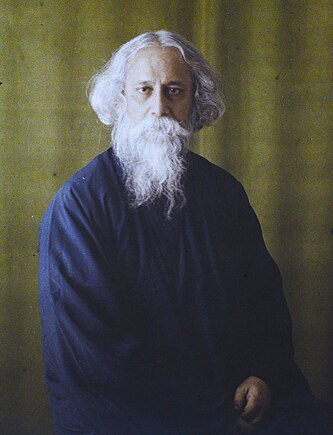


























About Rabindranath Tagore
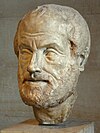
Rabindranath Tagore (7 May 1861 – 7 August 1941), also known as Rabi Thakur, was a Bengali philosopher, poet, and winner of the Nobel Prize for literature in 1913.
Best Rabindranath Tagore Quotes
Shortest
Earliest
Explore our curated collection of the most famous and impactful Rabindranath Tagore quotes.


“Light finds her treasure of colours
through the antagonism of clouds.”
through the antagonism of clouds.”




“My heart, the bird of the wilderness, has found its sky in your eyes.”


Rabindranath Tagore Quotes by Topic
Find exactly what you are looking for by browsing this categorized list of Rabindranath Tagore quotes by topic.
Rabindranath Tagore on Religious views on love 8 quotes
View all 8 quotes on Religious views on love →Rabindranath Tagore on Love 8 quotes
View all 8 quotes on Love →Rabindranath Tagore on Joy 4 quotes
“That side of our existence whose direction is towards the infinite seeks not wealth, but freedom and joy.”

Rabindranath Tagore on Taj Mahal 2 quotes
View all 2 quotes on Taj Mahal →Rabindranath Tagore on Life 2 quotes
View all 2 quotes on Life →Rabindranath Tagore on God 2 quotes
“God seeks comrades and claims love, The devil seeks slaves and claims obedience.”

Rabindranath Tagore on Brahma 2 quotes
“It is not a mere sentiment; it is truth; it is the joy that is at the root of all creation. It is the white light of pure consciousness that emanates from Brahma. So, to be one with this sarvānubhūh [Omnipotent], this all-feeling being who is in the external sky, as well ...”

Rabindranath Tagore on Reincarnation 2 quotes
“To Indians the idea of the transmigration of the soul from animal to man, and man to animal, does not seem strange, and so from our scriptures pity for all sentient creatures has not been banished as a sentimental exaggeration. When I am in close touch with Nature in the country, the Indian in me asserts itself and I cannot remain coldly indifferent to the abounding joy of life throbbing within the soft down-covered breast of a single tiny bird.”

Rabindranath Tagore on Hindu–Islamic relations 2 quotes
“A very important factor which is making it almost impossible for Hindu-Muslim unity to become an accomplished fact is that the Muslims can not confine their patriotism to any one country. I had frankly asked (the Muslims) whether in the event of any Mohammedan power invading India, they (Muslims) would stand side by side with their Hindu neighbours to defend their common land. I was not satisfied with the reply I got from them… Even such a man as Mr. Mohammad Ali (one of the famous Ali brothers, the leaders of the Khilafat Movement-the compiler) has declared that under no circumstances is it permissible for any Mohammedan, whatever be his country, to stand against any Mohammedan."”

Rabindranath Tagore on Hospitality
Rabindranath Tagore on Heart
“My heart, the bird of the wilderness, has found its sky in your eyes.”

What Rabindranath Tagore Said About Others
Discover personal opinions Rabindranath Tagore shared regarding contemporaries.
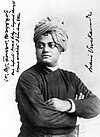
Rabindranath Tagore on Swami Vivekananda
“If you want to know India study Vivekananda. In him everything is positive and nothing negative.”
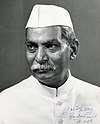
Rabindranath Tagore on Rajendra Prasad
“I feel assured in my mind that your personality will help to soothe the injured souls and bring peace and unity into an atmosphere of mistrust and chaos.”
Rabindranath Tagore on Women
Rabindranath Tagore on Nicholas Roerich
“I have keenly followed your most remarkable achievements in the realm of Arts and also your great humanitarian work for the welfare of nations of which your Peace Pact idea with a special Banner for the protection of cultural treasure is a singularly effective symbol.”

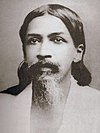
Rabindranath Tagore on Sri Aurobindo
“I felt the utterance of the ancient Hindu Rishis spoke from him of that equanimity which gives the human Soul its freedom of entrance into the All. I said to him, "You have the word and we are waiting to accept it from you. India will speak through your voice to the world, Hearken to me … O Aurobindo, accept the salutations from Rabindranath."”
Rabindranath Tagore on Gandhi
“It is extremely difficult for me to have to differ from Mahatma Gandhi in regard to any matter of principle or method. . . . For what could be a greater joy than to join hands in the field of work with one for whom one has such love and reverence? . . . The difference in our standpoints and temperaments . . . makes the Mahatma’s field of work one which my conscience cannot accept as its own. That is a regret that will abide with me always.”

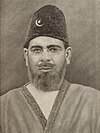
Rabindranath Tagore on Mohammad Ali Jauhar
“A very important factor which is making it almost impossible for Hindu-Muslim unity to become an accomplished fact is that the Muslims can not confine their patriotism to any one country. I had frankly asked (the Muslims) whether in the event of any Mohammedan power invading India, they (Muslims) would stand side by side with their Hindu neighbours to defend their common land. I was not satisfied with the reply I got from them… Even such a man as Mr. Mohammad Ali has declared that under no circumstances is it permissible for any Mohammedan, whatever be his country, to stand against any Mohammedan."”
Quotes About Rabindranath Tagore
Gain deeper perspective through quotes about Rabindranath Tagore from others.
Is India’s national anthem secular? on Rabindranath Tagore
“Jana Gana Mana’s “dispenser of India’s destiny”, while not its past or present ruler, unambiguously signifies the divine Guide, the eternal Guru, Krishna... [Tagore] leaves no one in doubt that he means the Eternal Charioteer leading the pilgrims on their journey through countless ages of the timeless history of mankind. This clearly refers to the Krishna of the Bhagavad Gita, who is there as Arjuna’s charioteer. He is worshipped as an incarnation of Vishnu, who takes birth from age to age, whenever Dharma has weakened and needs to be strengthened... The iconography of Vishnu and Krishna (chariot, conch, the expression yuge yuge, “age after age”) is exuberantly sung there, and the singers describe themselves as yatri, “pilgrims”. King George, Prime Minister Nehru or any otherworldly ruler is absent, the entire focus is on Krishna, the guide and charioteer. He is said to “deliver from sorrow and pain”, which would be too much honour for a mere state leader; and to be “the people’s guide on the path”.... According to Rabindranath Tagore, and according to all Indian citizens who intone or honour his anthem, India is not complete without a heaven-oriented, sacred dimension.”
Anna Akhmatova on Rabindranath Tagore
“He is a great poet, I can see that now. It's not only a matter of individual lines which have real genius, or individual poems . . . but that mighty flow of poetry which takes its strength from Hinduism as from the Ganges, and is called Rabindranath Tagore.”

Quoted by A. Ghosh in on Rabindranath Tagore
“One aspect of this behaviour pattern had been noticed by the great poet, Rabindranath, who was reported as follows in an interview to The Times of India published on April 18, 1924: "Another very important fact which according to the poet was making it almost impossible for Hindu-Mohammedan unity to become an accomplished fact was that the Mohammedans could not confine their patriotism to any one country. The poet said that he had very frankly asked many Mohammedans whether, in the event of any Mohammedan power invading India, they would stand side by side with their Hindu neighbours to defend their common land. He could not be satisfied with the reply he got from them. He said that he could definitely state that even men like Mr. Mohammed Ali had declared that under no circumstances was it permissible for any Mohammedan, whatever his country might be, to stand against any other Mohammedan."”
Hugh Tinker on Rabindranath Tagore
“The British now began to regard him as a subversive nationalist, though in fact his national- ism was purely cultural. He played no part in the Indian National Congress with its demands for an increased share in the legislatures and the higher civil service. To Rabindra all that was as alien and meaningless as the British administration, His idea of politics was effort directed to the reconstruction of Bengali village life. Characteristically, when he later visited Cornell University in New York State as a celebrity, and had to sign the distinguished visitor's book, in the space for the visitor's nationality he inscribed not 'Indian' but 'Bengali'.”
Werner Heisenberg on Rabindranath Tagore
“After these conversations with Tagore some of the ideas that had seemed so crazy suddenly made much more sense. That was a great help for me.”

Hermann Keyserling quoted on Rabindranath Tagore
“Rabindranath is the greatest man I have had the privilege to know. There has been no one like him anywhere on our globe for many centuries.”
Source on Rabindranath Tagore 3 quotes
“In the nineteenth century Bengali replaced Sanskrit as the literary language of Bengal; the novelist Chatterjee was its Boccaccio, the poet Tagore was its Petrarch.”
Will Durant on Rabindranath Tagore
“Therefore he has sung lyrics to the end, and all the world except the critics has heard him gladly. India was a little surprised when her poet received the Nobel prize (1913); the Bengal reviewers had seen only his faults, and the Calcutta professors had used his poems as examples of bad Bengali.30 The young Nationalists disliked him because his condemnation of the abuses in India’s moral life was stronger than his cry for political freedom; and when he was knighted it seemed to them a betrayal of India. He did not hold the honor long; for when, by a tragic misunderstanding, British soldiers fired into a religious gathering at Amritsar (1919), Tagore returned his decorations to the Viceroy with a stinging letter of renunciation. Today he is a solitary figure, perhaps the most impressive of all men now on the earth: a reformer who has had the courage to denounce the most basic of India’s institutions—the caste system—and the dearest of her beliefs—transmigration; a Nationalist who longs for India’s liberty, but has dared to protest against the chauvinism and self-seeking that play a part in the Nationalist movement; an educator who has tired of oratory and politics, and has retreated to his ashram and hermitage at Shantiniketan, to teach some of the new generation his gospel of moral self-liberation; a poet broken-hearted by the premature death of his wife, and by the humiliation of his country; a philosopher steeped in the Vedanta, a mystic hesitating, like Chandi Das, between woman and God, and yet shorn of the ancestral faith by the extent of his learning; a lover of Nature facing her messengers of death with no other consolation than his unaging gift of song.”

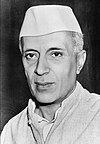
Jawaharlal Nehru on Rabindranath Tagore
“Gandhi and Tagore. Two types entirely different from each other, and yet both of them typical of India, both in the long line of India's great men ... It is not so much because of any single virtue but because of the tout ensemble, that I felt that among the world's great men today Gandhi and Tagore were supreme as human beings. What good fortune for me to have come into close contact with them.”
Shimon Peres on Rabindranath Tagore
“Many of us were educated on the literature of India when we fell in love we read Rabindranath Tagore and when we matured we tried to understand Gandhi.”

Y Rosser on Rabindranath Tagore
“In Bangladesh, textbooks created after 1971 narrated events through a lens of Bengali cultural nationalism. Bengali cultural nationalism includes Hindus, such at Rabindranath Tagore and Ram Mohan Roy, who contributed to Bengali literature and society prior to the partition of the subcontinent. Rabindranath Tagore is particularly dear to Bangladeshis. His poetry and songs, "Rabindra Sangit", are sung by Bengali speaking school children, additionally he authored the words and music of the national anthem. Sonar Bangla (Golden Bengal). Song is an integral part of Bengali life, and in particular, songs by Rabindranath Tagore are well known. The Muktijuddho soldiers are remembered for their songs of inspiration, many of them authored by Tagore, sung as they trudged along rice paddies. Another reason Tagore is popular is because he was banned in Bangladesh in the late 1960s, when West Pakistan was attempting to put down Bengali cultural nationalism that was gaining ground.”
Vandana Shiva on Rabindranath Tagore
“In “The Religion of the Forest,” Tagore wrote about the influence that the forest dwellers of ancient India had on classical Indian literature. The forests are sources of water and the storehouses of a biodiversity that can teach us the lessons of democracy—of leaving space for others while drawing sustenance from the common web of life. Tagore saw unity with nature as the highest stage of human evolution.”

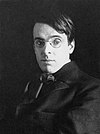
William Butler Yeats on Rabindranath Tagore
“Rabindranath Tagore, like Chaucer's forerunners, writes music for his words, and one understands at every moment that he is so abundant, so spontaneous, so daring in his passion, so full of surprise, because he is doing something which has never seemed strange, unnatural, or in need of defence.”
Disputed Quotes
Quotes attributed to Rabindranath Tagore that are questionable.
About Rabindranath Tagore
Rabindranath Tagore (7 May 1861 – 7 August 1941), also known as Rabi Thakur, was a Bengali philosopher, poet, and winner of the Nobel Prize for literature in 1913.