Link Copied!
Mary Wollstonecraft Quotes (1759-1797)
Philosopher



About Mary Wollstonecraft
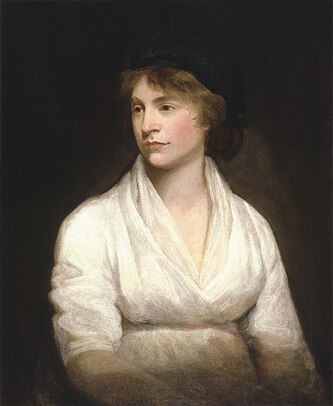
Mary Wollstonecraft (27 April 1759 – 10 September 1797) was an English social philosopher and pioneering advocate of women's rights. She married the anarchist philosopher William Godwin, but died soon after the birth of their daughter Mary Wollstonecraft Godwin (Mary Wollstonecraft Shelley).
Best Mary Wollstonecraft Quotes
Shortest
Earliest
Explore our curated collection of the most famous and impactful Mary Wollstonecraft quotes.

“Every political good carried to the extreme must be productive of evil.”

“Situation seems to be the mould in which men's characters are formed.”
“A modest man is steady, an humble man timid, and a vain one presumptuous.”


“It is the preservation of the species, not of individuals, which appears to be the design of Deity throughout the whole of nature.”
“The endeavor to keep alive any hoary establishment beyond its natural date is often pernicious and always useless.”
“Till women are more rationally educated, the progress in human virtue and improvement in knowledge must receive continual checks.”

“If women be educated for dependence; that is, to act according to the will of another fallible being, and submit, right or wrong, to power, where are we to stop?”

“Women are systematically degraded by receiving the trivial attentions which men think it manly to pay to the sex, when, in fact, men are insultingly supporting their own superiority.”
“Nothing could be more natural than the developement of the passions, nor more striking than the views of the human heart. What delicate struggles! and uncommonly pretty turns of thought!”
“Independence I have long considered as the grand blessing of life, the basis of every virtue; and independence I will ever secure by contracting my wants, though I were to live on a barren heath.”

“Till society is very differently constituted, parents, I fear, will still insist on being obeyed, because they will be obeyed, and constantly endeavour to settle that power on a Divine right, which will not bear the investigation of reason.”
“I write in a hurry, because the little one, who has been sleeping a long time, begins to call for me. Poor thing! when I am sad, I lament that all my affections grow on me, till they become too strong for my peace, though they all afford me snatches of exquisite enjoyment.”

“It would be an endless task to trace the variety of meannesses, cares, and sorrows, into which women are plunged by the prevailing opinion that they were created rather to feel than reason, and that all the power they obtain, must be obtained by their charms and weakness.”
“It is vain to expect virtue from women till they are in some degree independent of men; nay, it is vain to expect that strength of natural affection which would make them good wives and mothers. Whilst they are absolutely dependent on their husbands they will be cunning, mean, and selfish.”
“It may be confidently asserted that no man chooses evil because it is evil; he only mistakes it for happiness, the good he seeks. And the desire of rectifying these mistakes, is the noble ambition of an enlightened understanding, the impulse of feelings that Philosophy invigorates.”

“It is a melancholy truth; yet such is the blessed effect of civilization! the most respectable women are the most oppressed; and, unless they have understandings far superiour to the common run of understandings, taking in both sexes, they must, from being treated like contemptible beings, become contemptible.”

“How many women thus waste life away the prey of discontent, who might have practised as physicians, regulated a farm, managed a shop, and stood erect, supported by their own industry, instead of hanging their heads surcharged with the dew of sensibility, that consumes the beauty to which it at first gave lustre.”

“I see not the shadow of a reason to conclude that their [the sexes'] virtues should differ in respect to their nature. In fact, how can they, if virtue has only one eternal standard? I must therefore, if I reason consequentially, as strenuously maintain that they must have the same simple direction as that there is a God.”

Mary Wollstonecraft Quotes by Topic
Find exactly what you are looking for by browsing this categorized list of Mary Wollstonecraft quotes by topic.
Mary Wollstonecraft on Charity
Mary Wollstonecraft on Good and evil
Mary Wollstonecraft on Pregnancy
“I begin to love this little creature, and to anticipate his birth as a fresh twist to a knot which I do not wish to untie.”

Mary Wollstonecraft on Beauty
Mary Wollstonecraft on Insect suffering
“Do you know the meaning of the word Goodness? I see you are unwilling to answer. I will tell you. It is, first, to avoid hurting any thing; and then, to contrive to give as much pleasure as you can. If any insects are to be destroyed, to preserve my garden from desolation, I have it done in the quickest way.”

Mary Wollstonecraft on Prejudice
“Men, in general, seem to employ their reason to justify prejudices, which they have imbibed, they can scarcely trace how, rather than to root them out. The mind must be strong that resolutely forms its own principles; for a kind of intellectual cowardice prevails which makes many men shrink from the task, or only do it by halves.”

Mary Wollstonecraft on Effulgence
“The unexampled loveliness Of the flower-clad earth — the genial sunshine and grateful shade — the melody of the birds — the majesty of the woods — the splendor of the marble ruing — the clear effulgence of the stars by night — the combination of all that was exciting and voluptuous in this transcending land by inspiring a quicker spirit of life and an added sensitiveness in every articulation of her frame, only gave edge to the poignancy of her grief.”

What Mary Wollstonecraft Said About Others
Discover personal opinions Mary Wollstonecraft shared regarding contemporaries.
Quotes About Mary Wollstonecraft
Gain deeper perspective through quotes about Mary Wollstonecraft from others.
Susan B. Anthony on Mary Wollstonecraft
“I never saw that great woman, Mary Wollstonecraft, but I l have read her eloquent and unanswerable arguments in behalf of the liberty of womankind. I have met and known most of the progressive women who came after her...a long galaxy of great women...There have been others also just as true and devoted to the cause — I wish I could name every one — but with such women consecrating their lives, failure is impossible!”

Elizabeth Gurley Flynn on Mary Wollstonecraft
“During that period (around 1906) I had studied two more books, which helped to catapult me into socialist activities. One was the Vindication of the Rights of Women by Mary Wollstonecraft; the other was Women and Socialism by August Bebel.”

William Godwin on Mary Wollstonecraft 2 quotes
“If ever there was a book calculated to make a man in love with its author, this appears to me to be the book. She speaks of her sorrows, in a way that fills us with melancholy, and dissolves us in tenderness, at the same time that she displays a genius which commands all our admiration. Affliction had tempered her heart to a softness, almost more than human; and the gentleness of her spirit seems precisely to accord with all the romance of unbounded attachment.”

Camilla Jebb on Mary Wollstonecraft
“Mary Wollstonecraft's reputation has suffered vicissitudes which, even in the history of genius, are unusual. Her name, during her lifetime, was lauded to the skies by one half of the reading public, and — in exactly proportional measure — vituperated by the other half. Then, for more than half a century, it was wholly forgotten, or remembered only as suggesting certain vague associations of a grotesque and not altogether decorous kind. Within the last forty years, the mists have been gradually lifting, and she stands revealed for what she was — a woman singularly original in thought and noble in character.”
Claudia L. Johnson on Mary Wollstonecraft
“Even though Mary Wollstonecraft had little or no presence in history or literature curricula as recently as a generation ago, she has never exactly been a minor figure. Some, certainly, have wished her so. A dauntless advocate of political reform, Wollstonecraft was one of the first to vindicate the "rights of man," but in her own — brief — lifetime and ever since, she achieved notoriety principally for her championship of women's rights. And while some of this notoriety took the particular form of scandal of the sort that often attends women directly involved in public affairs, some of it she directly sought in her writing and in her conduct. Controversy always inspired Wollstonecraft, always sharpened her sense of purpose.”
Gerda Lerner on Mary Wollstonecraft
“women's marginalization in the process of History-making has set them back intellectually and has kept them for far longer than was necessary from developing a consciousness of their collectivity in sisterhood, not motherhood. The cruel repetitiousness by which individual women have struggled to a higher level of consciousness, repeating an effort made a number of times by other women in previous centuries, is not only a symbol of women's oppression but is its actual manifestation. Thus, even the most advanced feminist thinkers, up to and including those in the early 20th century, have been in dialogue with the "great men" before them and have been unable to verify, test and improve their ideas by being in dialogue with the women thinkers before them. Mary Wollstonecraft argued with Burke and Rousseau, when arguing with Makin, Astell and Margaret Fell might have sharpened her thought and radicalized her...Simone de Beauvoir, in a passionate dialogue with Marx, Freud, Sartre and Camus, could go as far with a feminist critique of patriarchal values and institutions as it was possible to go when the thinker was male-centered. Had she truly engaged with Mary Wollstonecraft's thought, the works of Mary Astell, the Quaker feminists of the early 19th century, the mystical revisioners among the black spiritualists and the feminism of Anna Cooper, her analysis might have become woman-centered and therefore capable of projecting alternatives to the basic mental constructs of patriarchal thought. Her erroneous assertion that, "They [women] have no past, no history, no religion of their own," was not just an oversight and a flaw, but a manifestation of the basic limitations which have for millennia limited the power and effectiveness of women's thought.”

Margaret S Marsh on Mary Wollstonecraft
“Deriving their analytic framework from the work of an earlier generation of feminists, particularly such singular rebels as Mary Wollstonecraft and Sarah Grimké, the anarchist women insisted that the humanity of women was all the justification their cause required.”
Lucretia Mott on Mary Wollstonecraft
“Young women of America, I want you to make yourselves acquainted with the history of the Woman’s Rights movement, from the days of Mary Wollstonecraft. All honor to Mary Wollstoncraft. Her name was cast out as evil, even as that of Jesus was cast out as evil, and as those of the apostles were cast out as evil; but her name shall yet go forth and stand as the pioneer of this movement. I want you to note the progress of this cause, and know now that Woman’s redemption is a hand, yea, even at the doors.”

Adrienne Rich on Mary Wollstonecraft
“I think I've brought figures of resistance into my poetry for quite a while-going back to the voice of Mary Wollstonecraft in "Snapshots of a Daughter-in-Law" (1960). History has always felt to me an immense resource for art, and poetry as a place where history can be kept alive-not grandmaster narratives, but otherwise forgotten or erased people and actions.”

Mary Ritter Beard on Mary Wollstonecraft
“Mary Wollstonecraft conceded the central point of the genteel theory with these words: "That woman is naturally weak, or degraded by a concurrence of circumstances, is, I think, clear." In effect she took over Rousseau's thesis, and phrased it in her fashion: Woman is everywhere in chains but I propose to show her the road to freedom. In Wollstonecraft's view, the idea that woman was formed to please man and could govern him by the use of sex charms "is the philosophy of lasciviousness," an offense against virtue, reason, and respectability - against everything that gives dignity and value to human life...Scattered through Vindication of the Rights of Woman were innumerable opinions equally preposterous. Yet the boldness of the book, like the experiments in living which the author undertook, attracted attention, friendly and adverse, to this ardent advocate of human "rights." Mary Wollstonecraft's unrepressed thrust at conventions was issued in an American edition at Boston the same year of its publication in England. Her name entered the stream of consciousness in which other names of social rebels floated near the surface or deeper in memory. To this day she is a near-saint of countless feminists, most of whom have probably never read a line of her pamphlet on women critically at least.”

Sally Rowena Munt on Mary Wollstonecraft
“According to the liberal tradition outlined by Mary Wollstonecraft in A Vindication of the Rights of Woman (1792), education is the key to social improvement, allowing a woman to develop her rational and moral capacities.”
About Mary Wollstonecraft
Mary Wollstonecraft (27 April 1759 – 10 September 1797) was an English social philosopher and pioneering advocate of women's rights. She married the anarchist philosopher William Godwin, but died soon after the birth of their daughter Mary Wollstonecraft Godwin (Mary Wollstonecraft Shelley).