Link Copied!
Martin Luther King Jr. Quotes (1929-1968)
Activist, King


















About Martin Luther King Jr.
Dr. Martin Luther King Jr. (15 January 1929 – 4 April 1968) was an American Baptist minister, civil rights activist, and recipient of the Nobel Peace Prize of 1964. He was the husband of Coretta Scott King, and father of Yolanda King and Martin Luther King III.
Best Martin Luther King Jr. Quotes
Shortest
Earliest
Explore our curated collection of the most famous and impactful Martin Luther King Jr. quotes.
“True greatness comes not by favoritism, but by fitness.”
- Martin Luther King Jr., 1960s, The Drum Major Instinct


“Human salvation lies in the hands of the creatively maladjusted.”
- Martin Luther King Jr., 1960s, Strength to Love
“There can be no deep disappointment where there is not deep love.”
- Martin Luther King Jr., 1960s, Letter from a Birmingham Jail

Imprisoned for civil disobedience during the Montgomery bus boycott, Martin Luther King Jr. penned this assertion of Jesus's pragmatism, challenging the notion of loving one's enemies.
“Jesus is not an impractical idealist; he is the practical realist.”
- Martin Luther King Jr., 1950s
“The evils of capitalism are as real as the evils of militarism and evils of racism.”
- Martin Luther King Jr., 1960s)


“The greatness of our God lies in the fact that He is both toughminded and tenderhearted.”
- Martin Luther King Jr., 1960s, Strength to Love
“Nonviolent resistance is not aimed against oppressors, but against oppression.”
- Martin Luther King Jr., 1950s
Challenged for disrupting societal calm during the Montgomery Bus Boycott, Martin Luther King Jr. redefined peace as the active presence of justice, not just the lack of conflict.
“True peace is not merely the absence of tension: it is the presence of justice.”
- Martin Luther King Jr., 1950s

“Oppressed people cannot remain oppressed forever. The yearning for freedom eventually manifests itself.”
- Martin Luther King Jr., 1960s, The Quest for Peace and Justice
“Ultimately a genuine leader is not a searcher for consensus, but a molder of consensus.”
- Martin Luther King Jr., 1960s, Remaining Awake Through a Great Revolution
“Keep moving. Let nothing slow you up. Move on with dignity and honor and respectability.”
- Martin Luther King Jr., 1950s


Delivered in 1966, Martin Luther King Jr.'s poignant assertion about healthcare injustice reflects his broader fight for civil rights and equality for all Americans.
“Of all the forms of inequality, injustice in healthcare is the most shocking and inhumane.”
- Martin Luther King Jr., 1960s)

“Nothing in the world is more dangerous than sincere ignorance and conscientious stupidity.”
- Martin Luther King Jr., 1960s, Strength to Love


Driven by a desire to bridge America's socio-economic divide, Martin Luther King Jr. passionately advocated for justice and equality, urging dissatisfaction with the status quo.
“Let us be dissatisfied until America will no longer have a high blood pressure of creeds and an anemia of deeds.”
- Martin Luther King Jr., 1960s, Where Do We Go from Here
In a 1966 lecture, Martin Luther King Jr. recognized that opposition to social progress, like marriage equality today, often reveals existing societal prejudices.
“The backlash is merely the surfacing of prejudices . . . that already existed and . . . are just now starting to open.”
- Martin Luther King Jr., 1960s)
“I submit to you that if a man has not discovered something that he will die for, he isn't fit to live.”
- Martin Luther King Jr., 1960s, Cobo Center speech

Martin Luther King Jr. Quotes by Topic
Find exactly what you are looking for by browsing this categorized list of Martin Luther King Jr. quotes by topic.
Martin Luther King Jr. on Racial segregation 6 quotes
“While abhorring segregation, we shall love the segregationist. This is the only way to create the beloved community.”

Martin Luther King Jr. on Slavery 5 quotes
“Racial segregation must be seen for what it is — and that is an evil system, a new form of slavery covered up with certain niceties of complexity.”

Martin Luther King Jr. on Trade unions 5 quotes
Speaking to the AFL-CIO in 1965, Martin Luther King Jr. lauded the labor movement's pivotal role in achieving economic justice and societal progress against powerful resistance.
“The labor movement was the principal force that transformed misery and despair into hope and progress. Out of its bold struggles, economic and social reform gave birth to unemployment insurance, old-age pensions, government relief for the destitute and, above all, new wage levels that meant not mere survival but a tolerable life. The captains of industry did not lead this transformation; they resisted it until they were overcome. When in the thirties the wave of union organization crested over the nation, it carried to secure shores not only itself but the whole society.”

Martin Luther King Jr. on Peace 3 quotes
“One day we must come to see that peace is not merely a distant goal that we seek, but that it is a means by which we arrive at that goal. We must pursue peaceful ends through peaceful means.”

Martin Luther King Jr. on Emancipation Proclamation 3 quotes
“Five score years ago, a great American, in whose symbolic shadow we stand today, signed the Emancipation Proclamation. This momentous decree came as a great beacon light of hope to millions of Negro slaves who had been seared in the flames of withering injustice. It came as a joyous daybreak to end the long night of their captivity.”

Martin Luther King Jr. on Riot 3 quotes
Speaking to psychologists in 1967, Martin Luther King Jr. invoked Victor Hugo to argue that societal injustice, not individual action, bears primary responsibility for civil unrest.
“A profound judgment of today's riots was expressed by Victor Hugo a century ago. He said, 'If a soul is left in the darkness, sins will be committed. The guilty one is not he who commits the sin, but he who causes the darkness.' / The policymakers of the white society have caused the darkness; they create discrimination; they structured slums; and they perpetuate unemployment, ignorance and poverty. It is incontestable and deplorable that Negroes have committed crimes; but they are derivative crimes. They are born of the greater crimes of the white society. When we ask Negroes to abide by the law, let us also demand that the white man abide by law in the ghettos.”

Martin Luther King Jr. on Capitalism 2 quotes
“The evils of capitalism are as real as the evils of militarism and evils of racism.”
Martin Luther King Jr. on Nuclear weapons 2 quotes
“We have genuflected before the God of Science only to find that it has given us the atomic bomb, producing fears and anxieties that science can never mitigate.”
- Martin Luther King Jr., 1960s)

Martin Luther King Jr. on Science 2 quotes
“We have genuflected before the God of Science only to find that it has given us the atomic bomb, producing fears and anxieties that science can never mitigate.”

Martin Luther King Jr. on Interdependence 2 quotes
“... for many of our white brothers, as evidenced by their presence here today, have come to realize that their destiny is tied up with our destiny. And they have come to realize that their freedom is inextricably bound to our freedom.”
Martin Luther King Jr. on History 2 quotes
Referencing both Jesus' teachings on love and non-violence, Martin Luther King Jr.'s 1963 Detroit speech powerfully urged adherence to these principles to avoid historical ruin.
“"...Jesus told us this a long time ago, and I can still hear that voice crying through the vista of time, saying, "Love your enemies, bless them that curse you, pray for them that despitefully use you." And there is still a voice saying to every potential Peter, "Put up your sword." History is replete with the bleached bones of nations, history is cluttered with the wreckage of communities that failed to follow this command."”

Martin Luther King Jr. on Unmoved mover 2 quotes
Delivered at the Prayer Pilgrimage for Freedom in 1957, King's "Give Us the Ballot" address highlights the religious underpinnings of the Civil Rights Movement, emphasizing God's active role in the fight for justice.
“I conclude by saying that each of us must keep faith in the future. Let us not despair. Let us realize that as we struggle for justice and freedom, we have cosmic companionship. This is the long faith of the Hebraic-Christian tradition: that God is not some Aristotelian Unmoved Mover who merely contemplates upon himself. He is not merely a self-knowing God, but an other-loving God forever working through history for the establishment of His kingdom.”
What Martin Luther King Jr. Said About Others
Discover personal opinions Martin Luther King Jr. shared regarding contemporaries.
Martin Luther King Jr. on Black people 6 quotes
In his 1957 Oberlin College speech, Martin Luther King Jr. cautioned the burgeoning Civil Rights movement against succumbing to bitterness and hate in the pursuit of justice.
“In the struggle for human rights and justice, Negros will make a mistake if they become bitter and indulge in hate campaigns.”
- Martin Luther King Jr., I - Z)

Martin Luther King Jr. on George Washington Carver 2 quotes
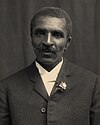
“From crippling circumstance, George Washington Carver made for himself an imperishable niche in the annals of science.”
Martin Luther King Jr. on Rosa Parks 2 quotes
“Actually, no one can understand the action of Mrs. Parks unless he realizes that eventually the cup of endurance runs over, and the human personality cries out, 'I can take it no longer.'”

Martin Luther King Jr. on John Bunyan 2 quotes
“Those who project total responsibility for their actions on heredity circumstances fail to see that numerous individuals rise above such circumstances. There is a John Bunyan, deprived of his physical sight, and yet he wrote a Pilgrim's Progress that generations will cherish so long as the cords of memory shall lengthen.”

Martin Luther King Jr. on Albert Lutuli 2 quotes
“I only regret that circumstances and spacial divisions have made it impossible for us to meet. But I admire your great witness and your dedication to the cause of freedom and human dignity. You have stood amid persecution, abuse, and oppression with a dignity and calmness of spirit seldom paralleled in human history. One day all of Africa will be proud of your achievements.”

Martin Luther King Jr. on William Cullen Bryant
Martin Luther King Jr. on African Americans
“If you will protest courageously, and yet with dignity and Christian love, when the history books are written in future generations, the historians will have to pause and say, 'There lived a great people—a black people—who injected new meaning and dignity into the veins of civilization.'”

Martin Luther King Jr. on Abraham Lincoln
“Five score years ago, a great American, in whose symbolic shadow we stand today, signed the Emancipation Proclamation. This momentous decree came as a great beacon light of hope to millions of Negro slaves who had been seared in the flames of withering injustice. It came as a joyous daybreak to end the long night of their captivity.”

Martin Luther King Jr. on Leo Tolstoy
“The measured words of Leo Tolstoi's confession in My Religion reflect an experience many have shared: Five years ago faith came to me; I believed in the doctrine of Jesus, and my whole life underwent a sudden transformation. What I had once wished for I wished for no longer, and I began to desire what I have never desired before. What had once appeared to me right now became wrong and the wrong of the past I beheld as right... My life and my desires were completely changed; good and evil interchanged meanings. Herein we find the answer to a perplexing question. Evil can be cast out not by a man alone, not by a dictatorial God who invades our lives, but when we open the door and invite God through Christ to enter.”

Martin Luther King Jr. on Booker T. Washington
“For a hundred years since emancipation, Negroes had searched tor the elusive path to freedom. They knew that they had to fashion a body of tactics suitable for their unique and special conditions. The words of the Constitution had declared them free, but life had told them that they were a twice-burdened people—they lived in the lowest stratum of society, and within it they were additionally imprisoned by a caste of color. For decades the long and winding trails led to dead ends. Booker T. Washington, in the dark days that followed Reconstruction, advised them: “Let down your buckets where you are.” Be content, he said in effect, with doing well what the times permit you to do at all. However, this path, they soon felt, had too little freedom in its present and too little promise in its future.”

Martin Luther King Jr. on Malcolm X
Martin Luther King Jr.'s full *Playboy* interview transcript reveals a more nuanced critique of Malcolm X than the commonly circulated, potentially misattributed, quote suggests.
“I met Malcolm X once in Washington, but circumstances didn't enable me to talk with him for more than a minute. He is very articulate ... but I totally disagree with many of his political and philosophical views — at least insofar as I understand where he now stands. I don't want to seem to sound self-righteous, or absolutist, or that I think I have the only truth, the only way. Maybe he does have some of the answer. I don't know how he feels now, but I know that I have often wished that he would talk less of violence, because violence is not going to solve our problem. And in his litany of articulating the despair of the Negro without offering any positive, creative alternative, I feel that Malcolm has done himself and our people a great disservice. Fiery, demagogic oratory in the black ghettos, urging Negroes to arm themselves and prepare to engage in violence, as he has done, can reap nothing but grief.”

Martin Luther King Jr. on Winston Churchill
In a 1957 sermon, Martin Luther King Jr. critiques Anthony Eden's actions in Egypt, contrasting them with Churchill's imperial resolve while highlighting the rising power of global public opinion.
“I remember we passed by 10 Downing Street. That’s the place where the prime minister of England lives. And I remember that a few years ago a man lived there by the name of Winston Churchill. One day he stood up before the world and said, “I did not become his Majesty’s First Minister to preside over the liquidation of the British Empire.” And I thought about the fact that a few weeks ago a man by the name of Anthony Eden lived there. And out of all of his knowledge of the Middle East, he decided to rise up and march his armies with the forces of Israel and France into Egypt. And there they confronted their doom, because they were revolting against world opinion. Egypt, a little country. Egypt, a country with no military power. They could have easily defeated Egypt. But they did not realize that they were fighting more than Egypt. They were attacking world opinion, they were fighting the whole Asian-African bloc, which is the bloc that now thinks and moves and determines the course of the history of the world.”

Martin Luther King Jr. on Anthony Eden
In a 1957 sermon, Martin Luther King Jr. critiques Anthony Eden's actions in Egypt, contrasting them with Churchill's imperial resolve while highlighting the rising power of global public opinion.
“I remember we passed by 10 Downing Street. That’s the place where the prime minister of England lives. And I remember that a few years ago a man lived there by the name of Winston Churchill. One day he stood up before the world and said, “I did not become his Majesty’s First Minister to preside over the liquidation of the British Empire.” And I thought about the fact that a few weeks ago a man by the name of Anthony Eden lived there. And out of all of his knowledge of the Middle East, he decided to rise up and march his armies with the forces of Israel and France into Egypt. And there they confronted their doom, because they were revolting against world opinion. Egypt, a little country. Egypt, a country with no military power. They could have easily defeated Egypt. But they did not realize that they were fighting more than Egypt. They were attacking world opinion, they were fighting the whole Asian-African bloc, which is the bloc that now thinks and moves and determines the course of the history of the world.”

Martin Luther King Jr. on Gandhi
“Prior to reading Gandhi, I had about concluded that the ethics of Jesus were only effective in individual relationships. The "turn the other cheek" philosophy and the "love your enemies" philosophy were only valid, I felt, when individuals were in conflict with other individuals; when racial groups and nations were in conflict, a more realistic approach seemed necessary. But after reading Gandhi, I saw how utterly mistaken I was. Gandhi was probably the first person in history to lift the love ethic of Jesus above mere interaction between individuals to a powerful and effective social force on a large scale. Love for Gandhi was a potent instrument for social and collective transformation. It was in this Gandhian emphasis on love and nonviolence that I discovered the method for social reform that I had been seeking. The intellectual and moral satisfaction that I failed to gain from the utilitarianism of Bentham and Mill, the revolutionary methods of Marx and Lenin, the social contracts theory of Hobbes, the "back to nature" optimism of Rousseau, the superman philosophy of Nietzsche, I found in the nonviolent resistance philosophy of Gandhi.”

Martin Luther King Jr. on Isaiah
Delivered in 1957, Martin Luther King Jr.'s "The Birth of a New Nation" sermon envisions a future of global equality, drawing inspiration from the book of Isaiah.
“Then I can hear Isaiah again, because it has profound meaning to me, that somehow “every valley shall be exalted, and every hill shall be made low; the crooked places shall be made straight, and the rough places plain; and the glory of the Lord shall be revealed, and all flesh shall see it together.” That’s the beauty of this thing: all flesh shall see it together. Not some from the heights of Park Street and others from the dungeons of slum areas. Not some from the pinnacles of the British Empire and some from the dark deserts of Africa. Not some from inordinate, superfluous wealth and others from abject, deadening poverty. Not some white and not some black, not some yellow and not some brown, but all flesh shall see it together. They shall see it from Montgomery. They shall see it from New York. They shall see it from Ghana. They shall see it from China. For I can look out and see a great number, as John saw, marching into the great eternity, because God is working in this world, and at this hour, and at this moment. And God grants that we will get on board and start marching with God because we got orders now to break down the bondage and the walls of colonialism, exploitation, and imperialism. To break them down to the point that no man will trample over another man, but that all men will respect the dignity and worth of all human personality. And then we will be in Canaan’s freedom land.”

Quotes About Martin Luther King Jr.
Gain deeper perspective through quotes about Martin Luther King Jr. from others.
Ralph Abernathy on Martin Luther King Jr. 2 quotes
“Martin Luther King Jr. held to the fact that an eye for an eye and a tooth for a tooth would end up with a blind society and a toothless generation.”

Joan Baez on Martin Luther King Jr. 2 quotes
“Martin Luther King, Jr., more than any other public figure helped to solidify my ideas and inspired me to act upon them.”

Bill Bostock on Martin Luther King Jr. 2 quotes
In 2019, newly revealed documents illuminated the FBI's 1960s campaign to discredit Martin Luther King Jr., including a blackmail attempt disguised as a suicide suggestion.
“There is no way to verify the FBI's information. It is not clear whether the agents involved were transcribing the true reality of King's private life, or creating idle gossip as part of their campaign against him. Alongside the tapes was the now-infamous, anonymous letter urging King to avoid embarrassment, with the words, "There is only one thing left for you to do. You know what it is. ... There is but one way out for you." It was delivered inside a manila envelope. The letter runs to more than 500 words, and claims to be from an African-American who supported the civil rights movement. In fact, it was written by the FBI.”
Bruce Bartlett on Martin Luther King Jr.
“It wasn't a Republican who wiretapped and snooped on Dr. Martin Luther King, Jr., but Democrats John F. Kennedy and his brother Robert, who signed the order as Attorney General.”
Bill Carmichael, in "The betrayal of Martin Luther King’s 'I Have a Dream' speech", on Martin Luther King Jr.
“In this time of division and hatred, I’ve found myself returning time and again to Dr King’s words as a source of comfort and guidance, and a number of things have struck me. First is how overtly Christian the speech was, imbued throughout with biblical theology. Of course Dr King was a Baptist minister, so this is no surprise, but his faith was clearly central to everything he said and did and he wasn’t embarrassed, unlike most politicians and even senior clergy today, to make this plain. Second, far from wanting to destroy America, as many modern activists advocate, he wanted to build it up. He saw the “magnificent” words of the US Constitution and the Declaration of Independence as a “promissory note” to deliver “life, liberty and the pursuit of happiness” to all Americans.For black Americans this had become a “bad cheque” that had come back marked “insufficient funds” and he saw it as nothing less than a sacred obligation on his fellow countrymen to put right this injustice.”
Stokely Carmichael on Martin Luther King Jr.
“Dr. King's policy was, if you are nonviolent, if you suffer, your opponent will see your suffering and will be moved to change his heart. That's very good. He only made one fallacious assumption. In order for nonviolence to work, your opponent must have a conscience. The United States has none.”

Professor Clayborne Carson on Martin Luther King Jr.
“King used to say, "People think of me as a civil rights leader, but fundamentally, I'm a Baptist preacher."”
Cesar Chavez on Martin Luther King Jr.
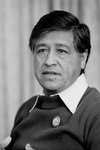
“My friends, the time for action is upon us. The enemies of justice wants you to think of Dr. King as only a civil rights leader, but he had a much broader agenda. He was a tireless crusader for the rights of the poor, for an end to the war in Vietnam long before it was popular to take that stand, and for the rights of workers everywhere. Many people find it convenient to forget that Martin was murdered while supporting a desperate strike on that tragic day in Memphis, Tennessee. He died while fighting for the rights of sanitation workers. Dr. King's dedication to the rights of the workers who are so often exploited by the forces of greed has profoundly touched my life and guided my struggle.”
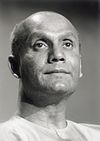
Sri Chinmoy on Martin Luther King Jr.
“He was very pure in mind and heart. He was a lover: a lover not only of his race but a lover of all mankind. His heart was so broad, so great, so magnanimous, and this gave him a most sincere feeling of absolute oneness with everyone. This is what made him so divinely great.”
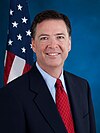
James Comey on Martin Luther King Jr.
“There is a reason that I require all new agents and analysts to study the FBI's interaction with Dr. Martin Luther King, Jr., and to visit his memorial in Washington as part of their training. And there is a reason I keep on my desk a copy of Attorney General Robert Kennedy's approval of J. Edgar Hoover's request to wiretap Dr. King. It is a single page. The entire application is five sentences long, it is without fact or substance, and is predicated on the naked assertion that there is "communist influence in the racial situation." The reason I do those things is to ensure that we remember our mistakes and that we learn from them.”
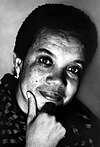
David Dinkins anthologized on Martin Luther King Jr.
“Martin Luther King is dead now, but he left a legacy. He planted in all of us, black and white, the seeds of love of justice, of decency, of honor, and we must not fail to have these seeds bear fruit. Martin Luther King is dead now, and there is only time for action. The time for debate, the time for blame, the time for accusation is over. Ours is a clear call to action. We must not only dedicate ourselves to great principles, but we must apply those principles to our lives. Martin Luther King is dead now, and he is because he dared believe in nonviolence in a world of violence. Because he dared believe in peace in a world of conflict. He is dead now because he challenged all of us to believe in his dream. Martin Luther King is dead now, and we cannot allow the substance of his dream to turn into the ashes of defeat. If we are to build a tribute to what he stood for, we must, each of us, stand for the same things.”
Marian Wright Edelman on Martin Luther King Jr. 2 quotes
“A lot of people are waiting for Martin Luther King or Mahatma Gandhi to come back — but they are gone. We are it. It is up to us. It is up to you.”
Disputed Quotes
Quotes attributed to Martin Luther King Jr. that are questionable.
“When people criticize Zionists, they mean Jews, You are talking anti-Semitism!”
Misattributed Quotes
Quotes mistakenly credited to Martin Luther King Jr.
“Justice runs down like water, and righteousness like a mighty stream.”
“Everything that is done in the world is done by hope.”
“I mourn the loss of thousands of precious lives, but I will not rejoice in the death of one, not even an enemy. Returning hate for hate multiplies hate, adding deeper darkness to a night already devoid of stars. Darkness cannot drive out darkness: only light can do that. Hate cannot drive out hate: only love can do that.”
About Martin Luther King Jr.
Dr. Martin Luther King Jr. (15 January 1929 – 4 April 1968) was an American Baptist minister, civil rights activist, and recipient of the Nobel Peace Prize of 1964. He was the husband of Coretta Scott King, and father of Yolanda King and Martin Luther King III.