Link Copied!
Marianne von Werefkin Quotes (1860-1938)
Artist, Painter, King

About Marianne von Werefkin
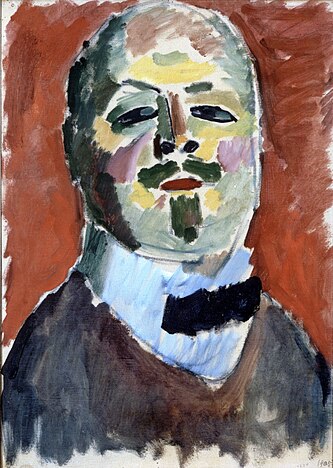
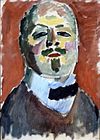
Marianne von Werefkin (10 September 1860, Tula, Russia – 6 February 1938, Ascona, Switzerland) was a Russian-German-Swiss Expressionist painter and important contributor in the Munich artist-group Der Blaue Reiter. At the outbreak of the First World War, Werefkin and Jawlensky immigrated to Switzerland; in 1921 they separated. Werefkin stayed in Ascona, on Lago Maggiore where she painted her colorful imaginative landscapes in an expressionist style, till her death.
Best Marianne von Werefkin Quotes
Shortest
Earliest
Explore our curated collection of the most famous and impactful Marianne von Werefkin quotes.

“Any art is a concentrated feeling of love elevated to a world view and translated into an artistic language of symbols.”
“I am more a man than a woman. Only the need to please and compassion turn me into a woman. I am not a man, I am not a woman, I am I. [written in her Journal, 1905].”

“..upon the frightening gray sky one can see a black mountain, completely black even with black houses, and all of a sudden a fire-red house appears, a violet path with snowflakes and on the path a black chain of people like crows.”

“I adore my life: it is filled with so much true poetry, fine feelings, things many have no idea about. I despise my life, which, being rich, allowed itself to be crammed into the confines of conventions. Between these two opinions pulsates my soul always longing for beauty and good.”
“I am a woman, I lack every [ability for] creation. I can understand everything and cannot create.. .I don't have the words to express my ideal. I am looking for the person, the man, who can give this ideal form. As a woman, wanting someone who could give the internal world expression, I met Jawlensky...”

“A colossal orange moon rolls as an unbelievable ball against intense blue. The silhouettes of the houses flank this blue on both sides, forming a childishly rigid little frame. As if we witness the birth of the song of flowers which are subordinated to this blue and dominated by the orange moon. [she wrote in 1905]”

“in German: Ich bin Frau, bin bar jeder Schöpfung. Ich kann verstehen und kann nichts schaffen.. .Mir fehlen die Worte, um meine Ideal auszudücken. Ich suche den Menschen, den Mann, der diesem Ideal Gestalt geben würde. Als Frau, verlangend nach demjenigen, der ihrer inneren Welt Ausdruck geben sollte, traf ich Jawlensky...”
“I love Russia as few people do - I've demonstrated it my whole life, but those who plow here in Russia, are not my brothers. I heed a Russian life with my entire existence, I look into the eyes of all the people around me, nothing.. .And the main horror is that we long for Russia and here no one loves her, they only mimic those feelings.”

“Why should we do as those who do not have other joys than to believe, as night falls, in their double beds.. .that it is to be great and sanctified by love to jostle the companions of their bed. Our passion must be like our love – illusory and artistic, having no other end than the desire to be beautiful. To remain beautiful in unsated [unstated?] passion...”

“You for whom I have looked so hard without ever finding. You whom I have longed for, called after, without ever seeing you come, you who are always present without ever existing – I am writing to you now. You who are basically only myself, but a much bigger and more noble self, an ingenious self, a self far from me, as real as the whole distance between the dream and the reality.”

“Oh, If I had been able to realize you with my hand. If the painted canvas was able to give me your dear image. The labor was you ['The Unknown'] the work of art was me – I have kissed your head, I have looked elsewhere.. .You are neither good, nor charitable. You do not know how to love. – You are only great and beautiful. I sacrificed to tenderness and still, my self, you do not know how to love.”
“A man with taste is the same as a woman with taste. Man invents his home, woman - her dress. Being an artist means having an individual, distinct from all other people's perception and concept of every single thing. Being an artist does not mean possessing a faculty of combining lines and paints, being artful in this or that sort of art, but having a world inside oneself and individual forms to express it.”
“..I need to immerse my gaze in your eyes, it is in their mirror that I see myself as I would like to be, and it is only in seeing myself as I feel I should be. I think, therefore I am, my Beautiful One, to both of us, every day we recreate the world, every day a paradise falls in our hands, to darken in the dust of many paradises.. .The paradises will fall in our hands, will sink in the dust and will be born again according to our will.”
“I love what doesn't exist. I love love that doesn't exist, which extends above you like an invisible city, like uncapturable smoke, a love that evokes a longing for enchanted lands, which fills the head with magical scenes, which confers strength and grandeur, which leads all beings to perfection, which adorns you in marvelous clothes, which increases painting abilities, which crowns you king of all goals, which makes you a god of creation.”
“My eyes are magical glass [when looking at] the outside world, and it can transform a lot into bewitching beauty. Paris, Munich.. ..they're all the same. The country is nice, because it is closer to nature and bad because we [Werefkin and Jawlensky] are no longer people from nature. I saw this at Blagodat. The more a person improves himself, the more one is doomed to loneliness. One doesn't need friends, one needs oneself and anybody who loves you like themselves.”

“All bores me in the world of facts, I see an end, a limit to all things and my heart thirsts for the infinite and for eternity. How to speak of the feeling, so serious, that has seized me?.. .Human activity has its greatest efforts always fall back on broken wings. Oh, thus I close my eyes. I do not wish to see, to hear, to love, or to act. Only artistic creation, infinite, unlimited, work of god in man, appears desirable to me. It only is the truth and only it is the illusion...”
“Before the blank canvas, the unrealized work, completely in the artist’s head, must seem to him equal to the greatest. To say that which has never been said – is the reason for all artistic work. But only outside of the work should the artist worthily get down on his knees before the great artists of the past.. .Rembrandt in our days would be Rembrandt again, because the work of the master is his self. But in order to be Rembrandt in our days, he would have used new ways that would give a new culture.”

“..I want a lovely life; in order for it to be, harmony and style are necessary. I avow mine to the key of aesthetic sentiment – the constant permanent creation everywhere and in every one. All is false there, all is true. The truth is the desire to see falsely. I do not want the naked truth; it is the principle of my life. It is that which makes my life one which is artistic and complete. Feelings, events, people and things, such as they are, are nothing to me. I wish them invented, illusory, false in so far as true life and in so far as art.”
“..Oh my dear friend, you whose voice called me towards my beautiful past, oh how I love you because you are young, you serve the idea, you understand the beauty of a life devoted completely to abstraction. Oh the devil you have done me, and the good of this devil. There is an atrocious page in my existence.. .I am not a woman. Neither love nor the family satisfies me. I don’t like the baby. I detest the household. I love all works of the human genius, I adore art the beauties of nature and of the heart. The beautiful, the beautiful in all such as love and such as life.”
“The artist is the only one who detaches himself from life, opposes his personality against it, he is the only one who orders things as he wishes them to be in place of things as they are. Thus for him life is not a fait accompli, it is something to remake, to do again. He takes possession of his gifts in order to continue, to change, He makes his choice, it is he who creates the conceptions of beautiful and ugly, those are the things to preserve, the things to change. At the seat of the things that it is necessary to change he puts his desires, his aspirations, in one word, his personality...”

“Art is not hysteria. Art is as natural to man as is thought, it is a normal function of his brain. Art is observation and consciousness. It is not an instinct, vague, indecisive, sickly. Art is an eternal source – life, and an unlimited expression, the individual. These two elements, well-adapted, make masterpieces.. .All speech that a human being finds to give a new impression is of art. Why believe that the speech must be epileptic to become art?.. .Such is art. It is the product of life and the individual. It is born from their clash, from the received impression. But this impression is made once, for then it is no longer, neither life nor the individual..”
“And I go to my room and stretch out my arms to the West—that it is far away [from here], that I will someday return. Outside those painful sensations—it is horrible to be before these people and their lives. Service and family troubles -a hard beginning, pay raise, promotion - sweet dreams, scandal - daily bread, [This is a figurative reference to Our Lord's Prayer, "give us this day our daily bread.."] and their happiness reminds me sweetly, of those who buy "for the people," and whose food you wouldn't put in your mouth. I think of Munich and of my health. All that is here is suffering and this horror of beauty and this horrible life and this overbearing literature, and the complete superfluousness of art.”
“I save myself in a church. Dark, empty. Lights flickering before icons. One sings everything that one has sung before in the past. Some black figures - and the heart is heavy. The tears take one's breath away and the past rises up again. Home.. ..in Peter's office [Marianne's brother, governor of Kovno Province, Lithuania], my entire soul starts to ache for him, for that battle for everything that is sweet and good, which is called Russian life. Empty, empty in the house, no one. Whoever comes - doesn't get his fill of him. And then such a heated rush of love rips out of the [visitor's] heart, begging one's pardon and forgetting the trouble behind, that the whole house swells.”
What Marianne von Werefkin Said About Others
Discover personal opinions Marianne von Werefkin shared regarding contemporaries.
Marianne von Werefkin on Alexej von Jawlensky 2 quotes
“Why do you [= Marianne von Werefkin, herself] no longer work? Why work again? Faith has left me – the habit of putting myself into the background, has done the rest. Am I a true artist? Yes, yes, yes. Am I a woman? Alas. Yes, yes, yes. Are the two [Jawlensky and she] able to work as a pair? No, no, no. Who will take up the desires -?.. .The work of my life, this talent [her love Jawlensky] that I protect with all my interest, with all my affection, it must be alone in the dwelling. Reason says, calm yourself. But the great passion in me, and my call to work, destroys all the calm acquisitions of my life.”
Quotes About Marianne von Werefkin
Gain deeper perspective through quotes about Marianne von Werefkin from others.
Else Lasker-Schüler on Marianne von Werefkin
“'Amazon of the 'Blue Rider' / 'Blaue Reiter' (in original German: 'Des Blauen Reiterreiterin').”
Quote of Gabriele Münter on Marianne von Werefkin 2 quotes
“Yes, we [Marianne von Werefkin and Gabriele Münter,] shared very much the same tastes and ideas, when we lived together in this house (the 'Russian house' in Murnau]. She was extremely perceptive and intelligent, but Alexej von Jawlensky (her 'husband' but not married] didn't always approve of her work.. .Suddenly Jawlensky would pick on some tiny detail of one of Marianne's best and most original pictures and exclaim: 'That patch of color, there, is laid on much too flat and smoothly. It's just like old Riepin [Russian painter [[w:Ilya Repin|Ilya Repin], and former art teacher of Marianne ànd Jawlensky]. Of course it was nonsense and he was only saying it to annoy her. But Jawlensky really was a devotee of the 'touche de peinture' of the French Fauvists, rather than an innovator...”
Igor Grabar on Marianne von Werefkin
“..Jawlensky introduced me to his big friend — Marianne Vladimirovna Werefkin, also an artist, Repin's student. Her father was the commandant of the Peter and Paul Fortress [in Petersburg], and the artists, including Ilya Repin, used to gather in their apartment at the fortress. With an excellent knowledge of foreign languages and financially comfortable, she bought all the newest books and magazines on art and acquainted us, who knew but little about all this, with the latest developments in art, reading to us aloud fragments from the most recent publications on art. There I heard for the first time such names as Edouard Manet, Monet, Renoir, Degas, Whistler; Werefkin and Jawlensky then were especially fond of the latter — they saw his artwork on prints.”
Quote of Mara R. Witzling on Marianne von Werefkin
“The convoluted relationship between Werefkin and Jawlensky needs clarification, particularly because of its impact on Werefkin's working life. Although Werefkin has often been referred to as Jawlensky's muse or mentor, in actuality their relationship was a good deal more complex than that would imply; in fact, they lived for many years [till 1921, then they separated and Marianne left for Italy] in a ménage a trois [together with Werefkin's domestic servant Yelena Neznakomova, who was pregnant in 1902, with Jawlensky as the father].”
Natalia Tolstaya on Marianne von Werefkin 2 quotes
“Faced with this betrayal, in utter despair, Werefkin started a journal filled with outpourings of the heart, and with recitals of her aesthetic opinions and views on art and the artist's place in society, and on relationships between men and women. Begun in 1901 and finished in 1905, the Journal ['Letters to an Unknown Man'] includes three Notebooks, each dated: I — 1901-1902; II — 1903-1904; III — 1904-1905. The confession in 'Letters to an Unknown Man' helped Marianne forgive Jawlensky; they continued living together [till 1921], and Werefkin continued to educate herself and Jawlensky.”
About Marianne von Werefkin
Marianne von Werefkin (10 September 1860, Tula, Russia – 6 February 1938, Ascona, Switzerland) was a Russian-German-Swiss Expressionist painter and important contributor in the Munich artist-group Der Blaue Reiter. At the outbreak of the First World War, Werefkin and Jawlensky immigrated to Switzerland; in 1921 they separated. Werefkin stayed in Ascona, on Lago Maggiore where she painted her colorful imaginative landscapes in an expressionist style, till her death.