Link Copied!
Louis L'Amour Quotes (1908-1988)
Writer, Poet, Novelist
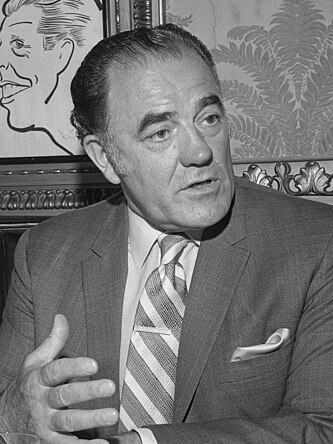
About Louis L'Amour
Louis Dearborn L'Amour /ˈluːi ləˈmʊr/ (22 March 1908 – 10 June 1988) was an American novelist and short story writer whose works consisted primarily of Western novels, which he called his "frontier stories", but who also wrote historical fiction, science fiction, nonfiction and poetry.
Best Louis L'Amour Quotes
Shortest
Earliest
Explore our curated collection of the most famous and impactful Louis L'Amour quotes.
“There will come a time when you believe everything is finished; that will be the beginning.”
“Many people know how to get money, but few know how to keep it. Wise investments are always based on information, Johannes, so the more you know, the better.”
“Only one who has learned much can fully appreciate his ignorance.
He knows well the limits of his knowledge and how much is waiting to be learned.”
He knows well the limits of his knowledge and how much is waiting to be learned.”
“A mistake constantly made by those who should know better is to judge people of the past by our standards rather than their own. The only way men or women can be judged is against the canvas of their own time.”
“'''It is often said that one has but one life to live, but that is nonsense. For one who reads, there is no limit to the number of lives that may be lived, for fiction, biography, and history offer an inexhaustible number of lives in many parts of the world, in all periods of time.”
“I am merely a seeker after knowledge, taking the world for my province, for it seems all knowledge is interrelated, and each science is dependent to some extent on the others. We study the stars that we may know more about our earth, and herbs that we may know medicine better.”
“Do not let yourself be bothered by the inconsequential. One has only so much time in this world, so devote it to the work and the people most important to you, to those you love and things that matter. One can waste half a lifetime with people one doesn't really like, or doing things when one would be better off somewhere else.”
“What kind of scholar was I? Or was I a scholar at all? My ignorance was enormous. Beside it my knowledge was nothing. My hunger for learning, not so much to improve my lot as to understand my world, had led me to study and to thought. Reading without thinking is as nothing, for a book is less important for what it says than for what it makes you think.”
“Characters have a way of taking on a life on their own, expressing themselves in the simple philosophy of their times, and expressing beliefs acquired through living, working, and being. Once characters are established, they become their own persons and the ideas of the characters are such ideas as they might have acquired in the circumstances of their daily existence.”
“My own education, which is the one I know most about, has been haphazard, a hit-and-miss affair that was and continues to be thoroughly delightful.
I came into the world with two priceless advantages: good health and a love of learning. When I left school at the age of fifteen I was halfway through the tenth grade. I left for two reasons, economic necessity being the first of them. More important was that school was interfering with my education.”
I came into the world with two priceless advantages: good health and a love of learning. When I left school at the age of fifteen I was halfway through the tenth grade. I left for two reasons, economic necessity being the first of them. More important was that school was interfering with my education.”

“Up to a point a man’s life is shaped by environment, heredity, and movements and changes in the world about him; then there comes a time when it lies within his grasp to shape the clay of his life into the sort of thing he wishes to be. Only the weak blame parents, their race, their times, lack of good fortune, or the quirks of fate. Everyone has it within his power to say, this I am today, that I shall be tomorrow. The wish, however, must be implemented by deeds.”

“She looked at me suddenly. “Johannes? What do you wish to be? What would you like to become?”
I did not know, and I told her so, but the question worried me. Should I know? “There is time,” she said, “but the sooner you know, the sooner you can plan. To have a goal is the important thing, and to work toward it. Then, if you decide you wish to do something different, you will at least have been moving, you have been going somewhere, you will have been learning. "”
I did not know, and I told her so, but the question worried me. Should I know? “There is time,” she said, “but the sooner you know, the sooner you can plan. To have a goal is the important thing, and to work toward it. Then, if you decide you wish to do something different, you will at least have been moving, you have been going somewhere, you will have been learning. "”
“This was the beginning of something, yet I had ventured back into a world from which I had come and found it an alien world of which I was no longer a part. In a sense I had always been alien. My Druidic training had taken me deep into a past that held more than the present, and along with it had been my father’s accounts, returning home after voyages, of a world beyond our shores. I had mingled with the men of his crews, almost half of which had come from other lands, other cultures, until I had become a stranger in my own land.”

“How much of what we do is free will, and how much is programmed in our genes? Why is each people so narrow that it believes that it, and it alone, has all the answers?
In religion, is there but one road to salvation? Or are there many, all equally good, all going in the same general direction?
I have read my books by many lights, hoarding their beauty, their wit or wisdom against the dark days when I would have no book, nor a place to read. I have known hunger of the belly kind many times over, but I have known a worse hunger: the need to know and to learn.”
““You are complex.”
“No. Within this giant house of flesh lives a quiet man who would prefer working at a trade. Or perhaps he is a poet whose dreams are too large for his words. “My home is among the mountains. Men destroy what they do not understand, as they destroyed the son of God when he chose to walk among them. I do not wish to be understood. I wish to be left alone. Your Johannes has done this. He is a kind man, a thoughtful man.”
“Are you never lonely?”
“When would I not be lonely? When a man is one of a kind, he will be lonely wherever he is. I am a man apart but have become adjusted to it. I have the mountains, and I have my books. I also have the friendship of Johannes.””

“Long ago, before the Indians who live here now, there were other people. Perhaps they went away, or maybe they died or were driven out by these Indians’ ancestors, but they are gone. Yet sometimes I am not sure they are gone. I think sometimes their spirits are still around, in the land they loved.
Each people has its gods, or the spirits in which they believe. It may be their god is the same as ours, only clothed in different stories, different ideas, but a god can only be strong, Hannes, if he is worshiped, and the gods of those ancient people are lonesome gods now.
They are out there in the desert and mountains, and perhaps their strength has waned because nobody lights fires on their altars anymore. But they are there, Hannes, and sometimes I think they know me and remember me.”

“Sometimes, when crossing a pass in the mountains, one will see a pile of loose stones, even several piles. Foolish people have dug into them, thinking treasure is buried there. It is a stupid idea, to think a treasure would be marked so obviously.
It is an old custom of these people to pick up a stone and toss it on the pile. Perhaps it is a symbolical lightening of the load they carry, perhaps a small offering to the gods of the trails. I never fail to toss a stone on the pile, Hannes. In my own way it is a small offering to those lonesome gods.
A man once told me they do the same thing in Tibet, and some of our ancient people may have come from there, or near there. Regardless of that, I like to think those ancient gods are out there waiting, and that they are, because of my offerings, a little less lonely.”
“Your pa had seven years at sea, mostly in foreign parts.
You’ve heard him talk. He’s got a way about him, a way with words. He can make the temple bells tinkle for you, and you can just hear them big old elephants shuff-shuffling along, the priests callin’ folks to prayer and the like.
Your pa learned a sight of things most folks never even hear of. I’ve seen scholars back off an’ look at your pa, amazed.
You take these Injuns, now. You look at the way they live and you’ll say they don’t amount to much, but what are they thinkin’? What do they know? What memories do they have? They want different things, boy, and they consider different things important. Many a thing we’d give anything to know, they just take for granted.
Some of these Injuns, maybe all of them, they’re in tune with something. I don’t know what. But some of them have lost touch with it, and others are losin’ touch. Goin’ the white folks’ way might seem the likely thing to do, but maybe they lose as much as they gain.”
“How much could I tell them? How much dared I tell them? What was the point at which acceptance would begin to yield to doubt? For the mind must be prepared for knowledge as one prepares a field for planting, and a discovery made too soon is no better than a discovery not made at all. Had I been a Christian, I would undoubtedly have been considered a heretic, for what the world has always needed is more heretics and less authority. There can be no order or progress without discipline, but authority can be quite different. Authority, in this world in which I moved, implied belief in and acceptance of a dogma, and dogma is invariably wrong, as knowledge is always in a state of transition. The radical ideas of today are often the conservative policies of tomorrow, and dogma is left protesting by the wayside. Each generation has a group that wishes to impose a static pattern on events, a static pattern that would hold society forever immobile in a position favorable to the group in question.”

“Once, when hitchhiking, I was picked up by a professor from some small college. He noticed a book in my coat pocket, and was curious. It was a Modern Library edition, in the limp bindings they used to have, which sold at the time for 95 cents. This one contained Nietzsche's Ecce Homo, and The Birth of Tragedy.
The professor was a pedantic man of limited imagination and seemed almost offended that I was reading such a book. Obviously I did not fit some category in which he decided I belonged, and when he dropped me off in town, I suspect he was relived to be rid of me.
He kept asking me why I wanted to read such a book. At first, he doubted I was reading it. Where had I heard of Nietzsche?
When I told him I thought it was in the preface to a book on Schopenhauer, he was even more disturbed and probably believed I was lying. Fortunately, there seem to be few of his kind, and my subsequent friendships with university professors have proved exciting, stimulating and fun.”

Louis L'Amour Quotes by Topic
Find exactly what you are looking for by browsing this categorized list of Louis L'Amour quotes by topic.
Louis L'Amour on Diary
“Diaries have been a rich source of material for me. Not the events recorded in such journals, but the mental attitude, the moral standards, and the feelings of people at the time. It is all right to imagine, but the imagination must have a takeoff point, it must have a basis in fact.”
Louis L'Amour on History
“Historians as a rule follow the main lines of history—the wars, the politics, the rise and fall of empires—yet the true history is that of the people themselves: where they lived, their ways of making a living, their inventions, discoveries, problem-solving, business dealings, and their relations with each other.”

Louis L'Amour on Judgment
“No man can be judged except against the background of his own time. The standard of yesterday are not the standards of today, and the circumstance of daily life were vastly different. Before one attempts to render judgment, one should consider the world in which the man existed, and the customs of the time and place.”
Louis L'Amour on Car
“Contemporary man has tried to substitute the car for the cow pony, but it simply doesn't work. True, in a car he is mobile, and once behind the wheel he can feel the excitement of command, but nevertheless the car is bound to the road, inhibited by traffic, and frustrated by regulations essential to his safety but which he often feels rob him of the true freedom he wants.”

Louis L'Amour on Newspapers
“Newspapers—and nearly every western town had at least one—are valuable sources. Often the reporting was good, and just as often the writing was opinionated, a fact one should easily detect, for people of the time—and that included newspaper reporters—made no secret of their opinions. Many a western editor set his type with a six-shooter on the table beside him, ready to back up his opinions, if need be.”
Louis L'Amour on Story
“My stories are history of a kind. The difference is that I write of the nameless ones, and when they have left no stories I write what must have been, what could have been, using knowledge of the country itself, how it was traveled, how many people lived by hunting and gathering, and what their relationships might have been with the Indians and others. Yet my stories or any others, as well as history itself, must always be read with the understanding that we know only a small part of the whole picture.”

Quotes About Louis L'Amour
Gain deeper perspective through quotes about Louis L'Amour from others.
Daniel J. Boorstin on Louis L'Amour 2 quotes
“Louis was a modest man, slow to reveal what he really knew. While many of us are tempted to pretend to have read what we think we should have read, Louis was not that way. For most of us Mark Twain's definition of a classic — "a book which people praise and don’t read" — is accurate enough. But certainly not for Louis. … He had a natural preference tor books that had stood the test of time.”

About Louis L'Amour
Louis Dearborn L'Amour /ˈluːi ləˈmʊr/ (22 March 1908 – 10 June 1988) was an American novelist and short story writer whose works consisted primarily of Western novels, which he called his "frontier stories", but who also wrote historical fiction, science fiction, nonfiction and poetry.