Link Copied!
Li Bai Quotes (701-762)
Poet
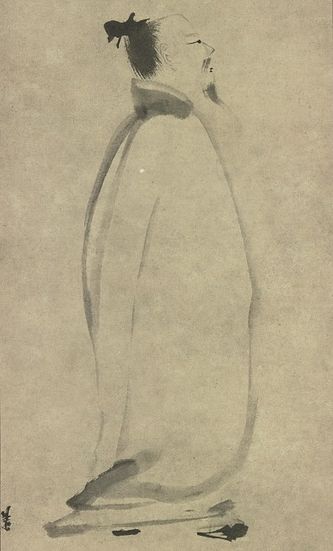
About Li Bai
Li Bai (701–762), also known as Li Po, was a Chinese poet living during the Tang Dynasty. Called the Poet Immortal, Li Bai is often regarded, along with Du Fu, as one of the two greatest poets in China's literary history.
Best Li Bai Quotes
Shortest
Earliest
Explore our curated collection of the most famous and impactful Li Bai quotes.
“蜀道之难,难于上青天!
• Oh, but it is high and very dangerous!
Such travelling is harder than scaling the blue sky.”
• Oh, but it is high and very dangerous!
Such travelling is harder than scaling the blue sky.”

“君不见,黄河之水天上来,奔流到海不复回。
• See how the Yellow River's waters move out of heaven,
Entering the ocean, never to return.”
• See how the Yellow River's waters move out of heaven,
Entering the ocean, never to return.”
“飛流直下三千尺,疑是銀河落九天。
• Flying waters descending straight three thousand feet,
Till I think the Milky Way has tumbled from the ninth height of Heaven.”
• Flying waters descending straight three thousand feet,
Till I think the Milky Way has tumbled from the ninth height of Heaven.”
“危楼高百尺,手可摘星辰。
不敢高声语,恐惊天上人。
• Here it is night: I stay at the Summit Temple.
Here I can touch the stars with my hand.
I dare not speak aloud in the silence
For fear of disturbing the dwellers of Heaven.”
不敢高声语,恐惊天上人。
• Here it is night: I stay at the Summit Temple.
Here I can touch the stars with my hand.
I dare not speak aloud in the silence
For fear of disturbing the dwellers of Heaven.”
“云想衣裳花想容,春风拂槛露华浓。
若非群玉山头见,会向瑶台月下逢。
• Her robe is a cloud, her face a flower;
Her balcony, glimmering with the bright spring dew,
Is either the tip of earth's Jade Mountain,
Or a moon-edged roof of paradise.”
若非群玉山头见,会向瑶台月下逢。
• Her robe is a cloud, her face a flower;
Her balcony, glimmering with the bright spring dew,
Is either the tip of earth's Jade Mountain,
Or a moon-edged roof of paradise.”
“朝辞白帝彩云间,千里江陵一日还。
两岸猿声啼不住,轻舟已过万重山。
• Leaving at dawn the White Emperor crowned with cloud,
I've sailed a thousand li through Canyons in a day.
With the monkeys' adieus the riverbanks are loud,
My skiff has left ten thousand mountains far away.”
两岸猿声啼不住,轻舟已过万重山。
• Leaving at dawn the White Emperor crowned with cloud,
I've sailed a thousand li through Canyons in a day.
With the monkeys' adieus the riverbanks are loud,
My skiff has left ten thousand mountains far away.”
“問余何意棲碧山,笑而不答心自閒。
桃花流水窅然去,別有天地非人間。
• You ask me why do I dwell in these green mountains,
But I smile without a reply, only an easy mind.
The river flows away silently, bearing the fallen peach blossoms,
Here is another world, but not the world of men.”
桃花流水窅然去,別有天地非人間。
• You ask me why do I dwell in these green mountains,
But I smile without a reply, only an easy mind.
The river flows away silently, bearing the fallen peach blossoms,
Here is another world, but not the world of men.”

“镜湖三百里,菡萏发荷花。
五月西施采,人看隘若耶。
回舟不待月,归去越王家。
• On Mirror Lake outspread for miles and miles,
The lotus lilies in full blossom teem.
In fifth moon Xi Shi gathers them with smiles,
Watchers o'erwhelm the bank of Yuoye Stream.
Her boat turns back without waiting moonrise
To royal house amid amorous sighs.”
五月西施采,人看隘若耶。
回舟不待月,归去越王家。
• On Mirror Lake outspread for miles and miles,
The lotus lilies in full blossom teem.
In fifth moon Xi Shi gathers them with smiles,
Watchers o'erwhelm the bank of Yuoye Stream.
Her boat turns back without waiting moonrise
To royal house amid amorous sighs.”
“花間一壺酒,獨酌無相親。
舉杯邀明月,對影成三人。
月既不解飲,影徒隨我身。
暫伴月將影,行樂須及春。
我歌月徘徊,我舞影零亂。
醒時同交歡,醉後各分散。
永結無情遊,相期邈雲漢。
• A cup of wine, under the flowering trees;
I drink alone, for no friend is near.
Raising my cup I beckon the bright moon,
For he, with my shadow, will make three men.
The moon, alas, is no drinker of wine;
Listless, my shadow creeps about at my side.
Yet with the moon as friend and the shadow as slave
I must make merry before the Spring is spent.
To the songs I sing the moon flickers her beams;
In the dance I weave my shadow tangles and breaks.
While we were sober, three shared the fun;
Now we are drunk, each goes his way.
May we long share our odd, inanimate feast,
And meet at last on the Cloudy River of the sky.
• Variant translation:”
Li Bai Quotes by Topic
Find exactly what you are looking for by browsing this categorized list of Li Bai quotes by topic.
Li Bai on Moon
“Here among flowers a single jug of wine, No close friends here, I pour alone And lift a cup to bright moon, ask it to join me, Then face my shadow and we become three. The moon never has known how to drink, All my shadow does is follow my body, But with moon and shadow as companions a while, This joy I find will surely last till spring. I sing, the moon just lingers on, I dance, and my shadow scatters wildly. When still sober we share friendship and pleasure, Then entirely drunk each goes his own way— Let us join in travels beyond human feelings And plan to meet far in the river of stars.”
Quotes About Li Bai
Gain deeper perspective through quotes about Li Bai from others.
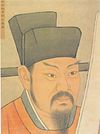
Wang Anshi on Li Bai
“Li Po's style is swift, yet never careless; lively, yet never informal. But his intellectual outlook was low and sordid. In nine poems out of ten he deals with nothing but wine or women.”
Po Chü-i on Li Bai
“The world acclaims Li Po as its master poet. I grant that his works show unparalleled talent and originality, but not one in ten contains any moral reflection or deeper meaning.”
Du Fu on Li Bai
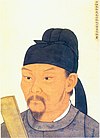
Shen Fu on Li Bai
“"Tu's poems," she said, "are known for their workmanship and artistic refinement, while Li's poems are known for their freedom and naturalness of expression. I prefer the vivacity of Li Po to the severity of Tu Fu." "Tu Fu is the acknowledged king of poets," said I, "and he is taken by most people as their model. Why do you prefer Li Po?" "Of course," said she, "as for perfection of form and maturity of thought, Tu is the undisputed master, but Li Po's poems have the wayward charm of a nymph. His lines come naturally like falling flowers and flowing water, and are so much lovelier for their spontaneity. I am not saying that Tu is second to Li; only personally I feel, not that I love Tu less, but that I love Li more."”
Lin Yutang on Li Bai
“Li Po is China's prince of vagabond poets, with his drink, his dread of officialdom, his companionship with the moon, his love of high mountain scenery, and his constant aspiration: "Oh, could I but hold a celestial sword / And stab a whale across the seas!" Li Po's romanticism ended finally in his death from reaching for the shadow of the moon in the water in a drunken fit and falling overboard. Good, infinitely good, that the staid and apparently unfeeling Chinese could sometimes reach for the shadow of the moon and die such a poetic death!”

About Li Bai
Li Bai (701–762), also known as Li Po, was a Chinese poet living during the Tang Dynasty. Called the Poet Immortal, Li Bai is often regarded, along with Du Fu, as one of the two greatest poets in China's literary history.