Link Copied!
Kurt Vonnegut Quotes (1922-2007)
Novelist















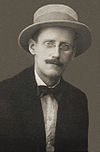



















About Kurt Vonnegut
Kurt Vonnegut, Jr. (11 November 1922 – 11 April 2007) was an American novelist known for works blending satire, black comedy, and science fiction.
Best Kurt Vonnegut Quotes
Shortest
Earliest
Explore our curated collection of the most famous and impactful Kurt Vonnegut quotes.
“And so on.”
“"Poo-Tee-Weet?"”
“Hi Ho”

“How embarrassing to be human.”



“Everything was beautiful and nothing hurt.”
“No grown woman is a fan of premature ejaculation.”


“It is a gruesome Disneyland. Nobody is cute there.”


“Humor is an almost physiological response to fear.”
“Everybody's shaking in his boots, so don't be bluffed.”
Kurt Vonnegut Quotes by Topic
Find exactly what you are looking for by browsing this categorized list of Kurt Vonnegut quotes by topic.
Kurt Vonnegut on Love 6 quotes
View all 6 quotes on Love →Kurt Vonnegut on Time 3 quotes
View all 3 quotes on Time →Kurt Vonnegut on Now 3 quotes
“Kilgore's Creed: "You were sick, but now you're well again, and there's work to do."”

Kurt Vonnegut on Television 3 quotes
“Thanks to TV and for the convenience of TV, you can only be one of two kinds of human beings, either a liberal or a conservative.”

Kurt Vonnegut on Relationship between religion and science 2 quotes
View all 2 quotes on Relationship between religion and science →Kurt Vonnegut on Death 2 quotes
“Everything was beautiful and nothing hurt.”

Kurt Vonnegut on God 2 quotes
View all 2 quotes on God →Kurt Vonnegut on Earth 2 quotes
“We are here on Earth to fart around. Don't let anybody tell you any different.”

Kurt Vonnegut on Moment 2 quotes
“Well, here we are, Mr. Pilgrim, trapped in the amber of this moment. There is no why.”

Kurt Vonnegut on Control 2 quotes
“A purpose of human life, no matter who is controlling it, is to love whoever is around to be loved.”

Kurt Vonnegut on Atheism 2 quotes
“The study of anthropology … confirmed my atheism, which was the faith of my fathers anyway. Religions were exhibited and studied as the Rube Goldberg inventions I'd always thought they were.”

Kurt Vonnegut on Indianapolis 2 quotes
“"Indianapolis, Indiana," said Constant, "is the first place in the United States of America where a white man was hanged for the murder of an Indian. The kind of people who'll hang a white man for murdering an Indian," said Constant, "that's the kind of people for me."”

What Kurt Vonnegut Said About Others
Discover personal opinions Kurt Vonnegut shared regarding contemporaries.
Kurt Vonnegut on Ernest Hemingway
“I wonder now what Ernest Hemingway's dictionary looked like, since he got along so well with dinky words that everybody can spell and truly understand.”

Kurt Vonnegut on Women
“Every greedy, unreasonable dream I’d ever had about what a woman should be came true in Mona. There, God love her warm and creamy soul, was peace and plenty forever.”

Kurt Vonnegut on Lot's wife
Kurt Vonnegut on Isaac Asimov
“I am honorary president of the American Humanist Association, having succeeded the late, great, spectacularly prolific writer and scientist, Dr. Isaac Asimov in that essentially functionless capacity. At an A.H.A. memorial service for my predecessor I said, "Isaac is up in Heaven now." That was the funniest thing I could have said to an audience of humanists. It rolled them in the aisles. Mirth! Several minutes had to pass before something resembling solemnity could be restored.”

Quotes About Kurt Vonnegut
Gain deeper perspective through quotes about Kurt Vonnegut from others.
Anthony Gregory on Kurt Vonnegut
“A leftist anti-authoritarian of sorts, he exposed the horrors of totalitarianism as he saw them, including on the left. His political and economic blindspots are hardly a blemish for this libertarian reader, who enjoyed his wonderful and scathing attacks on moral hypocrisy and atrocity. In Slaughterhouse Five, he took on morally nihilistic determinism and the terror bombing of Dresden, where he had been an American POW. In his often-neglected work of brilliance, Mother Night, Vonnegut discussed the moral dilemmas of being an agent who had infiltrated the Nazis and served as a Nazi propagandist — all on behalf of the Allies, but with the effect of bolstering the National Socialist regime. Throughout many of his books and short stories, the latter of which can be read in Welcome to the Monkey House, he examined various forms of modernist dystopianism and displayed a charming quality of shunning the PC orthodoxy when old-fashioned sensibility would better serve. Many readers might most appreciate his short story "Harrison Bergeron," an anti-egalitarian masterpiece that takes place in "2081, and everybody was finally equal." Vonnegut was a great writer with a great sense of humanity.”
Doris Lessing on Kurt Vonnegut
Dinitia Smith on Kurt Vonnegut
“Like Mark Twain, Mr. Vonnegut used humor to tackle the basic questions of human existence: Why are we in this world? Is there a presiding figure to make sense of all this, a god who in the end, despite making people suffer, wishes them well? He also shared with Twain a profound pessimism. "Mark Twain," Mr. Vonnegut wrote in his 1991 book, Fates Worse Than Death: An Autobiographical Collage, "finally stopped laughing at his own agony and that of those around him. He denounced life on this planet as a crock. He died." … His novels — 14 in all — were alternate universes, filled with topsy-turvy images and populated by races of his own creation, like the Tralfamadorians and the Mercurian Harmoniums. He invented phenomena like chrono-synclastic infundibula (places in the universe where all truths fit neatly together) as well as religions, like the Church of God the Utterly Indifferent and Bokononism (based on the books of a black British Episcopalian from Tobago “filled with bittersweet lies,” a narrator says). The defining moment of Mr. Vonnegut’s life was the firebombing of Dresden, Germany, by Allied forces in 1945, an event he witnessed firsthand as a young prisoner of war. … His experience in Dresden was the basis of Slaughterhouse-Five, which was published in 1969 against the backdrop of war in Vietnam, racial unrest and cultural and social upheaval. The novel, wrote the critic Jerome Klinkowitz, "so perfectly caught America’s transformative mood that its story and structure became best-selling metaphors for the new age." To Mr. Vonnegut, the only possible redemption for the madness and apparent meaninglessness of existence was human kindness.”
Jon Stewart on Kurt Vonnegut
“I felt like he educated me in... in the genre of optimistic, cynical humanism. [...] He fought in World War II, he saw Dresden. That's what Slaughterhouse-Five was about, it was about his experiences seeing the worst that people could do. And people always took his cynicism as... Or his, I guess I should say, his dryness as cynicism. But it was really idealism. He believed so much in people that he couldn't help but be somewhat disappointed that we were blowing it in the way that we were blowing it? But I would say, line your desk with Kurt Vonnegut and you cannot go wrong.”
Howard Zinn on Kurt Vonnegut
“Those words "We the People" were a way of deceiving people into thinking that there was a national interest. The term national interest is what the novelist Kurt Vonnegut called a granfalloon (this is one of his invented words), which is sort of an artificial constellation of people, people who are artificially brought together but really don't have any common interests.”

Misattributed Quotes
Quotes mistakenly credited to Kurt Vonnegut
“Be soft. Do not let the world make you hard. Do not let the pain make you hate. Do not let the bitterness steal your sweetness. Take pride that even though the rest of the world may disagree, you still believe it to be a beautiful place.”
“When I was 15, I spent a month working on an archeological dig. I was talking to one of the archeologists one day during our lunch break and he asked those kinds of “getting to know you” questions you ask young people: Do you play sports? What’s your favorite subject? And I told him, no I don’t play any sports. I do theater, I’m in choir, I play the violin and piano, I used to take art classes. And he went WOW. That’s amazing! And I said, “Oh no, but I’m not any good at ANY of them.””
About Kurt Vonnegut
Kurt Vonnegut, Jr. (11 November 1922 – 11 April 2007) was an American novelist known for works blending satire, black comedy, and science fiction.