Link Copied!
Jorge Luis Borges Quotes (1899-1986)
Author, Writer, Poet

















About Jorge Luis Borges
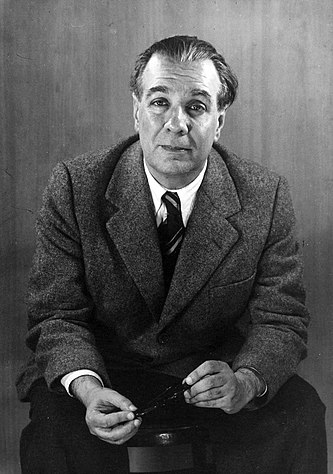
Jorge Luis Borges (24 August 1899 – 14 June 1986) was an Argentine writer who is considered one of the foremost literary figures of the 20th century. Most famous in the English speaking world for his short stories and fictive essays, Borges was also a poet, critic, translator and man of letters.
Best Jorge Luis Borges Quotes
Shortest
Earliest
Explore our curated collection of the most famous and impactful Jorge Luis Borges quotes.

“The central problem of novel-writing is causality.”
“Censorship is the mother of metaphor.”

“Ser conservador es una forma de ser escéptico.”
“La duda es uno de los nombres de la inteligencia.”
“Fame is a form—perhaps the worst form—of incomprehension.”
“My advanced age has taught me the resignation of being Borges.”


“In a riddle whose answer is chess, what is the only prohibited word?”

“Art always opts for the individual, the concrete; art is not Platonic.”

“Your unforgivable sins do not allow you to see my splendor.”
“To die for a religion is easier than to live it absolutely.”


Jorge Luis Borges Quotes by Topic
Find exactly what you are looking for by browsing this categorized list of Jorge Luis Borges quotes by topic.
Jorge Luis Borges on Absurdism 8 quotes
“I will pause to consider this eternity from which the subsequent ones derive.”
Jorge Luis Borges on Labyrinth 6 quotes
View all 6 quotes on Labyrinth →Jorge Luis Borges on Time 3 quotes
“Time forks perpetually toward innumerable futures.”

Jorge Luis Borges on Mirror 3 quotes
“I owe the discovery of Uqbar to the conjunction of a mirror and an encyclopedia.”
Jorge Luis Borges on Libraries 3 quotes
“The universe (which others call the Library) is composed of an indefinite and perhaps infinite number of hexagonal galleries, with vast air shafts between, surrounded by very low railings.”

Jorge Luis Borges on Fiction 2 quotes
View all 2 quotes on Fiction →Jorge Luis Borges on Love 2 quotes
“The mightiest love was granted him Love that does not expect to be loved.”

Jorge Luis Borges on Abomination 2 quotes
“The earth we inhabit is an error, an incompetent parody. Mirrors and paternity are abominable because they multiply and affirm it.”
Jorge Luis Borges on Infinity 2 quotes
“There is a concept which corrupts and upsets all others. I refer not to Evil, whose limited realm is that of ethics; I refer to the infinite.”

Jorge Luis Borges on Unicorns 2 quotes
“A Chinese prose writer has observed that the unicorn, because of its own anomaly, will pass unnoticed. Our eyes see what they are accustomed to seeing.”
Jorge Luis Borges on Universe 2 quotes
“It is clear that there is no classification of the Universe that is not arbitrary and full of conjectures. The reason for this is very simple: we do not know what kind of thing the universe is.”

Jorge Luis Borges on Argentina 2 quotes
“As I think of the many myths, there is one that is very harmful, and that is the myth of countries. I mean, why should I think of myself as being an Argentine, and not a Chilean, and not an Uruguayan. I don't know really. All of those myths that we impose on ourselves — and they make for hatred, for war, for enmity — are very harmful. Well, I suppose in the long run, governments and countries will die out and we'll be just, well, cosmopolitans.”

What Jorge Luis Borges Said About Others
Discover personal opinions Jorge Luis Borges shared regarding contemporaries.
Jorge Luis Borges on Baruch Spinoza 3 quotes
“Time carries him as the river carries A leaf in the downstream water. No matter. The enchanted one insists And shapes God with delicate geometry. Since his illness, since his birth, He goes on constructing God with the word. The mightiest love was granted him Love that does not expect to be loved.”
Jorge Luis Borges on George Bernard Shaw 2 quotes
“The writers of our century delight in the weaknesses of the human condition; the only one capable of inventing heroes was Bernard Shaw.”

Jorge Luis Borges on Fyodor Dostoyevsky
“In the preface to an anthology of Russian literature, Vladimir Nabokov stated that he had not found a single page of Dostoevsky worthy of inclusion. This ought to mean that Dostoevsky should not be judged by each page but rather by the total of all the pages that comprise the book.”

Jorge Luis Borges on María Luisa Bombal
“Today, in Santiago, Chile, or Buenos Aires, in Caracas or Lima, when they name the best names, María Luisa Bombal is never missing from the list. This fact is even more notable when one considers the brevity of her work-which does not correspond to any determined "school" and which fortunately is devoid of any regionalism.”
Jorge Luis Borges on William Shakespeare
“History adds that before or after dying he found himself in the presence of God and told Him: "I who have been so many men in vain want to be one and myself." The voice of the Lord answered from a whirlwind: "Neither am I anyone; I have dreamt the world as you dreamt your work, my Shakespeare, and among the forms in my dream are you, who like myself are many and no one."”

Jorge Luis Borges on Voltaire
“Not a day goes by without our using the word optimism, coined by Voltaire against Leibniz, who had demonstrated (in spite of the Ecclesiastes and with the approval of the Church) that we live in the best of possible worlds. Voltaire, very reasonably, denied that exorbitant opinion... Leibniz could have replied that a world which has given us Voltaire has some right to be considered the best.”

Jorge Luis Borges on Angelus Silesius
“I will end with a great line by the poet who, in the seventeenth century, took the strangely real and poetic name of Angelus Silesius. It is the summary of all I have said tonight — except that I have said it by means of reasoning and simulated reasoning. I will say it first in Spanish and then in German: La rosa es sin porqué; florece porque florece. Die Rose ist ohne warum; sie blühet weil sie blühet”

Jorge Luis Borges on Ernest Bramah
“Bramah's books fall into two very unequal categories. Some, fortunately the smaller part, record the adventures of the blind detective, Max Carrados. These are competent, mediocre books. The rest are parodic in nature: they pass themselves off as translations from the Chinese, and their boundless perfection achieved the unconditional praise of Hilaire Belloc in 1922. Their names: The Wallet of Kai Lung (1900), Kai Lung's Golden Hours (1922), Kai Lung Unrolls His Mat (1928), The Mirror of Kong Ho (1931), The Moon of Much Gladness (1936).”
Jorge Luis Borges on Filippo Tommaso Marinetti
“F. T. Marinetti is perhaps the most celebrated example of the kind of writer who lives by his wits and to whom something witty rarely occurs... He has also proposed that Italians replace chic with elettrizzante [electrifying] (five syllables instead of one) and bar with qui si beve [here one drinks]-four syllables for one, and the unresolved enigma of how the plural will be formed. "Our Italian language must not be despoiled by foreignisms!" declares Filippo Tommaso with a Puritanism not unworthy of the aseptic Cejador or the forty stalls of the Spanish Royal Academy. Foreignisms! The old impresario of Futurism cannot abide such mischief.”
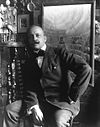
Jorge Luis Borges on Robert Louis Stevenson
“Keats, entirely a stranger to error, could believe that the nightingale enchanting him was the same one Ruth heard amid the alien corn of Bethlehem in Judah; Stevenson posits a single bird that consumes the centuries: "the nightingale that devours time." Schopenhauer — impassioned, lucid Schopenhauer — provides a reason: the pure corporeal immediacy in which animals live, oblivious to death and memory. He then adds, not without a smile: Whoever hears me assert that the grey cat playing just now in the yard is the same one that did jumps and tricks there five hundred years ago will think whatever he likes of me, but it is a stranger form of madness to imagine that the present-day cat is fundamentally an entirely different one.”
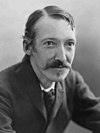
Jorge Luis Borges on John Keats
“Keats, entirely a stranger to error, could believe that the nightingale enchanting him was the same one Ruth heard amid the alien corn of Bethlehem in Judah; Stevenson posits a single bird that consumes the centuries: "the nightingale that devours time." Schopenhauer — impassioned, lucid Schopenhauer — provides a reason: the pure corporeal immediacy in which animals live, oblivious to death and memory. He then adds, not without a smile: Whoever hears me assert that the grey cat playing just now in the yard is the same one that did jumps and tricks there five hundred years ago will think whatever he likes of me, but it is a stranger form of madness to imagine that the present-day cat is fundamentally an entirely different one.”
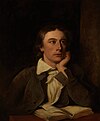
Jorge Luis Borges on Arthur Schopenhauer
“Keats, entirely a stranger to error, could believe that the nightingale enchanting him was the same one Ruth heard amid the alien corn of Bethlehem in Judah; Stevenson posits a single bird that consumes the centuries: "the nightingale that devours time." Schopenhauer — impassioned, lucid Schopenhauer — provides a reason: the pure corporeal immediacy in which animals live, oblivious to death and memory. He then adds, not without a smile: Whoever hears me assert that the grey cat playing just now in the yard is the same one that did jumps and tricks there five hundred years ago will think whatever he likes of me, but it is a stranger form of madness to imagine that the present-day cat is fundamentally an entirely different one.”

Quotes About Jorge Luis Borges
Gain deeper perspective through quotes about Jorge Luis Borges from others.
Marjorie Agosín "Reflections on the Fantastic" Translated from the Spanish by Celeste Kostopulos-Cooperman. In on Jorge Luis Borges
“Both Italo Calvino and Jorge Luis Borges have contributed greatly to our understanding of the fantastic...For Borges, on the other hand, the key to the fantastic resides within the articulation of a new language. His allegories, fictions, poems and essays make a distinction between what language represents and what it wants to represent. Within the border of that which is spoken and that which is not, arises the space that we would call the fantastic, where the unusual does and does not astonish and where magic is also reality.”
Isabel Allende on Jorge Luis Borges
“I belong to the first generation of Latin American writers brought up reading other Latin American writers. Before my time the work of Latin American writers was not well distributed, even on our continent. In Chile it was very hard to read other writers from Latin America. My greatest influences have been all the great writers of the Latin American Boom in literature: García Márquez, Vargas Llosa, Cortázar, Borges, Paz, Rulfo, Amado, etc.”

Mariana Enriquez interview quoted on Jorge Luis Borges
“Ficciones by Jorge Luis Borges is no longer my favorite short story book. I could name dozens I love more and held more dear—but when I read it, at age 12 I think, maybe younger, it blew my mind in a way that taught me that fiction was a territory of freedom unlike any other, where if I’d venture, I’d have immense powers. The possibilities that these stories offer, the sheer power of the imagination displayed here, is unforgettable. And for me to read it in Spanish, to read this kind of wizardry in my language, was just a joy.”
Angélica Gorodischer on Jorge Luis Borges

James Irby on Jorge Luis Borges
“Extremes of fantastic hope and skepticism paradoxically coexist in Borges' thought. In "Pascal's Sphere" he examines an image which is not only paradoxical in itself — the universe as an infinite sphere, in other words, a boundless form perfectly circumscribed — but which has also served to express diametrically opposite emotions: Bruno's elation and Pascal's anguish. But the other basic symmetry to note here is Borges' history of the metaphor. Not only paradoxes are found throughout this collection, but also various listings of ideas or themes or images which though diverse in origin and detail are essentially the same. In "The Flower of Coleridge" the coincidence of Valéry's, Emerson's, and Shelley's conceptions of all literature as the product of one Author seems itself to bear out that conception. At the beginning of the essay on Hawthorne, Borges again briefly traces the history of a metaphor — the likening of our dreams to a theatrical performance — and adds that true metaphors cannot be invented, since they have always existed. Such "avatars" point beyond the flux and diversity of history to a realm of eternal archetypes, which, though limited in number, "can be all things for all people, like the Apostle." While the paradox upsets our common notions of reality and suggests that irreducible elements are actually one, recurrence negates history and the separateness of individuals. Of course, this too is a paradox, as "New Refutation of Time" shows: time must exist in order to provide the successive identities with which it is to be "refuted." The two symmetries noted above, if we pursue their implications far enough, finally coalesce, with something of the same dizzying sense, so frequent in Borges' stories, of infinite permutations lurking at every turn. Both are uses of what he calls a pantheist extension of the principle of identity — God is all things: a suitably heterogeneous selection of these may allude to Totality — which has, as he notes in the essay on Whitman, unlimited rhetorical possibilities.”
Bryan Magee on Jorge Luis Borges
“When I met Borges some time ago and remarked that I was about to embark on writing a book about Schopenhauer, he became excited and started talked volubly about how much Schopenhauer had meant to him. It was the desire to read Schopenhauer in the original, he said, that had made him learn German; and when people asked him, which they often had, why he with his love of intricate structure had never attempted a systematic exposition of the world-view which underlay his writings, his reply was that he did not do it because it had already been done by Schopenhauer.”
The inventor of virtual literature on Jorge Luis Borges
“O inventor da literatura virtual, essa sua literatura que parece ter-se desprendido da realidade para melhor revelar os seus invisíveis mistérios.”
Mgr. Tino Scotti on Jorge Luis Borges
“(About Pope Francis) remains an enigma of gifts that time and history will reveal. There is still a wealth of qualities that we will discover over time. Pope Francis had a vast theological, literary and philosophical culture. He always presented himself with simplicity, never flaunting his culture, but he was a fine intellectual. Suffice it to say that he was a friend of Jorge Luis Borges, whom he invited to speak at his school in Buenos Aires.”
Rebecca Solnit on Jorge Luis Borges
“(What’s your go-to classic? And your favorite book no one else has heard of?) More than any other book, Jorge Luis Borges’s “Labyrinths,” which I discovered when I was 15, showed me what was possible in short prose nonfiction.”

Luisa Valenzuela on Jorge Luis Borges 3 quotes
“Borges was already considered a sort of genius but “a writer for writers,” nobody else would be able to understand his stories. Or buy his books, for that matter. Much later things changed dramatically, and now his oeuvre is a worldwide reference. One could write forever about this phenomenon. And many many books have been written: Borges and mathematics, Borges and the Kabbala, and so on.”

About Jorge Luis Borges
Jorge Luis Borges (24 August 1899 – 14 June 1986) was an Argentine writer who is considered one of the foremost literary figures of the 20th century. Most famous in the English speaking world for his short stories and fictive essays, Borges was also a poet, critic, translator and man of letters.