Economic theory, since the time of the Physiocrats, has endeavored to get rid of the human will and to explain economic phenomena in terms of physical and hedonic forces. The human will had been the main reliance of the Mercantilists and of the economic theory of the Church fathers. But the will was arbitrary, capricious and contrary to natural laws. There were two stages of these physical theories which attempted to get away from the will:-the natural rights arld physical equilibrium stage of foreordained evolution of Quesnay, Adam Smith and Karl Marx, and the natural selection stage of blind evolution that followed Darwin, whose distinguished exponent in economics is Veblen. The theorists of each stage attempted to get rid of the human will and to explain economic phenomena as the working out of natural forces, either foreordained or blind. It was a concept of society as the natural growth of a mechanistic equilibrium.
What It Means
This is a placeholder explanation generated by the low-overhead model. It interprets "Economic theory, since the time of the Physiocrats, has endeavored to get rid of the human will and to explain economic phenomena in terms of physical and hedonic forces. The human will had been the main reliance of the Mercantilists and of the economic theory of the Church fathers. But the will was arbitrary, capricious and contrary to natural laws. There were two stages of these physical theories which attempted to get away from the will:-the natural rights arld physical equilibrium stage of foreordained evolution of Quesnay, Adam Smith and Karl Marx, and the natural selection stage of blind evolution that followed Darwin, whose distinguished exponent in economics is Veblen. The theorists of each stage attempted to get rid of the human will and to explain economic phenomena as the working out of natural forces, either foreordained or blind. It was a concept of society as the natural growth of a mechanistic equilibrium." in the context of "p. 376" to mean that wisdom is timeless.
Tags
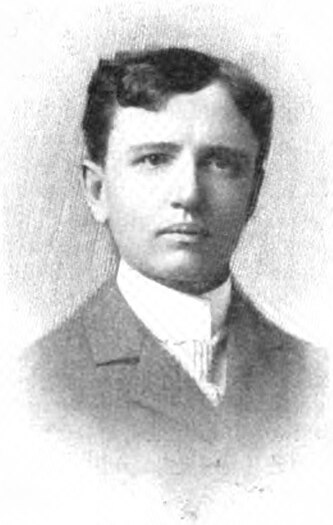
About John R. Commons