Link Copied!
John R. Commons Quotes (1862-1945)
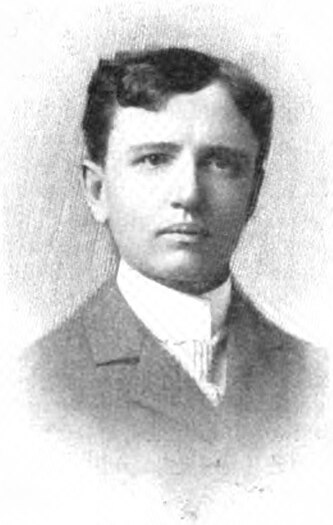
About John R. Commons
John Rogers Commons (October 13, 1862 – May 11, 1945) was an American institutional economist, progressive and labor historian at the University of Wisconsin–Madison.
Best John R. Commons Quotes
Shortest
Earliest
Explore our curated collection of the most famous and impactful John R. Commons quotes.
“Liberty is absence of restraint. Freedom is participation in government.”


“Liberty, as such, is only the negative of duty, the absence of restraint or compulsion.”
“Other races of immigrants, by contact with our institutions, have been civilized—the negro has only been domesticated.”
“The ‘liberty’ of one is his permission to act as he pleases, supported against interference by the power of the concern or government
of which he is a member.”

“The binding power of custom is its security of expectations. What has happened before may be expected to happen again, and he who arbitrarily disappoints expectations must be restrained or punished.”

“The aim of this volume is to work out an evolutionary and behavioristic, or rather volitional, theory of value. It was commenced thirty-five years ago at Johns Hopkins University under my stimulating teacher, Richard T. Ely.”
“An institution is defined as collective action in control, liberation and expansion of individual action. Its forms are unorganized custom and organized going concerns. The individual action is participation in bargaining, managing and rationing”

“Since institutional economics is behavioristic, and the behavior in question is none other than the behavior of individuals while participating in transactions, institutional economics must make an analysis of the economic behavior of individuals.”
“Liberty is as much a matter of compulsion as duty, but where duty says to a person that he must or must not, liberty says to other persons that they must not interfere with that person, or that they even must help to prevent still other persons from interfering, if necessary.”

“The Chinese and Japanese are perhaps the most industrious of all races, while the Chinese are the most docile. The Japanese excel in imitativeness, but are not as reliable as the Chinese. Neither race, so far as their immigrant representatives are concerned, possesses the originality and ingenuity which characterize the competent American and British mechanic.”
“The boot and shoe makers, either as shoemakers or “cordwainers,” have been the earliest and the most strenuous of American industrialists in their economic struggles. A highly skilled and intelligent class of tradesmen, widely scattered, easily menaced by commercial and industrial changes, they have resorted with determination at each new menace to the refuge of protective organizations.”
“While mere process of thinking is the process of habits, ideals, definitions, investigations, classifications, valuations and behavior, due process of thinking, which is due process of law, is the process of correct habits, right ideals, true definitions, sincere investigation, reasonable classification, reasonable value, and justice; whereas its opposite, undue process, is perverse habit, wrong ideals, double meanings, partial investigation, class legislation, confiscation and injustice.”
“Economic theory deals with two concepts, Value and Economy. Abstract reasoning regarding these concepts rests ultimately on mathematical concepts of quantity, time and energy. The three are inseparable, for quantity and time are dimensions of energy. The quantity relationships of energy, usually termed "statics," turn on the problem of the relation of the parts to the whole, while the time relationships, usually termed "dynamics," are the relations of a process that connects past, present and future.”

“It is an easy and patriotic matter for the lawyer, minister, professor, employer, or investor, placed above the arena of competition, to proclaim the equal right of all races to American opportunities; to avow his own willingness to give way should even a better Chinaman, Hindu, or Turk come in to take his place; and to rebuke the racial hatred of those who resist this displacement. His patriotism and world-wide brotherhood cost him and his family nothing, and indeed they add to his profits and leisure.”

“In the entire circuit of the globe those races which have developed under a tropical sun are found to be indolent and fickle. From the standpoint of survival of the fittest, such vices are virtues, for severe and continuous exertion under tropical conditions bring prostration and predisposition to disease. Therefore, if such races are to adopt that industrious life which is a second nature to races of the temperate zones, it is only through some form of compulsion. The negro could not possibly have found a place in American industry had he come as a free man.”
“I do not overlook the important contributions to economic theory in the past whether orthodox or heterodox I correlate them with institutional economics. The classical and communistic economists used as their measure of value the man hour of labor. This is evidently since the incoming of scientific management the engineering economics of efficiency. The Austrian and hedonistic economists deriving from Bentham used as the measure of value the diminishing marginal utility of consumption goods. This is evidently the home economics recently introduced in the college curriculum.”
“The smallest unit of the institutional economists is a unit of activity — a transaction, with its participants. Transactions intervene between the labor of the classic economists and the pleasures of the hedonic economists, simply because it is society that controls access to the forces of nature, and transactions are, not the "exchange of commodities," but the alienation and acquisition, between individuals, of the rights of property and liberty created by society, which must therefore be negotiated between the parties concerned before labor can produce, or consumers can consume, or commodities be physically exchanged.”
“But institutional economics is the field of the public interest in private ownership, which shows itself behavioristically in buying and selling, borrowing and lending, hiring and firing, leasing and renting. The private interests become the field of intangible yet quantitative and measurable rights, duties, liberties and exposures to the liberties of others. These are various aspects of rights of ownership. What we buy and sell is not material things and services but ownership of materials and services. The correlation of engineering economics, home economics, and institutional economics makes up the whole of the science of political economics.”
“The division of opinion turns on the definition of property and the scope of contract. Physical things of themselves are powerless. Even liberty to choose between opportunities is passive and ineffective. But power to withhold opportunities is economic power, and associated power is government. When therefore liberty of contract is merged with property, it adds the liberty of persons to the exclusive holding of things. And this liberty operates in the several directions of liberty to combine their property into an industrial government and to act as a unit, not only in proportioning their resources economically but also in choosing opportunities, in commanding obedience, in persuading or coercing, and in planning for the expectations of an indefinite future.”
“The difficulty in defining a field for the so-called institutional economics is the uncertainty of meaning of an institution. Sometimes an institution seems to mean a framework of laws or natural rights within which individuals act like inmates. Sometimes it seems to mean the behavior of the inmates themselves. Sometimes anything additional to or critical of the classical or hedonic economics is deemed to be institutional. Sometimes anything that is "economic behavior" is institutional. Sometimes anything that is "dynamic" instead of "static," or a "process" instead of commodities, or activity instead of feelings, or mass action instead of individual action, or management instead of equilibrium, or control instead of laissez faire, seems to be institutional economics.”
John R. Commons Quotes by Topic
Find exactly what you are looking for by browsing this categorized list of John R. Commons quotes by topic.
John R. Commons on Institutional economics 2 quotes
“The smallest unit of the institutional economists is a unit of activity — a transaction, with its participants. Transactions intervene between the labor of the classic economists and the pleasures of the hedonic economists, simply because it is society that controls access to the forces of nature, and transactions are, not the "exchange of commodities," but the alienation and acquisition, between individuals, of the rights of property and liberty created by society, which must therefore be negotiated between the parties concerned before labor can produce, or consumers can consume, or commodities be physically exchanged.”

John R. Commons on Institutional theory
“An institution is defined as collective action in control, liberation and expansion of individual action.”

John R. Commons on Collective action
“An institution is defined as collective action in control, liberation and expansion of individual action.”

John R. Commons on Business magnate
“The boot and shoe makers, either as shoemakers or “cordwainers,” have been the earliest and the most strenuous of American industrialists in their economic struggles. A highly skilled and intelligent class of tradesmen, widely scattered, easily menaced by commercial and industrial changes, they have resorted with determination at each new menace to the refuge of protective organizations.”
John R. Commons on Transaction cost
“These individual actions are really trans-actions instead of either individual behavior or the "exchange" of commodities. It is this shift from commodities and individuals to transactions and working rules of collective action that marks the transition from the classical and hedonic schools to the institutional schools of economic thinking. The shift is a change in the ultimate unit of economic investigation. The classic and hedonic economists, with their communistic and anarchistic offshoots, founded their theories on the relation of man to nature, but institutionalism is a relation of man to man. The smallest unit of the classic economists was a commodity produced by labor. The smallest unit of the hedonic economists was the same or similar commodity enjoyed by ultimate consumers. One was the objective side, the other the subjective side, of the same relation between the individual and the forces of nature. The outcome, in either case, was the materialistic metaphor of an automatic equilibrium, analogous to the waves of the ocean, but personified as "seeking their level." But the smallest unit of the institutional economists is a unit of activity -- a transaction, with its participants. Transactions intervene between the labor of the classic economists and the pleasures of the hedonic economists,simply because it is society that controls access to the forces of nature, and transactions are, not the "exchange of commodities," but the alienation and acquisition, between individuals, of the rights of property and liberty created by society, which must therefore be negotiated between the parties concerned before labor can produce, or consumers can consume, or commodities be physically exchanged.”
About John R. Commons
John Rogers Commons (October 13, 1862 – May 11, 1945) was an American institutional economist, progressive and labor historian at the University of Wisconsin–Madison.