Link Copied!
John Locke Quotes (1632-1704)
Philosopher






















About John Locke
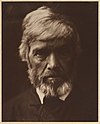
John Locke (29 August 1632 – 28 October 1704) was an influential English philosopher and social contract theorist. He developed an alternative to the Hobbesian state of nature and asserted a government could be good only if it received the consent of the governed and protected the natural rights of life, liberty, and estate. If such a consent was not achieved, Locke argued in favour of a right of rebellion, which he referred to as an "appeal to heaven".
Best John Locke Quotes
Shortest
Earliest
Explore our curated collection of the most famous and impactful John Locke quotes.

“No man's knowledge here can go beyond his experience.”

“Preference of vice to virtue, a manifest wrong judgment.”
“Government has no other end than the preservation of property.”

“The boundaries of the species, whereby men sort them, are made by men.”

“He that uses his words loosely and unsteadily will either not be minded or not understood.”
“A sound mind in a sound body, is a short but full description of a happy state in this world.”

“But there is only one thing which gathers people into seditious commotion, and that is oppression.”

“This life affords no solid satisfaction, but in the consciousness of having done well, and the hopes of another life.”

“It is one thing to show a man that he is in error, and another to put him in possession of the truth.”

“That which parents should take care of... is to distinguish between the wants of fancy, and those of nature.”
“All men are liable to error; and most men are, in many points, by passion or interest, under temptation to it.”

“To love truth for truth's sake is the principal part of human perfection in this world, and the seed-plot of all other virtues.”

“I doubt not, but from self-evident Propositions, by necessary Consequences, as incontestable as those in Mathematics, the measures of right and wrong might be made out.”

“He that denies any of the doctrines that Christ has delivered, to be true, denies him to be sent from God, and consequently to be the Messiah; and so ceases to be a Christian.”
John Locke Quotes by Topic
Find exactly what you are looking for by browsing this categorized list of John Locke quotes by topic.
John Locke on Knowledge 6 quotes
“Reading furnishes the mind only with materials of knowledge; it is thinking makes what we read ours.”
John Locke on Truth 6 quotes
“It is one thing to show a man that he is in error, and another to put him in possession of the truth.”
John Locke on Liberalism 3 quotes
“As to the having and possessing of things, teach them to part with what they have, easily and freely to their friends, and let them find by experience that the most liberal has always the most plenty, with esteem and commendation to boot, and they will quickly learn to practise it.”

John Locke on Virtue 2 quotes
“Virtue is harder to be got than knowledge of the world; and, if lost in a young man, is seldom recovered.”

John Locke on Socinianism 2 quotes
“...the church of England, when she baptizes any one, makes him not a Christian ...the church of England is mistaken, and makes none but socinians Christians.”

John Locke on Commonplace book 2 quotes
“Yet it is of Service to have Collections of this Kind, both that Students may learn the Art of putting Things in Order, as also the better retain what they Read.”

John Locke on Repentance 2 quotes
“Repentance does not consist in one single act of sorrow, though that, being the first and leading act, gives denomination to the whole; but in doing works meet for repentance, in a sincere obedience to the law of Christ for the remainder of our lives.”

John Locke on Species
“The boundaries of the species, whereby men sort them, are made by men.”
John Locke on Action
“I have always thought the actions of men the best interpreters of their thoughts.”
John Locke on Reflection
“Education begins the gentleman, but reading, good company, and reflection must finish him.”

John Locke on Happiness
“A sound Mind in a sound Body, is a short but full description of a happy State in this World.”

What John Locke Said About Others
Discover personal opinions John Locke shared regarding contemporaries.
John Locke on James Joyce
“The actions of men are the best interpreters of their thoughts.”

John Locke on Miguel de Cervantes
“Of all the books of fiction, I know none that equals Cervantes's History of Don Quixote in usefulness, pleasantry, and a constant decorum.”

John Locke on Isaac Newton
“Newton was really a very valuable man, not onely for his wonderfull skill in Mathematicks but in divinity too and his great knowledge in the scriptures where in I know few his equals.”

John Locke on Baruch Spinoza
“...I am not so well read in Hobbes or Spinoza, as to be able to say what were their opinions in this matter [the life after death]. But, possibly, there be those who will think your lordship's authority of more use to them in the case than those justly decried names;”
Quotes About John Locke
Gain deeper perspective through quotes about John Locke from others.
Lord Acton on John Locke
“It is hard on Locke to attribute his success so much to opportunity and current. In the history of thought, especially of thought bearing on action, he is, not the greatest certainly, but the largest of all Englishmen, looming tremendously, and filling an immense space. The Lettres sur les Anglais, which put England into continental circulation, deal most with him and Newton, and he is the master of Voltaire and Condillac. As the—unscientific—inventor of the division of power, he is the master of Montesquieu. By his theory of Education and the Social Contract, he is the master of Rousseau, the most powerful political writer that ever lived. By his political economy he is the master of Adam Smith, and, in a sense, of Turgot. He gave to Whiggism whatever general ideas it mixed with the specific national elements, and is the theorist of government by the great families. Lastly, in the Catena of tradition on Toleration, he is very nearly the principal classic.”
John Adams on John Locke
Paula Gunn Allen on John Locke
“The vision that impels feminists to action was the vision of the Grandmothers' society, the society that was captured in the words of the sixteenth-century explorer Peter Martyr nearly five hundred years ago. It is the same vision repeated over and over by radical thinkers of Europe and America, from François Villon to John Locke, from William Shakespeare to Thomas Jefferson, from Karl Marx to Friedrich Engels, from Benito Juarez to Martin Luther King, from Elizabeth Cady Stanton to Judy Grahn, from Harriet Tubman to Audre Lorde, from Emma Goldman to Bella Abzug, from Malinalli to Cherrie Moraga, and from Iyatiku to me. That vision as Martyr told it is of a country where there are "no soldiers, no gendarmes or police, no nobles, kings, regents, prefects, or judges, no prisons, no lawsuits... All are equal and free."”

Allan Bloom on John Locke
“Locke had illegitimately selected those parts of man he needed for his social contract and suppressed all the rest, a theoretically unsatisfactory procedure and a practically costly one. The bourgeois is the measure of the price paid, he who most of all cannot afford to look to his real self, who denies the existence of the thinly boarded-over basement in him, who is most made over for the purposes of a society that does not even promise him perfection or salvation but merely buys him off.”

Robert A. Dahl on John Locke 2 quotes
“Locke was ascribing to men a kind of intrinsic equality that while clearly irrelevant to many situations should definitely be decisive for certain purposes, specifically for purposes of government.”

John Theophilus Desaguliers on John Locke
“But to return to the Newtonian Philosophy: Tho' its Truth is supported by Mathematicks, yet its Physical Discoveries may be communicated without. The great Mr. Locke was the first who became a Newtonian Philosopher without the help of Geometry; for having asked Mr. Huygens, whether all the mathematical Propositions in Sir Isaac's Principia were true, and being told he might depend upon their Certainty; he took them for granted, and carefully examined the Reasonings and Corollaries drawn from them, became Master of all the Physics, and was fully convinc'd of the great Discoveries contained in that Book.”

Alan Ebenstein on John Locke
“Hayek thought that the state is necessary, though, because, like and following John Locke, he thought that there must be a body— government—in society that possesses the monopoly of coercive power; otherwise, the condition of men and women would be barbarous. The critical goal, in both Locke's and Hayek's minds, therefore became how to control the power of government. As James Madison wrote in The Federalist: “In framing a government which is to be administered by men over men, the great difficulty lies in this: you must first enable the government to control the governed; and in the next place oblige it to control itself.” Both Hayek and Locke thought that this is best achieved by limiting government's potential actions and restricting these potential actions to known general rules applicable to all. Both sought a government of rules rather than commands, the latter of which, by their nature, are not known in advance and may be arbitrary—not applicable to all. Hayek's goal was the society of law.”
Thomas Erskine on John Locke
“[O]ne of the greatest men that this country ever saw, considered universal representation to be such an inherent part of the Constitution as that the King himself might grant it by his prerogative, even without the Lords and Commons... [T]he maxim that the King might grant universal representation, as a right before inherent in the whole people to be represented, stands upon the authority of Mr. Locke, the man, next to Sir Isaac Newton, of the greatest strength of understanding which England, perhaps, ever had; high too in the favour of King William, and enjoying one of the most exalted offices in the state.”
Misattributed Quotes
Quotes mistakenly credited to John Locke
“That which is static and repetitive is boring. That which is dynamic and random is confusing. In between lies art.”
“The people cannot delegate to government the power to do anything which would be unlawful for them to do themselves.”
“We are like chameleons; we take our hue and the color of our moral character from those who are around us.”
About John Locke
John Locke (29 August 1632 – 28 October 1704) was an influential English philosopher and social contract theorist. He developed an alternative to the Hobbesian state of nature and asserted a government could be good only if it received the consent of the governed and protected the natural rights of life, liberty, and estate. If such a consent was not achieved, Locke argued in favour of a right of rebellion, which he referred to as an "appeal to heaven".