Inaugural Address (4 March 1845) QOTD 2007·11·02 Sound file
“
By the theory of our Government majorities rule, but this right is not an arbitrary or unlimited one. It is a right to be exercised in subordination to the Constitution and in conformity to it. One great object of the Constitution was to restrain majorities from oppressing minorities or encroaching upon their just rights. Minorities have a right to appeal to the Constitution as a shield against such oppression.
— James K. Polk
What It Means
This is a placeholder explanation generated by the low-overhead model. It interprets "By the theory of our Government majorities rule, but this right is not an arbitrary or unlimited one. It is a right to be exercised in subordination to the Constitution and in conformity to it. One great object of the Constitution was to restrain majorities from oppressing minorities or encroaching upon their just rights. Minorities have a right to appeal to the Constitution as a shield against such oppression." in the context of "Inaugural Address (4 March 1845) QOTD 2007·11·02 Sound file " to mean that wisdom is timeless.
Source: Wikiquote: "James K. Polk" (Quotes)
The 'What it means' explanation text was generated by Google Gemini Flash (accessed January 18, 2026). https://gemini.google.com/app
Tags
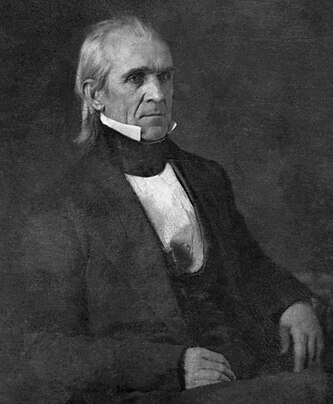
About James K. Polk
James Knox Polk (2 November 1795 - 15 June 1849) was the 11th president of the United States (1845–49). A Democrat, Polk served as the 13th speaker of the House of Representatives (1835–39) — the only president to have served as House speaker — and governor of Tennessee (1839–41). Polk was the surprise (dark horse) candidate for president in 1844, defeating Henry Clay of the rival Whig Party by promising to annex Texas. Polk was a leader of Jacksonian Democracy during the Second Party System. His nickname was "Young Hickory" because of his close association with "Old Hickory", Andrew Jackson.
View all quotes →