James Burnham Quotes (1905-1987)
Philosopher, Activist, Politician

About James Burnham

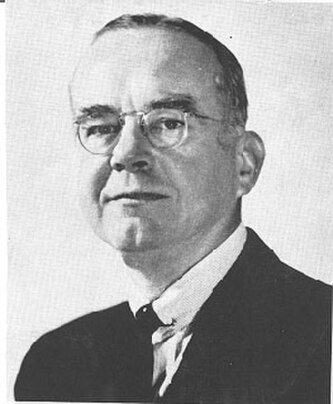
James Burnham (November 22, 1905 – July 28, 1987) was an American philosopher and political theorist. He chaired the New York University Department of Philosophy and became a radical activist in the 1930s and an important factional leader of the American Trotskyist movement. In later years Burnham rejected Marxism and became an even more influential theorist of the political right as a leader of the American conservative movement. His 1941 book The Managerial Revolution speculated on the future of capitalism. Burnham was an editor and a regular contributor to William F. Buckley's conservative magazine National Review on a variety of topics. He rejected containment of the Soviet Union and called for the rollback of communism worldwide.

Best James Burnham Quotes

Shortest
Earliest

Explore our curated collection of the most famous and impactful James Burnham quotes.

“To say that the ruling class is the managers is almost the same thing as to say that it is the state bureaucracy', he writes.”
James Burnham
“Ideologies capable of influencing and winning the acceptance of great masses of people are an indispensable verbal cement holding the fabric of any given type of society together.”
“The Russian revolution was not a socialist revolution... but a managerial revolution... Today Russia is the nation which has, in its structural aspects, advanced furthest along the managerial road.”
James Burnham
“There is no one force, no group, and no class that is the preserver of liberty. Liberty is preserved by those who are against the existing chief power. Oppositions which do not express genuine social forces are as trivial, in relation to entrenched power, as the old court jesters.”
James Burnham
“We are now in a period of social transition, a period characterized, that is, by an unusually rapid rate of change of the most important economic, social, political, and cultural institutions of society. This transition is from the type of society which we have called capitalist or bourgeois to a type of society which we shall call managerial.”
James Burnham

What James Burnham Said About Others

Discover personal opinions James Burnham shared regarding contemporaries.

James Burnham on Leon Trotsky
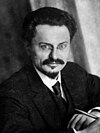
“According to Leon Trotsky, in an article published in late 1939, and to my personal knowledge based on a careful collation and analysis of statistics published in the Soviet press, the upper 11% or 12% of the Soviet population now receives approximately 50% of the national income. This differentiation is sharper than in the United States, where the upper 10% of the population receives approximately 35% of the national income.”
James Burnham

Quotes About James Burnham

Gain deeper perspective through quotes about James Burnham from others.

George Orwell. "You on James Burnham

“Looking at the world as a whole, the drift for many decades has been not towards anarchy but towards the reimposition of slavery. We may be heading not for general breakdown but for an epoch as horribly stable as the slave empires of antiquity. James Burnham's theory has been much discussed, but few people have yet considered its ideological implications — that is, the kind of world-view, the kind of beliefs, and the social structure that would probably prevail in a state which was at once unconquerable and in a permanent state of "cold war" with its neighbors. Had the atomic bomb turned out to be something as cheap and easily manufactured as a bicycle or an alarm clock, it might well have plunged us back into barbarism, but it might, on the other hand, have meant the end of national sovereignty and of the highly-centralised police state. If, as seems to be the case, it is a rare and costly object as difficult to produce as a battleship, it is likelier to put an end to large-scale wars at the cost of prolonging indefinitely a "peace that is no peace."”

Alan Brinkley on James Burnham

“The publication of two books … helped to galvanize the concerns that were beginning to emerge among intellectuals (and many others) about the implications of totalitarianism. One was James Burnham's The Managerial Revolution … [A second] Friedrich A. Hayek's The Road to Serfdom... was far more controversial — and influential. Even more than Burnham, Hayek forced into public discourse the question of the compatibility of democracy and statism. And unlike Burnham, he made no pretense of neutrality about the phenomena he described. ...In responding to Burnham and Hayek... liberals were in fact responding to a powerful strain of Jeffersonian anti-statism in American political culture... The result was a subtle but important shift in liberal thinking.”

Daniel Kelly on James Burnham

“It is tempting to write off Burnham’s Trotskyist phase as wasted time, a six-year detour into the sterile world of left-wing sects. But this judgment would be wrong... [because] the involvement prepared him for what would be his real career.”

About James Burnham

James Burnham (November 22, 1905 – July 28, 1987) was an American philosopher and political theorist. He chaired the New York University Department of Philosophy and became a radical activist in the 1930s and an important factional leader of the American Trotskyist movement. In later years Burnham rejected Marxism and became an even more influential theorist of the political right as a leader of the American conservative movement. His 1941 book The Managerial Revolution speculated on the future of capitalism. Burnham was an editor and a regular contributor to William F. Buckley's conservative magazine National Review on a variety of topics. He rejected containment of the Soviet Union and called for the rollback of communism worldwide.