Link Copied!
J. J. C. Smart Quotes (1920-2012)
Philosopher


About J. J. C. Smart
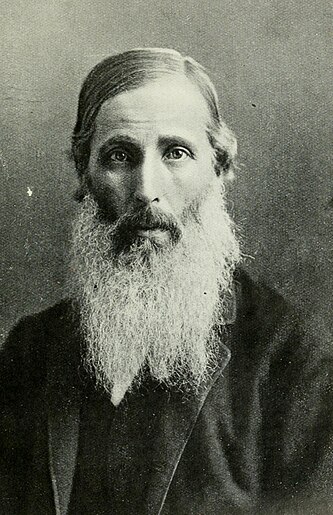
J. J. C. Smart (full name, John Jamieson Carswell "Jack" Smart; 16 September 1920 – 6 October 2012) was a British-Australian philosopher and Emeritus Professor at the Australian National University. He specialized in metaphysics, philosophy of science, philosophy of mind, philosophy of religion, and political philosophy.
Best J. J. C. Smart Quotes
Shortest
Earliest
Explore our curated collection of the most famous and impactful J. J. C. Smart quotes.
“The sentiment to which [the utilitarian] appeals is generalized benevolence, that is, the disposition to seek happiness, or...good consequences, for all mankind, or perhaps for all sentient beings.”

“The reason why there are hardly ever completely knock-down arguments, except between very like minded philosophers, is that philosophers, unlike chemists or geologists, are licensed to question everything, including methodology.”

“[A] purely hedonistic utilitarian, like Bentham, might agree with Mill in preferring the experiences of discontented philosophers to those of contented fools. His preference for the philosopher’s state of mind, however, would not be an intrinsic one. He would say that the discontented philosopher is a useful agent in society and that the existence of Socrates is responsible for an improvement in the lot of humanity generally.”
“[I]f it is rational for me to choose the pain of a visit to the dentist in order to prevent the pain of a toothache, why is it not rational of me to choose a pain of Jones, similar to that of my visit to the dentist, if that is the only way in which I can prevent a pain, equal to that of my toothache, for Robinson? Such situations continually occur in war, in mining, and in the fight against disease, when we may often find ourselves in the position of having in the general interest to inflict suffering on good and happy men.”

“Nor is this utilitarian doctrine incompatible...with a recognition of the importance of warm and spontaneous expressions of emotion. Consider a case in which a man sees that his wife is tired, and simply from a spontaneous feeling of affection for her he offers to wash the dishes. Does utilitarianism imply that he should have stopped to calculate the various consequences of his different possible courses of action? Certainly not. This would make married life a misery and the utilitarian knows very well as a rule of thumb that on occasions of this sort it is best to act spontaneously and without calculation.”
“I regard Peter as one of the great moralists, because I suspect that more than anyone he has helped to change the attitudes of very many people to the sufferings of animals. Peter is a utilitarian in normative ethics, and a humane attitude to animals is a natural corollary of utilitarianism. Utilitarian concern for animals goes back to Bentham, who, presumably alluding to the Kantians, said that the question was not whether animals can reason, but whether they can suffer.”

“Another type of ultimate disagreement between utilitarians, whether hedonistic or ideal, can arise over whether we should try to maximize the average happiness of human beings...or whether we should try to maximize the total happiness or goodness...Would you be quite indifferent between (a) a universe containing only one million happy sentient beings, all equally happy, and (b) a universe containing two million happy beings, each neither more nor less happy than any in the first universe? Or would you, as a humane and sympathetic person, give a preference to the second universe? I myself cannot help feeling a preference for the second universe.”

“Certainly there would be no future suffering on earth if all life on earth ceased. But most people seem glad that they were born: we do not usually think of present people (and animals) that the pain in their lives outweighs their pleasures...There have been great advances in the human condition due to science: recollect the horrors of childbirth, surgical operations, even of having a tooth out, a hundred years ago. If the human race is not extinguished there may be cures of cancer, senility, and other evils, so that happiness may outweigh unhappiness in the case of more and more individuals. Perhaps our far superior descendants of a million years hence (if they exist) will be possessed of a felicity unimaginable to us.”

“The utilitarian’s ultimate moral principle...expresses the sentiment not of altruism but of benevolence, the agent counting himself neither more nor less than any other person. Pure altruism cannot be made the basis of a universal moral discussion because it might lead different people to different and perhaps incompatible courses of action, even though the circumstances were identical. When two men each try to let the other through a door first a deadlock results...Of course we often tend to praise and honour altruism even more than generalized benevolence. This is because people too often err on the side of selfishness, and so altruism is a fault on the right side. If we can make a man try to be an altruist he may succeed as far as acquiring a generalized benevolence.”

“Normally the utilitarian is able to assume that the remote effects of his actions tend rapidly to zero...It seems plausible that the long-term probable benefits and costs of his alternative actions are likely to be negligible or cancel one another out.
An obviously important case in which, if he were a utilitarian, a person would have to consider effects into the far future, perhaps millions of years, would be that of a statesman who was contemplating engaging in nuclear warfare, if there were some probability, even a small one, that this war might end in the destruction of the entire human race. (Even a war less drastic than this might have important consequences into the fairly far future, say hundreds of years.) Similar long term catastrophic consequences must be envisaged in planning flight to other planets, if there is any probability, even quite a small one, that these planets possess viruses or bacteria, to which terrestrial organisms would have no immunity.”
An obviously important case in which, if he were a utilitarian, a person would have to consider effects into the far future, perhaps millions of years, would be that of a statesman who was contemplating engaging in nuclear warfare, if there were some probability, even a small one, that this war might end in the destruction of the entire human race. (Even a war less drastic than this might have important consequences into the fairly far future, say hundreds of years.) Similar long term catastrophic consequences must be envisaged in planning flight to other planets, if there is any probability, even quite a small one, that these planets possess viruses or bacteria, to which terrestrial organisms would have no immunity.”

“I want to illustrate the relevance of metaphysics to ethics by reference to what is the greatest moral problem that has ever faced the human race: the question of nuclear war...the threat of nuclear war makes us envisage macro effects (effects on all people and the whole earth): the end of the human race, perhaps also of mammalian life itself, and the end of the prospect of humans evolving into yet higher and more wonderful forms of life...Those who comfort themselves with the thought that mutual deterrence has kept the peace for thirty years forget the importance of low probabilities in the macro context. Indeed what does it matter, from the perspective of possible millions of years of future evolution, that the final catastrophe should merely be postponed for (say) a couple of hundred years? Postponing is only of great value if it is used as a breathing space in which ways are found to avert the final disaster. And even a small probability that we shall not have this breathing space will yield negative expected utility of macro dimensions.”

J. J. C. Smart Quotes by Topic
Find exactly what you are looking for by browsing this categorized list of J. J. C. Smart quotes by topic.
J. J. C. Smart on Utilitarianism 3 quotes
“The sentiment to which [the utilitarian] appeals is generalized benevolence, that is, the disposition to seek happiness, or...good consequences, for all mankind, or perhaps for all sentient beings.”
J. J. C. Smart on Existence of God

J. J. C. Smart on Population ethics
“Another type of ultimate disagreement between utilitarians, whether hedonistic or ideal, can arise over whether we should try to maximize the average happiness of human beings...or whether we should try to maximize the total happiness or goodness...Would you be quite indifferent between (a) a universe containing only one million happy sentient beings, all equally happy, and (b) a universe containing two million happy beings, each neither more nor less happy than any in the first universe? Or would you, as a humane and sympathetic person, give a preference to the second universe? I myself cannot help feeling a preference for the second universe.”

What J. J. C. Smart Said About Others
Discover personal opinions J. J. C. Smart shared regarding contemporaries.
J. J. C. Smart on Peter Singer
“I regard Peter as one of the great moralists, because I suspect that more than anyone he has helped to change the attitudes of very many people to the sufferings of animals. Peter is a utilitarian in normative ethics, and a humane attitude to animals is a natural corollary of utilitarianism. Utilitarian concern for animals goes back to Bentham, who, presumably alluding to the Kantians, said that the question was not whether animals can reason, but whether they can suffer.”

Quotes About J. J. C. Smart
Gain deeper perspective through quotes about J. J. C. Smart from others.
Monima Chadha on J. J. C. Smart
“He was a philosopher with a wide range of interests and made distinctive contributions to the study of ethics, philosophy of mind, metaphysics and philosophy of religion....Jack became a committed Quinean naturalist believing that reality is wholly natural: no God, no soul, no mysterious singularities, not even meanings or propositions. For Jack philosophy and science have the same subject matter, even though the methods are different.”
Jane O'Grady on J. J. C. Smart 3 quotes
“His aim throughout was to produce a comprehensive worldview that accommodated both common-sense and scientific stringency. In moral philosophy, he applied his swashbuckling approach to bringing utilitarianism – the theory that goodness consists of promoting the greatest overall happiness – back to centre stage after it had been ignored for more than 50 years...he embraced its then-unpopular extreme form – act utilitarianism. Its milder version, rule utilitarianism, was "superstitious rule worship", he said, and negated precisely the deft adaptability to the actual situation that was utilitarianism's whole point.”
About J. J. C. Smart
J. J. C. Smart (full name, John Jamieson Carswell "Jack" Smart; 16 September 1920 – 6 October 2012) was a British-Australian philosopher and Emeritus Professor at the Australian National University. He specialized in metaphysics, philosophy of science, philosophy of mind, philosophy of religion, and political philosophy.