The temptation to neglect good ordinary writers, and thereby to exaggerate the importance of the unusual, is one that, even in the moment of deploring it, is hardly to be resisted. Mr. Walpole happens to be a popular as well as a good writer. A conscientious craftsman, he has produced book after book, every one of which has been in some degree robust, charming, and eminently sensible. His work exhibits, moreover, surprising versatility.
What It Means
This is a placeholder explanation generated by the low-overhead model. It interprets "The temptation to neglect good ordinary writers, and thereby to exaggerate the importance of the unusual, is one that, even in the moment of deploring it, is hardly to be resisted. Mr. Walpole happens to be a popular as well as a good writer. A conscientious craftsman, he has produced book after book, every one of which has been in some degree robust, charming, and eminently sensible. His work exhibits, moreover, surprising versatility." in the context of "Gerald Bullett, Modern English Fiction: A Personal View, London, Herbert Jenkins, 1926. Quoted in R. Z. Temple and M. Tucker, A Library of Literary Criticism. New York, Frederick Ungar, 1966 (p. 284)." to mean that wisdom is timeless.

Tags
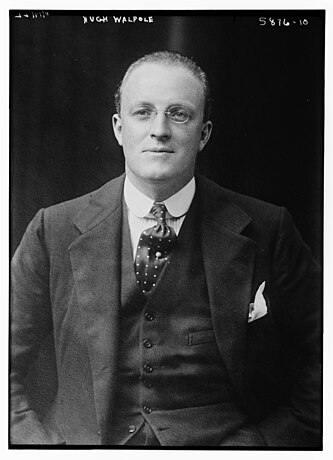
About Hugh Walpole