Link Copied!
Hugh Walpole Quotes (1884-1941)
Author, Novelist
About Hugh Walpole
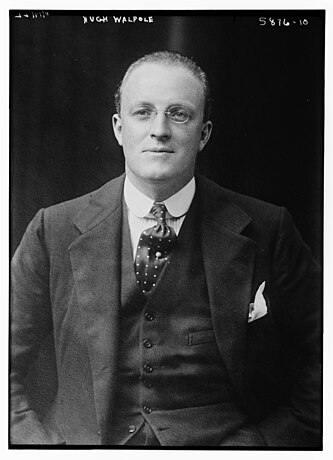
Sir Hugh Seymour Walpole (13 March 1884 – 1 June 1941) was an English novelist. He was a best-selling author in the 1920s and 1930s, but has fallen into neglect since.
Best Hugh Walpole Quotes
Shortest
Earliest
Explore our curated collection of the most famous and impactful Hugh Walpole quotes.
“The whole secret of life is to be interested in one thing profoundly and a thousand other things as well.”
“Over this country, when the giant Eagle flings the shadow of his wing, the land is darkened. So compact is it that the wing covers all its extent in one pause of the flight. The sea breaks on the pale line of the shore; to the Eagle's proud glance waves run in to the foot of the hills that are like rocks planted in green water.”

“The most wonderful of all things in life, I believe, is the discovery of another human being with whom one's relationship has a glowing depth, beauty, and joy as the years increase. This inner progressiveness of love between two human beings is a most marvelous thing, it cannot be found by looking for it or by passionately wishing for it. It is a sort of Divine accident.”
Hugh Walpole Quotes by Topic
Find exactly what you are looking for by browsing this categorized list of Hugh Walpole quotes by topic.
Hugh Walpole on Love
“The most wonderful of all things in life, I believe, is the discovery of another human being with whom one's relationship has a glowing depth, beauty, and joy as the years increase. This inner progressiveness of love between two human beings is a most marvelous thing, it cannot be found by looking for it or by passionately wishing for it. It is a sort of Divine accident.”

What Hugh Walpole Said About Others
Discover personal opinions Hugh Walpole shared regarding contemporaries.
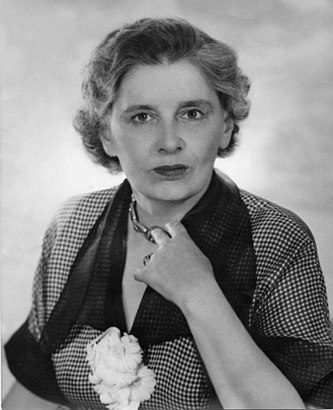
Hugh Walpole on Rebecca West
“It is not an exaggeration if one claims that The Strange Necessity and The Common Reader of Virginia Woolf are the two finest volumes of literary criticism written by women in the English language.”

Quotes About Hugh Walpole
Gain deeper perspective through quotes about Hugh Walpole from others.
Gerald Bullett on Hugh Walpole
“The temptation to neglect good ordinary writers, and thereby to exaggerate the importance of the unusual, is one that, even in the moment of deploring it, is hardly to be resisted. Mr. Walpole happens to be a popular as well as a good writer. A conscientious craftsman, he has produced book after book, every one of which has been in some degree robust, charming, and eminently sensible. His work exhibits, moreover, surprising versatility.”

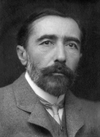
Joseph Conrad on Hugh Walpole
“Of the general soundness of Mr. Walpole's work I am firmly convinced. He is distinctly a man of his time. We see him grappling with the truth of things spiritual and material with his usual earnestness, and we can discern the characteristics of this acute and sympathetic explorer of human nature.”
Peter Hitchens on Hugh Walpole
“Henry James and John Buchan praised him. Joseph Conrad, T S Eliot and Virginia Woolf were kind about him. What's more, his books sold enormously well on both sides of the Atlantic, he was knighted, and he became very rich ... Yet now he has vanished completely, his books not even to be found on the back shelves of most second hand shops, dismissed as "unreadable".”

Frank Swinnerton on Hugh Walpole
“He [Walpole] has done more than any man alive to make modern English writers, some of them struggling, some active and unsparing rivals of his own, familiar to a wider public, both in the United States and in England.”
Virginia Woolf on Hugh Walpole
“Mr Walpole’s gift is neither for passion nor for satire, but he possesses an urbane observant humour. He has a true insight into the nature of domesticity...These are the small things in which Mr Walpole is invariably happy, and in our view it is no disparagement to a writer to say that his gift is for the small things rather than for the large.”

About Hugh Walpole
Sir Hugh Seymour Walpole (13 March 1884 – 1 June 1941) was an English novelist. He was a best-selling author in the 1920s and 1930s, but has fallen into neglect since.