As a boy he won the appreciation of his parents and teachers by his high moral character. Already his pursuits showed his natural inclinations. While still attending school he worked of his own accord at the bench and lathe, on Sundays he attended the Trade School to practise geometrical drawing, and with the simplest appliances he constructed serviceable optical and mechanical instruments. ...It is in young men of unusual capacity that one most frequently observes [his] sort of timid modesty. ...their strength must be tried by some practical test before they can secure the self-reliance requisite for their difficult task. And even in later years men of great ability are the less content with their own achievements the higher their capacity and ideals. The most gifted attain the highest and truest success because they are most keenly alive to the presence of imperfection and most unwearied in removing it. ...[A]s he grew in knowledge he grew in the conviction that only in scientific work could he find enduring satisfaction.
What It Means
This is a placeholder explanation generated by the low-overhead model. It interprets "As a boy he won the appreciation of his parents and teachers by his high moral character. Already his pursuits showed his natural inclinations. While still attending school he worked of his own accord at the bench and lathe, on Sundays he attended the Trade School to practise geometrical drawing, and with the simplest appliances he constructed serviceable optical and mechanical instruments. ...It is in young men of unusual capacity that one most frequently observes [his] sort of timid modesty. ...their strength must be tried by some practical test before they can secure the self-reliance requisite for their difficult task. And even in later years men of great ability are the less content with their own achievements the higher their capacity and ideals. The most gifted attain the highest and truest success because they are most keenly alive to the presence of imperfection and most unwearied in removing it. ...[A]s he grew in knowledge he grew in the conviction that only in scientific work could he find enduring satisfaction." in the context of "Hermann von Helmholtz, Introduction to Hertz, The Principles of Mechanics Presented in a New Form (1899) Tr. D. E. Jones, J. T. Walley, pp. viii-ix." to mean that wisdom is timeless.
Tags
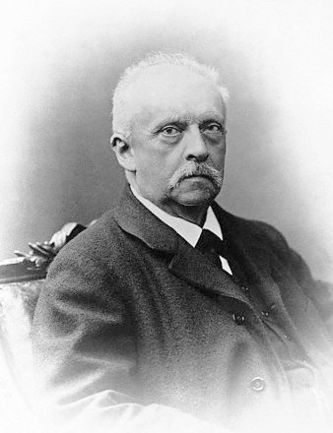
About Hermann von Helmholtz