Link Copied!
Herman Melville Quotes (1819-1891)
Writer, Poet, Novelist



















About Herman Melville
Herman Melville (1 August 1819 – 28 September 1891) was an American novelist, essayist, short story writer, and poet of the American Renaissance period.
Best Herman Melville Quotes
Shortest
Earliest
Explore our curated collection of the most famous and impactful Herman Melville quotes.

“Patriotism is not baseness, neither is it inhumanity.”

“Nothing so aggravates an earnest person as a passive resistance.”
“"I would prefer not to." (A line spoken repeatedly by Bartleby).”
“A smile is the chosen vehicle of all ambiguities.”

“"At present I would prefer not to be a little reasonable," was his mildly cadaverous reply.”


“Amity itself can only be maintained by reciprocal respect, and true friends are punctilious equals.”
“Zeal is not of necessity religion, neither is it always of the same essence with poetry or patriotism.”
“Truth is ever incoherent, and when the big hearts strike together, the concussion is a little stunning.”

“Genius, all over the world, stands hand in hand, and one shock of recognition runs the whole circle round.”
“At the height of their madness
The night winds pause,
Recollecting themselves;
But no lull in these wars.”
The night winds pause,
Recollecting themselves;
But no lull in these wars.”
“Youth is the time when hearts are large,
And stirring wars
Appeal to the spirit which appeals in turn
To the blade it draws.”
And stirring wars
Appeal to the spirit which appeals in turn
To the blade it draws.”
“At the penultimate moment, his words, his only ones, words wholly unobstructed in the utterance were these — "God bless Captain Vere!"”

Herman Melville Quotes by Topic
Find exactly what you are looking for by browsing this categorized list of Herman Melville quotes by topic.
Herman Melville on Whales 6 quotes
“The skeleton of the whale furnishes but little clue to the shape of his fully invested body.”

Herman Melville on Pauperism 2 quotes
“In this world, shipmates, sin that pays its way can travel freely, and without passport; whereas Virtue, if a pauper, is stopped at all frontiers.”

Herman Melville on Doom
Herman Melville on Originality
“It is better to fail in originality, than to succeed in imitation.”

Herman Melville on Anger
Herman Melville on Book of Jonah
“And here, shipmates, is true and faithful repentance; not clamorous for pardon, but grateful for punishment.”
Herman Melville on Jackal
Herman Melville on Misery
Herman Melville on Oceans
“This mysterious divine Pacific zones the world's whole bulk about; makes all coasts one bay to it; seems the tide-beating heart of earth.”

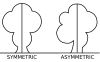
Herman Melville on Symmetry
“The symmetry of form attainable in pure fiction can not so readily be achieved in a narration essentially having less to do with fable than ...”
What Herman Melville Said About Others
Discover personal opinions Herman Melville shared regarding contemporaries.
Herman Melville on Nathaniel Hawthorne 5 quotes
“I found that but to glean after this man, is better than to be in at the harvest of others.”

Herman Melville on Luís de Camões 4 quotes
View all 4 quotes on Luís de Camões →Herman Melville on William Shakespeare
“Dolt & ass that I am I have lived more than 29 years, & until a few days ago, never made close acquaintance with the divine William. Ah, he's full of sermons-on-the-mount, and gentle, aye, almost as Jesus. I take such men to be inspired. I fancy that this moment Shakspeare in heaven ranks with Gabriel, Raphael and Michael. And if another Messiah ever comes twill be in Shakespeare's person.”

Herman Melville on William Julius Mickle
“'But how we boom through the billows!' cried Jack, gazing over the top-rail; then, flinging forth his arm, recited:' "Aslope, and gliding on the leeward side, The bounding vessel cuts the roaring tide."Camoens! White Jacket, Camoens! Did you ever read him? The Lusiad, I mean? It's the man-of-war epic of the world, my lad. Give me Gama for a commodore, say I—noble Gama! And Mickle, White Jacket, did you ever read of him? William Julius Mickle? Camoens's translator? A disappointed man, though, White Jacket. Besides his version of The Lusiad, he wrote many forgotten things. Did you ever see his ballad of "Cumnor Hall"?—No?—Why, it gave Sir Walter Scott the hint of Kenilworth. My father knew Mickle when he went to sea on board the old Romney man-of-war...'”

Quotes About Herman Melville
Gain deeper perspective through quotes about Herman Melville from others.
Hannah Arendt on Herman Melville
“under certain circumstances violence-acting without argument or speech and without counting the consequences-is the only way to set the scales of justice right again. (Billy Budd is the classical example.) In this sense, rage and the violence that sometimes-not always-goes with it belong among the "natural" human emotions, and to cure man of them would mean nothing less than to dehumanize or emasculate him. That such acts, in which men take the law into their own hands for justice's sake, are in conflict with the constitutions of civilized communities is undeniable; but their antipolitical character, so manifest in Melville's great story, does not mean that they are inhuman or "merely" emotional.”

Margaret Atwood on Herman Melville
“Writing is also a profession, and, at its best, an honourable one. It has been made honourable by those who have already been members of it. Whether you like it or not, every time you set pen to paper you’re staring at the same blank space that confronted Milton, Melville, Emily Bronte, Dostoevsky and George Eliot, George Orwell and William Faulkner and Virginia Woolf and William Carlos Williams, not to mention the latest hero, Gabriel Garcia Marquez.”

Edward Bok on Herman Melville
“Forty-four years ago, when his most famous tale, Typee, appeared, there was not a better known author than he, and he commanded his own prices. Publishers sought him, and editors considered themselves fortunate to secure his name as a literary star. And to-day? Busy New York has no idea he is even alive, and one of the best-informed literary men in this country laughed recently at my statement that Herman Melville was his neighbor by only two city blocks. "Nonsense," said he. "Why, Melville is dead these many years!" Talk about literary fame? There's a sample of it!”
Roxanne Dunbar-Ortiz on Herman Melville 2 quotes
“Most of the books published during the five-year period leading up to, during, and after the invasion of Mexico were war-mongering tracts. Euro-American settlers were nearly all literate, and this was the period of the foundational "American literature," with writers James Fenimore Cooper, Walt Whitman, Edgar Allan Poe, John Greenleaf Whittier, Henry Wadsworth Longfellow, James Russell Lowell, Ralph Waldo Emerson, Henry David Thoreau, Nathaniel Hawthorne, and Herman Melville all active-each of whom remains read, revered, and studied in the twenty-first century, as national and nationalist writers, not as colonialists. Although some of the writers, like Melville and Longfellow, paid little attention to the war, most of the others either fiercely supported it or opposed it.”

Marlene Wagman-Geller on Herman Melville
“On one meeting Melville showed Hawthorne a draft of Moby-Dick. Hawthorne, himself currently completing The Scarlet Letter, persuaded his friend to rework it from a tale of the high seas to an epic allegory that told not only a tale, but probed the defeats and triumphs of the human spirit. Melville delayed his submission to his publishers until it could meet Hawthorne's exacting standards. When it did, Hawthorne at last pronounced that the tragic tale was "cooked in hellfire." It was the praise Melville had sought.”
Nathaniel Hawthorne on Herman Melville 2 quotes
“Melville and I had a talk about time and eternity, things of this world and next, and books, and publishers, and all possible and impossible matters, that lasted pretty deep into the night.”
Sophia Hawthorne on Herman Melville
“A man with true, warm heart, and a soul and an intellect, — with life to his fingerprints; earnest, sincere, and reverent; very tender and modest. And I am not sure that he is not a very great man. He has very keen perceptive power; but what astonishes me is, that his eyes are not large and deep. He seems to me to see everything accurately; and how he can do so with his small eyes, I cannot tell. They are not keen eyes, either, but quite undistinguished in any way. His nose is straight and handsome, his mouth expressive of sensibility and emotion. He is tall and erect, with an air free, brave, and manly. When conversing, he is full of gesture and force, and loses himself in his subject. There is no grace or polish. Once in a while, his animation gives place to a singularly quiet expression, out of those eyes to which I have objected; an indrawn, dim look, but which at the same time makes you feel that he is at that instant taking deepest note of what is before him. It is a strange, lazy glance, but with a power in it quite unique. It does not seem to penetrate through you, but to take you into itself.”
Ken Kesey on Herman Melville
“Nobody had more class than Melville. To do what he did in Moby-Dick, to tell a story and to risk putting so much material into it. If you could weigh a book, I don’t know any book that would be more full. It’s more full than War and Peace or The Brothers Karamazov. It has Saint Elmo’s fire, and great whales, and grand arguments between heroes, and secret passions. It risks wandering far, far out into the globe. Melville took on the whole world, saw it all in a vision, and risked everything in prose that sings. You have a sense from the very beginning that Melville had a vision in his mind of what this book was going to look like, and he trusted himself to follow it through all the way.”

Misattributed Quotes
Quotes mistakenly credited to Herman Melville
“We cannot live only for ourselves. A thousand fibers connect us with our fellow men; and along these fibers, as sympathetic threads, our actions run as causes, and they come back to us as effects.”
About Herman Melville
Herman Melville (1 August 1819 – 28 September 1891) was an American novelist, essayist, short story writer, and poet of the American Renaissance period.