Link Copied!
Heraclitus Quotes (-535--475)
Philosopher
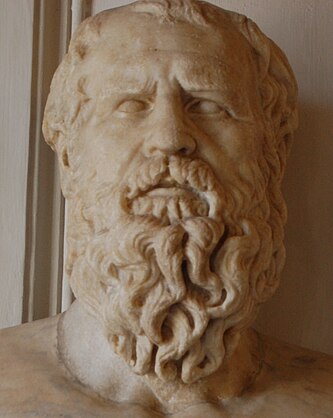






About Heraclitus
Heraclitus of Ephesus (Ἡράκλειτος, Herakleitos; c. 535 BC – 475 BC) was a Greek philosopher, known for his doctrine of change being central to the universe, and for establishing the term Logos (λόγος) in Western philosophy as meaning both the source and fundamental order of the Cosmos.
Best Heraclitus Quotes
Shortest
Earliest
Explore our curated collection of the most famous and impactful Heraclitus quotes.
“B49a. potamois tois autois …”
“The many are mean; only the few are noble.”

“Ten thousand do not turn the scale against a single man of worth.”
“Into the same rivers we step and do not step, we are and are not. (Heraclitus Homericus)”

“Greater fates gain greater rewards
• Alternative translation: Big results require big ambitions.”
• Alternative translation: Big results require big ambitions.”
“πολυμαθίη νόον οὐ διδάσκει
• Much learning does not teach understanding.”
• Much learning does not teach understanding.”

“ὁδὸς ἄνω κάτω μία καὶ ὡυτή
• The road up and the road down is one and the same.”
• The road up and the road down is one and the same.”
“Although the Law of Reason is common, the majority of people live as though they had an understanding of their own.”
“νέκυες γὰρ κοπρίων ἐκβλητότεροι
• Corpses are more fit to be cast out than dung.”
• Corpses are more fit to be cast out than dung.”
“πάντα χωρεῖ καὶ οὐδὲν μένει
• Everything changes and nothing stands still.”
• Everything changes and nothing stands still.”

“ποταμῷ γὰρ οὐκ ἔστιν ἐμβῆναι δὶς τῷ αὐτῷ
• You cannot step twice into the same river.”
• You cannot step twice into the same river.”
“τὰ ὄντα ἰέναι τε πάντα καὶ μένειν οὐδέν
• All entities move and nothing remains still.”
• All entities move and nothing remains still.”

“δὶς ἐς τὸν αὐτὸν ποταμὸν οὐκ ἂν ἐμβαίης.
• You could not step twice into the same river.”
• You could not step twice into the same river.”

“μάχεσθαι χρὴ τὸν δῆμον ὑπὲρ τοῦ νόμου ὅκωσπερ τείχεος
• The people must fight for its law as for its walls.”
• The people must fight for its law as for its walls.”
“ἐὰν μὴ ἔλπηται ἀνέλπιστον, οὐκ ἐξευρήσει
• He who does not expect will not find out the unexpected, for it is trackless and unexplored.”
• He who does not expect will not find out the unexpected, for it is trackless and unexplored.”



“ἀμαθίην κρύπτειν ἄμεινον
• It is better to conceal ignorance than to expose it.
• Variant translation: Hide our ignorance as we will, an evening of wine soon reveals it.”
• It is better to conceal ignorance than to expose it.
• Variant translation: Hide our ignorance as we will, an evening of wine soon reveals it.”

Heraclitus Quotes by Topic
Find exactly what you are looking for by browsing this categorized list of Heraclitus quotes by topic.
Heraclitus on Change 2 quotes
View all 2 quotes on Change →Heraclitus on Rivers
Heraclitus on Commons
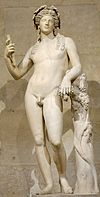
Heraclitus on Dionysus
Heraclitus on Masses
“For what sense or understanding have they? They follow minstrels and take the multitude for a teacher, not knowing that many are bad and few good. For the best men choose one thing above all—immortal glory among mortals; but the masses stuff themselves like cattle.”

Heraclitus on Ecce Homo (book)
“Heraklit, in dessen Nähe überhaupt mir wärmer, mir wohler zu Muthe wird als irgendwo sonst. Die Bejahung des Vergehens und Vernichtens, das Entscheidende in einer dionysischen Philosophie, das Jasagen zu Gegensatz und Krieg, das Werden, mit radikaler Ablehnung auch selbst des Begriffs „Sein”—darin muss ich unter allen Umständen das mir Verwandteste anerkennen, was bisher gedacht worden ist.”
What Heraclitus Said About Others
Discover personal opinions Heraclitus shared regarding contemporaries.
Quotes About Heraclitus
Gain deeper perspective through quotes about Heraclitus from others.
H.P. Blavatsky on Heraclitus
“It was not Zeno, the founder of the Stoics, alone, who taught that the Universe evolves, and its primary substance is transformed from the state of fire into that of air, then into that of water, etc. Heraclitus of Ephesus maintained that the one principle that underlies all phenomena in Nature is fire. The intelligence that moves the Universe is fire, and fire is intelligence. And while Anaximenes said the same of air, and Thales of Miletus (600 years b.c.) of water, the Esoteric Doctrine reconciles all these philosophers, by showing that though each was right, the system of none was complete.”
Werner Heisenberg on Heraclitus
“In... Heraclitus... Becoming occupies the foremost place. He regarded that which moves, the fire, as the basic element. The difficulty, to reconcile the... one fundamental principle with the infinite variety of phenomena, is solved... by recognizing... strife of... opposites is... a kind of harmony. ...[T]he world is ...one and many ..."the opposite tension" of ...opposites ...constitutes the unity of the One. He says: "...war is common to all and strife is justice ...all things come into being and pass away through strife." ...[T]hat infinite and eternal undifferentiated Being ...cannot ...explain the infinite variety of things. This leads to the antithesis of Being and Becoming and ...to the solution of Heraclitus ...change ...is the fundamental principle; the "imperishable change, that renovates the world," as the poets have called it. But ...change ...is not a material cause and therefore is represented ...by the fire ...both matter and a moving force. ...[P]hysics is ...extremely near to ...Heraclitus ...[i]f we replace ..."fire" by ..."energy" ...Energy is a substance, since its total ...does not change, and ...elementary particles can ...be made from this ...Energy may be called the fundamental cause for all change in the world. ...Energy is ...that which moves; it may be called the primary cause of all change, and ...can be transformed into matter or heat or light. The strife between opposites in the philosophy of Heraclitus can be found in the strife between two different forms of energy.”

Georg Wilhelm Friedrich Hegel on Heraclitus
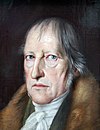
“[With Heraclitus] we see land; there is no proposition of Heraclitus which I have not adopted in my Logic.”
Ross Macdonald on Heraclitus
“I walked on to the next corner, sat on a bench at a bus stop, and read in my new book about Heraclitus. All things flow like a river, he said; nothing abides. Parmenides, on the other hand, believed that nothing ever changed, it only seemed so. Both views appealed to me.”
Max Müller on Heraclitus 2 quotes
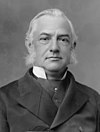
“In other countries, too, the idea of a creation was sternly rejected, as, for instance, by Heraclitus, who declares that no god and no man made this world, but that it was always and is and will be, an eternal fire, assuming forms and destroying them. And this protest, it should be remembered, came from a man who was able to say with equal honesty that 'God is day and night, winter and summer, war and peace, satiety and hunger—and that he is called according to the pleasure of every one.'”
George Pólya on Heraclitus
“If the flow is steady, the field velocity vectors and the system of streamlines remain unaffected by the progress of time. Looking at the vector field and its streamlines we do not notice any change. Yet if we could distinguish the different particles of fluid from each other, we could observe incessant change... We have here two aspects of a steady flow, one of unchanging persistence, the other of incessant change. ...Heraclitus was called the "Dark Philosopher"; his views of human affairs were sombre and his sayings obscure. ... "You cannot look twice at the same river; for fresh waters are ever flowing in." "We look and do not look at the same rivers; we are, and we are not." What is the intended meaning of these sentences? I do not venture to find out. Yet I think that the originator of these senteces came pretty close to formulating the concept "steady flow of a fluid."”

Albert Schwegler on Heraclitus
“When... Heraclitus names the world an ever-living fire that... extinguishes itself and again kindles itself, when... all is exchanged for fire and fire for all... he can only understand by this that fire, this restless, all-consuming, all-transmuting, and equally (in heat) all-vivifying element, represents the constant force of this eternal alteration and transformation, the notion of life, in the most vivid and energetic manner. ...the means of which the power of motion that is precedent to all matter avails itself for the production of the living process of things. Heraclitus... explains the multiplicity of things... [fire] condenses itself into material elements, first air, then water, then earth. ...These two processes of extinction and ignition... alternate... in perpetual rotation with each other and... in stated periods the world resolves itself into the primal fire, in order to re-create itself out of it again. ...[F]ire is to him... the principle of movement, of physical as of spiritual vitality; the soul itself is a fiery vapour; its power and perfection depend on its being pure from all grosser and duller elements.”
Socrates on Heraclitus
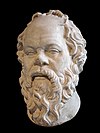
“The part I understand is excellent, and so too is, I dare say, the part I do not understand; but it needs a Delian diver to get to the bottom of it.”
Tatian on Heraclitus
“I cannot approve of Heraclitus, who, being self-taught and arrogant, said, "I have explored myself." Nor can I praise him for hiding his poem in the temple of Artemis, in order that it might be published afterwards as a mystery; and those who take an interest in such things say that Euripides the tragic poet came there and read it, and, gradually learning it by heart, carefully handed down to posterity this darkness of Heraclitus.”

Stephen Toulmin on Heraclitus
“If neither sub-atomic particles nor organic species exemplify the 'permanent entities' of Greek metaphysics, what else in the real world does so? ...Two hundred years of historical research have had their effect. Whether we turn to social or intellectual history, evolutionary zoology, historical geology or astronomy—whether we consider explanatory theories or star-clusters, societies or cultures, languages or disciplines, organic species or the Earth itself—the verdict is not Parmenidean but Heraclitean. As we now understand it, nothing in the empirical world possesses the permanent unchanging identity which all Greek natural philosophers (the Epicureans apart) presupposed in the ultimate elements of Nature. So, if we... are to entertain metaphysical thoughts about the nature of things-in-general consistent with the rest of our late-twentieth-century ideas, we must explore the consequences of the modern, post-Darwinian or 'populational' approach, as applied not just to species, but to historical entities of all kinds. Confronted with the question, 'How do permanent entities preserve their identity through all their apparent changes?', we must simply deny the validity of the question itself. In its place, we must substitute the question, 'How do historical entities maintain their coherence and continuity, despite all the real changes they undergo?'”
Source on Heraclitus 80 quotes
“[L]ikely he was not a disciple of any one; but... he was acquainted both with the Milesian cosmology and with the poems of Xenophanes. He... knew something of the theories taught by Pythagoras (fr. 17).”
Disputed Quotes
Quotes attributed to Heraclitus that are questionable.
“I have sought for myself.”
“It pertains to all men to know themselves and to learn self-control.”
“Opposition brings concord. Out of discord comes the fairest harmony.”
Misattributed Quotes
Quotes mistakenly credited to Heraclitus
“Of Every One-Hundred Men, Ten shouldn't even be there, Eighty are nothing but targets, Nine are real fighters... We are lucky to have them... They make the battle. Ah but the One, One of them is a Warrior... and He will bring the others back.”
About Heraclitus
Heraclitus of Ephesus (Ἡράκλειτος, Herakleitos; c. 535 BC – 475 BC) was a Greek philosopher, known for his doctrine of change being central to the universe, and for establishing the term Logos (λόγος) in Western philosophy as meaning both the source and fundamental order of the Cosmos.