Link Copied!
Henry David Thoreau Quotes (1817-1862)
Philosopher, Poet
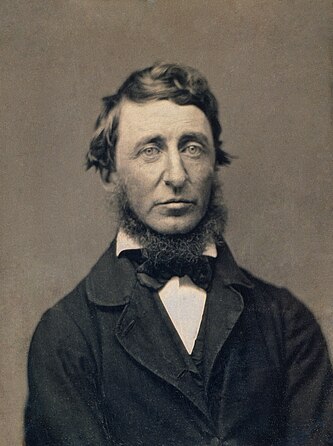


























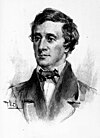































About Henry David Thoreau
Henry David Thoreau (12 July 1817 – 6 May 1862) was an American essayist, poet, philosopher, abolitionist, naturalist, tax resister, development critic, surveyor, and historian. A leading transcendentalist, Thoreau is best known for his book Walden, a reflection upon simple living in natural surroundings, and his essay Resistance to Civil Government (also known as Civil Disobedience), an argument for disobedience to an unjust state.
Best Henry David Thoreau Quotes
Shortest
Earliest
Explore our curated collection of the most famous and impactful Henry David Thoreau quotes.
“Enthusiasm is supernatural serenity.”


“The savage in man is never quite eradicated.”

“This world is but canvas to our imaginations.”




“The heavens are as deep as our aspirations are high.”


“The perception of beauty is a moral test.”


“Dreams are the touchstones of our characters.”

“The unconsciousness of man is the consciousness of God.”

Henry David Thoreau Quotes by Topic
Find exactly what you are looking for by browsing this categorized list of Henry David Thoreau quotes by topic.
Henry David Thoreau on Life 3 quotes
View all 3 quotes on Life →Henry David Thoreau on Freedom 3 quotes
View all 3 quotes on Freedom →Henry David Thoreau on Solitude 3 quotes
“I never found the companion that was so companionable as solitude.”

Henry David Thoreau on Poetry 3 quotes
“My life has been the poem I would have writ, But I could not both live and utter it.”

Henry David Thoreau on Work 3 quotes
“It is not enough to be industrious; so are the ants. What are you industrious about?”
Henry David Thoreau on Mountain 3 quotes
“You must ascend a mountain to learn your relation to matter, and so to your own body, for it is at home there, though you are not.”

Henry David Thoreau on Civil disobedience 3 quotes
“It is not desirable to cultivate a respect for the law, so much as for the right. The only obligation which I have a right to assume is to do at any time what I think right.”

Henry David Thoreau on Enlightenment (spiritual) 3 quotes
“There will never be a really free and enlightened State until the State comes to recognize the individual as a higher and independent power, from which all its own power and authority are derived, and treats him accordingly.”

Henry David Thoreau on Goodness 2 quotes
View all 2 quotes on Goodness →Henry David Thoreau on Wilderness 2 quotes
“In Wildness is the preservation of the world.”

Henry David Thoreau on Dreams 2 quotes
“Dreams are the touchstones of our characters.”
Henry David Thoreau on Wealth 2 quotes
View all 2 quotes on Wealth →What Henry David Thoreau Said About Others
Discover personal opinions Henry David Thoreau shared regarding contemporaries.
Henry David Thoreau on Adam and Eve
“Adam and Eve, according to the fable, wore the bower before other clothes. Man wanted a home, a place of warmth, or comfort, first of physical warmth, then the warmth of the affections.”

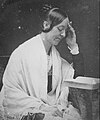
Henry David Thoreau on Margaret Fuller
“The ship struck at ten minutes after four A.M., and all hands, being mostly in their nightclothes, made haste to the forecastle, the water coming in at once. There they remained; the passengers in the forecastle, the crew above it, doing what they could. Every wave lifted the forecastle roof and washed over those within. The first man got ashore at nine; many from nine to noon. At flood-tide, about half past three o'clock, when the ship broke up entirely, they came out of the forecastle, and Margaret sat with her back to the foremast, with her hands on her knees, her husband and child already drowned. A great wave came and washed her aft. The steward had just before taken her child and started for shore. Both were drowned.”
Quotes About Henry David Thoreau
Gain deeper perspective through quotes about Henry David Thoreau from others.
Rachel Carson on Henry David Thoreau
“The tradition of John Burroughs, which you seek to keep alive through these awards, is a long and honorable one. It is a tradition that had its beginnings in even earlier writings. On the other side of the Atlantic it flowered most fully in the works of Richard Jefferies and W. H. Hudson; and in this country the pen of Thoreau - as that of John Burroughs himself-most truly represented the contemplative observer of the world about us. These four, I think, were the great masters. To those of us who have come later, there can scarcely be any greater honor than to be compared to one of them. Yet if we are true to the spirit of John Burroughs, or of Jefferies or Hudson or Thoreau, we are not imitators of them but-as they themselves were - we are pioneers in new areas of thought and knowledge. If we are true to them, we are the creators of a new type of literature as representative of our own day as was their own.”

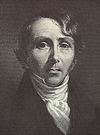
William Ellery Channing on Henry David Thoreau
“Thoreau believed that one of the arts of life was to make the most of it. He loved the multum in parvo, or pot-luck; to boil up the little into the big. Thus, he was in the habit of saying, — Give me healthy senses, let me be thoroughly alive, and breathe freely in the very flood-tide of the living world. But this should have availed him little, if he had not been at the same time copiously endowed with the power of recording what he imbibed. His senses truly lived twice.”
Robert Collyer on Henry David Thoreau
“His words also were as distinct and true to the ear as those of a great singer, and he had Tennyson's splendid gift in this, that he never went back on his tracks to pick up the fallen loops of a sentence as commonplace talkers do. He would hesitate for an instant now and then, waiting for the right word, or would pause with a pathetic patience to master the trouble in his chest, but when he was through the sentence was perfect and entire, lacking nothing, and the word was so purely one with the man that when I read his books now and then I do not hear my own voice within my reading but the voice I heard that day.”
J. Bradford DeLong on Henry David Thoreau
“For Thoreau, the fact that it took him a day to walk or ride into Boston was a benefit—part of living deliberately. But his was the point of view of a rich guy, or at least of a guy without a family to care for, and for whom Ralph Waldo Emerson's second wife, Lidian Jackson, was willing to bake pies.”

Roxanne Dunbar-Ortiz on Henry David Thoreau
“Most of the books published during the five-year period leading up to, during, and after the invasion of Mexico were war-mongering tracts. Euro-American settlers were nearly all literate, and this was the period of the foundational "American literature," with writers James Fenimore Cooper, Walt Whitman, Edgar Allan Poe, John Greenleaf Whittier, Henry Wadsworth Longfellow, James Russell Lowell, Ralph Waldo Emerson, Henry David Thoreau, Nathaniel Hawthorne, and Herman Melville all active-each of whom remains read, revered, and studied in the twenty-first century, as national and nationalist writers, not as colonialists. Although some of the writers, like Melville and Longfellow, paid little attention to the war, most of the others either fiercely supported it or opposed it...Opposition to the Mexican War came from writers who were active abolitionists such as Thoreau, Whittier, and Lowell. They believed the war was a plot of southern slave owners to extend slavery, punishing Mexico for having outlawed slavery when it became independent from Spain.”

Ralph Waldo Emerson on Henry David Thoreau 11 quotes
“He chose to be rich by making his wants few, and supplying them himself. In his travels, he used the railroad only to get over so much country as was unimportant to the present purpose, walking hundreds of miles, avoiding taverns, buying a lodging in farmers' and fishermen's houses, as cheaper, and more agreeable to him, and because there he could better find the men and the information he wanted. There was somewhat military in his nature not to be subdued, always manly and able, but rarely tender, as if he did not feel himself except in opposition. He wanted a fallacy to expose, a blunder to pillory, I may say required a little sense of victory, a roll of the drum, to call his powers into full exercise.”

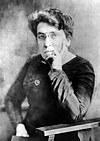
Emma Goldman on Henry David Thoreau
“The whole world has given heroic figures to humanity, who in the face of persecution and obloquy have lived and fought for their right and the right of mankind to free and unstinted expression. America has the distinction of having contributed a large quota of native-born children who have most assuredly not lagged behind. Walt Whitman, Henry David Thoreau, Voltairine de Cleyre...Moses Harman...Horace Traubel...and quite an array of other brave souls have expressed themselves in keeping with their vision of a new social order based on freedom from every form of coercion. True, the price they had to pay was high. They were deprived of most of the comforts society offers to ability and talent, but denies when they will not be subservient. But whatever the price, their lives were enriched beyond the common lot.”
Carl Hart on Henry David Thoreau
“Numerous American heroes-such as Harriet Tubman, Nat Turner, and Henry David Thoreau-led rebellious acts to reconcile the government's actions with the country's promise of liberty for all its citizens.”

Julian Hawthorne on Henry David Thoreau
“Truly, Nature absorbed his attention, but I don't think he cared much for what is called the beauties of nature; it was her way of working, her mystery, her economy in extravagance; he delighted to trace her footsteps toward their source .... He liked to feel that the pursuit was endless, with mystery at both ends of it ....”
Nathaniel Hawthorne on Henry David Thoreau
“He is a singular character — a young man with much of wild original nature still remaining in him; and so far as he is sophisticated, it is in a way and method of his own. He is as ugly as sin, long-nosed, queer-mouthed, and with uncouth and rustic, though courteous manners, corresponding very well with such an exterior. But his ugliness is of an honest and agreeable fashion, and becomes him much better than beauty. He was educated, I believe, at Cambridge, and formerly kept school in this town; but for two or three years back, he has repudiated all regular modes of getting a living, and seems inclined to lead a sort of Indian life among civilized men — an Indian life, I mean, as respects the absence of any systematic effort for a livelihood. ... Mr. Thoreau is a keen and delicate observer of nature — a genuine observer — which, I suspect, is almost as rare a character as even an original poet; and Nature, in return for his love, seems to adopt him as her especial child, and shows him secrets which few others are allowed to witness.”

Disputed Quotes
Quotes attributed to Henry David Thoreau that are questionable.
Misattributed Quotes
Quotes mistakenly credited to Henry David Thoreau
“None are so old as those who have outlived enthusiasm.”
“Wealth is the ability to fully experience life.”
“Most men lead lives of quiet desperation and go to the grave with the song still in them.”
About Henry David Thoreau
Henry David Thoreau (12 July 1817 – 6 May 1862) was an American essayist, poet, philosopher, abolitionist, naturalist, tax resister, development critic, surveyor, and historian. A leading transcendentalist, Thoreau is best known for his book Walden, a reflection upon simple living in natural surroundings, and his essay Resistance to Civil Government (also known as Civil Disobedience), an argument for disobedience to an unjust state.