Remarks to a dinner for Asquith in the House of Commons by MPs who were "Balliol men" (Oxford graduates of Balliol College, 22 July 1908), quoted in The Times (23 July 1908), p. 12
“
[T]he bond which united them, if their critics were to be believed, might be a tranquil consciousness of effortless superiority.
— H. H. Asquith
What It Means
This is a placeholder explanation generated by the low-overhead model. It interprets "[T]he bond which united them, if their critics were to be believed, might be a tranquil consciousness of effortless superiority." in the context of "Remarks to a dinner for Asquith in the House of Commons by MPs who were "Balliol men" (Oxford graduates of Balliol College, 22 July 1908), quoted in The Times (23 July 1908), p. 12" to mean that wisdom is timeless.

Source: Wikiquote: "H. H. Asquith" (Quotes, Prime Minister)
The 'What it means' explanation text was generated by Google Gemini Flash (accessed January 18, 2026). https://gemini.google.com/app
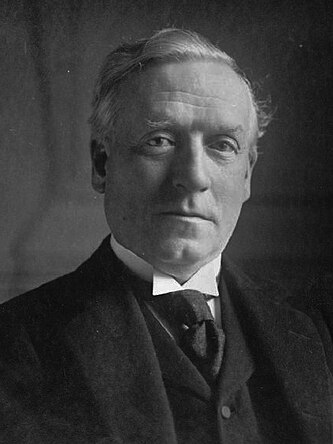
About H. H. Asquith
Herbert Henry Asquith, 1st Earl of Oxford and Asquith, KG, PC (12 September 1852 – 15 February 1928) was Prime Minister of the United Kingdom from 1908 to 1916. As Prime Minister, his Liberal Party government passed social legislation beginning the modern British welfare state and reducing the power of the House of Lords. He was the leader of the country during World War I and formed a wartime coalition with the Conservative Party. He was was forced to resign in favor of David Lloyd George due to disagreements over military strategy and conscription, leading to a split between the two that began the decline of the Liberal Party.
View all quotes →