Link Copied!
George Santayana Quotes (1863-1952)
Philosopher, Poet, Novelist

















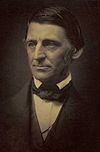

About George Santayana
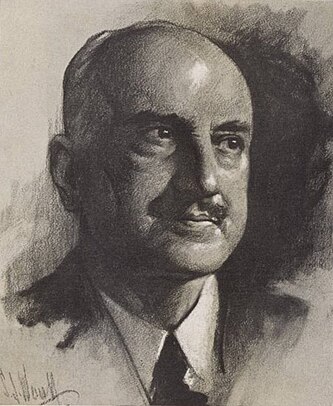
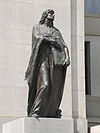
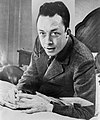
Jorge Agustín Nicolás Ruiz de Santayana y Borrás, known in English as George Santayana (16 December 1863 in Madrid, Spain – 26 September 1952 in Rome, Italy) was a Spanish-American philosopher, essayist, poet and novelist.
Best George Santayana Quotes
Shortest
Earliest
Explore our curated collection of the most famous and impactful George Santayana quotes.

“To covet truth is a very distinguished passion.”
“The idea of Christ is much older than Christianity.”

“The Bible is literature, not dogma.”

“A child educated only at school is an uneducated child.”
“Art like life should be free, since both are experimental.”
“Our dignity is not in what we do, but in what we understand.”

“Every moment celebrates obsequies over the virtues of its predecessor.”
“To know how just a cause we have for grieving is already a consolation.”
“[Everything] ideal has a natural basis and everything natural an ideal development.”

“Skepticism, like chastity, should not be relinquished too readily.”

“To call war the soil of courage and virtue is like calling debauchery the soil of love.”



“To understand oneself is the classic form of consolation; to elude oneself is the romantic.”
“Our dignity is not in what we do, but in what we understand. The whole world is doing things.”
“England is the paradise of individuality, eccentricity, heresy, anomalies, hobbies, and humors.”
George Santayana Quotes by Topic
Find exactly what you are looking for by browsing this categorized list of George Santayana quotes by topic.
George Santayana on Skepticism 3 quotes
“Skepticism, like chastity, should not be relinquished too readily.”
George Santayana on Imagination 2 quotes
“I have imagination, and nothing that is real is alien to me.”

George Santayana on History 2 quotes
View all 2 quotes on History →George Santayana on Patriotism 2 quotes
“To me, it seems a dreadful indignity to have a soul controlled by geography.”

George Santayana on Music
“Music is essentially useless, as life is.”

George Santayana on Ambition
George Santayana on Pity
“Piety to mankind must be three-fourths pity.”
George Santayana on Organizational memory
George Santayana on Birth
What George Santayana Said About Others
Discover personal opinions George Santayana shared regarding contemporaries.
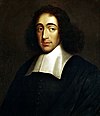
George Santayana on Baruch Spinoza 19 quotes
“...Descartes who misled the whole chorus of modern philosophers, except Spinoza, by making them fall in love with themselves.”
George Santayana on Ralph Waldo Emerson 2 quotes
“A cheery, child-like soul, impervious to the evidence of evil.”

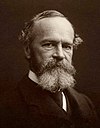
George Santayana on William James
“Philosophy to him was rather like a maze in which he happened to find himself wandering, and what he was looking for was the way out.”
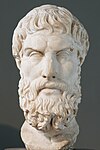
George Santayana on Epicurus
“The system of Democritus was adopted by Epicurus, but not because Epicurus had any keenness of scientific vision. On the contrary, Epicurus, the Herbert Spencer of antiquity, was in his natural philosophy an encyclopedia of second-hand knowledge.”
George Santayana on Saints
“By the way, I have been reading the last volume of the Bible (the Epistles & Apocalypse) in your modern edition. I long for notes; but even half understood the stuff is extraordinary. What could be more remote from polite religion than this palpitating, ... eschatological, revolutionary delusion? And what fisticuffs—controversial and perhaps physical—among these new-born saints!”

George Santayana on Charles Dickens
“When people say Dickens exaggerates, it seems to me they can have no eyes and no ears. They probably have only notions of what things and people are: they accept them conventionally at their diplomatic value. Their minds run on in the region of discourse, where there are masks only, and no faces; ideas and no facts; they have little sense for those living grimaces that play from moment to moment on the countenance of the world.”

George Santayana on Friedrich Nietzsche
“Nietzsche was personally more philosophical than his philosophy. His talk about power, harshness, and superb immorality was the hobby of a harmless young scholar and constitutional invalid. He did not crave in the least either wealth or empire. What he loved was solitude, nature, music, books. But his imagination, like his judgment, was captious; it could not dwell on reality, but reacted furiously against it. Accordingly, when he speaks of the will to be powerful, power is merely an eloquent word on his lips. It symbolises the escape from mediocrity. What power would be when attained and exercised remains entirely beyond his horizon. What meets us everywhere is the sense of impotence and a passionate rebellion against it.”

Disputed Quotes
Quotes attributed to George Santayana that are questionable.
Misattributed Quotes
Quotes mistakenly credited to George Santayana
“The working of great administrations is mainly the result of a vast mass of routine, petty malice, self-interest, carelessness and sheer mistake. Only a residual fraction is thought.”
“Books are “imaginative rehearsals for living,” stated novelist George Santayana. They are also a great equalizer in a diverse society. Book reading helps prepare a child for mental liberation from ignorance, fear, and falsehood.”
“The writer-philosopher George Santayana is credited with the phrase: “Those who cannot remember the past are condemned to repeat it.” Yet here we are, repeating that of just 52 years ago. Let us pray that come 2072, Americans then have at last heeded Santayana's warning and Dr. King’s dream is no longer words in a speech but reality being lived.”
“But what a perfection of rottenness in a philosophy!”
“"In America literary reputations come and go so swiftly," I complained, fatuously. [Santayana's] answer was swift. "It would be insufferable if they did not."”
“"There is no God, and Mary is his mother." Often, almost certainly incorrectly, attributed to Santayana himself. More plausibly attributed to Robert Lowell, as a sardonic description of Santayana's philosophy.”
“Santayana, indeed, is the Moses of the new naturalism, who discerned the promised land from afar but still wanders himself in the desert realms of being.”
About George Santayana
Jorge Agustín Nicolás Ruiz de Santayana y Borrás, known in English as George Santayana (16 December 1863 in Madrid, Spain – 26 September 1952 in Rome, Italy) was a Spanish-American philosopher, essayist, poet and novelist.