Link Copied!
Friedrich Nietzsche Quotes (1844-1900)
Philosopher, Writer, Poet
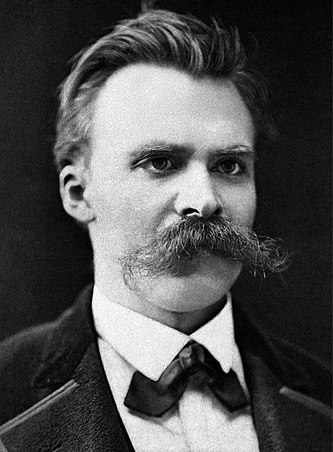






















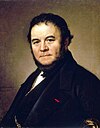













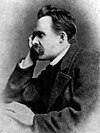


















































































About Friedrich Nietzsche
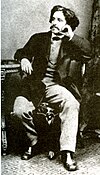
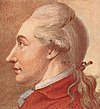
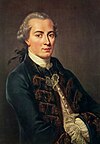
Friedrich Wilhelm Nietzsche (15 October 1844 – 25 August 1900) was a German philosopher, cultural critic, composer, poet, writer, and philologist whose work has exerted a profound influence on modern intellectual history. His critiques of contemporary culture, religion, and philosophy centered on a basic question regarding the foundation of values and morality.
Best Friedrich Nietzsche Quotes
Shortest
Earliest
Explore our curated collection of the most famous and impactful Friedrich Nietzsche quotes.

“Morality is herd instinct in the individual.”
“»Glaube« heißt Nicht-wissen-wollen.”


“The good generally displeases us when it is beyond our ken.”
“No power can maintain itself if only hypocrites represent it.”
“Gegen die Langeweile kämpfen Götter selbst vergebens.”

“Forgetting our intentions is the most frequent of all acts of stupidity.”

“Oh wie ferne war mir damals gerade dieser ganze Resignationismus!”
“Most men are too concerned with themselves to be malicious.”
Friedrich Nietzsche Quotes by Topic
Find exactly what you are looking for by browsing this categorized list of Friedrich Nietzsche quotes by topic.
Friedrich Nietzsche on Übermensch 10 quotes
View all 10 quotes on Übermensch →Friedrich Nietzsche on Manusmriti 10 quotes
“To draw up such a law–book as Manu’s means to lay before a people the possibility of future mastery, of attainable perfection—it permits them to aspire to the highest reaches of the art of life.”

Friedrich Nietzsche on Truth 7 quotes
View all 7 quotes on Truth →Friedrich Nietzsche on Art 7 quotes
“Art is the supreme task and the truly metaphysical activity in this life…”

Friedrich Nietzsche on God is dead 7 quotes
“New battles. - After Buddha was dead, they still showed his shadow in a cave for centuries - a tremendous, gruesome shadow. God is dead; but given the way people are, there may still for millennia be caves in which they show his shadow. - And we - we must still defeat his shadow as well!”
Friedrich Nietzsche on Eugenics 6 quotes
“Pity on the whole thwarts the law of evolution, which is the law of selection.”

Friedrich Nietzsche on Herd mentality 6 quotes
“It is not the ferocity of the beast of prey that requires a moral disguise but the herd animal with its profound mediocrity, timidity, and boredom with itself.”

Friedrich Nietzsche on Eternal return 6 quotes
“I, Zarathustra, the advocate of life, the advocate of suffering, the advocate of the circle – you I summon, my most abysmal thought! Hail to me! You are coming – I hear you! My abyss speaks,I have unfolded my ultimate depth to the light! Hail to me! Here now! Give me your hand – ha! Let go! Haha! – Nausea, nausea, nausea – oh no!”
Friedrich Nietzsche on Aphorisms 5 quotes
View all 5 quotes on Aphorisms →Friedrich Nietzsche on Hedonism 5 quotes
“The spiritualization of sensuality is called love.”
Friedrich Nietzsche on Value (ethics) 5 quotes
View all 5 quotes on Value (ethics) →Friedrich Nietzsche on God 5 quotes
View all 5 quotes on God →What Friedrich Nietzsche Said About Others
Discover personal opinions Friedrich Nietzsche shared regarding contemporaries.
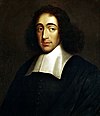
Friedrich Nietzsche on Baruch Spinoza 16 quotes
“Nothing is less Greek than the conceptual web-spinning of a hermit—amor intellectualis dei—after the fashion of Spinoza.”
Friedrich Nietzsche on Women 7 quotes
View all 7 quotes on Women →Friedrich Nietzsche on Plato 3 quotes
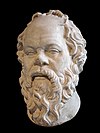
View all 3 quotes on Plato →Friedrich Nietzsche on Socrates 2 quotes
“We cannot help but see Socrates as the turning-point, the vortex of world history.”
Friedrich Nietzsche on Richard Wagner 2 quotes
“Is Wagner a human being at all? Is he not rather a disease? He contaminates everything he touches — he has made music sick.”

Friedrich Nietzsche on Laurence Sterne 2 quotes
“How, in a book for free spirits, should there be no mention of Laurence Sterne, whom Goethe honoured as the most liberated spirit of his century! Let us content ourselves here simply with calling him the most liberated spirit of all time, in comparison with whom all others seem stiff, square, intolerant and boorishly direct.”
Friedrich Nietzsche on Lou Andreas-Salomé 2 quotes
“My most useful activity this summer was talking with Lou. There is a deep affinity between us in intellect and taste -- and there are in other ways so many differences that we are the most instructive objects and subjects of observation for each other. I have never met anyone who could derive so many objective insights from experience, who knows how to deduce so much from all she has learned.”
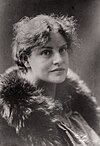
Friedrich Nietzsche on Jesus
“Jesus died too soon. If he had lived to my age he would have repudiated his doctrine.”

Friedrich Nietzsche on William Thomson
“If materialism cannot consistently escape the conclusion of a finite state, which William Thomson has traced out for it, then materialism is thereby refuted.”
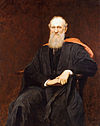
Friedrich Nietzsche on Martin Luther
Friedrich Nietzsche on Voltaire
“O Voltaire! O humaneness! O nonsense! There is something about "truth", about the search for truth; and when a human being is too human about it- "il ne cherche le vrai que pour faire le bien"- I bet he finds nothing.”

Quotes About Friedrich Nietzsche
Gain deeper perspective through quotes about Friedrich Nietzsche from others.
Thomas J. J. Altizer on Friedrich Nietzsche 2 quotes
“Absolute nothingness is an ultimate ground of a purely apophatic mysticism, and it is even more primal in Mahayana Buddhism, just as it has been resurrected in the deepest expressions of a uniquely modern imagination. Nietzsche is the only Western thinker who has fully thought an absolute nothingness, although that nothingness is a deep even if elusive ground of Hegelian thinking, and of all of the fullest expressions of modern dialectical thinking and vision.”
Hannah Arendt on Friedrich Nietzsche 2 quotes
“Nietzsche's inverted Platonism, his insistence on life and the sensuously and materially given as against the suprasensuous and transcendent ideas which, since Plato, had been supposed to measure, judge, and give meaning to the given, ended in what is commonly called nihilism. Yet Nietzsche was no nihilist but, on the contrary, was the first to try to overcome the nihilism inherent not in the notions of the thinkers but in the reality of modern life. What he discovered in his attempt at “trans-valuation” was that within this categorical framework the sensuous loses its very raison d'être when it is deprived of its background of the suprasensuous and transcendent. “We abolished the true world: which world has remained? perhaps the world of appearances? . . . But no! together with the true world we abolished the world of appearances.” This insight in its elementary simplicity is relevant for all the turning-about operations in which the tradition found its end.”

Karl Barth on Friedrich Nietzsche
“It is another matter, and one that objectively considered is to the praise of Nietzsche, that he thus hurled himself against the strongest and not the weakest point in the opposing front. With his discovery of the Crucified and His host he discovered the Gospel itself in a form which was missed even by the majority of its champions, let alone its opponents, in the 19th century. And by having to attack it in this form, he has done us the good office of bringing before us the fact that we have to keep to this form as unconditionally as he rejected it, in self-evident antithesis not only to him, but to the whole tradition on behalf of which he made this final hopeless sally.”

Allan Bloom on Friedrich Nietzsche
“It is Nietzsche's merit that he was aware that to philosophize is radically problematic in the cultural, historicist dispensation. He recognized the terrible intellectual and moral risks involved. At the center of his every thought was the question “How is it possible to do what I am doing?” He tried to apply to his own thought the teachings of cultural relativism. This practically nobody else does. For example, Freud says that men are motivated by desire for sex and power, but he did not apply those motives to explain his own science or his own scientific activity. But if he can be a true scientist, i.e., motivated by love of the truth, so can other men, and his description of their motives is thus mortally flawed. Or if he is motivated by sex or power, he is not a scientist, and his science is only one means among many possible to attain those ends. This contradiction runs throughout the natural and social sciences. They give an account of things that cannot possibly explain the conduct of their practitioners.”

Harold Bloom on Friedrich Nietzsche
“I've come to understand that the quality of memorability and inevitability which I assumed came from intense pleasure may actually have come from a kind of pain. That is to say that one learns from Nietzsche that there is something painful about meaning. Sometimes it is the pain of difficulty, sometimes the pain of being set a standard that one cannot attain.”
Bronze Age Pervert on Friedrich Nietzsche
“Who knew that if you merely represent the thought of Nietzsche or Schopenhauer in a fun way it would find such an audience? Some things, it seems, are always green.”
Martin Buber on Friedrich Nietzsche
“Kierkegaard's criticism of actual Christianity is an inner one; he does not confront Christianity, as, for example, Nietzsche does, with an alleged higher value, and test it by that and reject it.”

Julio Cabrera on Friedrich Nietzsche
“It is Nietzsche's merit to have critically placed the problem of the relationship between life and truth and to have denounced the confusion between truth and what sustains, justifies, and legitimizes. However, the Nietzschean chant to life, the cry for the intensification of life to the detriment of “truth” etc., are simply Nietzsche's choice, not a part of his scientific (specifically, psychological) results. ... The way of truth, if it is really undertaken — and not only “proclaimed” in the apologetic discourse of the philosopher as a “seeker of truth” — must necessarily — so is the goal of my argument — lead to the non-being. ... If Nietzsche frightens you, then take your moral ideas to their last consequences, which will lead one to embrace a negative ethic, that is, an ethic in which truth will have absolute primacy over life.”
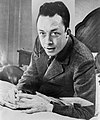
Albert Camus on Friedrich Nietzsche 2 quotes
“The more exciting life is, the more absurd is the idea of losing it. This is perhaps the secret of that proud aridity felt in Nietzsche's work. In this connection, Nietzsche appears to be the only artist to have derived the extreme consequences of an aesthetic of the Absurd, inasmuch as his final message lies in a sterile and conquering lucidity and an obstinate negation of any supernatural consolation.”
Rudolf Carnap on Friedrich Nietzsche
“Our conjecture that metaphysics is a substitute, albeit an inadequate one, for art, seems to be further confirmed by the fact that the metaphysician who perhaps had artistic talent to the highest degree, viz Nietzsche, almost entirely avoided the error of that of confusion. A large part of his work has predominantly empirical content. We find there, for instance, historical analyses of specific artistic phenomena, or an historical psychological analysis of morals, In the work, however, in which he expresses most strongly that which others express through metaphysics or ethics, in Thus Spake Zarathustra, he does not choose the misleading theoretical form, but openly form of art, of poetry.”

E. H. Carr on Friedrich Nietzsche
“Nietzsche follows the path till he reaches a complete and absolute nihilism never perhaps achieved before or since in human thinking. Human action is deprived not merely of any rational motive but of any super-rational motive. It becomes simply the expression of a biological urge to self-assertion ; the will to power. Standing beyond good and evil, and recognizing no conscious ultimate purpose, Nietzsche's superman is the perfect animal. Nietzsche is at the opposite pole to those who subordinate means to ends and hold that the end sanctifies the means. He believes only in action as a good in itself without reference to ends.”
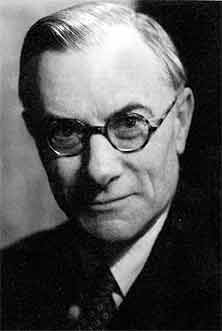
John Casey on Friedrich Nietzsche
“Nietzsche's man of noble soul is an egoist (the very type whom Kant's philosophy of morals would seek to rule out a priori), not in the sense that he is "selfish", but in the sense that he feels himself to be a standard, and creator of values. Nietzsche buttresses his idea of the noble soul with an account of what we might call the natural satisfactions of an aristocrat. He describes the "aristocratic value equation" as "good = noble = powerful = happy = beloved of God". The noble morality, with its aggression, cunning, strong drives, its pride, is something to be feared. Nietzsche is not describing the "good" man, at least in any sense which Kant would recognize, but rather the superior specimen, the "great man". He is not a good man because he obeys the moral law, but is a source of values, a superior man, a man born to command, to inspire fear and awe, a man whose sense of his own power is a cause of both pride and nobility.”
Disputed Quotes
Quotes attributed to Friedrich Nietzsche that are questionable.
“Rather than cope with the unbearable loneliness of their condition men will continue to seek their shattered God, and for His sake they will love the very serpents that dwell among His ruins.”
“The individual has always had to struggle to keep from being overwhelmed by the tribe. If you try it, you will be lonely often, and sometimes frightened. But no price is too high to pay for the privilege of owning yourself.”
“You know these things as thoughts, but your thoughts are not your experiences, they are an echo and after-effect of your experiences: as when your room trembles when a carriage goes past. I however am sitting in the carriage, and often I am the carriage itself.”
“All things are subject to interpretation; whichever interpretation prevails at a given time is a function of power and not the truth.”
Misattributed Quotes
Quotes mistakenly credited to Friedrich Nietzsche
“Meaning and morality of one's life come from within oneself. Healthy, strong individuals seek self-expansion by experimenting and by living dangerously. Life consists of an infinite number of possibilities, and the healthy person explores as many of them as possible. Religions that teach pity, self-contempt, humility, self-restraint and guilt are incorrect. The good life is ever-changing, challenging, devoid of regret, intense, creative, and risky.”
About Friedrich Nietzsche
Friedrich Wilhelm Nietzsche (15 October 1844 – 25 August 1900) was a German philosopher, cultural critic, composer, poet, writer, and philologist whose work has exerted a profound influence on modern intellectual history. His critiques of contemporary culture, religion, and philosophy centered on a basic question regarding the foundation of values and morality.