Link Copied!
Franz Kafka Quotes (1883-1924)
Writer, Novelist




About Franz Kafka
Franz Kafka (3 July 1883 – 3 June 1924) was a Bohemian-Jewish novelist, and one of the major German-language fiction writers of the 20th century.
Best Franz Kafka Quotes
Shortest
Earliest
Explore our curated collection of the most famous and impactful Franz Kafka quotes.



“Ours is a lost generation, it may be, but it is more blameless than those earlier generations.”

“"Everything you say is boring and incomprehensible," she said, "but that alone doesn't make it true."”
“There was once a community of scoundrels, that is to say, they were not scoundrels, but ordinary people.”

“The right understanding of any matter and a misunderstanding of the same matter do not wholly exclude each other.”

“To fight against this lack of understanding, against a whole world of non-understanding, was impossible.”

“It would have been so pointless to kill himself that, even if he had wanted to, the pointlessness would have made him unable.”
“Was he an animal, that music could move him so? He felt as if the way to the unknown nourishment he longed for were coming to light.”
“Als Gregor Samsa eines Morgens aus unruhigen Träumen erwachte, fand er sich in seinem Bett zu einem ungeheuren Ungeziefer verwandelt.”
“I cannot make you understand. I cannot make anyone understand what is happening inside me. I cannot even explain it to myself.”
“They're talking about things of which they don't have the slightest understanding, anyway. It's only because of their stupidity that they're able to be so sure of themselves.”
“"Don't you want to join us?" I was recently asked by an acquaintance when he ran across me alone after midnight in a coffeehouse that was already almost deserted. "No, I don't," I said.”
“'...it is not necessary to accept everything as true, one must only accept it as necessary.' 'A melancholy conclusion,' said K. 'It turns lying into a universal principle.In the Cathedral”

“The whole visible world is perhaps nothing more than the rationalization of a man who wants to find peace for a moment. An attempt to falsify the actuality of knowledge, to regard knowledge as a goal still to be reached.”
Franz Kafka Quotes by Topic
Find exactly what you are looking for by browsing this categorized list of Franz Kafka quotes by topic.
Franz Kafka on Cheating
Franz Kafka on Shame
Franz Kafka on Salvation
Franz Kafka on Insect
“As Gregor Samsa awoke one morning from uneasy dreams he found himself transformed in his bed into an enormous insect.”

Franz Kafka on Synagogue
Franz Kafka on Lying
Franz Kafka on Self-control
“Self-control is something for which I do not strive. Self-control means wanting to be effective at some random point in the infinite radiations of my spiritual existence.”

Franz Kafka on Open individualism
“The indestructible is one thing; at one and the same time it is each individual, and it is something common to all; hence the uniquely indissoluble connection among mankind.”
Franz Kafka on Ritual
“Leopards break in¬to the tem¬ple and drink all the sac¬ri¬fi¬cial ves¬sels dry; it keeps hap¬pen¬ing; in the end, it can be cal¬cu¬lat¬ed in ad¬vance and is in¬cor¬po¬rat¬ed in¬to the rit¬ual.”

Franz Kafka on Fiction
“A man once said: Why such reluctance? If you only followed the parables you yourselves would become parables and with that rid of all your daily cares. Another said: I bet that is also a parable. The first said: You have won. The second said: But unfortunately only in parable. The first said: No, in reality: in parable you have lost.”
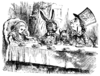
Franz Kafka on Parable
“A man once said: Why such reluctance? If you only followed the parables you yourselves would become parables and with that rid of all your daily cares. Another said: I bet that is also a parable. The first said: You have won. The second said: But unfortunately only in parable. The first said: No, in reality: in parable you have lost.”
Franz Kafka on Magic (supernatural)
“It is entirely conceivable that life’s splendour forever lies in wait about each one of us in all its fullness, but veiled from view, deep down, invisible, far off. It is there, though, not hostile, not reluctant, not deaf. If you summon it by the right word, by its right name, it will come. This is the essence of magic, which does not create but summons.”

Franz Kafka on Philosophical pessimism
“We are as forlorn as children lost in the woods. When you stand in front of me and look at me, what do you know of the griefs that are in me and what do I know of yours? And if I were to cast myself down before you and weep and tell you, what more would you know about me than you know about Hell when someone tells you it is hot and dreadful? For that reason alone we human beings ought to stand before one another as reverently, as reflectively, as lovingly, as we would before the entrance to Hell.”

Franz Kafka on Synthesis
“A man ... has two antagonists: the first presses him from behind, from the origin. The second blocks the road ahead. He gives battle to both. To be sure, the first supports him in his fight with the second, for he wants to push him forward, and in the same way the second supports him in his fight with the first, since he drives him back. But it is only theoretically so. For it is not only the two antagonists who are there, but he himself as well, and who really knows his intentions? His dream, though, is that some time in an unguarded moment and this would require a night darker than any night has ever been yet he will jump out of the fighting line and be promoted, on account of his experience in fighting, to the position of umpire over his antagonists in their fight with each other.”

Franz Kafka on Thesis, antithesis, synthesis
“A man ... has two antagonists: the first presses him from behind, from the origin. The second blocks the road ahead. He gives battle to both. To be sure, the first supports him in his fight with the second, for he wants to push him forward, and in the same way the second supports him in his fight with the first, since he drives him back. But it is only theoretically so. For it is not only the two antagonists who are there, but he himself as well, and who really knows his intentions? His dream, though, is that some time in an unguarded moment and this would require a night darker than any night has ever been yet he will jump out of the fighting line and be promoted, on account of his experience in fighting, to the position of umpire over his antagonists in their fight with each other.”
What Franz Kafka Said About Others
Discover personal opinions Franz Kafka shared regarding contemporaries.
Franz Kafka on Frank Zappa
Franz Kafka on Charles Dickens
“There is a heartlessness behind his sentimentally overflowing style.”

Franz Kafka on Walt Whitman
“I know the formal element in Walt Whitman's poetry found and enormous echo throughout the world. Yet Walt Whitman's significance lies elsewhere. He combined the contemplation of nature and of civilization which are apparently either contradictory, into a single intoxicating vision of life, because he always had sight of the transitoriness of all phenomena. He said: "Living is the little that is left over from dying." so he gave his whole heart to every leaf of grass. I admire in him the reconciliation of art and nature. When the war between the Northern and Southern States in America, which first really set in motion the power of our present machine world, first broke out, Walt Whitman became a medical orderly. He did what all of us ought to do, particularly today. He helped the weak, the sick and the defeated. He was a Christian and–with a close affinity to us Jews–he was therefore an important measure of the status and worth of humanity.”

Quotes About Franz Kafka
Gain deeper perspective through quotes about Franz Kafka from others.
Isabel Allende on Franz Kafka
“It’s strange that my work has been classified as magic realism because I see my novels as just being realistic literature. They say that if Kafka had been born in Mexico he would have been a realistic writer. So much depends on where you were born.”

Aharon Appelfeld on Franz Kafka
“Kafka was a Jew in his heart and soul. He learned Hebrew and Yiddish. He attended a beit midrash in Frankfurt and he wanted to settle in Palestine. He had lots of women, but most of them were Jewish. I don't mean that he proclaimed his Jewishness every morning, but that he was connected with Jewishness in every sense of the word. For example, the pounding at the castle — the desire to enter and understand this mystery — is a very Jewish longing. For good reason, authors such as his colleague Max Brod tried to find kabbalistic meaning in his works. Consider, for example, his two greatest works, The Trial and The Castle. He felt that he was a defendant who had done no wrong. A man is sitting at home or in a pension, looking forward to breakfast, and suddenly someone comes in and says, “You're under arrest! You are accused!” for no reason and no purpose. That's the classic Jewish situation, manifested most acutely during the Holocaust. It was a situation of total guilt with no sin. People were accused, taken from their homes, shut up in ghettos, led to railroad stations and from there to extermination camps — not because they had done anything wrong but because Jewish blood flowed in their veins. Kafka illustrated the absurdity of Jewish life in Europe even before the Holocaust. In this sense Kafka grasped the lowly position Jews held in European civilization...Kafka performed a psychic analysis of the defendant. Although he refrained from mentioning the Jew explicitly in order to give this absurd situation a much broader meaning, this, in essence, is Jewish psychology. A Jewish fate, if you will. Interestingly, this analysis led him indirectly to Zionism, and he even wanted to settle in Palestine.”
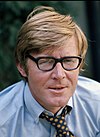
Alan Bennett on Franz Kafka
“He is interested in the feelings of the squash ball, and of the champagne bottle that launches the ship. In a football match his sympathy is not with either of the teams but with the ball, or, in a match ending nil-nil, with the hunger of the goalmouth.”
Bertolt Brecht on Franz Kafka
“Kafka described with wonderful imaginative power the future concentration camps, the future instability of the law, the future absolutism of the state Apparat.”

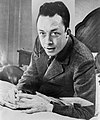
Albert Camus on Franz Kafka
“The whole art of Kafka consists in forcing the reader to re-read. His endings or his absence of endings, suggest explanations which, however, are not revealed in clear language but, before they seem justified, require that the story be reread.”
Stanley Corngold on Franz Kafka
“The way in which he experienced estrangement was literature, with an intensity greater than that of any other writer of this century, more inexorably than Joyce or Proust or Mann. From this experience flows the power of Kafka’s works to comprehend all forms of alienation, and to suggest a response to political estrangement different from political counterterror: the effort to illuminate this condition by grasping through literature that play is the reward for the courage of accepting death.”
Rosario Ferré on Franz Kafka
“He writes about his father, but he is actually writing a diatribe against the fascist state, against a Germanized Prague. It is minor literature because he is Jewish and a Czech writing in German; he is writing the reverse side of history. And that is what literature gives you: the reverse side of history.”
Dara Horn on Franz Kafka
“It is mainly Jewish readers who think of Kafka as a Jewish writer. This isn’t a matter of possessiveness, the way one claims a sports hero for an ethnic group — after all, if one wanted to claim a writer to carry the Jews into world literature, would it be asking too much to pick someone, well, happier? — but rather a matter of Kafka’s work itself. Jewish readers cannot help but hear the echoes of the Dreyfus Affair in “In the Penal Colony,” or those of the blood libel in “The Trial”; such readers see in Kafka’s famous cockroach a horrifying caricature of the way others have so often seen them — and worse, the way they sometimes see themselves. Nor is this awareness mere suspicion. Though none of his published works mention it explicitly, Kafka’s private letters and diaries reveal an interest in Jewish identity verging on obsession. But Kafka’s broader fame comes from the point where this obsession merges with more ordinary fears, making non-Jewish readers see his work as expressing an abstract “existential” dread, rather than the very real dread that defined European Jewish existence.”

Misattributed Quotes
Quotes mistakenly credited to Franz Kafka
“By believing passionately in something which still does not exist, we create it. The nonexistent is whatever we have not sufficiently desired.”
“Don't bend; don't water it down; don't try to make it logical; don't edit your own soul according to the fashion. Rather, follow your most intense obsessions mercilessly.”
About Franz Kafka
Franz Kafka (3 July 1883 – 3 June 1924) was a Bohemian-Jewish novelist, and one of the major German-language fiction writers of the 20th century.