Link Copied!
Franklin D. Roosevelt Quotes (1882-1945)
President, Leader
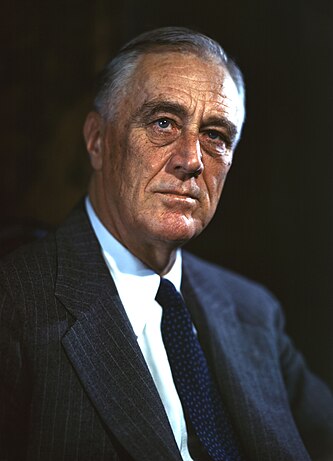

















































About Franklin D. Roosevelt
Franklin Delano Roosevelt (30 January 1882 – 12 April 1945), often referred to by his initials FDR, was an American statesman and political leader who served as the president of the United States, from 1933, to 1945. A Democrat, he won a record four presidential elections and dominated his party for many years as a central figure in world events during the mid-20th century, leading the United States during a time of worldwide economic depression and total war. His program for relief, recovery and reform, known as the New Deal, involved a great expansion of the role of the federal government in the economy.
Best Franklin D. Roosevelt Quotes
Shortest
Earliest
Explore our curated collection of the most famous and impactful Franklin D. Roosevelt quotes.
Echoing the founding principles of inalienable rights, this extension broadens the definition of liberty to encompass essential economic well-being, envisioning a home as a fundamental human need.
“The right of every family to a decent home;”
- Franklin D. Roosevelt, 1940s, State of the Union Address — Second Bill of Rights


“Repetition does not transform a lie into a truth.”
- Franklin D. Roosevelt, 1930s)

Facing a request to define his overarching beliefs, Franklin Delano Roosevelt succinctly declared his identity as a Christian and a Democrat, revealing a pragmatic, faith-infused political stance.
“Philosophy? I am a Christian and a Democrat. That's all.”
- Franklin D. Roosevelt, 1930s)

“An American Government cannot permit Americans to starve.”
- Franklin D. Roosevelt, 1930s, Address at San Diego Exposition

Amidst a defense of fundamental political rights, this statement unexpectedly broadens the concept of rights to include economic security, linking sustenance to liberty.
“The right to earn enough to provide adequate food and clothing and recreation;”
- Franklin D. Roosevelt, 1940s, State of the Union Address — Second Bill of Rights

Juxtaposing traditional political freedoms with modern notions of well-being, this declaration controversially frames healthcare access as a fundamental right on par with freedom of speech and religion.
“The right to adequate medical care and the opportunity to achieve and enjoy good health;”
- Franklin D. Roosevelt, 1940s, State of the Union Address — Second Bill of Rights
“All free peoples are deeply impressed by the courage and steadfastness of the Greek nation.”
- Franklin D. Roosevelt, 1940s)

During the dedication of his presidential library in 1941, Franklin D. Roosevelt underscored the profound optimism inherent in preserving knowledge for future generations with this line.
“It seems to me that the dedication of a library is in itself an act of faith.”
- Franklin D. Roosevelt, 1940s)
“Are you laboring under the impression that I read these memoranda of yours? I can't even lift them.”
- Franklin D. Roosevelt, Posthumous publications)
“We have always known that heedless self-interest was bad morals; we know now that it is bad economics.”
- Franklin D. Roosevelt, 1930s, Second inaugural address
Juxtaposing foundational American rights with economic opportunity, this statement controversially extends the concept of inalienable rights to include the right to employment.
“The right to a useful and remunerative job in the industries or shops or farms or mines of the nation;”
- Franklin D. Roosevelt, 1940s, State of the Union Address — Second Bill of Rights
Juxtaposing foundational American freedoms with economic security, this statement expands the definition of rights to include protection from the harsh realities of modern life.
“The right to adequate protection from the economic fears of old age, sickness, accident, and unemployment;”
- Franklin D. Roosevelt, 1940s, State of the Union Address — Second Bill of Rights

Amidst rising global tensions, Roosevelt condemned Italy's surprise attack on France during a commencement speech, using vivid imagery to highlight the act of betrayal.
“On this tenth day of June, 1940, the hand that held the dagger has struck it into the back of its neighbor.”
- Franklin D. Roosevelt, 1940s)

“As a nation, we may take pride in the fact that we are soft-hearted; but we cannot afford to be soft-headed.”
- Franklin D. Roosevelt, 1940s, State of the Union Address — The Four Freedoms
“The hopes of the Republic cannot forever tolerate either undeserved poverty or self-serving wealth.”
- Franklin D. Roosevelt, 1940s, Third inaugural address


“I don't mind telling you in confidence that I am keeping in fairly close touch with that admirable Italian gentleman.”
- Franklin D. Roosevelt, 1930s)

Franklin D. Roosevelt Quotes by Topic
Find exactly what you are looking for by browsing this categorized list of Franklin D. Roosevelt quotes by topic.
Franklin D. Roosevelt on Truth 4 quotes
“Repetition does not transform a lie into a truth.”
Franklin D. Roosevelt on New Deal 4 quotes
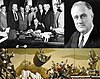
“I pledge you, I pledge myself, to a new deal for the American people.”
Franklin D. Roosevelt on Books 3 quotes
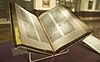
Speaking at the dedication of his presidential library in 1941, Franklin D. Roosevelt highlighted the inherent optimism and enduring value he saw in preserving knowledge.
“It seems to me that the dedication of a library is in itself an act of faith.”
Franklin D. Roosevelt on United States 3 quotes
Speaking to the DAR in 1938, FDR subtly challenged their nativism by reminding them of their shared immigrant and revolutionary ancestry, a sentiment often simplified to "my fellow immigrants."
“Remember, remember always that all of us, and you and I especially, are descended from immigrants and revolutionists.”

Franklin D. Roosevelt on Peace 3 quotes
“We can gain no lasting peace if we approach it with suspicion and mistrust or with fear. We can gain it only if we proceed with the understanding, the confidence, and the courage which flow from conviction.”

Franklin D. Roosevelt on Americas 3 quotes
“America has been the New World in all tongues, to all peoples, not because this continent was a new-found land, but because all those who came here believed they could create upon this continent a new life — a life that should be new in freedom.”
- Franklin D. Roosevelt, R)

Franklin D. Roosevelt on Freedom 3 quotes
“If the fires of freedom and civil liberties burn low in other lands, they must be made brighter in our own. If in other lands the press and books and literature of all kinds are censored, we must redouble our efforts here to keep them free. If in other lands the eternal truths of the past are threatened by intolerance we must provide a safe place for their perpetuation.”
Franklin D. Roosevelt on Social Security (United States) 3 quotes
“Let me warn you, and let me warn the nation, against the smooth evasion that says: "Of course we believe these things. We believe in social security. We believe in work for the unemployed. We believe in saving homes. Cross our hearts and hope to die! We believe in all these things. But we do not like the way that the present administration is doing them. Just turn them over to us. We will do all of them, we will do more of them, we will do them better and, most important of all, the doing of them will not cost anybody anything!"”

Franklin D. Roosevelt on Japan 3 quotes
“Japan's scheme of conquest goes back half a century. It was not merely a policy of seeking living room: it was a plan which included the subjugation of all the peoples in the Far East and in the islands of the Pacific, and the domination of that ocean by Japanese military and naval control of the western coasts of North, Central, and South America. The development of this ambitious conspiracy was marked by the war against China in 1894; the subsequent occupation of Korea; the war against Russia in 1904; the illegal fortification of the mandated Pacific islands following 1920; the seizure of Manchuria in 1931; and the invasion of China in 1937.”
- Franklin D. Roosevelt, R)

Franklin D. Roosevelt on Man 2 quotes
Facing the Great Depression, Franklin D. Roosevelt invoked Macaulay's sentiment "There is no indispensable man" to temper the cult of personality in leadership during a time of crisis.
“A great man left a watchword that we can well repeat: "There is no indispensable man".”

Franklin D. Roosevelt on Future 2 quotes
Penned shortly before his death, Franklin D. Roosevelt's handwritten addition to his final, unfinished Jefferson Day address reveals his enduring optimism for the future.
“The only limit to our realization of tomorrow will be our doubts of today. Let us move forward with strong and active faith.”

Franklin D. Roosevelt on United States Constitution 2 quotes
“I hope your committee will not permit doubts as to constitutionality, however reasonable, to block the suggested legislation.”

What Franklin D. Roosevelt Said About Others
Discover personal opinions Franklin D. Roosevelt shared regarding contemporaries.
Franklin D. Roosevelt on Abraham Lincoln 4 quotes
In a 1938 Gettysburg address, Franklin D. Roosevelt reflects on Lincoln's enduring relevance, suggesting his character transcends specific historical challenges.
“It seldom helps to wonder how a statesman of one generation would surmount the crisis of another. A statesman deals with concrete difficulties — with things which must be done from day to day. Not often can he frame conscious patterns for the far off future. But the fullness of the stature of Lincoln's nature and the fundamental conflict which events forced upon his Presidency invite us ever to turn to him for help.”

Franklin D. Roosevelt on Ernest King
Franklin D. Roosevelt on Chester W. Nimitz
Franklin D. Roosevelt on Winston Churchill
“[re Mulberry Habours] You know that was Churchill’s idea. He has a hundred a day and about four of them are good.”

Franklin D. Roosevelt on Benito Mussolini
In 1933, amidst the Great Depression, Franklin D. Roosevelt expressed admiration for Mussolini's efforts to revitalize Italy, highlighting a shared interest in national recovery.
“There seems to be no question that [Mussolini] is really interested in what we are doing and I am much interested and deeply impressed by what he has accomplished and by his evidenced honest purpose of restoring Italy.”

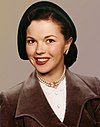
Franklin D. Roosevelt on Shirley Temple
“When the spirit of the people is lower than at any other time during this Depression, it is a splendid thing that for just 15 cents, an American can go to a movie and look at the smiling face of a baby and forget his troubles.”
Franklin D. Roosevelt on Joseph Stalin
“I may say that I 'got along fine' with Marshal Stalin. He is a man who combines a tremendous, relentless determination with a stalwart good humor. I believe he is truly representative of the heart and soul of Russia; and I believe that we are going to get along very well with him and the Russian people - very well indeed.”

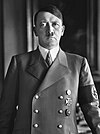
Franklin D. Roosevelt on Adolf Hitler
In 1941, amidst rising global tensions, President Roosevelt warned Americans of Hitler's expansive ambitions, framing European conquest as a prelude to Nazi aggression against the Western Hemisphere.
“Adolf Hitler never considered the domination of Europe as an end in itself. European conquest was but a step toward ultimate goals in all the other continents. It is unmistakably apparent to all of us that, unless the advance of Hitlerism is forcibly checked now, the Western Hemisphere will be within range of the Nazi weapons of destruction.”
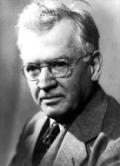
Franklin D. Roosevelt on John Thomas Flynn
In 1939, Franklin D. Roosevelt, angered by John T. Flynn's criticisms of the New Deal, advocated for his blacklisting from reputable publications.
“I have watched John T. Flynn during these many years and the net answer in my mind is that he has always, with practically no exception, been a destructive rather than a constructive force. Therefore, Q.E.D., John T. Flynn should be barred hereafter from the columns of any presentable daily paper, monthly magazine or national quarterly, such as the Yale Review.”
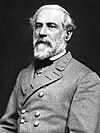
Franklin D. Roosevelt on Robert E. Lee
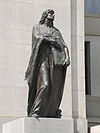
“I am very happy to take part in this unveiling of the statue of General Robert E. Lee. All over the United States we recognize him as a great leader of men, as a great general. But, also, all over the United States I believe that we recognize him as something much more important than that. We recognize Robert E. Lee as one of our greatest American Christians and one of our greatest American gentlemen.”
Franklin D. Roosevelt on Russians
“At the same time, I also wish to pay tribute to the Russian people from whom the Red Army springs, and upon whom it is dependent for its men, women, and supplies. They, too, are giving their full efforts to the war and are making the supreme sacrifice. The Red Army and the Russian people have surely started the Hitler forces on the road to ultimate defeat and have earned the lasting admiration of the people of the United States.”
- Franklin D. Roosevelt, R)

Franklin D. Roosevelt on Will Rogers
“In addition to my deep appreciation of his humor the first time that I fully realized Will Rogers' exceptional and deep understanding of political and social problems was when he came home from his European trip in 1926. While I had discussed European matters with many others, both American and foreign, Will Rogers' analysis of affairs abroad was not only more interesting but proved to be more accurate than any other I had heard.”

Franklin D. Roosevelt on Pedro II of Brazil
In a 1936 address to Brazil's Congress, Franklin D. Roosevelt recounts his childhood introduction to the nation through an encounter with Emperor Dom Pedro II, highlighting a long-standing connection.
“In early half a century ago a little boy was walking with his father and mother in a park of a city in Southern France. Toward them came a distinguished-looking elderly couple—Dom Pedro II and his Empress. That occasion was my first introduction to Brazil. In the years that have passed since that day—years measured by the splendid history of the Republic of Brazil—I have had the pleasure of meeting many of your statesmen and of becoming increasingly familiar with the problems which mutually affect our two Nations.”

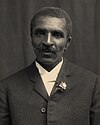
Franklin D. Roosevelt on George Washington Carver
“The versatility of his genius and his achievements in diverse branches of the arts and sciences were truly amazing. The versatility of his genius All mankind is the beneficiary of his discoveries in the field of agricultural chemistry. The things which he achieved in the face of early handicaps will for all time afford an inspiration of youth everywhere. The things, which he achieved in the face of early handicaps, will for all time afford an inspiration of youth everywhere. I count it a great privilege to have met Dr. Carver and to have talked with him at Tuskegee on the occasion of my visit to the institute, which was the scene of his long and distinguished labors.”
Quotes About Franklin D. Roosevelt
Gain deeper perspective through quotes about Franklin D. Roosevelt from others.
Margaret Atwood on Franklin D. Roosevelt
“Political pundits have a saying that a great leader needs three things: brains, heart, and guts, or its modern variant, balls. Churchill, for example, had all three. Now start doing your own sums: FDR surely had all three; Nixon had brains and guts, but not much heart. Reagan had a good facsimile of a heart, but not much of a brain...”

Speak Now Against The Day The Generation Before the Civil Rights Movement in the South By John Egerton, 2013 on Franklin D. Roosevelt
John Egerton highlights Roosevelt's advantage in Congress during his early presidency, noting a massive Democratic majority that mitigated divisions among Southern Democrats and facilitated legislative success.
“In its own way, the House of Representatives showed a similar if less visible pattern of ideological and strategic division among its Southern Democrats. But there the party’s margin over the Republicans was nearly two hundred seats, and with the Democratic right wing small and not well organized, the administration had an easier time getting its program through.”
Phillips Payson O’Brien on Franklin D. Roosevelt
“To a striking degree, the way the United States conducted World War II was a consequence of Roosevelt’s own experience as the assistant secretary of the Navy during World War I—a period that made him appreciate the benefits of overwhelming the enemy with machinery, as well as the risks of ground warfare. When he traveled to France in 1918 to tour the front lines, the battlefield disgusted him. The conditions for soldiers were too crowded, and he wrote in his diary that “the smell of dead horses” offended his “sensitive naval” nose. Instead, he fixated on logistics and material: the deployment of large naval guns, transported on land via train carriages, to batter German lines; a push for rapid advances in aircraft and bomb technology. He promoted a plan to thwart German U-boat attacks by creating a minefield across the entire North Sea rather than putting Allied ships at risk. (The scheme was not complete when the war ended.) Roosevelt’s work during this period also showed him the value of working closely with trusted international partners such as Britain and France. Strong alliances, he came to learn, were how modern wars were won. Unlike many Americans, Roosevelt did not become an isolationist after World War I. He understood that aggressive authoritarian regimes had to be stopped and believed that the U.S. could protect many of its own interests via machinery and alliances. He was so wedded to these two ideas that, during World War II, he provided Britain and the Soviet Union with massive amounts of aid without expecting any repayment. So much better, Roosevelt believed, to strengthen U.S. allies and let them do much of the land fighting. This approach led to one of his greatest successes as a war leader.”
Winston Churchill on Franklin D. Roosevelt
Amidst World War II, Winston Churchill expressed profound admiration and dependence on Franklin D. Roosevelt to Kenneth Pendar, emphasizing Roosevelt's unmatched vision and friendship.
“If anything happened to that man ... I couldn't stand it. He is the truest friend; he has the farthest vision; he is the greatest man I have ever known.”
Henry H. Adams on Franklin D. Roosevelt
“The hands of the president no longer had the sure, firm grasp of earlier years. He was not up to par physically. He complained that he "lacked pep." His sinus condition, for which Ross McIntire gave him daily treatments, failed to improve. At the end of March, McIntire finally got him to go to Bethesda Naval Hospital for a complete medical check. Lieutenant Commander Howard Bruenn, USNR, a cardiologist, presented the grim report. The president suffered from hypertension, failure of the left ventricle of the heart, hypertensive heart disease, and acute bronchitis. At sixty-two, Roosevelt's body was failing him. He could die at any time. With great care, his life might be extended a year or so. But how could the president of the United States in wartime follow a program of rest and limited activity? It couldn't be done.”
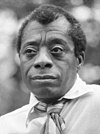
James Baldwin on Franklin D. Roosevelt
“[T]he Progressive Party, with its extravagant claims, has, therefore, imposed on itself the considerable burden of proof. The only party within recent memory which made equally strident claims of fellowship were the Communists, who failed to survive this test; and the only politician of similar claims was, of course, Henry Wallace's erstwhile master, Roosevelt, who did not after all, now that the magic of his voice is gone, succeed in raising the darker brother to the status of a citizen. This is the ancestry of the Wallace party, and it does not work wholly in its favor. It operates to give pause to even the most desperate and the most gullible.”
Bruce Bartlett on Franklin D. Roosevelt
“It wasn't a Republican president who locked up thousands of loyal Americans of Japanese descent in concentration camps for years. It was Democrat Franklin D. Roosevelt.”
Dave Barry on Franklin D. Roosevelt
“And although some members of Congress charged that Roosevelt was overstepping his legal authority, he was able to win them over by inviting them to the White House for a series of "Fireside Chats" ("Perhaps, Senator, you would better understand these policies if Ernst and Victor moved you even closer to the fire?" "NO! PLEASE!").”

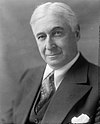
Bernard Baruch on Franklin D. Roosevelt
“In Franklin D. Roosevelt's record, four things will stand out above everything else. One, his interest in human beings and their welfare, as is exemplified in the social legislation and which is being carried further to this day. Two, as President of the United States and commander-in-chief of its forces, he became the main factor in winning the greatest war of all time. Three, he brought about the creation of a United Nations, in the framework of which, if the nations so willed it, a peace can be written — a peace which mankind has yearned for over the ages... Four, he gave hope to countless disabled by conquering an affliction which struck him in the prime of his life. ... Because of his interest in Warm Springs and polio, an advancement has been made in the intensive study of that dread disease that may bring relief from it, an accomplishment which in itself is of first importance.”
Walter R. Borneman on Franklin D. Roosevelt
“Popular perception has long suggested that FDR favored the Navy over the Army, but when it came to budgets, deployments, and promotions, he was evenhanded as a commander in chief. On an emotional level, however, Roosevelt's combination inspection-fishing-vacation trips- such as he enjoyed aboard the cruiser Houston- were among his favorite occasions. And his long-standing relationships with the Navy's admirals, particularly the duty-minded Leahy, made him more comfortable having them around. This contrast is underscored by remembering that the Army Chief of Staff from 1930 to 1935 was Douglas MacArthur. The general was still trying to emulate his father's advance up to Missionary Ridge during the Civil War, and his visits to the White House often took on the aura of a state visit. FDR was not intimidated by MacArthur- or anyone else- but neither was he terribly comfortable with him. When MacArthur left Washington for the Philippines and Malin Craig, whom Roosevelt did not know well, became Army Chief of Staff, it was only natural that Roosevelt gravitated toward the loyal and understated Leahy as his chief military adviser.”
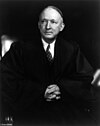
Hugo Black on Franklin D. Roosevelt
Hugo Black recounts a conversation with President Roosevelt, revealing Roosevelt's surprising tolerance for his past Ku Klux Klan membership due to political expediency.
“President Roosevelt ... told me there was no reason for my worrying about my having been a member of the Ku Klux Klan. He said some of his best friends and supporters he had in the state of Georgia were among members of the organization. He never in any way, by word or attitude, indicated any doubt about my having been in the Klan nor did he indicate any criticism of me for having been a member of that organization.”
Thomas B. Buell on Franklin D. Roosevelt
“Meetings between Roosevelt and the JCS were impromptu and usually convened to deal with a specific problem. The President would decide who would attend, presumably those whom he wanted for advice. The record shows that King was in the White House some thirty-two times during 1942, although there may have been other meetings that were not on the President's appointment calendar. The scheduled appointments then diminished for the remainder of the war: eight in 1943, nine in 1944, and one in 1945. In contrast, Churchill met with the British Chiefs of Staff almost daily.”
Disputed Quotes
Quotes attributed to Franklin D. Roosevelt that are questionable.
“He's a son-of-a-bitch, but he's our son-of-a-bitch.”
Misattributed Quotes
Quotes mistakenly credited to Franklin D. Roosevelt
“I do not believe in communism any more than you do but there is nothing wrong with the Communists in this country; several of the best friends I have got are Communists.”
About Franklin D. Roosevelt
Franklin Delano Roosevelt (30 January 1882 – 12 April 1945), often referred to by his initials FDR, was an American statesman and political leader who served as the president of the United States, from 1933, to 1945. A Democrat, he won a record four presidential elections and dominated his party for many years as a central figure in world events during the mid-20th century, leading the United States during a time of worldwide economic depression and total war. His program for relief, recovery and reform, known as the New Deal, involved a great expansion of the role of the federal government in the economy.