Link Copied!
Francis Bacon Quotes (1561-1626)
Philosopher, Scientist






































































About Francis Bacon
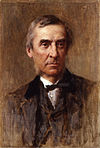
Francis Bacon, 1st Viscount St. Alban KC (22 January 1561 – 9 April 1626) was an English philosopher, statesman and essayist. His works argued for the possibility of scientific knowledge based only upon inductive reasoning and careful observation of events in nature. Most importantly, he argued this could be achieved by use of a sceptical and methodical approach whereby scientists aim to avoid misleading themselves. His general idea of the importance and possibility of a skeptical methodology makes Bacon the father of the scientific method. This marked a new turn in the rhetorical and theoretical framework for science, the practical details of which are still central in debates about science and methodology today.
Best Francis Bacon Quotes
Shortest
Earliest
Explore our curated collection of the most famous and impactful Francis Bacon quotes.

“Antiquitas saeculi juventus mundi.”
“Audacter calumniare, semper aliquid haeret.”


“Reading maketh a full man; conference a ready man; and writing an exact man.”

“There is no excellent beauty that hath not some strangeness in the proportion.”



“But the best demonstration by far is experience, if it go not beyond the actual experiment.”

“Ne mireris, si vulgus verius loquatur quam honoratiores; quia etiam tutius loquitur.”
“The sun, which passeth through pollutions and itself remains as pure as before.”
Francis Bacon Quotes by Topic
Find exactly what you are looking for by browsing this categorized list of Francis Bacon quotes by topic.
Francis Bacon on Knowledge 7 quotes
View all 7 quotes on Knowledge →Francis Bacon on Idolatry 7 quotes
“There is a great difference between the Idols of the human mind and the Ideas of the divine. That is to say, between certain empty dogmas, and the true signatures and marks set upon the works of creation as they are found in nature.”

Francis Bacon on Anger 6 quotes
View all 6 quotes on Anger →Francis Bacon on Pragmatism 6 quotes
“The learning that now is hath the curse of barrenness, and is courtesan-like, for pleasure and not for fruit.”

Francis Bacon on Understanding 6 quotes
“Words plainly force and overrule the understanding, and throw all into confusion, and lead men away into numberless empty controversies and idle fancies.”

Francis Bacon on Philosophy of science 6 quotes
“The logic now in use serves rather to fix and give stability to the errors which have their foundation in commonly received notions than to help the search for truth. So it does more harm than good.”
Francis Bacon on Books 5 quotes
View all 5 quotes on Books →Francis Bacon on Anger management 5 quotes
“To seek to extinguish Anger utterly is but a bravery of the Stoics.”

Francis Bacon on Death 5 quotes
View all 5 quotes on Death →Francis Bacon on Reading 4 quotes
View all 4 quotes on Reading →Francis Bacon on Law 4 quotes
View all 4 quotes on Law →Francis Bacon on Science 4 quotes
“The divisions of the sciences are not like different lines that meet in one angle, but rather like the branches of trees that join in one trunk.”

What Francis Bacon Said About Others
Discover personal opinions Francis Bacon shared regarding contemporaries.
Francis Bacon on William Gilbert (astronomer) 2 quotes
“[Gilbert] has himself become a magnet; that is, he has ascribed too many things to that force and built a ship out of a shell.”

Francis Bacon on Tacitus
Francis Bacon on Virgil
Francis Bacon on Wives
“Wives are young men's mistresses; companions for middle age; and old men's nurses.”

Francis Bacon on Pythagoras
Francis Bacon on Thucydides
“Of all histories I think Tacitus simply the best; Livy is very good; Thucydides above any of the writers of Greek matters.”

Francis Bacon on Demosthenes
“Of orators, if I must choose you any, it shall be Demosthenes, both for the argument he handles, and for that his eloquence is more proper to a statesman than Cicero's.”

Francis Bacon on Edward Coke
“[T]o give every man his due, had it not been for Sir Edward Coke's Reports, which though they may have errors, and some peremptory and extrajudicial resolutions more than are warranted; yet they contain infinite good decisions, and rulings over cases: the law, by this time, had been almost like a ship without ballast.”
Francis Bacon on Galileo Galilei
“[I]t was upon... inequality of motions in point of velocity that Galileo built his theory of flux and reflux of the sea; supposing that the earth revolved faster than the water could follow; and that the water was therefore first gathered in a heap and then fell down, as we see in a basin of water moved quickly. But this he devised upon an assumption which cannot be allowed, viz. that the earth moves; and also without being well informed as to the sexhorary motion of the tide.”

Francis Bacon on Niccolò Machiavelli
“We are much beholden to Machiavelli and others, that write what men do, and not what they ought to do. For it is not possible to join serpentine wisdom with the columbine innocency, except men know exactly all the conditions of the serpent; his baseness and going upon his belly, his volubility and lubricity, his envy and sting, and the rest; that is, all forms and natures of evil. For without this, virtue lieth open and unfenced. Nay, an honest man can do no good upon those that are wicked, to reclaim them, without the help of the knowledge of evil.”

Francis Bacon on Galen
“This misplacing hath caused a deficience, or at least a great improficience in the sciences themselves. For the handling of final causes, mixed with the rest in physical inquiries, hath intercepted the severe and diligent inquiry of all real and physical causes, and given men the occasion to stay upon these satisfactory and specious causes, to the great arrest and prejudice of further discovery. For this I find done not only by Plato, who ever anchoreth upon that shore, but by Aristotle, Galen, and others which do usually likewise fall upon these flats of discoursing causes.”

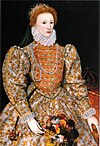
Francis Bacon on Elizabeth I of England
“This lady was endued with learning in her sex singular, and great even amongst masculine princes; whether we speak of learning, of language, or of science, modern or ancient, Divinity or Humanity: and unto the very last year of her life she was accustomed to appoint set hours for reading, scarcely any young student in a university more daily, or more duly. As for her government, I assure myself I shall not exceed, if I do affirm that this part of the island never had forty-five years of better times; and yet not through the calmness of the season, but through the wisdom of her regiment.”
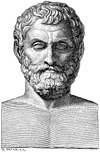
Francis Bacon on Thales
“Thales asserted Water to be the principle of things. For he saw that matter was principally dispensed in moisture, and moisture in water; and it seemed proper to make that the principle of things, in which the virtues and powers of beings, and especially the elements of their generations and restorations, were chiefly found. He saw that the breeding of animals is in moisture ; that the seeds and kernels of plants (as long as they are productive and fresh), are likewise soft and tender; that metals also melt and become fluid, and are as it were concrete juices of the earth, or rather a kind of mineral waters; that the earth itself is fertilised and revived by showers or irrigation, and that earth and mud seem nothing else than the lees and sediment of water; that air most plainly is but the exhalation and expansion of water; nay, that even fire itself cannot be lighted, nor kept in and fed, except with moisture and by means of moisture. He saw, too, that the fatness which belongs to moisture, and which is the support and life of flame and fire, seems a kind of ripeness and concoction of the water.”
Quotes About Francis Bacon
Gain deeper perspective through quotes about Francis Bacon from others.
Helena Blavatsky on Francis Bacon
“Bacon was one of the first to strike the key-note of materialism, not only by his inductive method (renovated from ill-digested Aristotle), but by the general tenor of his writings. He inverts the order of mental Evolution when saying that "the first Creation of God was the light of the sense; the last was the light of the reason; and his Sabbath work ever since is the illumination of the Spirit." It is just the reverse.”

Clifford D. Conner on Francis Bacon
“The "Baconian" sciences were the kind Francis Bacon had in mind when he issued a call to revitalize science by basing it on craftsmen's knowledge of nature. Bacon is remembered as the most effective critic of the traditional learning promulgated the elite institutions of his day. ...Bacon advocated compiling a "history of arts," or encyclopedia of crafts knowledge...”
John Davies on Francis Bacon
“This is unquestionably the nature of the principle of induction as proposed by Lord Bacon. Its useful and successful application, however, to the various departments of knowledge,—and there is scarcely any department to which, under suitable modifications, it may not be advantageously applied,—requires much care, attention, and assiduous patience. Bacon, therefore, employs the chief part of the first book of the Novum Organum in exposing the various prejudices and futile anticipations, which he calls the idols of the human mind, in contradistinction to the ideas of the divine mind, or those impressions of truth which are stamped upon the various elements and orders of creation. These idols he ranges under the four general classes, which he quaintly but expressively denominates Idols of the Tribe, Idols of the Den, Idols of the Forum, and Idols of the Theatre. The first class of idols, or prejudices, he represents as naturally inherent in the race of men, on account of the narrowness and imperfection of their views; the second, as peculiar to individuals, and arising from their peculiar habits and pursuits, hence entitled idols of the den or cave; the third, as springing from the mutual intercourse of mankind with each other, hence called idols of the forum or market; and the fourth, as originating in the false and fantastic theories of philosophers, exhibited from age to age as so many scenic representations on the stage of the intellectual world, and therefore appropriately styled idols of the theatre.”
Will Durant on Francis Bacon
“His achievement was not the less great because it was indirect. His philosophical works, though little read now, "moved the intellects which moved the world." He made himself the eloquent voice of the optimism and resolution of the Renaissance. Never was any man so great a stimulus to other thinkers... The whole tenor and career of British thought have followed the philosophy of Bacon. His tendency to conceive the world in Democritean mechanical terms gave to his secretary, Hobbes, the starting-point for a thorough-going materialism; his inductive metbod gave to Locke the idea of an empirical psychology, bound by observation and freed from theology and metaphysics; and his emphasis on "commodities" and "fruits" found formulation in Bentham's identification of the useful and the good. Wherever the spirit of control has overcome the spirit of resignation, Bacon's influence has been felt. He is the voice of all those Europeans who have changed a continent from a forest into a treasure-land of art and science, and have made their little peninsula the center of the world... Everything is possible to man. Time is young; give us some little centuries, and we shall control and remake all things. We shall perhaps at last learn the noblest lesson of all, that man must not fight man, but must make war only on the obstacles that nature offers to the triumph of man.”

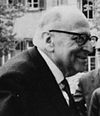
Max Horkheimer on Francis Bacon
“For Bacon as for Luther, "knowledge that tendeth but to satisfaction, is but as a courtesan, which is for pleasure, and not for fruit or generation." Its concern is not "satisfaction, which men call truth," but "operation," the effective procedure. The "true end, scope or office of knowledge" does not consist in "any plausible, delectable, reverend or admired discourse, or any satisfactory arguments, but in effecting and working, and in discovery of particulars not revealed before, for the better endowment and help of man's life." There shall be neither mystery nor any desire to reveal mystery.”
Knowledge on Francis Bacon
“Das Wissen, das Macht ist, kennt keine Schranken, weder in der Versklavung der Kreatur noch in der Willfähigkeit gegen die Herren der Welt.”
H. Gordon Hullfish on Francis Bacon
“Francis Bacon long ago called attention to the play of predispositions or prejudices in man's life when he wrote of four "Idols," or types of false opinion, that man must avoid if he wishes to attain sound judgements. ...1. The idols of the tribe are those false opinions which, by the very nature of man himself, are likely to distort and discolor his judgements. Bacon recognized "the mind" as an active agent that tended to project its own whims and desires into its surroundings... therefore... man, collectively speaking, tends to be anthropocentric or "man-centered" in his investigations of nature. 2. The idols of the cave are those errors which the individual makes in consequence of his peculiar or personal temperament and background. Each individual has been inevitably, if not unduly, influenced by certain traditions, authorities, and the like which have been especially admired in the particular "cave" or locality where his values came about as a reflection of what his associates valued. 3. The idols of the market place are those errors which arise as a result of the ways we confuse one another, especially through the nonrigorous and vague or ambiguous use of language. Bacon recognized that language does not necessarily reflect either the content or the structure of reality, that it is quite possible to create "names" for nonexistent things. Men may think that reason governs the use of words; but in reality it is often words which govern reason. 4. The idols of the theater are those errors or false opinions imbedded in an uncritically accepted tradition. Thus, pride of race, exaggerated nationalism, or perverted patriotism may become the essential traditions of a culture; and in some communities children grow up in a climate of social snobbery, narrow sectarianism in religion, and strict partisanism in politics. Bacon believed that "the power of reason" gave man the ability to rise above prejudice.”
Thomas Henry Huxley on Francis Bacon 3 quotes
“Francis Bacon had essayed to sum up the past of physical science, and to indicate the path which it must follow if its great destinies were to be fulfilled. And though the attempt was just such a magnificent failure as might have been expected from a man of great endowments, who was so singularly devoid of scientific insight that he could not understand the value of the work already achieved by the true instaurators of physical science; yet the majestic eloquence and the fervid vaticinations of one who was conspicuous alike by the greatness of his rise and the depth of his fall, drew the attention of all the world to the 'new birth of Time.'”

Naomi Klein on Francis Bacon
“With nature now cast as a machine, devoid of mystery or divinity, its component parts could be dammed, extracted, and remade with impunity. Nature still sometimes appeared as a woman, but one easily dominated and subdued. Sir Francis Bacon best encapsulated the new ethos when he wrote in the 1623 De dignitate et augmentis scientiarum that nature is to be "put in constraint, moulded, and made as it were new by art and the hand of man."”

C. W. Leadbeater on Francis Bacon
“The Head of the Seventh Ray is the Master the Comte de St. Germain, known to history in the eighteenth century, whom we sometimes call the Master Rakoczy, as he is the last survivor of that royal house. He was Francis Bacon, Lord Verulam, in the seventeenth century, Robertus the monk in the sixteenth, Hunyadi Janos in the fifteenth, Christian Rosenkreuz in the fourteenth, and Roger Bacon in the thirteenth; he is the Hungarian Adept of The Occult World. Further back in time he was the great Neoplatonist Proclus and before that St. Alban. p. 258”
George Henry Lewes on Francis Bacon
“Since... it appears that Aristotle very distinctly recognized the cardinal principles of the Baconian philosophy, why... has the world credited Bacon with a great reform in the very attacks he made on Aristotle? The answer is simple. Bacon did not attack the Method which Aristotle taught; indeed, he was very imperfectly acquainted with it. He attacked the Method which the followers of Aristotle practised.”

Basil Montagu on Francis Bacon
“Bacon has been accused of servility, of dissimulation, of various base motives, and their filthy brood of base actions, all unworthy of his high birth, and incompatible with his great wisdom, and the estimation in which he was held by the noblest spirits of the age. It is true that there were men in his own time, and will be men in all times, who are better pleased to count spots in the sun than to rejoice in its glorious brightness. Such men have openly libelled him, like Dewes and Weldon, whose falsehoods were detected as soon as uttered, or have fastened upon certain ceremonious compliments and dedications, the fashion of his day, as a sample of his servility, passing over his noble letters to the Queen, his lofty contempt for the Lord Keeper Puckering, his open dealing with Sir Robert Cecil, and with others, who, powerful when he was nothing, might have blighted his opening fortunes for ever, forgetting his advocacy of the rights of the people in the face of the court, and the true and honest counsels, always given by him, in times of great difficulty, both to Elizabeth and her successor. When was a "base sycophant" loved and honoured by piety such as that of Herbert, Tennison, and Rawley, by noble spirits like Hobbes, Ben Jonson, and Selden, or followed to the grave, and beyond it, with devoted affection such as that of Sir Thomas Meautys.”
Disputed Quotes
Quotes attributed to Francis Bacon that are questionable.
“Imagination was given to man to compensate for what he is not, and a sense of humor to console him for what he is.”
Misattributed Quotes
Quotes mistakenly credited to Francis Bacon
About Francis Bacon
Francis Bacon, 1st Viscount St. Alban KC (22 January 1561 – 9 April 1626) was an English philosopher, statesman and essayist. His works argued for the possibility of scientific knowledge based only upon inductive reasoning and careful observation of events in nature. Most importantly, he argued this could be achieved by use of a sceptical and methodical approach whereby scientists aim to avoid misleading themselves. His general idea of the importance and possibility of a skeptical methodology makes Bacon the father of the scientific method. This marked a new turn in the rhetorical and theoretical framework for science, the practical details of which are still central in debates about science and methodology today.